


Late 19th Century Glassware
These late 19th century glassware pieces bring rich colour and tactile blown forms to a room, offering a distinct physical weight collectors prize.
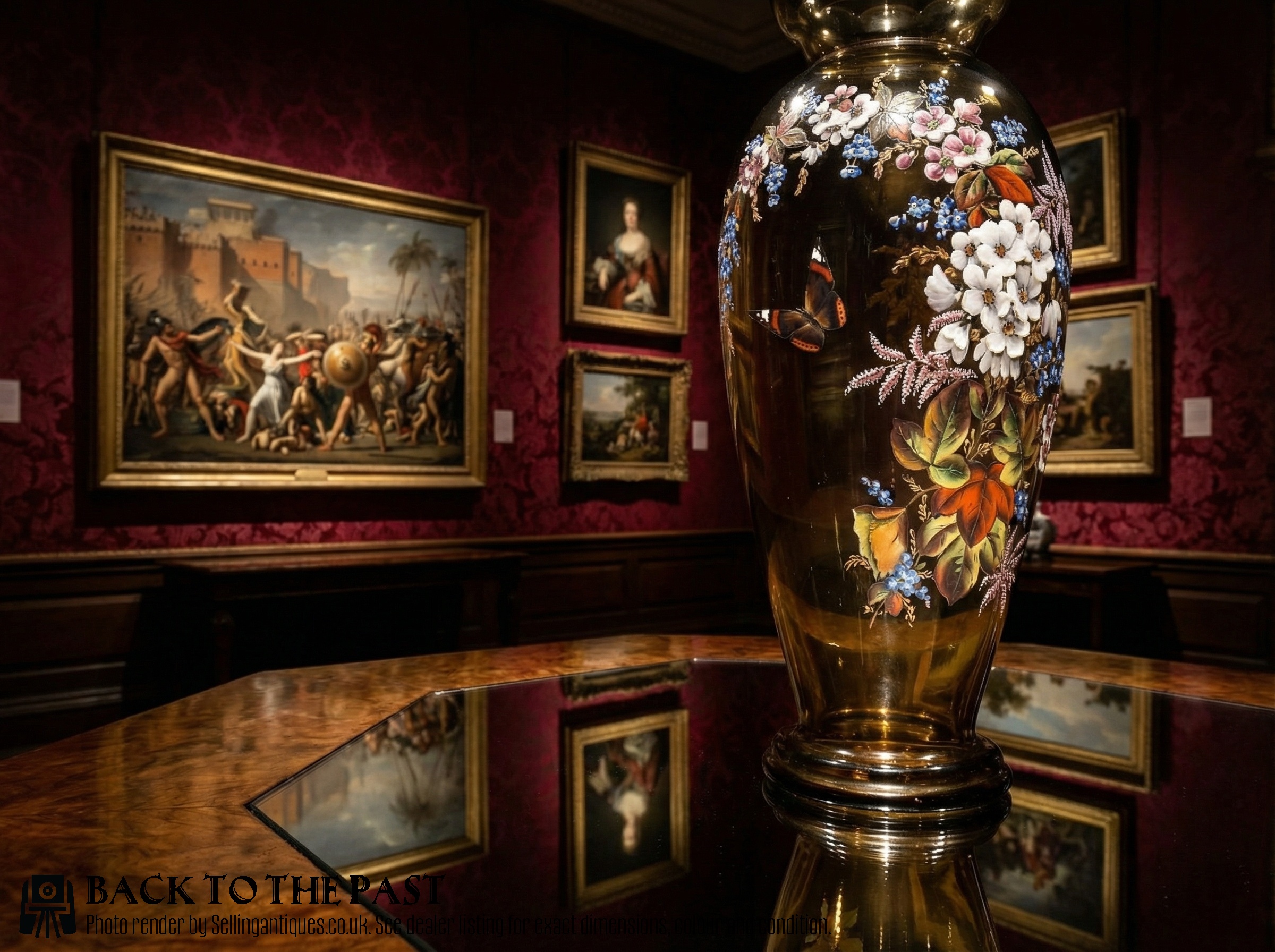
Late 19th Century Glassware
Late 19th century glassware encompasses a varied array of decorative and utilitarian vessels, ranging from vibrant vases and decanters to delicate hand bells and baskets. The selection spans distinct Victorian, Arts and Crafts, Art Nouveau, and Aesthetic Movement sensibilities, reflecting an era of immense technical experimentation in glasshouses.
You are most likely to encounter richly coloured or iridescent vases and decanters from around the 1890s on this page. These pieces often showcase characteristic methods like optical blowing, polychromatic enamelling, or acid cutting rather than simple plain forms.
Originating across Britain, Bohemia, and France, these items demonstrate regional specialisms from Moser, Kralik, and James Powell. Pieces bridge traditional Georgian and Regency utility with the ornate decorative tastes of the late Victorian period.
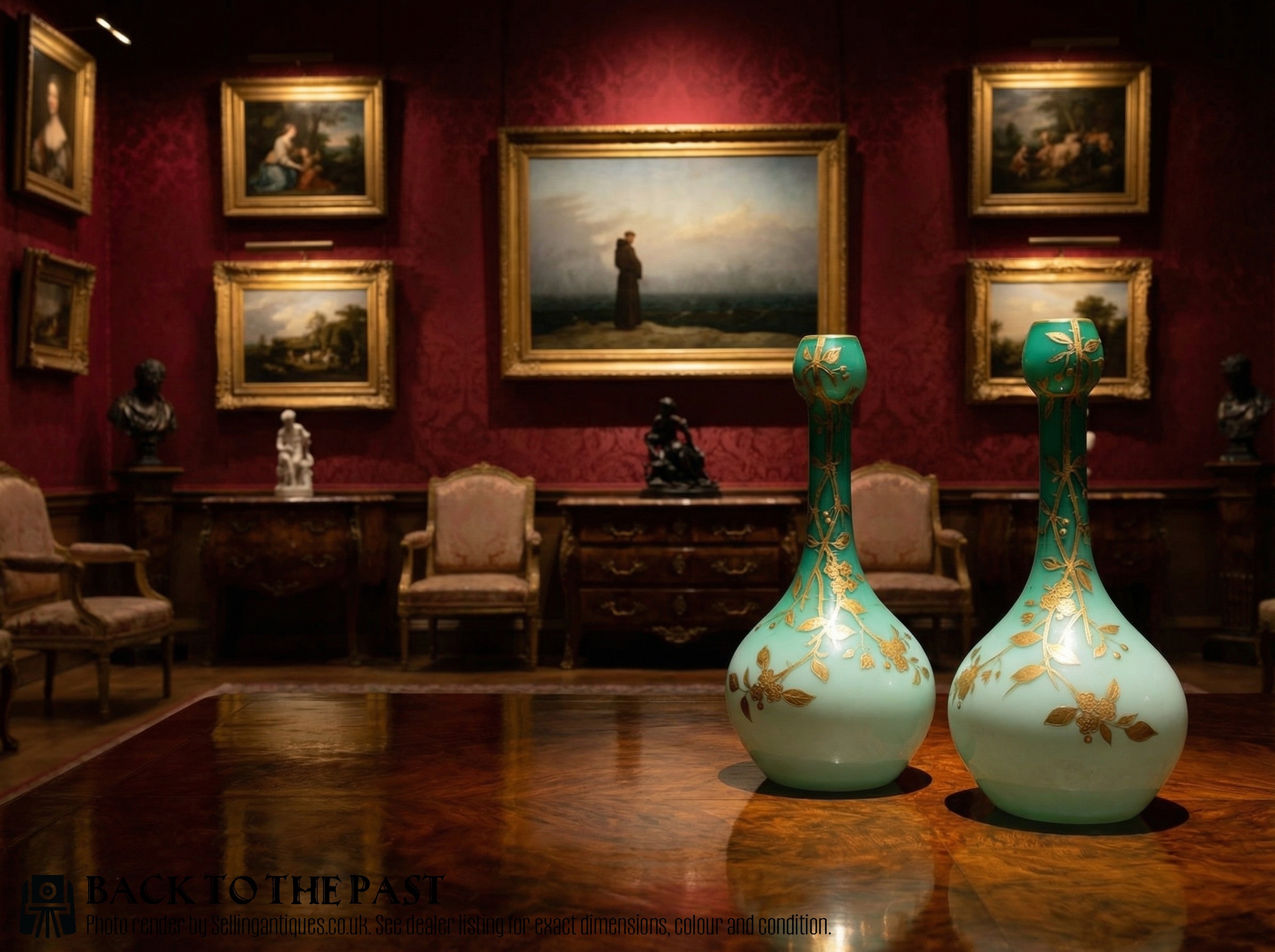
How they were made
Makers utilised free-blowing and optical moulding techniques to shape molten lead crystal and opaline glass while hot. Artisans achieved surface depth through layered casing, such as ruby glass over clear metal, or by applying iridescent finishes directly to the hot metal.
Decoration relied heavily on meticulous hand-painting with enamels and intricate acid cutting to reveal contrasting lower layers. Silver mounts and delicate silver or enamel work were frequently added to finished blown bodies to create pieces like Aesthetic Movement baskets.
Listings feature items spanning the Victorian era, Arts and Crafts movement, and Art Nouveau period, utilising lead crystal, opaline, and iridescent glass.
What varies in quality
Quality rests upon the crispness of the cutting, the uniformity of the glass walls, and the skill evident in the polychromatic enamelling. Pieces with complex optical blowing or sophisticated acid-etched cameo work demand a higher level of artisan control than standard mould-blown items.
The sophistication of the colour layering and the integration of secondary materials, such as silver mounts on opaline bodies, elevate the standing of a vessel. Superior examples retain sharp decorative details and harmonious proportions without cloudiness in the metal.
James Powell·Kralik glassworks·Moser·Stevens & Williams
The Late 19th Century Glassware Glossary
- Optically blown
- Glass blown into a ribbed or patterned mould to create internal optical distortions and patterns within the walls. This technique adds subtle texture to the body without altering the smooth exterior.
- Opaline glass
- An opaque or translucent pale glass developed to imitate porcelain, popular for decorative items during the nineteenth century. It accepts enamel painting exceptionally well.
- Acid cut cameo
- A method where glass is cased in multiple colours and partially etched away using acid to produce a raised design. It requires precise masking to achieve distinct layered reliefs.
- Peachblow
- A type of art glass featuring shaded colours that transition from one hue to another, typically mimicking ripe fruit. The effect is achieved by reheating specific chemical formulations during blowing.
- Iridescent glass
- Glass treated with metallic vapours while hot to produce a shimmering, rainbow-like surface sheen. This finish was favoured by late Victorian and Art Nouveau makers seeking organic effects.
Late 19th Century Glassware: Frequently Asked Questions
Can I use these decanters daily?
These decanters can hold liquids, but care is needed due to their age and delicate blown structures. Hand-wash them thoroughly before use and avoid pouring boiling liquids into cold glass.
Displaying them with spirits or water is common, provided you inspect the interior for historical residue first. Modern dishwashers will ruin the delicate glass surfaces.
How do I identify Art Nouveau glass?
Art Nouveau pieces typically feature organic, fluid forms inspired by nature, often with iridescent surfaces. Look for stylised floral motifs and asymmetrical shapes that break from strict Victorian symmetry.
Makers like Kralik embraced these sinuous lines during the late nineteenth century. The colours tend to mimic natural phenomena like peacock feathers or oil slicks.
What is cameo glass?
Cameo glass consists of two or more distinct layers of coloured glass fused together before carving. Artisans carve or acid-etch the outer layer away to expose a contrasting background colour.
This painstaking method creates sharp relief designs reminiscent of classical carved stone cameos. Stevens & Williams produced fine examples of this technique during the period.
Are opaline baskets fragile?
Opaline glass baskets are sturdy enough for gentle handling, but their applied handles and rims require caution. The opaque glass is durable, yet thin decorative elements remain vulnerable to sharp impacts.
Display them away from high-traffic edges where they might be knocked over. Proper placement ensures these decorative pieces survive safely.