
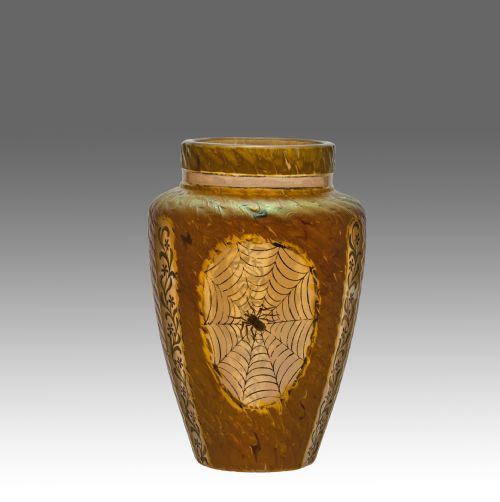
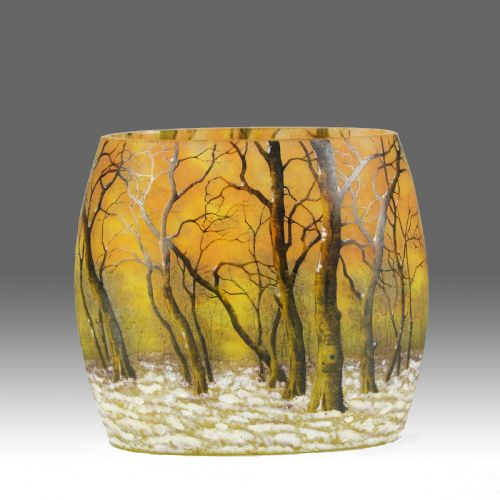


Enamelled Amber Glass Vase
An enamelled amber glass vase brings rich, warm tone and detailed surface decoration straight to a room, catching the light across Victorian, Art Nouveau and Art Deco periods.
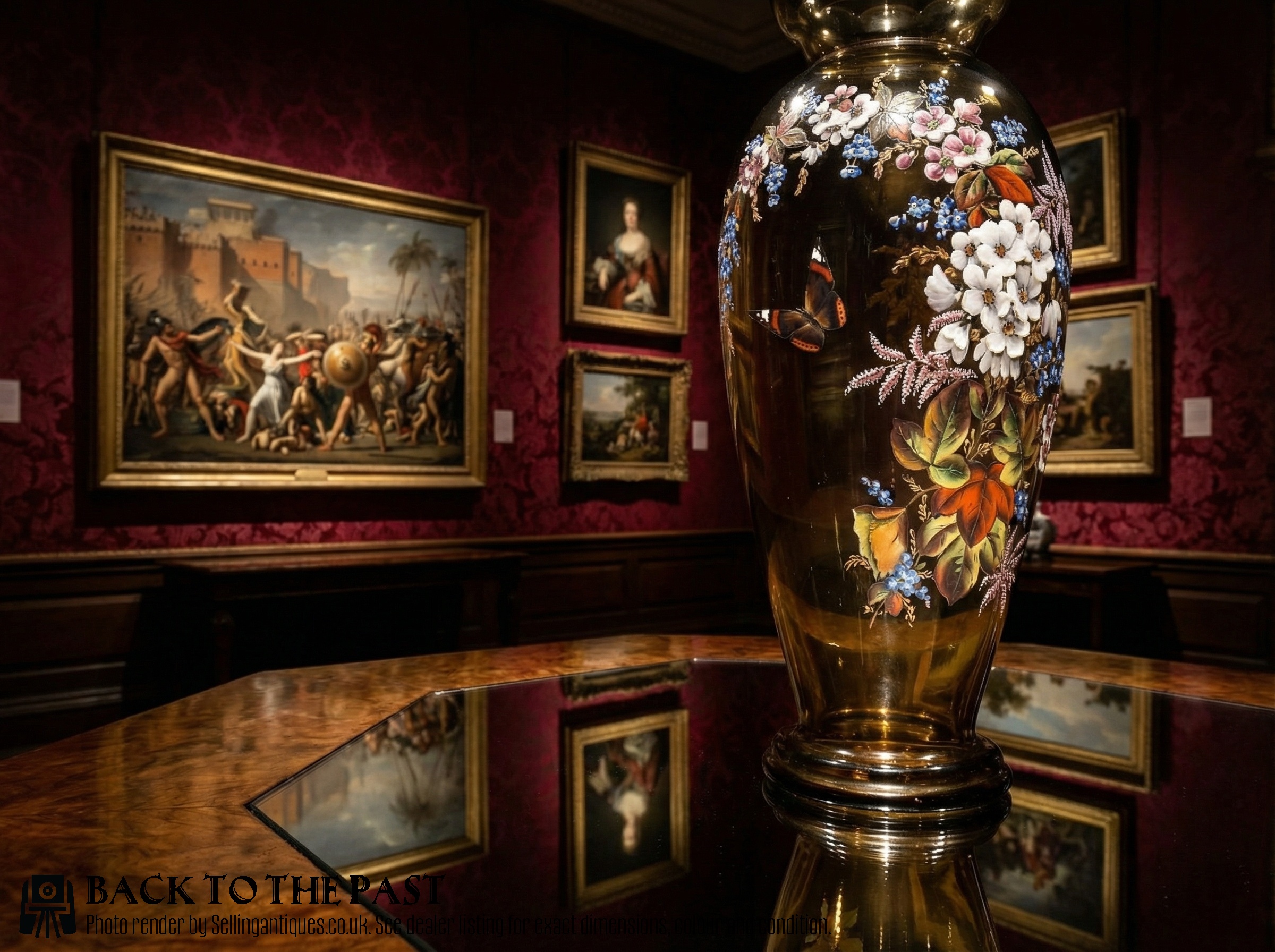
Enamelled Amber Glass Vase
An enamelled amber glass vase combines deep translucent colour with painted or raised surface detail, spanning periods from the late nineteenth century into the twentieth century. These vessels appear in forms ranging from tall nineteenth-century display pieces to miniature Art Nouveau shapes and later geometric Art Deco designs.
The most common examples on this page date around nineteen hundred, reflecting the organic motifs and landscape scenes popularised by continental glassmakers. Makers from this era utilise rich amber grounds to set off floral patterns, winter branches and insect details.
Moser and continental workshops shape the earlier Victorian output, while Czech glassmakers carry the tradition forward into the nineteen-thirties. Buyers encounter both monumental cabinet pieces and smaller cabinet vases bearing distinct enamelled or etched decoration.
How they were made
Glassmakers form these vessels using blown glass techniques, shaping molten material into oviform, cylindrical or tapered silhouettes. Craftsmen then apply enamel colours by hand, building up polychromatic floral subjects, berries or snowy landscapes across the amber surface.
Many workshops combine enamel work with cameo glass methods or acid-etched glass treatments to create textured relief. Some pieces also feature iridescent glass finishes or cameo layers that interact with the underlying amber hue when light passes through the vessel.
Listings feature amber glass, cameo glass and iridescent glass spanning the Victorian era through the nineteen-thirties.
What varies in quality
Quality rests upon the crispness of the enamel application and the depth of the glass body itself. Finer examples display precise brushwork in multi-coloured enamel subjects, where delicate details like botanical veins or winter foliage remain sharp and well-defined.
The prestige of the producing house shapes desirability, with signed pieces by established glassworks commanding greater attention. The complexity of the vessel's manufacture - such as combining cameo relief with hand-painted enamel on an amber ground - separates standard production from exceptional studio output.
Kralik Glass·Daum Frerès·Moser·Legras
The Enamelled Amber Glass Vase Glossary
- Enamel
- Opaque or translucent glass paste applied to the vessel surface and fired to fuse with the body. This technique allows makers to paint intricate scenes and raised motifs.
- Cameo glass
- Glass formed with multiple layers of contrasting colours, carved or acid-etched to create a raised design. It provides dramatic depth behind enamelled highlights.
- Iridescent glass
- Glass treated with metallic salts while hot to produce a shimmering, rainbow-like sheen. This effect often complements the warm tones of amber glass.
- Acid-etched glass
- Glass treated with hydrofluoric acid to eat away specific areas of the surface, creating a matte texture or low relief. Makers use this to enhance background details on landscape vases.
- Historismus
- A nineteenth-century revivalist style drawing inspiration from historical periods, frequently seen in ornate German glass production. It often incorporates heavy enamelling and gilding.
Enamelled Amber Glass Vase: Frequently Asked Questions
How do I date an amber glass vase?
Dating relies on stylistic clues, signatures and manufacturing techniques visible across the piece. Victorian examples often show heavy polychromatic enamelling, while nineteen-hundred pieces lean towards Art Nouveau flora and landscapes.
Later nineteen-thirty pieces introduce cleaner Art Deco lines. Examining the base and signature style helps narrow down the decade of manufacture.
Are all these vases signed?
Not every vessel carries a visible signature or factory mark. Major makers often etched or enamelled their names directly onto the lower body or base.
Unsigned pieces still find attribution through characteristic motifs, glass colours and blowing techniques standard to particular European workshops.
What is German Historismus glass?
Historismus refers to nineteenth-century revival styles that drew upon Renaissance and medieval decorative traditions. In glassmaking, this translates to robust forms with dense enamelling.
These pieces often feature heraldic or ornate botanical motifs across heavy amber or clear glass bodies.