


Amber Glass Floral Vase
An amber glass floral vase brings rich warmth and intricate botanical motifs into a room, capturing the botanical grace of the early twentieth century.
Amber Glass Floral Vase
When you search for an amber glass floral vase, you encounter pieces defined primarily by cameo glass techniques, acid-etched finishes, and polychromatic enamel decoration. The pieces span the Victorian period through the nineteen-twenties, incorporating distinct Art Nouveau styling.
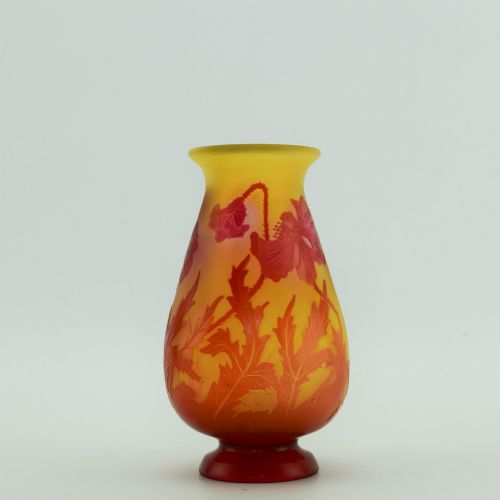
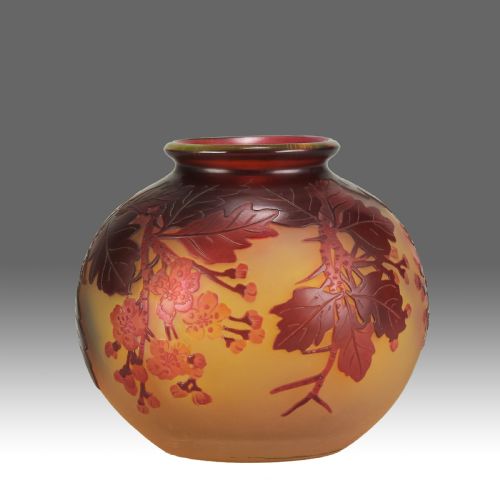
The dominant forms on this page originate from French makers working around nineteen-hundred, featuring botanical motifs such as poppies, apple blossoms, honeysuckle, ferns, and solanacees. Footed shapes and tall silhouettes appear frequently among the listings, rendered in warm amber tones.
Makers such as Gallé, Daum Frères, Moser, and Paul Nicolas for D'Argental dominate the selection, bringing master craftsmanship in cameo and enamelled glass to each vessel.
How they were made
The creation of an amber glass floral vase relies heavily on cameo glass techniques, where multiple layers of glass are fused together and partially carved away to reveal contrasting botanical designs. Acid-etched glass methods are frequently employed to achieve fine surface textures and varied relief depths on the body of the vessel.
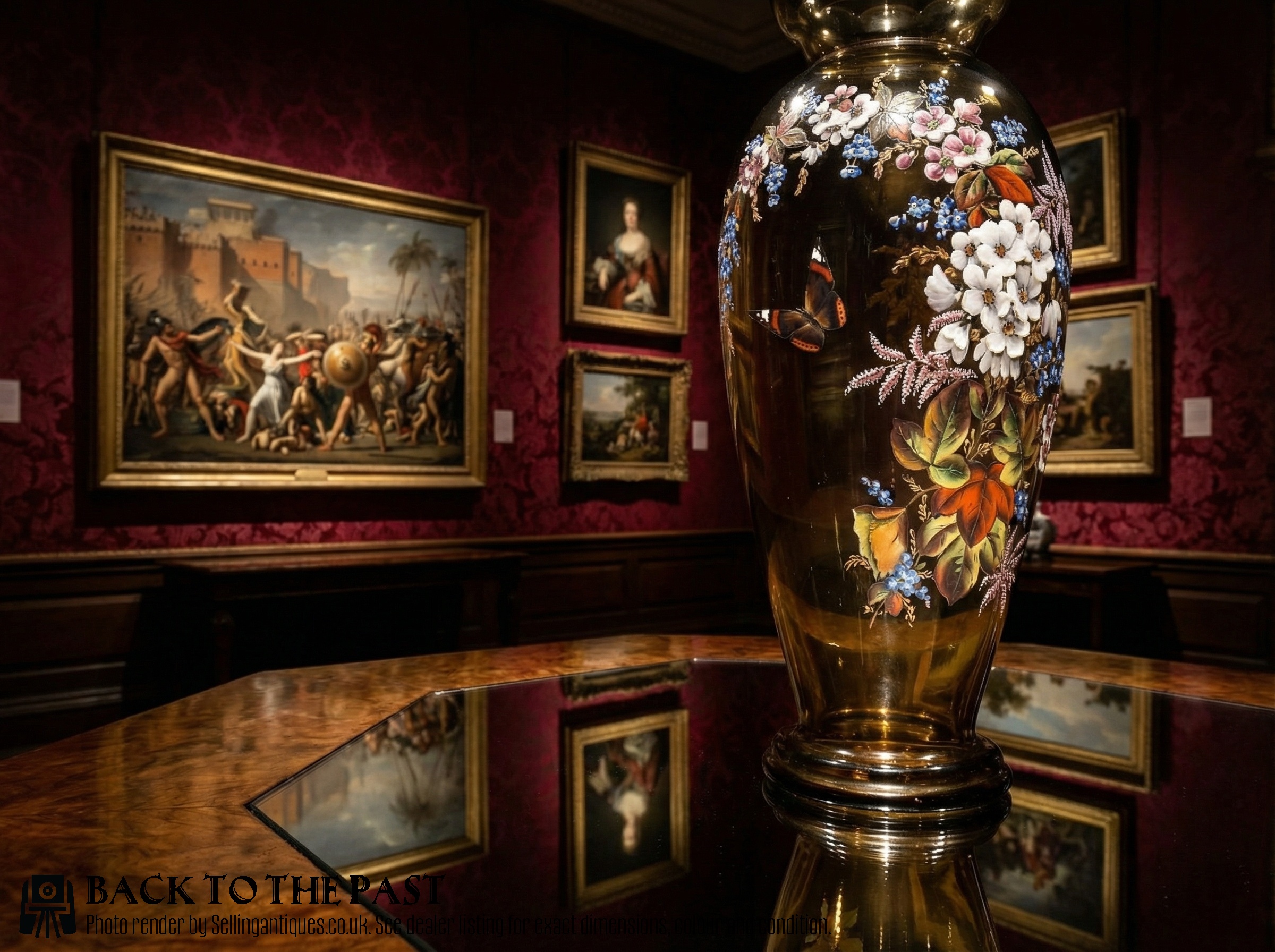
Enamel and frosted glass treatments frequently supplement the cameo work, adding polychromatic detail to floral subjects like bleeding hearts and poppies. Workshops utilised these combined methods to create depth and naturalistic shading within the warm amber medium.
Listings feature pieces from the Victorian era up through nineteen-twenty, utilising cameo glass, enamel, and frosted glass materials.
What varies in quality
Quality in these pieces is dictated by the depth and precision of the cameo carving, which separates standard production from exceptional artistry. Crisp execution of botanical details, such as individual petals and fern fronds, defines the upper tier of craftsmanship.
The complexity of the enamel work and the subtlety of the colour transition within the amber glass ground further distinguish superior examples. Pieces bearing clear signatures from prominent French studios represent the highest standard of nineteenth and twentieth-century glass production.
Gallé·Daum Frères·Moser·Paul Nicolas·D'Argental
The Amber Glass Floral Vase Glossary
- Cameo Glass
- A method of glass vessel construction utilising multiple fused layers of contrasting colours, which are then carved or acid-etched to create a raised design. This technique allows for intricate, multi-layered botanical motifs.
- Acid-Etched Glass
- A decorative technique where hydrofluoric acid is applied to the glass surface to eat away unprotected areas, creating frosted textures or shallow relief patterns. It permits precise detailing on floral vases.
- Art Nouveau
- An international style of art and architecture prevalent from the late nineteenth century until the First World War, characterised by organic, sinuous lines and floral forms. It heavily influences the decorative motifs on these pieces.
- Polychromatic Enamel
- A glass decoration method involving the application of multiple coloured glass paints that are subsequently fired onto the vessel. This adds vibrant, painted botanical details to the underlying amber glass.
Amber Glass Floral Vase: Frequently Asked Questions
What periods do these pieces come from?
The pieces span the late nineteenth century, specifically the Victorian era, through the early twentieth century up to the nineteen-twenties. Art Nouveau aesthetics strongly characterise this timeline.
French glasshouses produced the vast majority of these botanical vessels during this golden age of cameo glass manufacturing.
How should I display an amber glass floral vase?
Place the vessel near a natural light source to fully illuminate the warm amber tones and highlight the layered cameo glass carving. Window sills or well-lit mantels allow the translucent qualities of the glass to emerge.
Keep the surrounding decor simple to let the intricate floral motifs and enamel details remain the focal point of the space.
What flowers appear on these vases?
Common botanical subjects include poppies, apple blossoms, honeysuckle, ferns, and solanacees, alongside coeurs de jeannette or bleeding hearts. These motifs reflect the Art Nouveau fascination with organic, natural forms.
Artists rendered these plants with botanical accuracy, using the layered glass to capture realistic shading and petal depth.