


Victorian Mahogany Tray
A victorian mahogany tray combines practical nineteenth-century utility with rich timber grain, serving modern homes as a portable tabletop or an accent piece.
Victorian Mahogany Tray
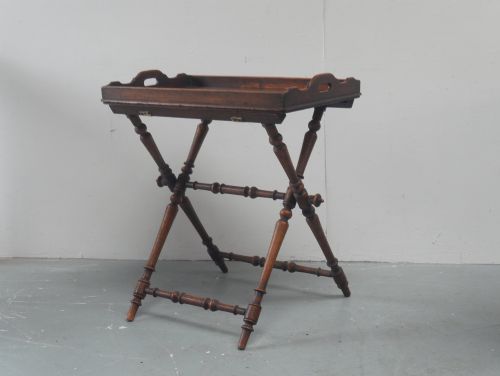
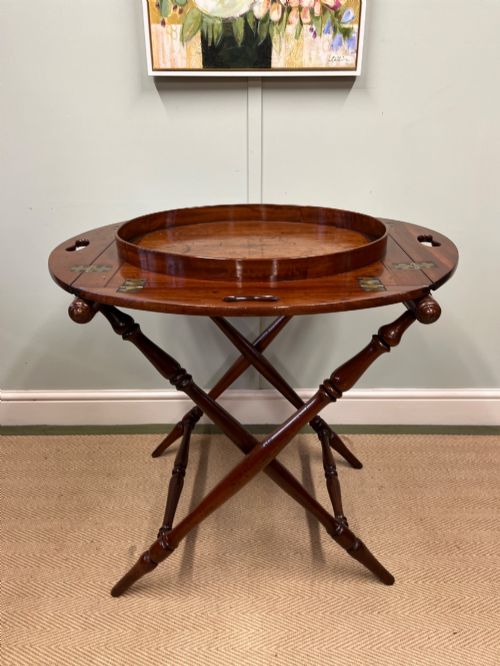
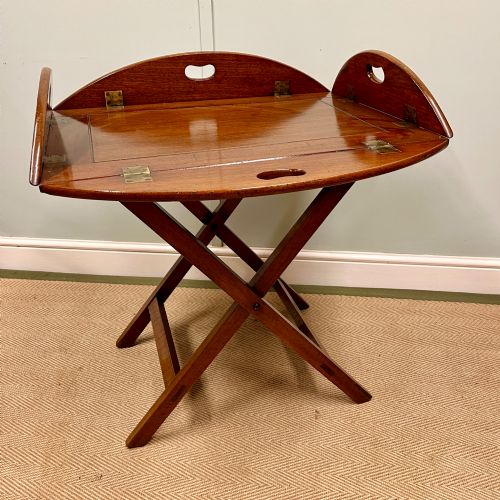
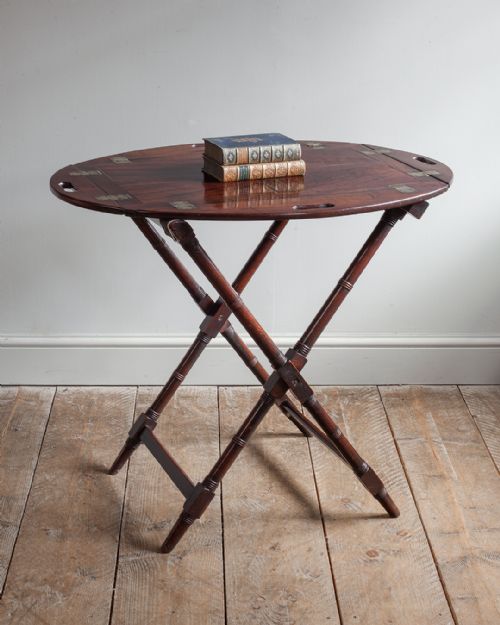
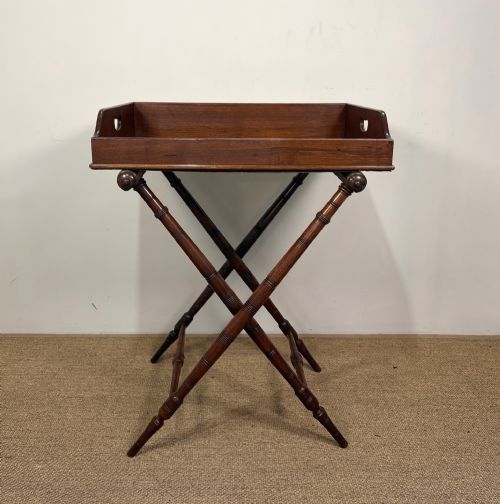
When searching for a victorian mahogany tray, buyers encounter several distinct domestic forms created during the nineteenth century. The most common variant met on this page is the traditional butler tray, frequently paired with a folding wooden stand for flexible entertaining and serving.
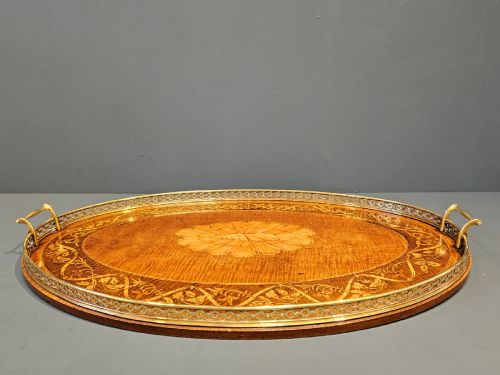
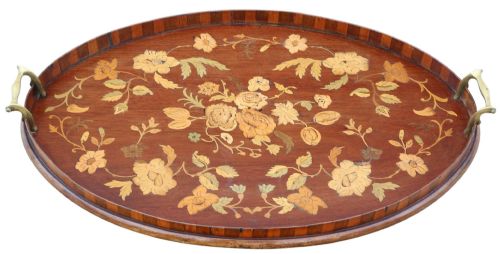
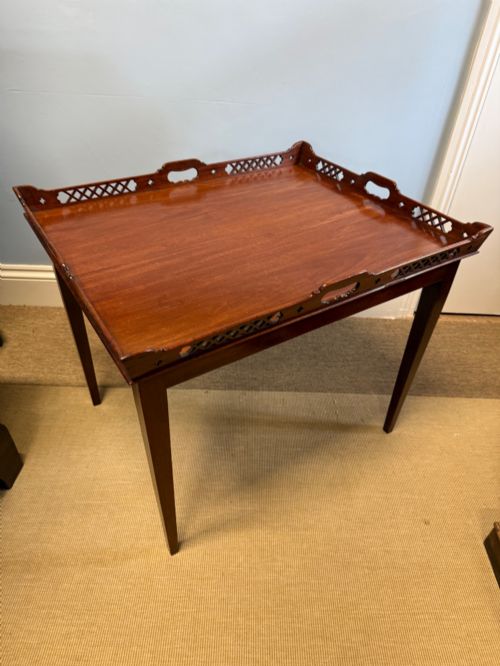
Beyond the standard serving format, the selection includes oval tea trays, kidney-shaped platters, and specialised tray tables. Many examples incorporate brass handles or gallery edges designed to keep items secure during transport.
The material vocabulary extends beyond pure timber into pieces featuring satinwood inlay, oak structures, and integrated silver plate or metal mounts. These variations reflect the diverse functional roles these items played in nineteenth-century country houses and parlours.
Materials and construction
Makers utilised dense mahogany timbers for the primary body, prized for stability and deep natural colour. Artisans frequently added contrasting satinwood inlay to create geometric borders or central decorative motifs on finer serving pieces.
Structural hardware relied on durable brass handles, hinges, and gallery rails affixed securely to the wooden base. Folding stands utilised sturdy wooden legs, sometimes joined by cross-braces for added support during daily use.
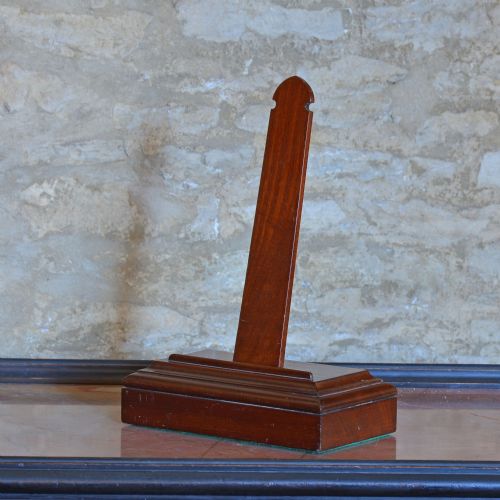
Alphabet slopes appear alongside standard trays, preserving nineteenth-century spelling lessons in timber and bone.
Distinctions in craftsmanship
The grade of a victorian mahogany tray is largely determined by the precision of its joinery and the fineness of any decorative inlay. Superior examples display tightly fitted corners and crisp, deliberate contrasting woodwork rather than simple painted lines.
Subtleties in the grain selection and the weight of the brass mounts also separate standard utility items from top-tier drawing room pieces. Well-preserved original surfaces with a deep, warm patina indicate careful handling over generations.
Shoolbred
The Victorian Mahogany Tray Glossary
- Butler tray
- A portable serving surface featuring hinged or cutout sides that allow the edges to fold flat or remain upright. These pieces typically rest on a separate folding wooden stand.
- Gallery tray
- A serving platter bordered by a raised rim or pierced metal gallery designed to prevent glassware and china from sliding off during transit.
- Satinwood inlay
- A decorative technique where lighter contrasting timber is embedded into the mahogany surface to form patterns or borders.
- Dumb waiter
- A multi-tiered revolving piece of furniture or serving stand utilised for holding dishes and drinks during meals without servant assistance.
- Tray table
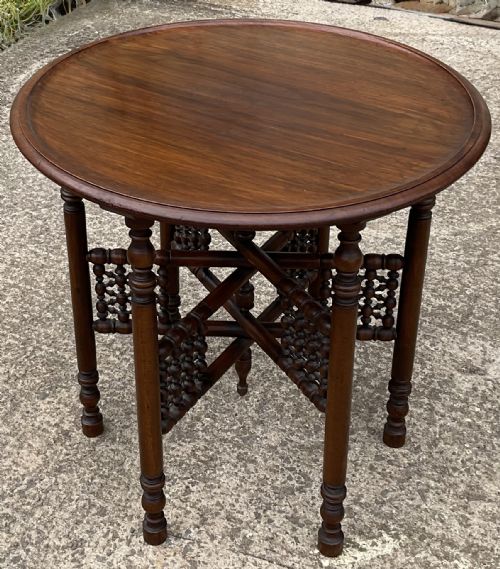
- A fixed or convertible piece of furniture where a removable serving tray sits atop a dedicated base or stand.
Victorian Mahogany Tray: Frequently Asked Questions
How were butler trays originally used?
Nineteenth-century households utilised these portable surfaces for carrying tea, food, and drinks from the kitchens to the drawing room. The removable tray rested on a folding stand, allowing servants to clear furniture quickly when the meal concluded.
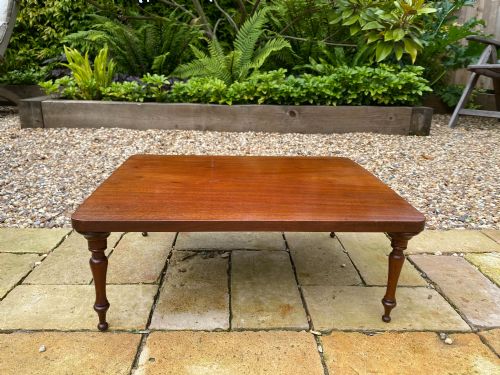
In modern spaces, these items transition easily into coffee tables or permanent side tables while retaining their historical utility and portability.
Are the stands usually original to the trays?
Many surviving pieces retain their matching folding stands, which share the same timber characteristics and wear patterns as the tray itself. Finding an authentic pairing increases the historical integrity of the piece.
When a stand is a later replacement, the fit and timber tone may differ slightly upon close inspection by an experienced eye.
How do I distinguish between periods?
Earlier nineteenth-century examples often display heavier timber construction, hand-cut joinery, and simpler functional designs without extensive decoration. Pieces from the later Victorian and Edwardian eras frequently incorporate finer satinwood inlay and more elaborate shaped edges.
Examing the underside and the method used to attach handles provides further clues regarding the approximate decade of manufacture.
How should I care for mahogany surfaces?
Protect the timber by avoiding placement near direct heat sources or in strong sunlight that might fade the natural grain. Regular dusting with a soft cloth preserves the antique polish without requiring heavy chemical treatments.
Using coasters and placemats helps prevent moisture rings from forming on the vintage polished finish during daily use.