

Victorian Mahogany Dining Sideboard
A victorian mahogany dining sideboard brings substantial timber presence and formal dining utility to a room.
Victorian Mahogany Dining Sideboard
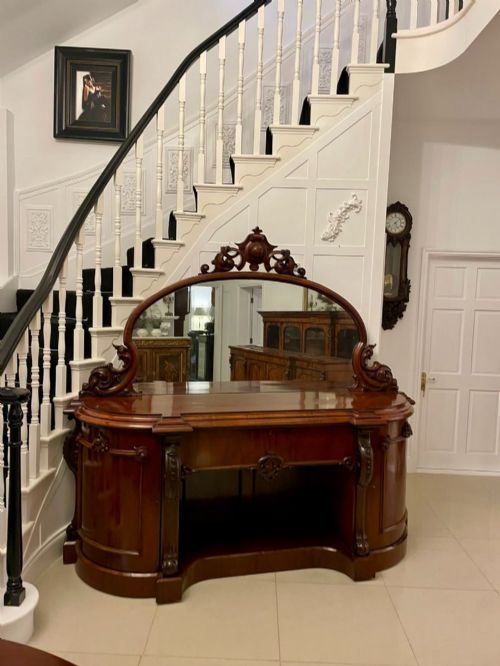
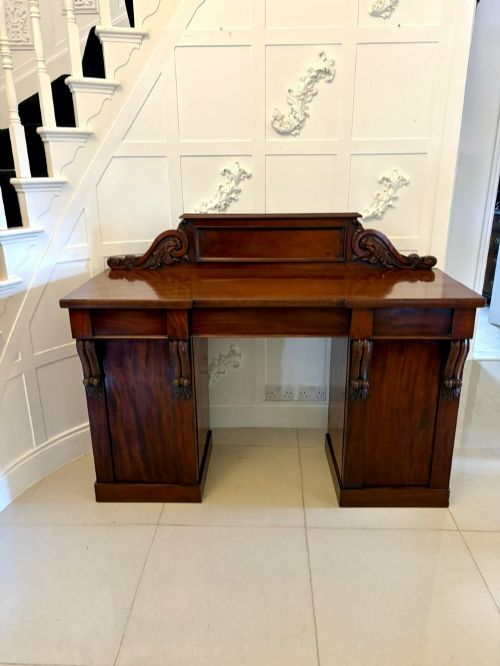
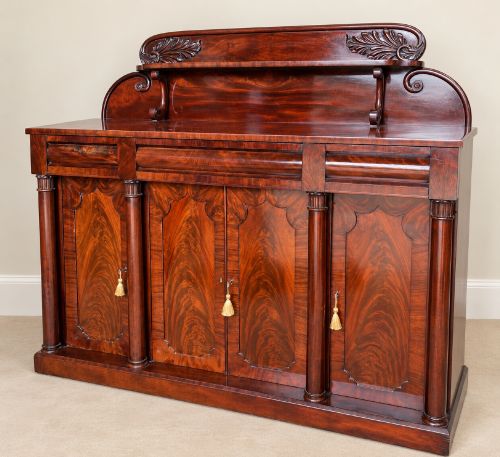
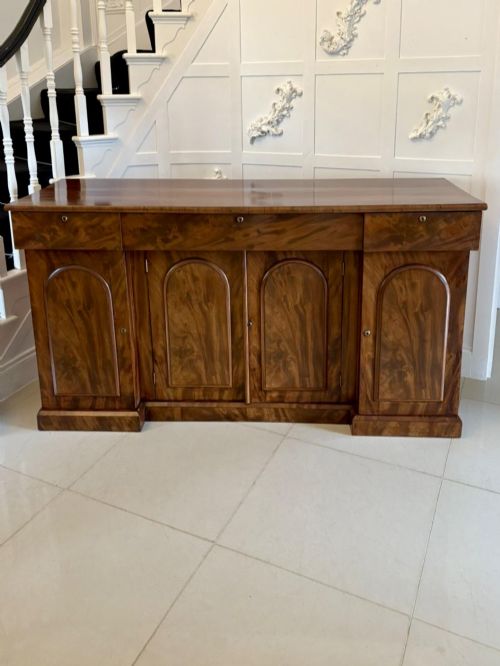
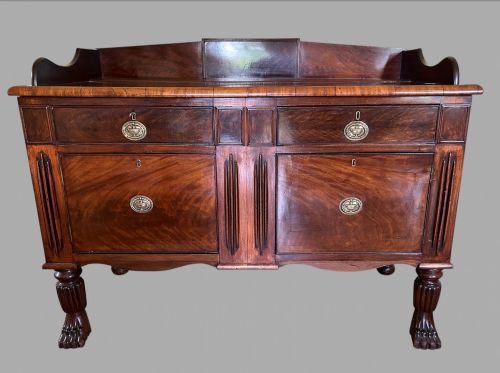
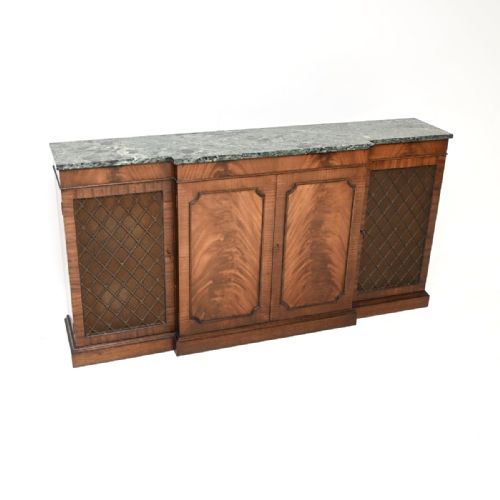
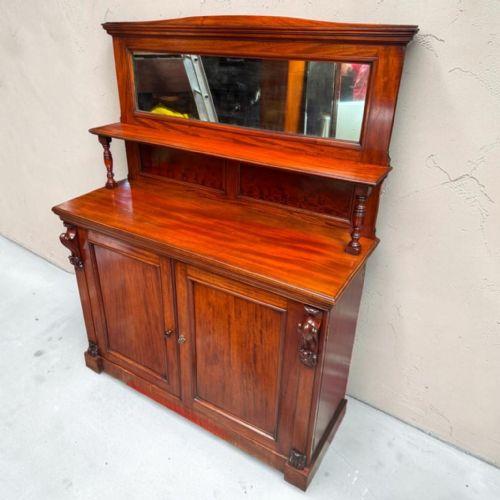
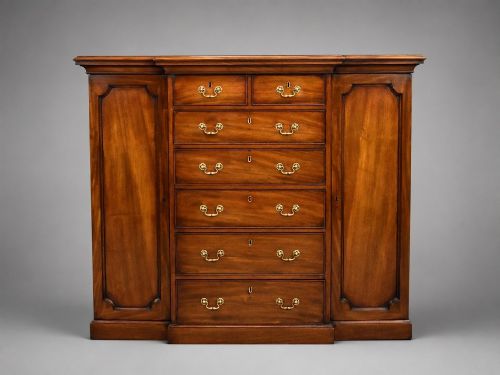
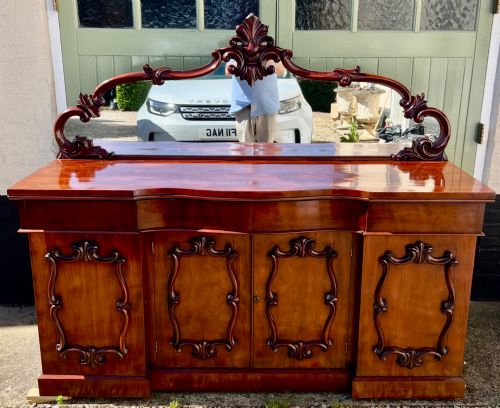
A victorian mahogany dining sideboard is a heavy storage piece built for formal dining rooms during the nineteenth century. These items appear in various configurations, from simple pedestals and serving tables to large breakfront forms with mirror backs.
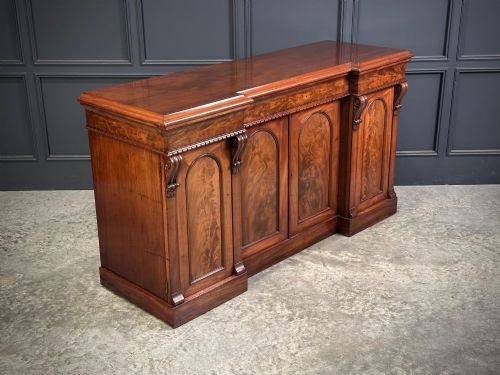
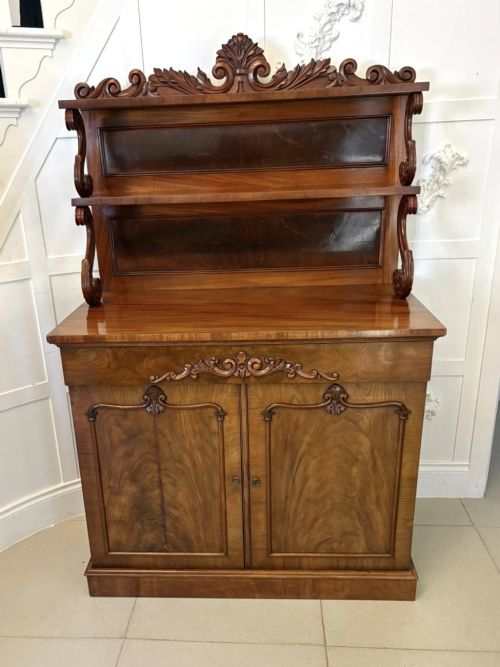
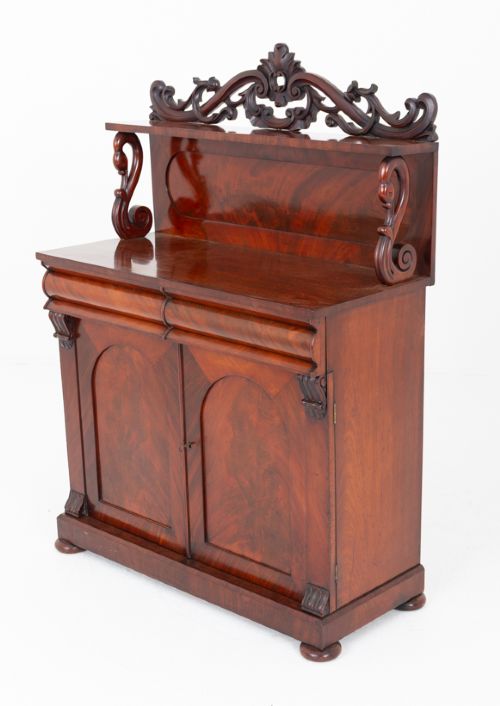
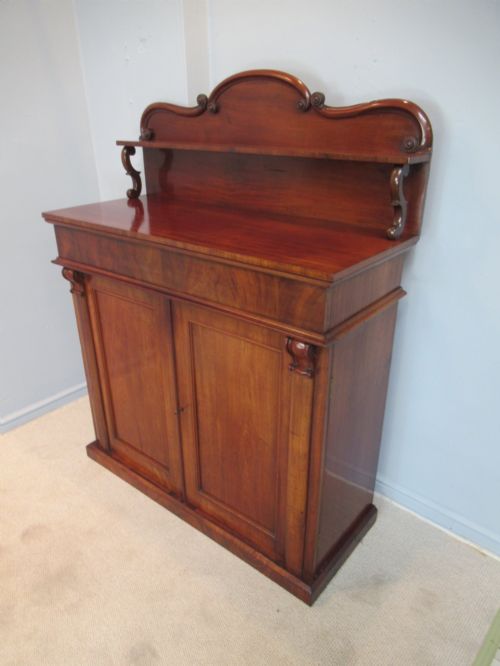
The version most commonly met on this page is the Victorian sideboard featuring solid mahogany, flame mahogany veneer, and carved details. Pieces range from compact two-door chiffoniers to expansive four-door and breakfront storage units.
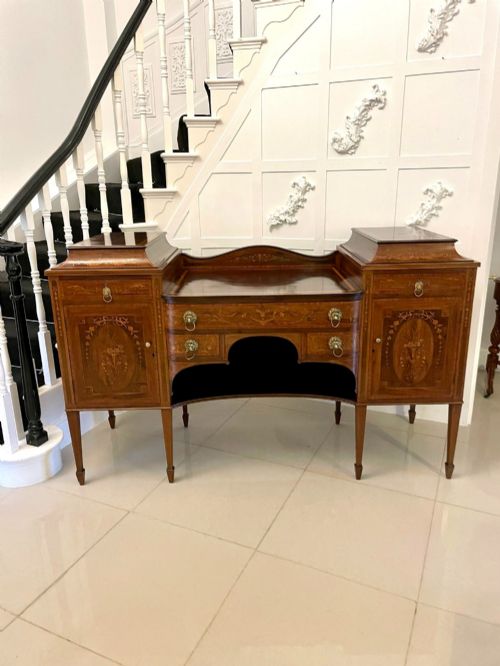
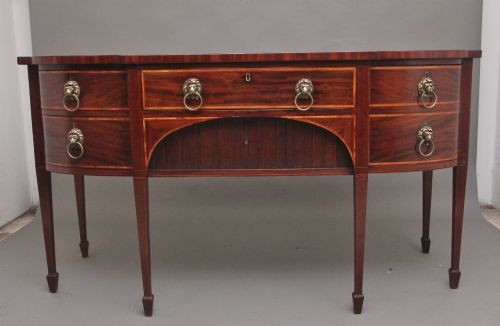
Makers adapted styles across decades, resulting in variations spanning William IV, Regency, Sheraton Revival, and Arts and Crafts aesthetics. Scale varies considerably, accommodating both modest dining spaces and large formal rooms.
Materials and construction
Cabinet makers utilised solid mahogany and applied flame mahogany veneers over secondary timbers to create rich, figured surfaces. Workshops incorporated brass fittings, glass panels, and mirror glass into the more decorative architectural formats.
Structural methods included heavy carving, marquetry inlay, and tiered shelving supported by sturdy pedestals and panelled doors. Marble tops also feature on specific robust examples intended for heavy serving use.
Some nineteenth century sideboards hide secret cellarette drawers designed specifically to keep wine bottles cool near the dining table.
Assessing quality
Quality rests upon the selection of timber figures, particularly the depth and movement within flame mahogany veneers. Highly figured grain and careful matching across doors elevate a piece significantly above plain surfaces.
The crispness and depth of carved ornamentation distinguish superior examples from standard production. Well-defined mouldings, balanced proportions, and integrated mirror backs or marquetry inlay indicate higher craftsmanship.
Hewetsons London·Gillows·Shapland and Petter·Edwards and Roberts
The Victorian Mahogany Dining Sideboard Glossary
- Breakfront
- A cabinet design where the central section projects forward from the flanking sections. This configuration adds architectural depth to large dining room furniture.
- Chiffonier
- A smaller sideboard or low cabinet typically fitted with shelves and a raised back. These compact pieces often feature doors with glass or fabric panels.
- Flame mahogany
- A veneer cut from timber fork sections that produces a flamy, rippled grain pattern. Cabinet makers used this figure on prominent door panels and drawer fronts.
- Pedestal sideboard
- A heavy format featuring two main pedestals supporting a central surface or drawers. These large items dominate formal dining spaces.
- Marquetry
- Decorative inlay work using various coloured woods to form pictorial patterns. Artisans applied this technique to surface panels on late nineteenth century revivals.
Victorian Mahogany Dining Sideboard: Frequently Asked Questions
How do I date a sideboard?
Dating relies on stylistic shifts visible in the evidence, moving from heavy William IV carvings through standard Victorian proportions to later revival styles.
Secondary indicators include construction methods, timber selection, and the presence of mirror backs or marquetry inlay associated with specific decades.
What is a chiffonier?
A chiffonier is a smaller relative of the sideboard, often featuring a low cupboard base and a tiered or mirrored back.
These pieces served similar dining or parlour storage functions in rooms where a full-size pedestal sideboard proved too large.
Where were sideboards placed?
These items stood against dining room walls to hold serving dishes, cutlery, and glassware during formal meals.
The large top surface functioned as a serving table while lower cupboards housed dining silver and linens.
How do I care for mahogany?
Maintenance involves dusting with a soft cloth and avoiding direct sunlight to protect the deep colour of the timber.
Applying traditional wax polish occasionally helps preserve the finish on flame mahogany veneers and solid surfaces.