
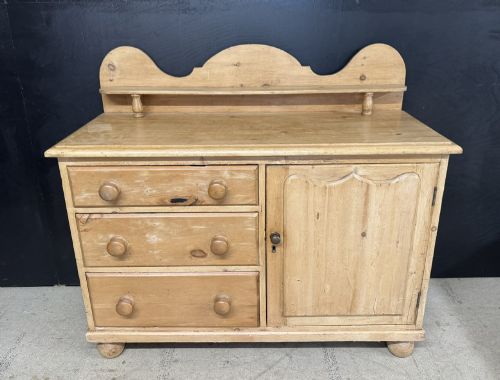
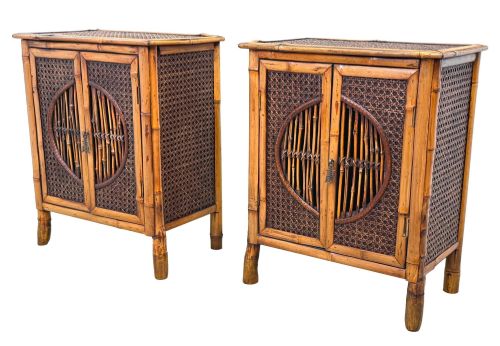
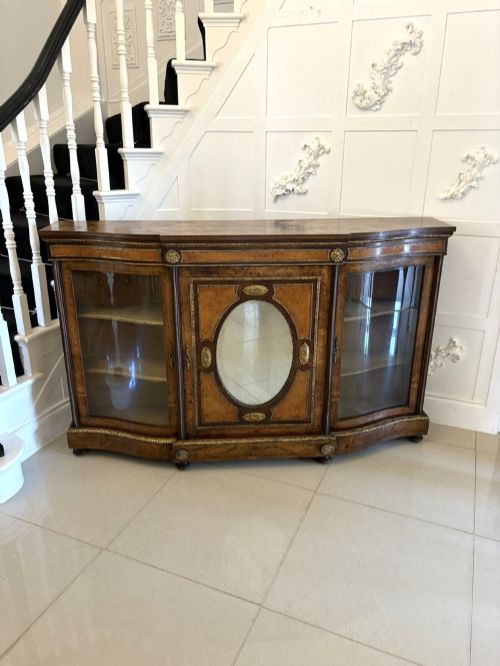
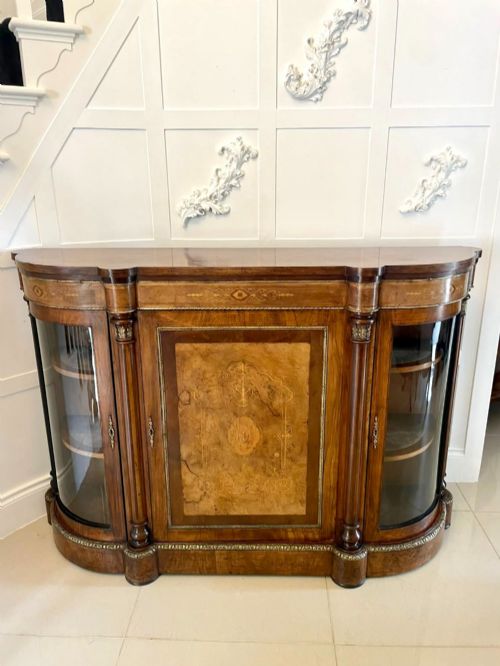
Victorian Sideboard
When you search for a victorian sideboard, you find heavy timber dining furniture built to serve food, display china, and anchor nineteenth-century rooms.
Victorian Sideboard
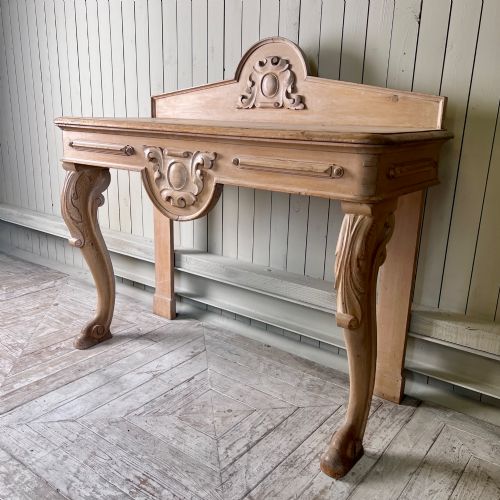
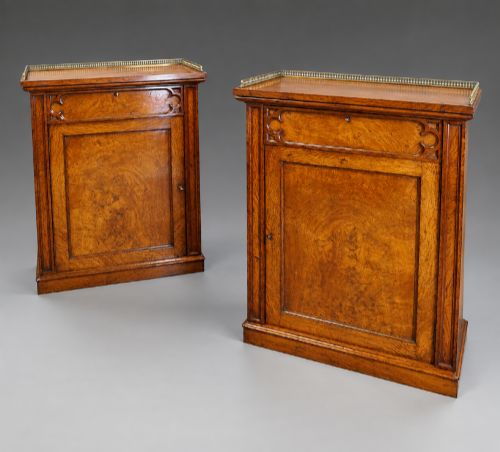
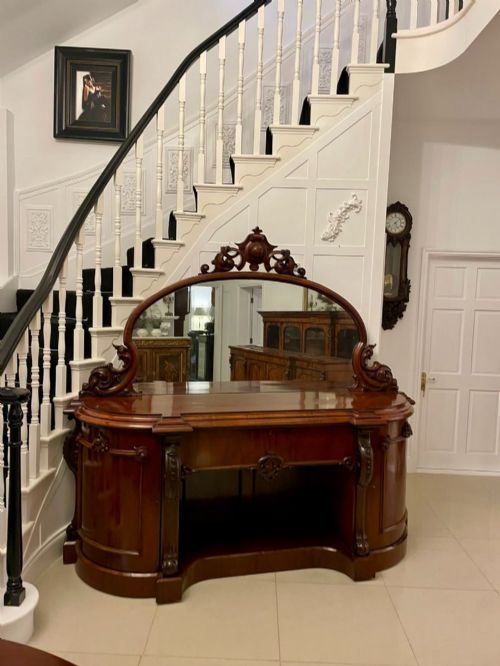
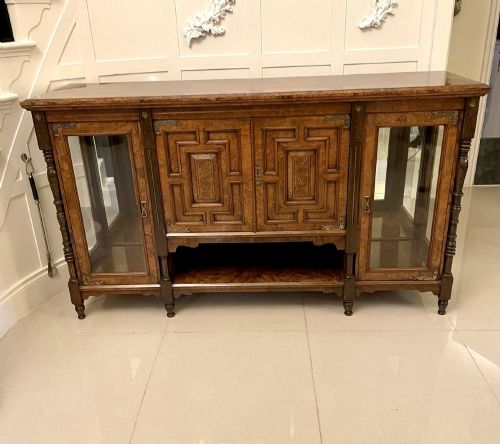
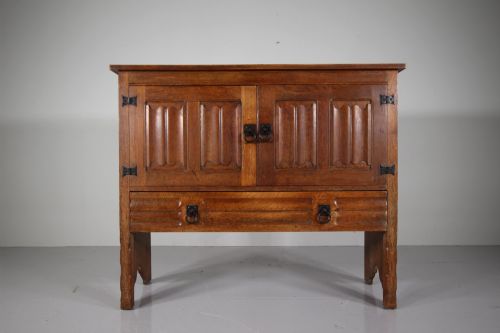
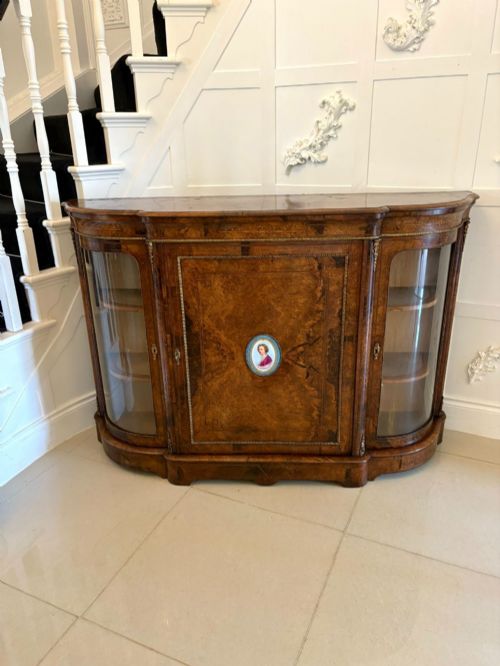
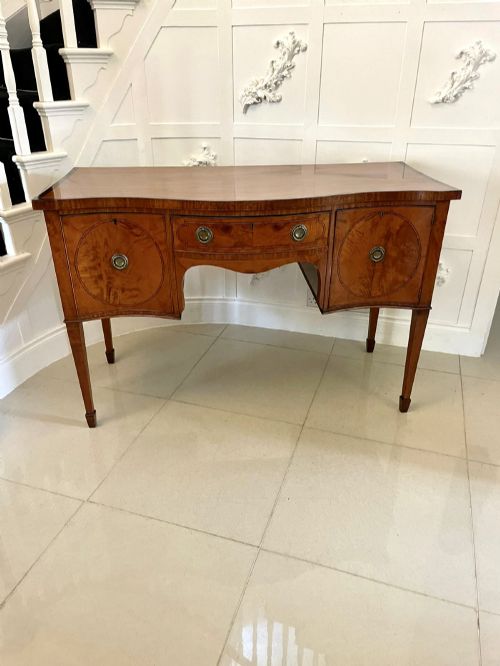
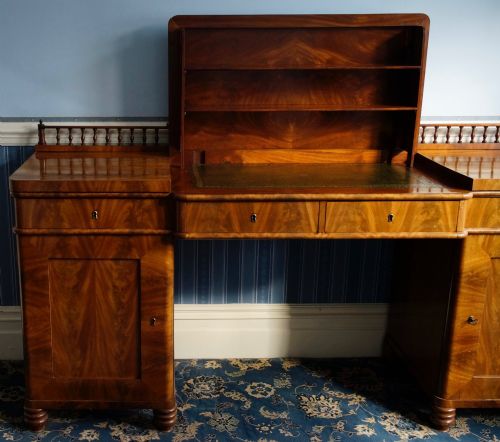
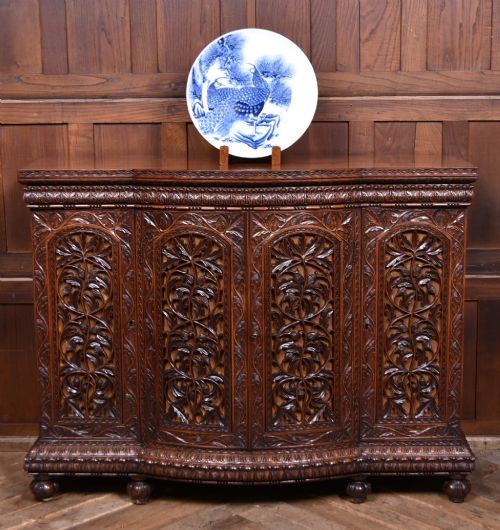
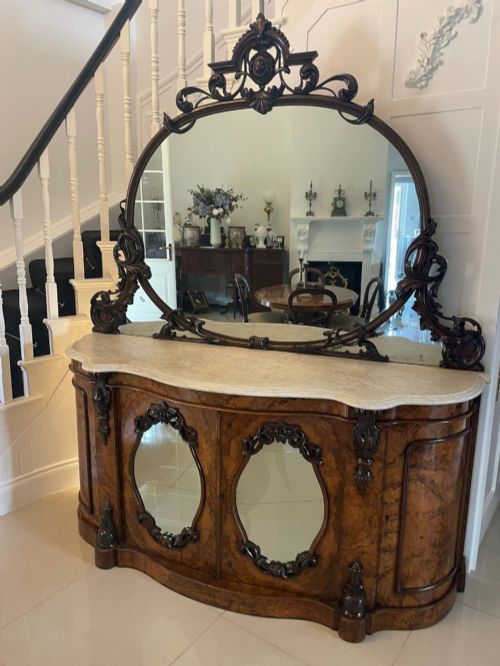
A victorian sideboard serves as the primary dining room storage piece, developed in various forms throughout the nineteenth century to hold cutlery, linens, and serving dishes. The pieces listed on this page encompass grand architectural designs in carved oak, flame mahogany pedestals, and polished walnut credenzas mounted with porcelain and brass.
Makers of the period produced diverse regional interpretations, ranging from Gothic Revival oak server bases to serpentine-shaped satinwood and rosewood display cabinets. Buyers encounter everything from large mirror-backed dining room pieces to smaller chiffoniers and side cabinets designed for domestic reception rooms.
The form evolved from simple mahogany server boards and dumbwaiters into elaborate exhibition pieces featuring marquetry inlay, marble tops, and glazed display sections. These items reflect the shifting domestic habits and tastes of nineteenth-century households across Britain and her colonies.
Materials and Construction
Cabinet makers utilised dense native and imported timbers, notably figured mahogany, pollard oak, and burr walnut, often applied as fine veneers over stable pine or oak carcasing. These woods were selected for their pronounced grain patterns and finished with hand-rubbed French polish to accentuate the natural figuring.
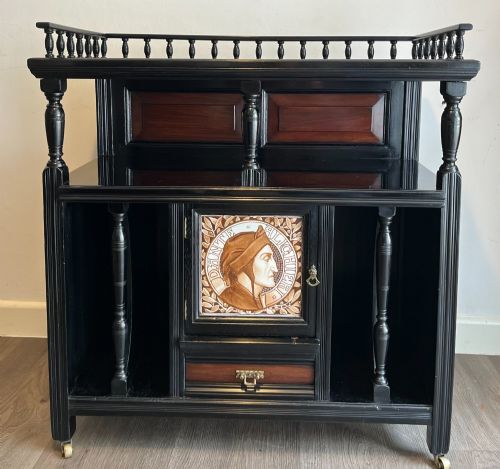
Decorative detailing relied on specialised craft techniques, including boxwood and fruitwood marquetry inlay, brass ormolu mounts, and hand-carved mirror backs. High-end examples incorporate inset porcelain plaques, glazed leaded panels, and shaped marble tops secured to heavy timber pedestals.
Judging Quality and Execution
Quality rests upon the selection of timber veneers and the precision of the joinery used in the drawers and carcass frames. Superior pieces display continuous grain matching across multiple doors and drawers, alongside deep, crisp hand-carving rather than applied composition ornaments.
The integration of secondary decorative elements, such as fire-gilt ormolu mounts, hand-painted porcelain panels, and heavy marble slabs, separates standard utility furniture from exhibition-grade commissions. Finer examples retain original hardware, mirrors, and interior shelving without modern alterations.
Hewetsons London·Shoolbred And Co·Collinson And Lock·Maple And Co·Gillows
The Victorian Sideboard Glossary
- Credenza
- A low cabinet or sideboard, frequently fitted with glass doors and ormolu mounts. These pieces gained popularity for displaying porcelain and decorative objects in nineteenth-century reception rooms.
- Chiffonier
- A compact sideboard or low cupboard featuring a raised shelf or tier on the top surface. They served smaller dining spaces and drawing rooms for holding glass and tableware.
- Marquetry
- Decorative veneer work forming pictorial or geometric patterns using various coloured woods. Craftsmen cut thin slices of timber like satinwood and kingwood to create intricate floral or scroll designs.
- Ormolu
- Gilded bronze mounts applied to the corners, friezes, and doors of cabinet furniture. This French technique added metallic contrast to dark woods such as burr walnut and ebonised timber.
- Dumbwaiter
- A multi-tiered serving table or sideboard without doors, used for holding dishes near the dining table. Nineteenth-century versions often include pivoting shelves or small lower cupboards.
Victorian Sideboard: Frequently Asked Questions
How were these sideboards originally used?
Dining rooms relied on these heavy timber pieces to store heavy silver, linen, and ceramic platters close to the table during formal meals. The upper surfaces and mirrored backs also provided a stage to display prized porcelain and glassware.
Smaller side cabinets and chiffoniers served similar storage functions in drawing rooms and reception spaces, holding everyday household items out of sight.
How do I fit a large nineteenth-century sideboard into a modern home?
Measure your ceiling height and wall space carefully, as nineteenth-century dining furniture often possesses deep pedestals and heavy mirror backs that dwarf small rooms. Pair the piece with neutral walls to let the figured timber and intricate carving stand out without crowding the space.
Utilise the deep cupboards and drawers for modern storage needs like media equipment, table linens, or everyday dinnerware.
What is the difference between a sideboard and a credenza?
Sideboards typically feature large central cupboards flanked by pedestals or drawers, designed primarily for practical dining room storage and serving. Credenzas originate from continental designs, featuring lower profiles, glazed display doors, and prominent ormolu mounts intended for formal display.
Victorian cabinet makers frequently blurred these distinctions, leading makers to apply both terms to the same form in historical catalogues.
How do I tell different nineteenth-century wood types apart?
Mahogany displays a deep reddish-brown tone with straight or ribbon grain patterns, while walnut exhibits a richer, darker brown colour featuring swirling burr figures. Oak shows prominent medullary rays and open pores, often stained darker or quarter-sawn for decorative effect.
Exotic timbers like rosewood and satinwood provide stark colour contrasts, ranging from dark purple-brown streaks to bright golden-yellow sheens.