

Victorian Magazine Stand
A Victorian magazine stand brings orderly charm to a room, offering practical storage for periodicals within a distinguished nineteenth-century framework.
Victorian Magazine Stand
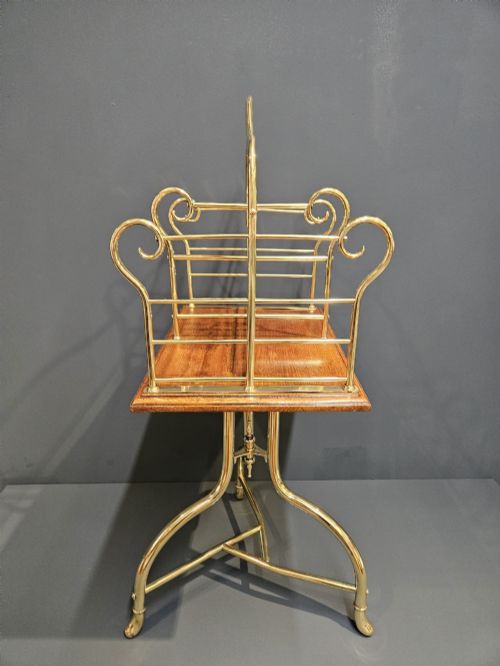
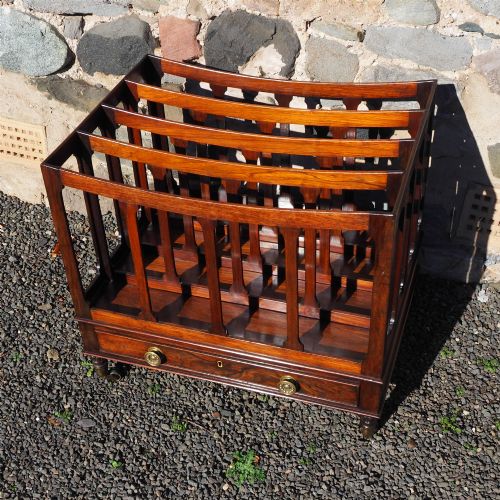
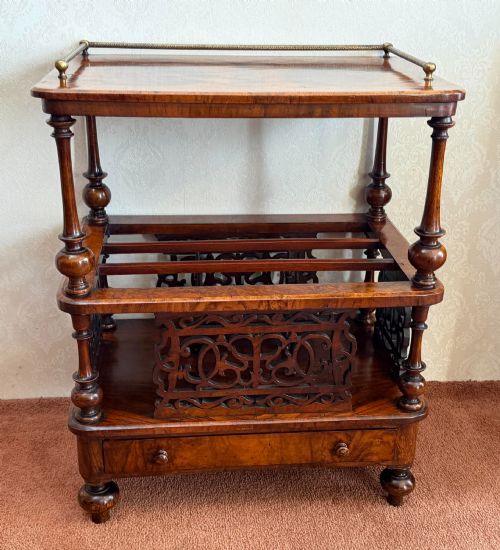
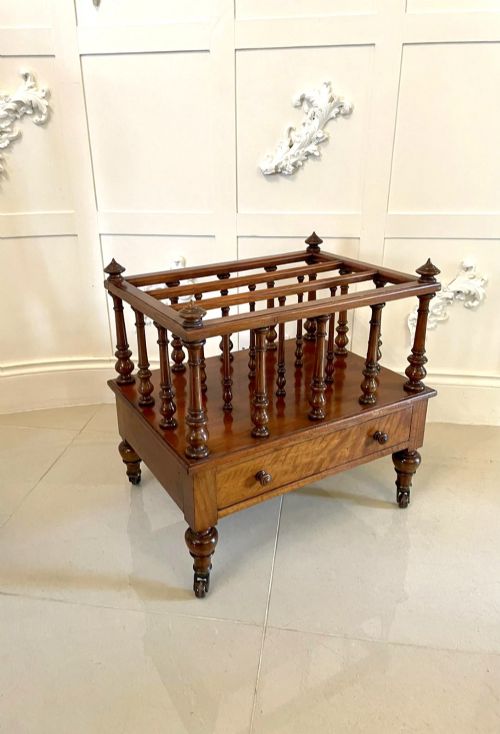
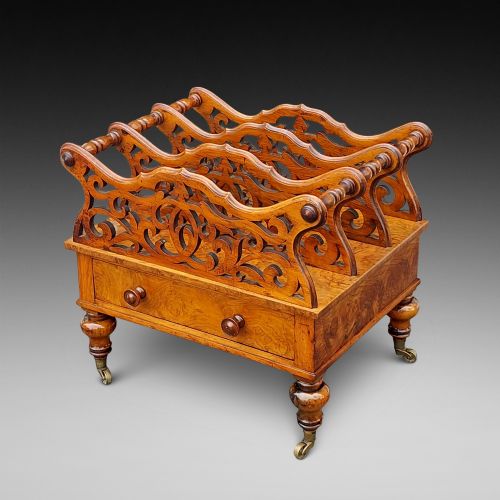
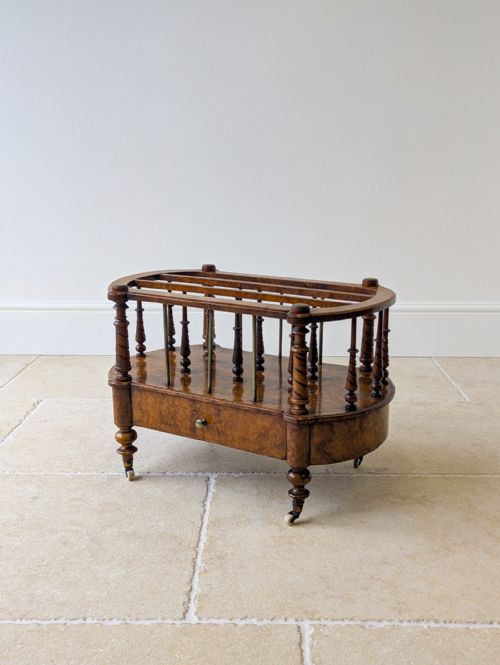
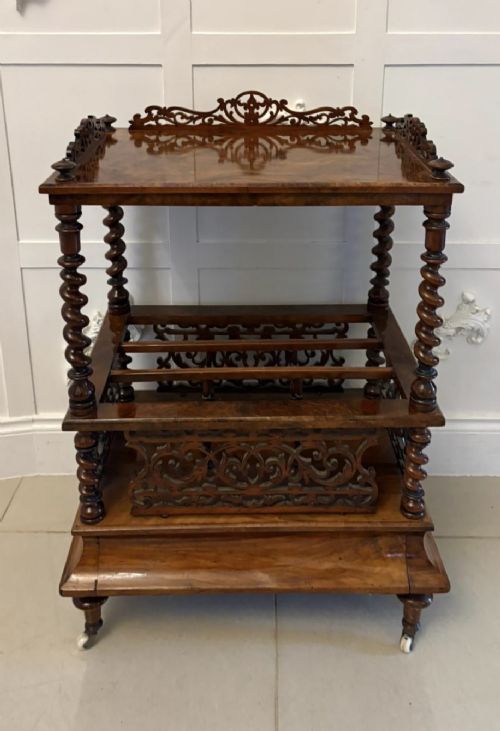
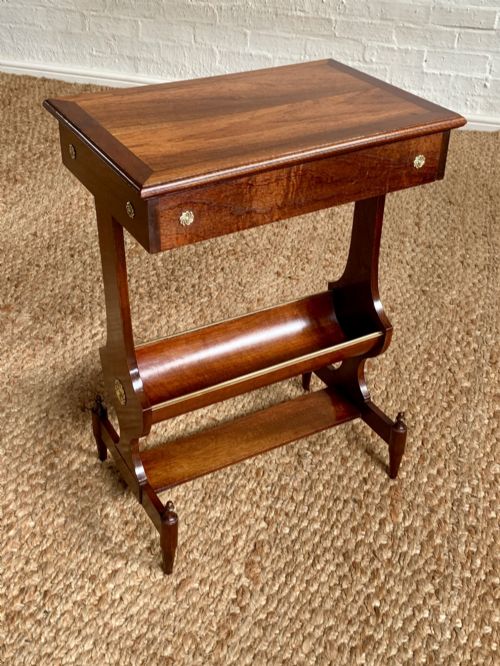
A Victorian magazine stand serves as a dedicated receptacle for journals, newspapers, and sheet music, evolving from earlier canterbury designs into specialised folding and revolving formats. These pieces range from compact bedside side tables with integrated racks to substantial multi-tiered floor units.
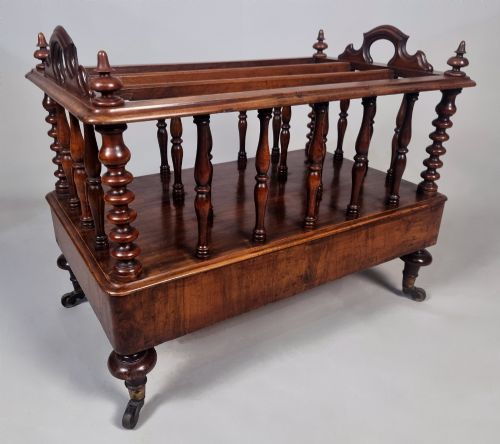
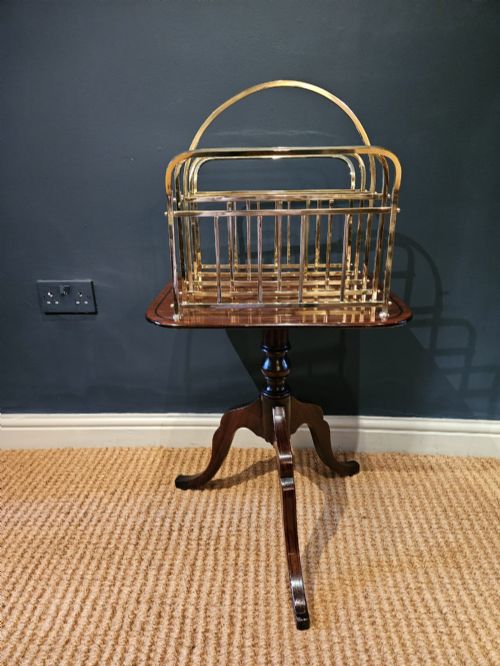
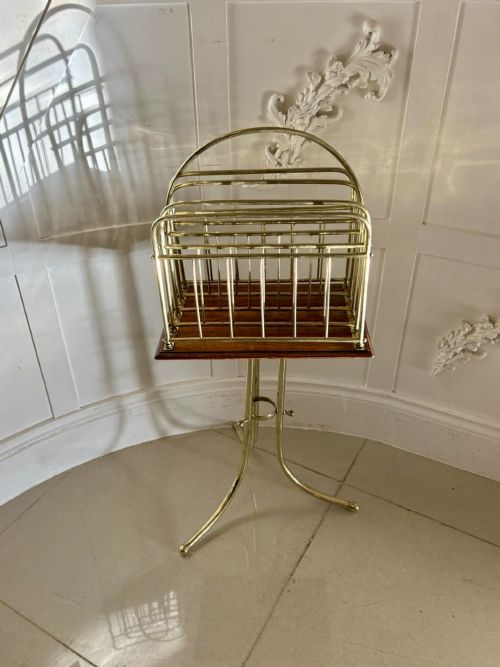
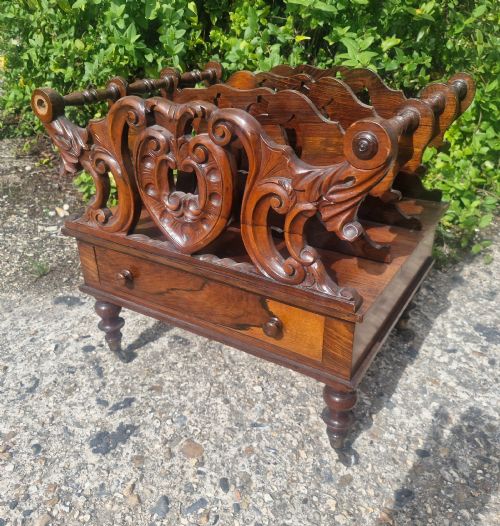
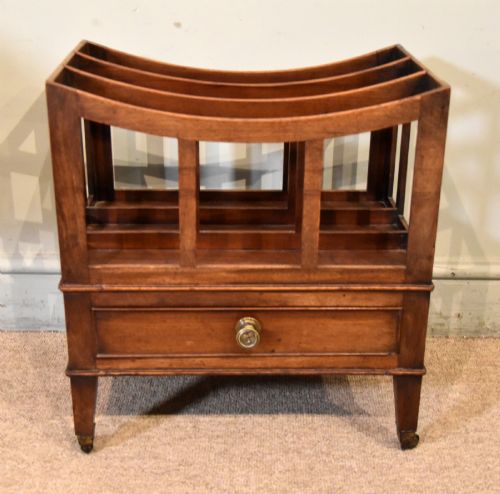
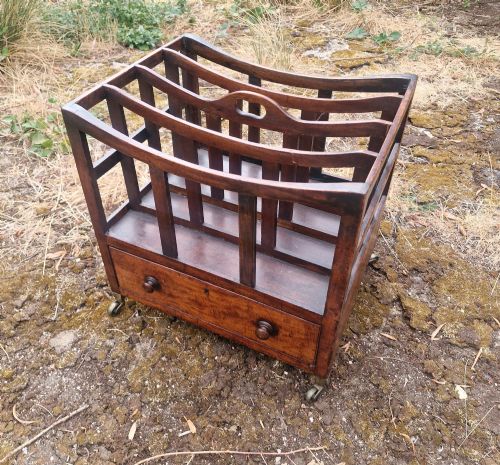
The most frequent form encountered on this page is the traditional mahogany or walnut canterbury, often featuring divisions for sorting papers and a low drawer beneath. Buyers also frequently encounter revolving stands utilising brass and mahogany, alongside folding Burmese teak models.
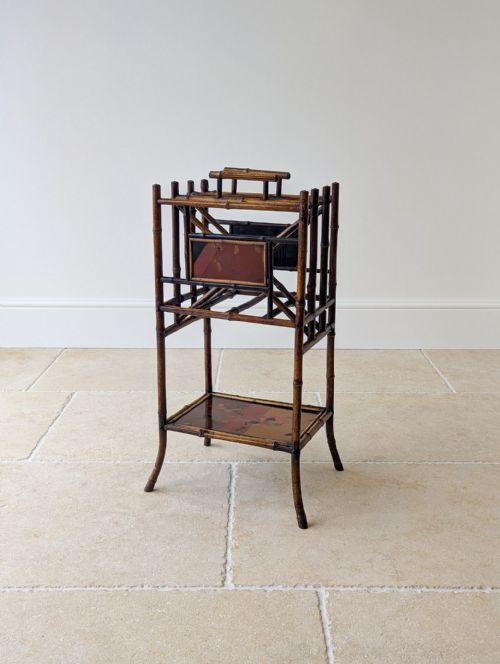
Origins span classic English cabinetmaking as well as Anglo-Indian workshops utilising exotic hardwoods. Occasional examples incorporate bamboo and Chinoiserie decoration, reflecting late nineteenth-century aesthetic preferences for diverse global styles.
How they were made
Construction relies heavily on dense timbers such as mahogany, walnut, burr walnut, rosewood, oak, and teak, selected for both structural integrity and decorative grain patterns. Craftsmen frequently applied inlaid details and turned pillars to enhance the visual weight of the wood.
Metalwork plays a significant structural and decorative role, with tubular brass uprights, carrying handles, and metal wire framing supporting the wooden partitions. These brass elements are often combined with ceramic components or joined using period-specific hardware.
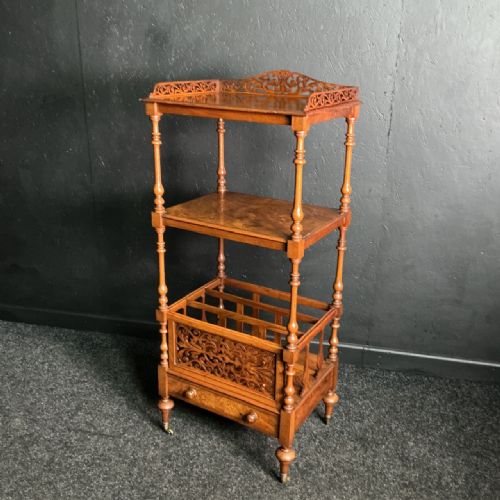
Folding mechanisms and revolving table bases demonstrate sophisticated nineteenth-century mechanical ingenuity. Joints are typically pegged or dowelled, and two-tier whatnots combine enclosed drawer storage with open vertical compartments.
Victorian Magazine Stand Retail Price Guide 2026
Typical asking prices for victorian magazine stand among the pieces listed under this phrase on Sellingantiques today, from the lower quarter to the upper quarter. They describe what is for sale here now, not the wider market.
Listings demonstrate a strong preference for walnut and mahogany, alongside occasional uses of bamboo, rosewood, and teak.
What varies in quality
The grade of timber veneer sets the baseline for visual appeal, with figured burr walnut and richly grained rosewood commanding greater presence than plain oak or mahogany. Book-matched veneers and intricate marquetry inlay distinguish finer cabinetwork from simpler utility pieces.
Engineering sophistication separates standard racks from superior examples, particularly in the smooth action of a revolving brass spindle or the precise alignment of a folding teak mechanism. Cast brass details, sturdy turned columns, and well-fitted undertier drawers indicate careful workshop execution.
William Tonks and Sons
The Victorian Magazine Stand Glossary
- Canterbury
- A low multi-tiered stand designed for holding sheet music, books, and periodicals, usually featuring slatted vertical partitions. It frequently incorporates a small drawer at the base.
- Whatnot
- An open set of shelves used for displaying or storing small household items, sometimes combined with magazine and newspaper racks.
- Burr walnut
- A highly decorative wood veneer taken from the wart-like growths on walnut trees, prized for its swirling, intricate grain patterns.
- Regency revival
- A nineteenth-century design style looking back to the early decades of the eighteen hundreds, favouring classical lines and dark hardwoods.
- Tubular brass
- Hollow metal cylinders utilised for upright supports, handles, and framework in Victorian furniture construction.
Victorian Magazine Stand: Frequently Asked Questions
What is a canterbury?
A canterbury is a low compartmentalized stand originally built to hold sheet music and folios, which later adapted to house Victorian periodicals.
These pieces typically feature slatted wooden divisions and often include a small base drawer for smaller items.
How do revolving stands work?
Revolving magazine stands utilise a central metal spindle and bearing system concealed beneath the tier, allowing the upper rack to turn freely.
This mechanism provided easy access to newspapers and journals from a seated position in a Victorian parlour or club lounge.
Where were these stands used?
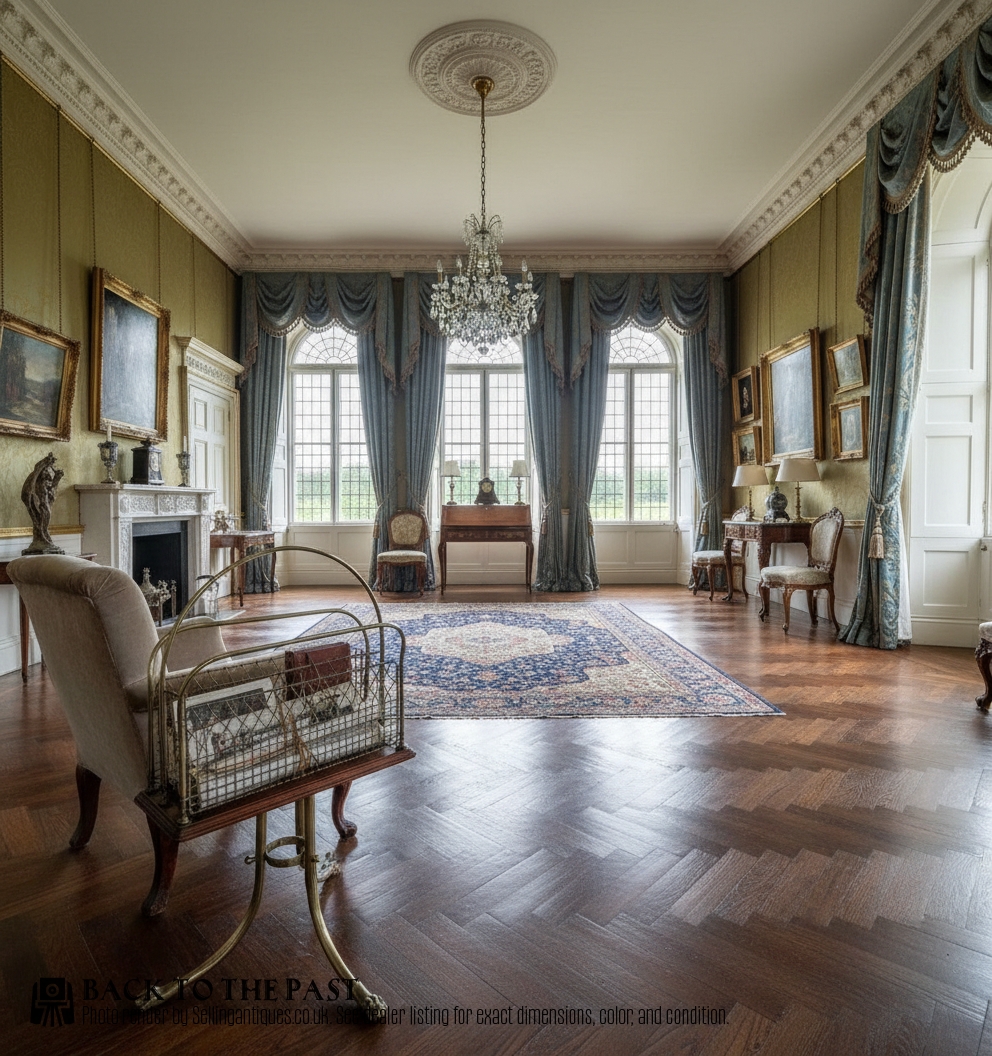
Victorian households placed these stands beside reading chairs in drawing rooms, studies, and club smoking rooms where periodicals accumulated.
Their compact footprints allowed them to sit neatly alongside sofas or between armchairs without obstructing walkways.
How do I care for wood and brass?
Maintain the timber surfaces with traditional beeswax applied sparingly to nourish the grain and preserve the historic polish.
Brass components can be cleaned gently with a soft cloth to remove dust while retaining the natural patination acquired over time.
How are different periods told apart?
Earlier nineteenth-century pieces tend to feature solid mahogany or rosewood with heavy turned supports and traditional joinery.
Later Victorian and Edwardian examples frequently incorporate lighter bamboo, tubular brass framing, or exotic teak woods reflecting changing aesthetic tastes.