

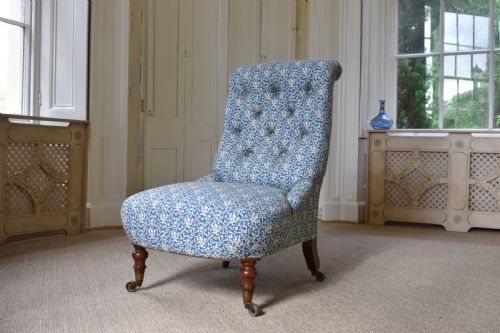
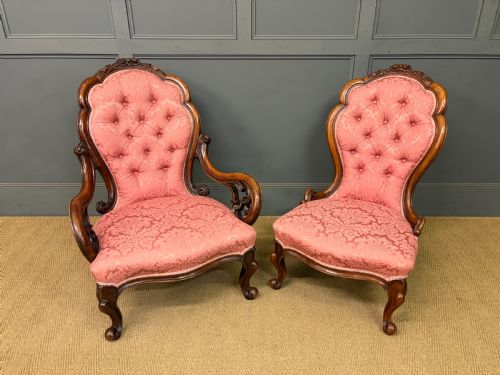
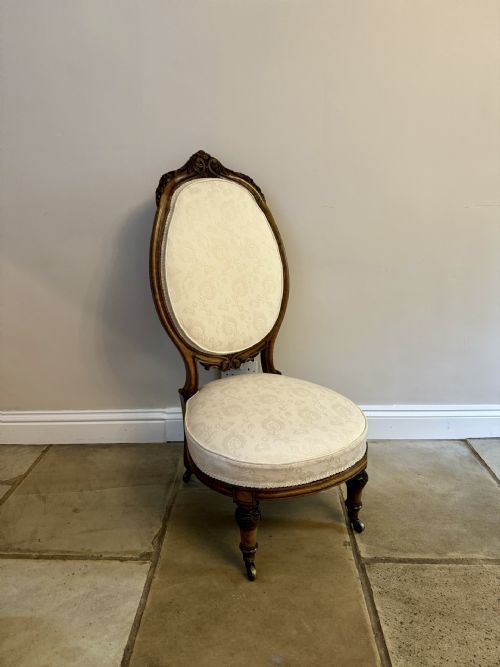
Victorian Low Nursing Chair
These nineteenth-century seats are designed for comfort and low-slung elegance, offering a practical addition to any bedroom or drawing room.
Victorian Low Nursing Chair
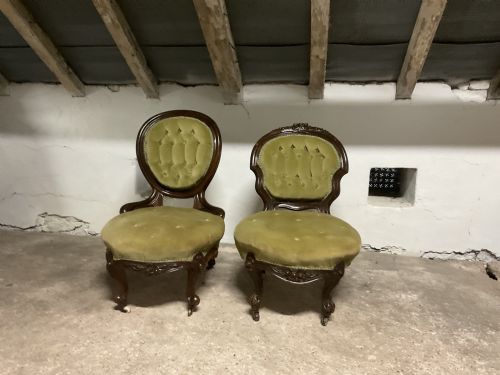
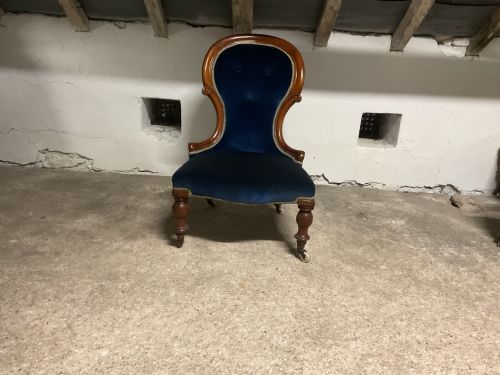
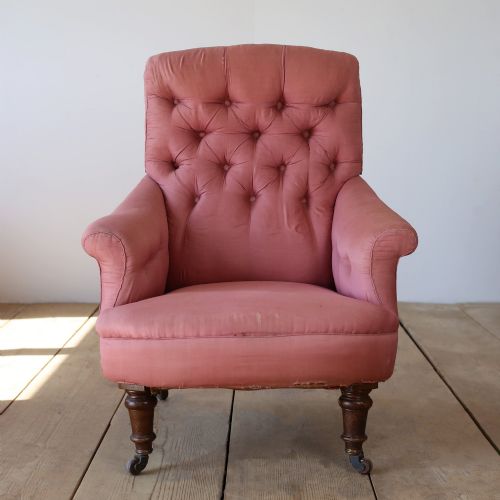
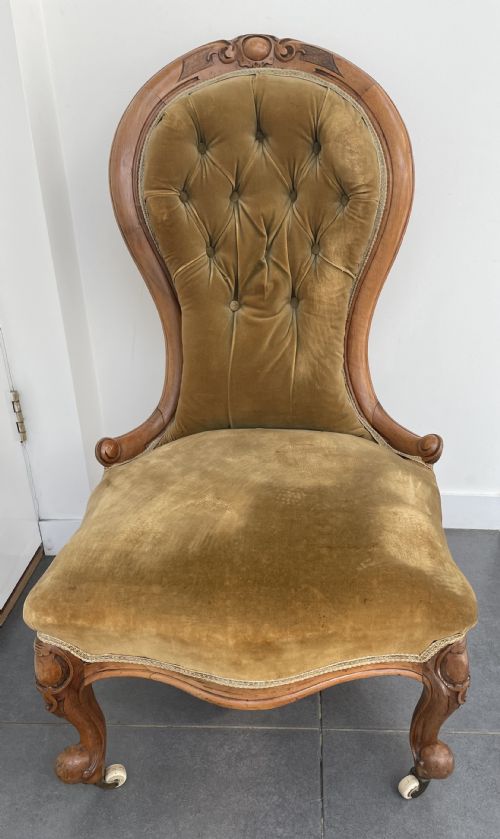
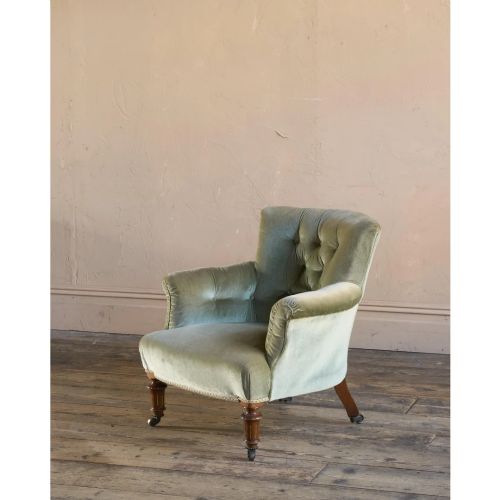
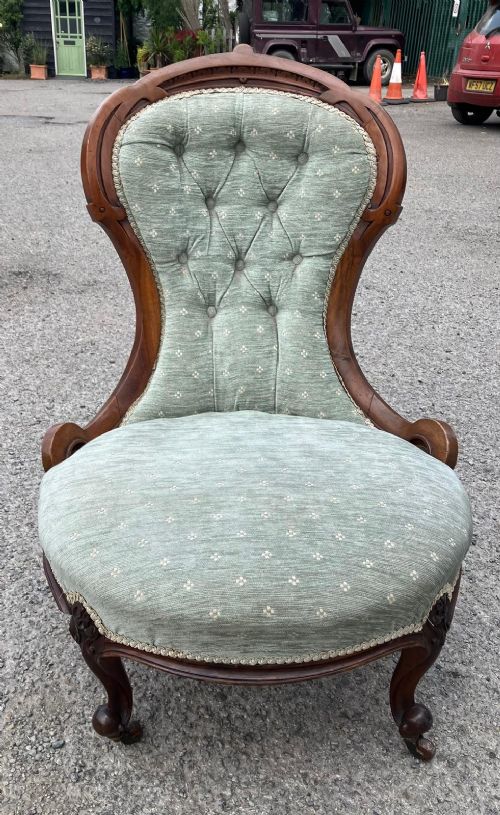
A victorian low nursing chair is typically encountered as a compact, low-to-the-ground seat designed originally for nurseries or bedrooms. These pieces appear frequently in walnut, mahogany, and ebonised wood, often carrying labels such as slipper chairs, bedroom chairs, or salon chairs.
The form spans the nineteenth century, including specific decades from the eighteen-fifties through to the Edwardian era. Makers constructed these seats with low seats and high or button-backed frames to allow comfortable sitting while dressing or attending to children.
Materials and construction
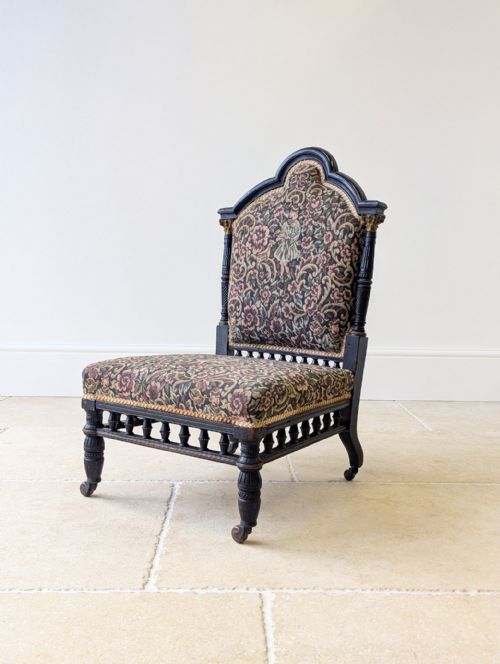
Frames rely on sturdy timbers including walnut, mahogany, rosewood, and ebonised wood, sometimes shaped with carved details or bobbin turnings. Metal components such as brass castors appear on legs, while iron frames support specific velvet-upholstered variants.
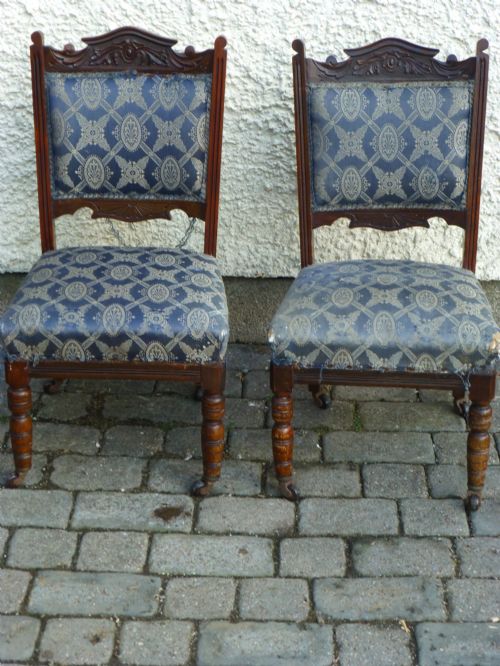
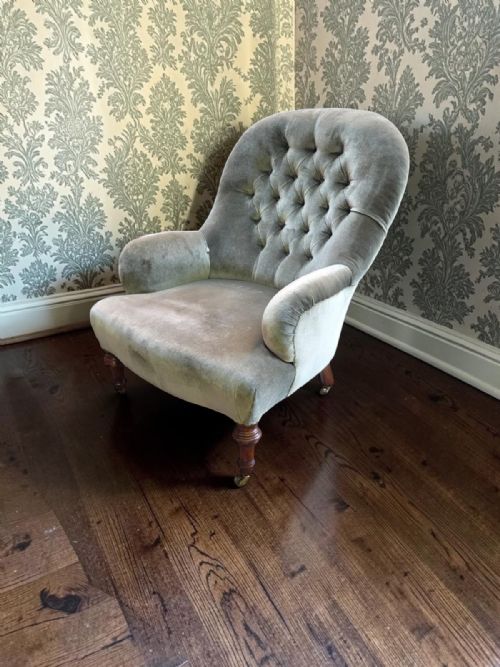
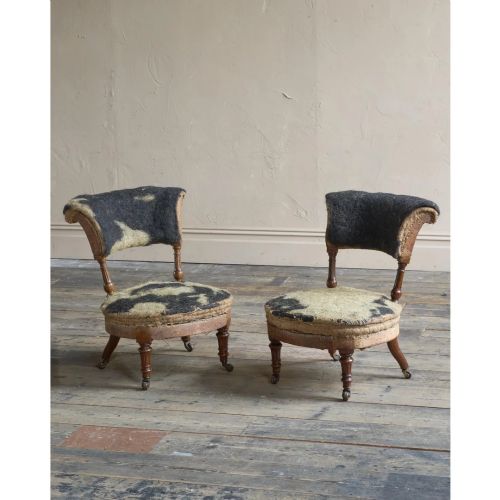
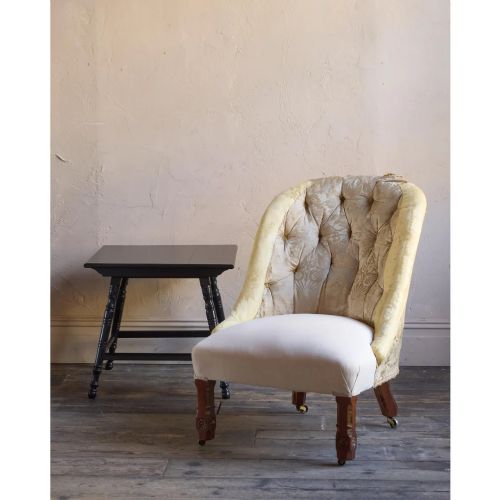
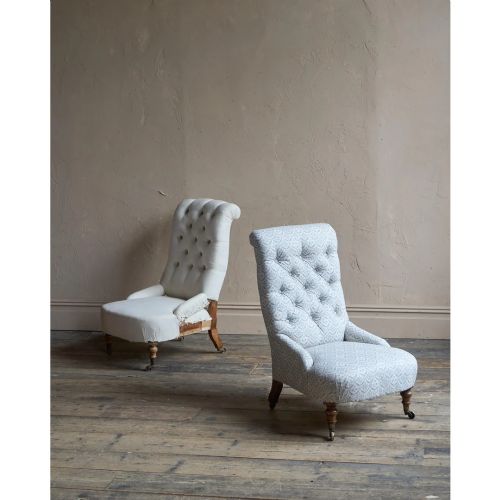
Upholstery techniques involve deep buttoning, scroll backs, and sprung seats covered in velvet, leather, or printed fabrics. Many examples survive requiring re-upholstery, exposing the internal webbing and stuffing used by nineteenth-century upholsterers.
Some nineteenth-century sitters required such low seats simply to navigate the voluminous petticoats of the period without tangling their skirts.
Markers of distinction
Quality rests in the timber selection and the crispness of the frame carving, from simple bobbin turnings to elaborate giltwood or carved walnut motifs. Maker attribution, such as stamps from Gillows or Howard and Sons, elevates certain pieces above standard workshop production.
Proportion and structural integrity dictate the standing of each seat. Pieces with well-balanced button backs, robust hardwood frames, and original castors demonstrate superior craftsmanship compared to lesser or altered examples.
Gillows·Howard and Sons·Gillows Of Lancaster
The Victorian Low Nursing Chair Glossary
- Button back
- A style of upholstery where depressions are formed in the padding by pulling buttons deep into the stuffing. This technique secures the filling evenly across the curved back of the chair.
- Slipper chair
- An upholstered seat with no arms and short legs designed for low-to-the-ground seating. They frequently share categories with nursing chairs in nineteenth-century inventories.
- Bobbin framing
- A style of woodwork turned on a lathe to resemble a string of beads or bobbins. It appears on the legs and structural supports of various late nineteenth-century chairs.
- Ebonised wood
- Timber stained or painted black to imitate ebony. This finish was popular during the Aesthetic Movement and Napoleon III periods.
- Bergere
- A closed-upholstered armchair with a wooden frame where the sides are often filled with cane work. These pieces offer lighter proportions than standard heavy armchairs.
Victorian Low Nursing Chair: Frequently Asked Questions
What is a victorian low nursing chair?
A victorian low nursing chair is a compact, low-seated chair built during the nineteenth century for use in bedrooms and nurseries. Their low profile allowed individuals to sit comfortably while attending to infants or dressing.
These pieces feature heavily padded backs, often with buttoning, and rest on short wooden legs frequently fitted with castors for easy movement across carpeted chambers.
How do you date these chairs?
Dating relies on observing stylistic shifts, such as the heavy rosewood and mahogany frames of the mid-nineteenth century transitioning to ebonised Aesthetic Movement designs or later Edwardian variations. Frame shapes, turned woodwork styles, and upholstery techniques provide further chronological clues.
Makers' stamps or marks stamped directly into the wood can also pinpoint specific workshops and decades of production.
Where were these chairs used?
These seats belonged primarily in private family spaces such as bedrooms, dressing rooms, and nurseries rather than formal reception rooms. Their compact dimensions made them suitable for smaller private quarters.
Today, buyers place them in bedrooms, reading corners, or dressing areas where a low seating position is practical and visually appealing.
What fabrics are appropriate for them?
Original coverings often included velvet, leather, and woven textiles, frequently finished with decorative fringe or gimp trim. Deep buttoning was a standard decorative and structural choice for the padded backs.
When restoring these chairs, many owners choose traditional fabrics or period-appropriate patterns to maintain the historic character of the wooden frame.