
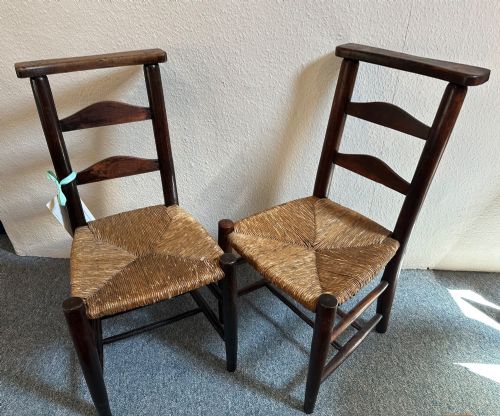


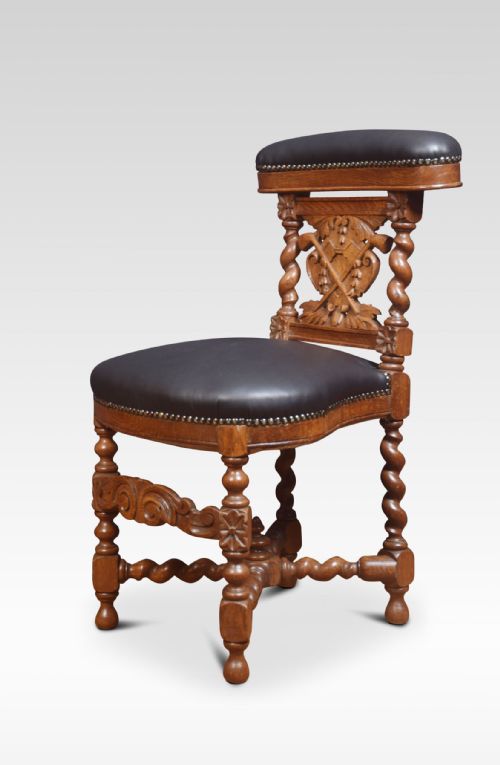


Gothic Revival Prayer Chair
These gothic revival prayer chair examples combine devotional function with architectural timberwork, offering collectors distinctive seating rooted in nineteenth-century ecclesiastical design.
Gothic Revival Prayer Chair
The form encompasses various related seating types recorded in the inventory, including accent chairs, side chairs, occasional chairs, dining chairs, and dedicated church chairs or kneelers. Origins span the Regency period through to Edwardian times, with specific pieces linked to ecclesiastical settings such as St Paul's Cathedral.
The stylistic vocabulary draws heavily upon architectural motifs, exhibiting characteristics associated with Victorian Gothic Revival, Victorian Ecclesiastical, and Jacobean Revival aesthetics. Makers such as R Whytock of Edinburgh and Angerstein contribute notable provenance to specific items within the selection.
Assessing Quality and Execution
Quality rests upon the depth and crispness of the carved timber details, the choice of dense cabinet woods like rosewood or mahogany over lesser timbers, and the integrity of the original framing. Superior examples display refined proportions, sophisticated turning such as barley twists, and documented ecclesiastical provenance.
The treatment of the upholstery and the survival of maker's marks or engraved plaques elevate specific pieces above standard production. The integration of architectural gothic elements, such as fretted tops and robust joinery, distinguishes masterwork examples from simpler utilitarian church seating.
Upholstery materials recorded across the inventory include green velvet, tapestry fabric, and standard fabric.
R Whytock of Edinburgh·Angerstein
The Gothic Revival Prayer Chair Glossary
- Prie-dieu
- A French term meaning pray-God, describing a devotional chair featuring a low seat and an upper shelf or rail for kneeling and praying. These pieces became popular during the nineteenth century for domestic prayer.
- Gothic Revival
- An architectural and decorative movement reviving medieval forms, featuring pointed arches, tracery, and heavy timber construction. This style heavily influenced mid-nineteenth-century domestic and ecclesiastical furniture.
- Barley Twist
- A type of furniture turning resembling a twisted rope, common in seventeenth-century joinery and revived during the Victorian era. It frequently appears on the upright supports of prayer chairs.
- Ecclesiastical
- Pertaining to the Christian church and its clergy, describing furniture designed for use in cathedrals, churches, or private chapels. Such pieces often incorporate formal architectural detailing.
- Fretted Top
- An openwork decorative pattern pierced through the timber at the top of a chair back. This technique lightened heavy gothic designs and added delicate visual detail.
Gothic Revival Prayer Chair: Frequently Asked Questions
What is a prayer chair used for?
A prayer chair is designed for private devotion, featuring a low seat and a padded upper rest for kneeling and leaning during prayer. Nineteenth-century households placed them in bedrooms or private chapels for daily religious observance.
Over time, these chairs transitioned into decorative accent pieces while retaining their distinctive architectural profile and association with Victorian ecclesiastical interiors.
How do I identify a Victorian prayer chair?
Victorian examples typically exhibit dense hardwoods like mahogany, rosewood, or oak, combined with Gothic Revival architectural motifs such as pointed arches and carved tracery. They often feature an upper ledge designed to support a devotional book.
Look for period upholstery textiles like velvet or tapestry fabric, alongside construction methods characteristic of mid-nineteenth-century cabinet making.
Were these chairs made for churches?
Many examples originated in ecclesiastical settings, ranging from large cathedral commissions, such as those marked for St Paul's, to standard church pews and seating. Other versions were manufactured specifically for domestic use in Victorian homes.
Distinguishing between domestic and church pieces usually depends on the scale, finish quality, and the presence of institutional stamps or engraved metal plaques.
How do I care for antique velvet upholstery?
Antique velvet requires gentle handling, regular dusting with a soft brush, and protection from direct sunlight to prevent fibre degradation and fading. Professional textile conservation is recommended for fragile historical fabrics.
Maintaining stable indoor humidity levels prevents the underlying timber frame and the historic textile from drying out or splitting.