


Victorian Leaded Window
When you handle a victorian leaded window, you hold architectural glass that brings colour and historical weight into a modern room.
Victorian Leaded Window
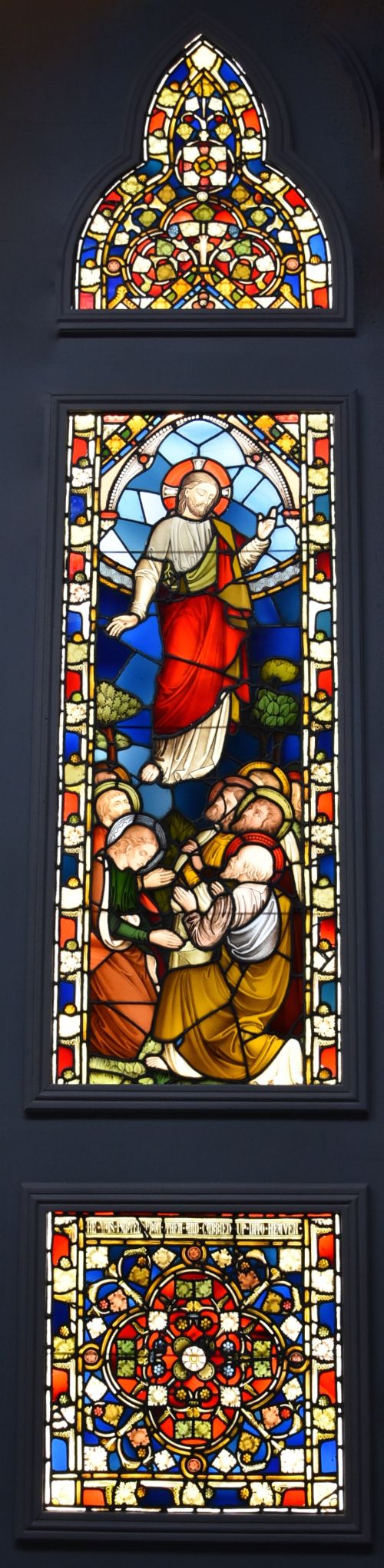
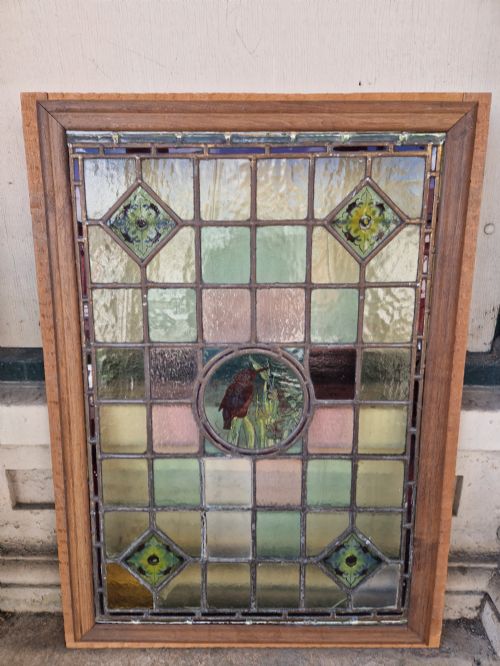
A victorian leaded window forms part of a broad category of architectural salvage, spanning architectural glass and stained glass panels designed for domestic or religious buildings. The pieces encountered here range from nineteenth century church windows to domestic panels featuring floral motifs, birds, and narrative scenes.
Makers produced these panels across multiple decades, with examples recorded from the eighteen fifties through to nineteen hundred and the subsequent Edwardian period. Architectural salvage from this era often retains its original timber framing in pine or heavier wood.
Domestic and ecclesiastical pieces appear in various configurations, including arch tops, triptychs, and pairs. The design repertoire encompasses Gothic Revival church glazing alongside domestic scenes, heraldry, and classical motifs.
Materials and Construction
Craftsmen built these windows by joining individual pieces of glass with lead cames, creating structural lattices that held complex pictorial designs. Painters added detail using enamel pigments fired onto the glass surface to render figures, landscapes, and floral patterns.
Wood frames, including pine wood and heavier timber surrounds, frequently housed the leaded panels for installation in buildings. Bullseyes and cut glass elements were often incorporated into the leaded matrix alongside painted sections to introduce texture and varied light transmission.
Several windows preserve surprisingly specific Victorian narratives, including dedicated depictions of lifeboats, Shakespearean emblems, and knights in full armour.
Assessing Quality
Quality in these panels depends on the crispness of the hand-painted detail and the ambition of the pictorial subject, such as figurative knight scenes or complex landscapes. The integrity of the lead cames and the depth of colour in the stained glass also distinguish standard domestic glazing from exceptional ecclesiastical works.
The survival of original timber frames and the complexity of the glass composition, including integrated bullseyes and enamel work, separate standard production from superior examples.
Sir Edward Burne Jones
The Victorian Leaded Window Glossary
- Lead came
- The soft lead channel used to hold individual pieces of glass together in a window. These strips form the structural grid of the panel.
- Bullseye
- A round centre piece of glass with a prominent knob, formed during traditional glassblowing. These appear in domestic panels to add texture and catch light.
- Triptych
- A picture or relief carved on three panels, applied here to large-scale stained glass configurations. Such pieces were typically made for architectural settings.
- Enamel
- Glass powder mixed with a medium and fired onto the glass surface to create permanent painted details. This technique allowed makers to render faces, feathers, and foliage.
- Architectural salvage
- Building elements rescued from structures slated for demolition or alteration. This category preserves historic windows and panels for reuse.
Victorian Leaded Window: Frequently Asked Questions
How do I hang a heavy leaded window?
Support the entire timber frame rather than hanging the leaded panel by its corners or lead cames alone. Weight distribution requires a solid mounting system attached to the structural wall.
For interior display, secure the window within a wooden rebate or use custom metal brackets that bear the weight from the bottom sill.
Can these windows go outside?
Most antique windows were built for internal room dividers or secondary interior glazing rather than exterior weather exposure. Placing them outdoors exposes the historic lead and painted enamel to degradation from wind and rain.
If installed on an exterior wall, sandwich the panel between panes of toughened modern glass to protect the fragile antique surfaces.
How do I clean antique glass?
Use a soft dry cloth or a slightly damp sponge with plain water to remove dust from the glass and lead. Avoid commercial chemical cleaners that can damage fragile enamel paint or weaken aged lead cames.
Test any cleaning method on a tiny corner first, as nineteenth-century painted surfaces can be sensitive to moisture and friction.
Are church windows different from house windows?
Church windows often feature Gothic Revival styling, religious narratives, or larger triptych formats intended for high-set ecclesiastical spaces. Domestic panels tend to incorporate smaller scales, floral motifs, or literary emblems suited for home interiors.
Both types utilise identical lead-joining techniques, but ecclesiastical glass frequently exhibits more ambitious painted figural work.