



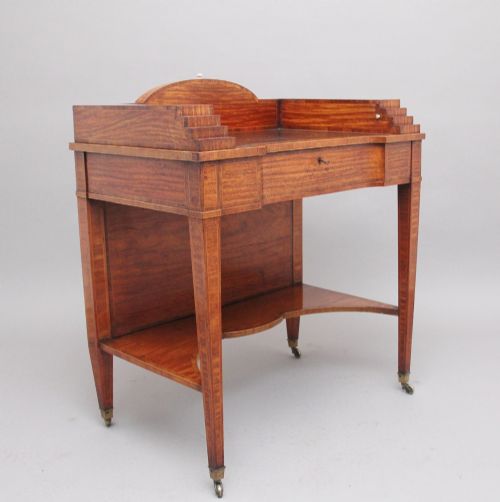
Victorian Ladies Bureau
These Victorian ladies bureau options bring refined craftsmanship and compact writing spaces into a modern home.
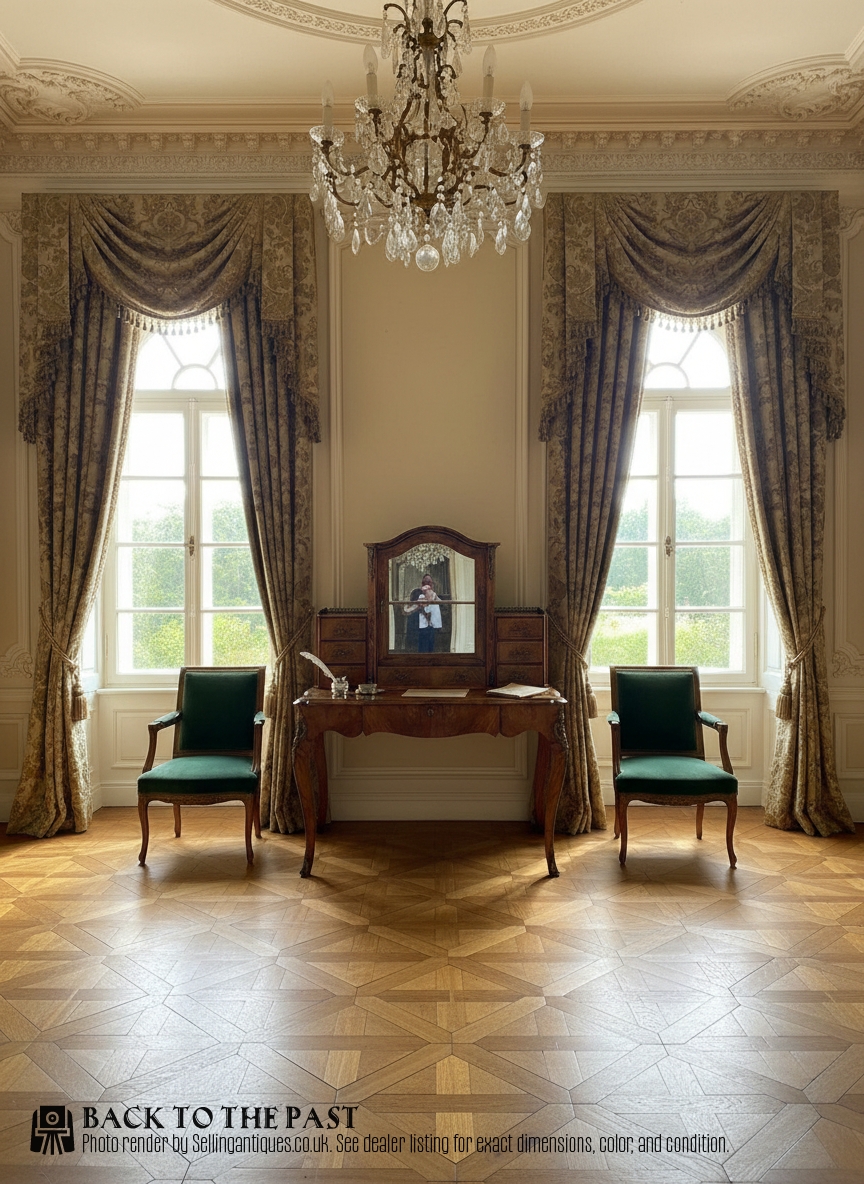
Victorian Ladies Bureau
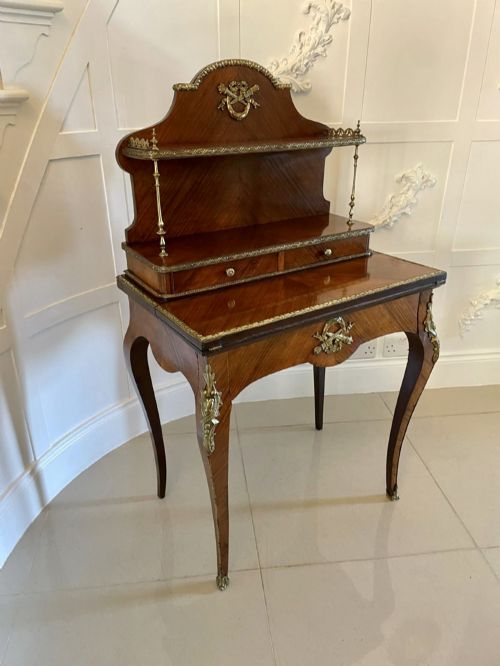
A Victorian ladies bureau encompasses delicate writing desks, bonheur du jour cabinets and davenports created during the nineteenth century. These pieces served personal correspondence and paper storage in private sitting rooms.
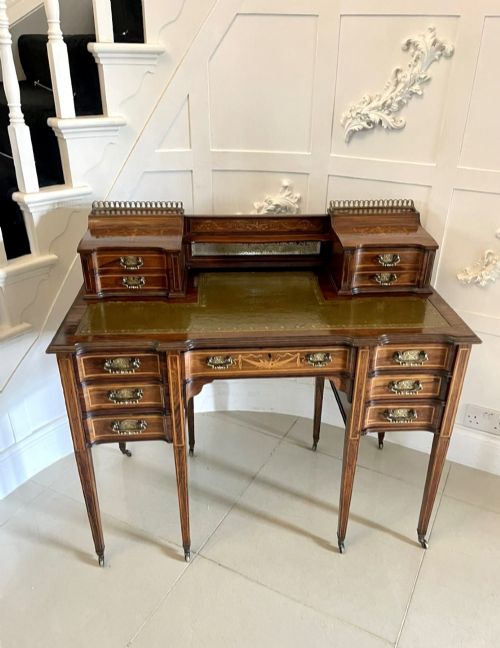
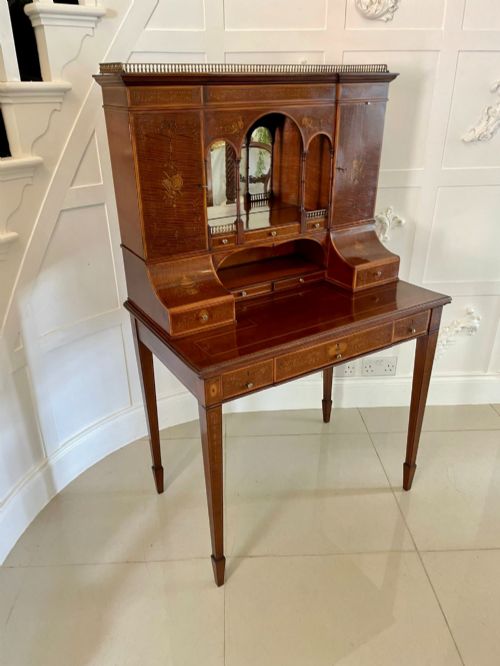
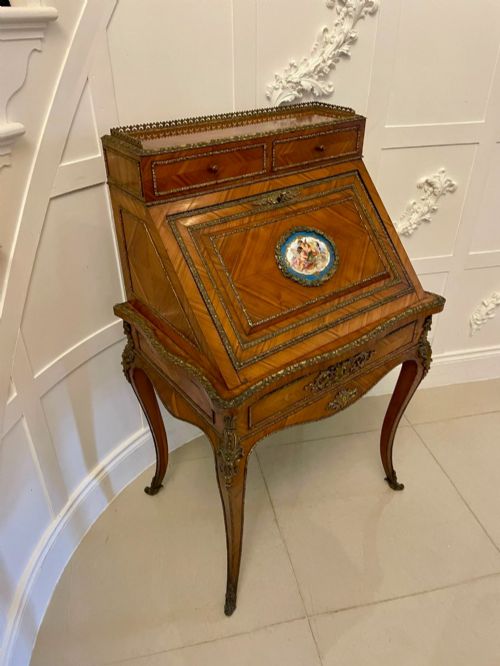
The selections available here rely heavily on walnut, rosewood, mahogany and satinwood forms produced across the Victorian and Edwardian eras. Many examples draw directly upon French revival styles like the Louis XV aesthetic or Sheraton revival motifs.
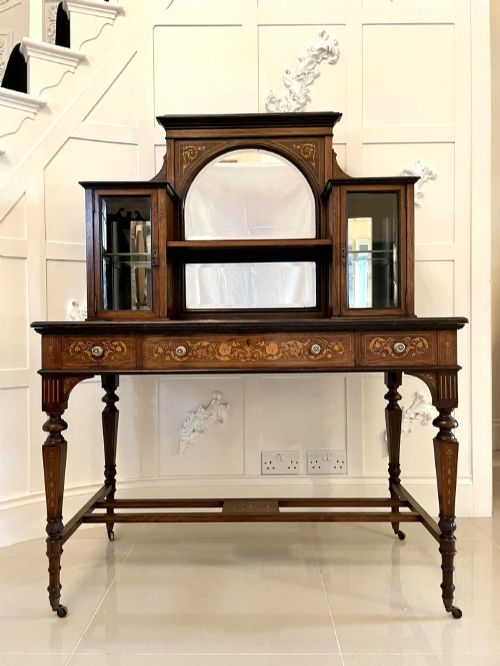
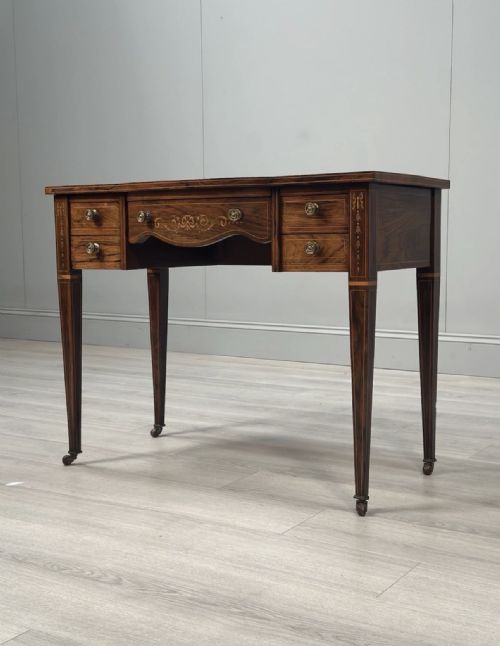
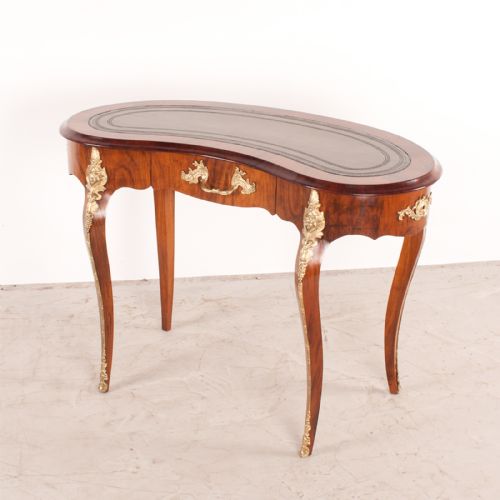
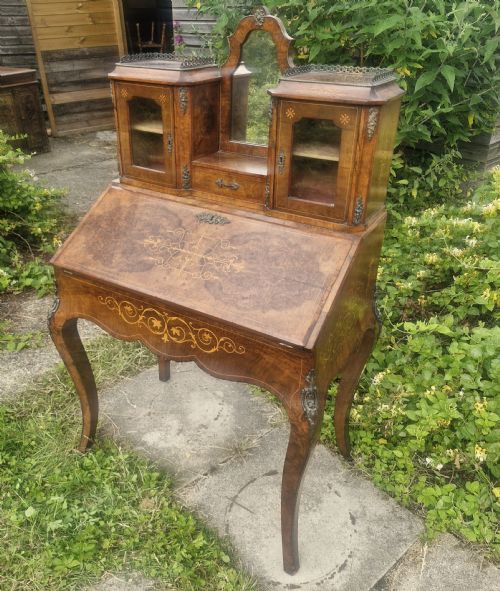
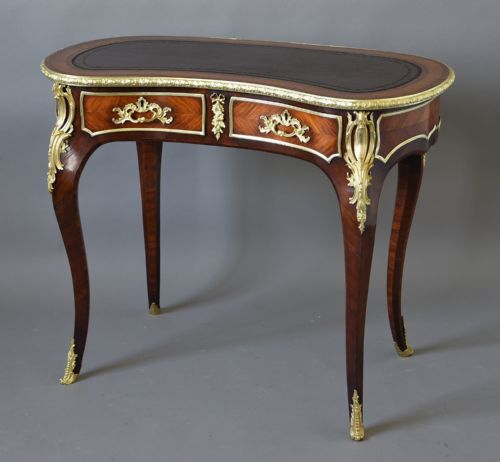
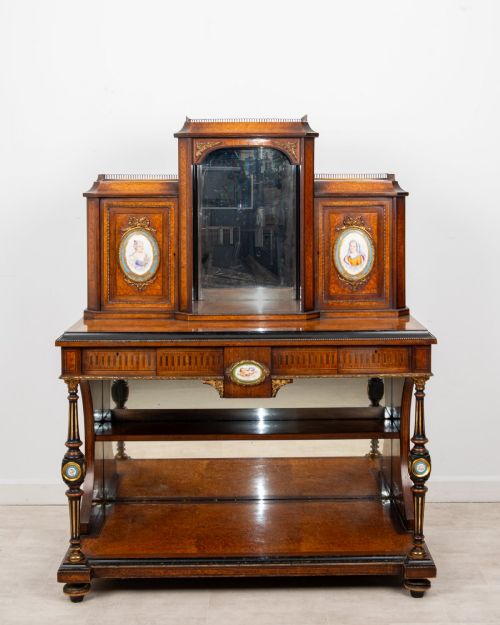
Buyers frequently encounter kidney-shaped writing tables and tiered bonheur du jour designs featuring fitted interiors. These smaller proportions suit contemporary spaces while retaining period character.
Materials and construction
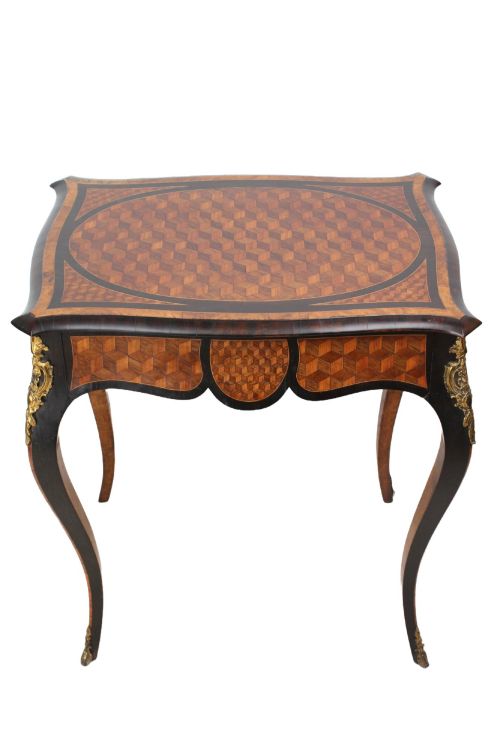
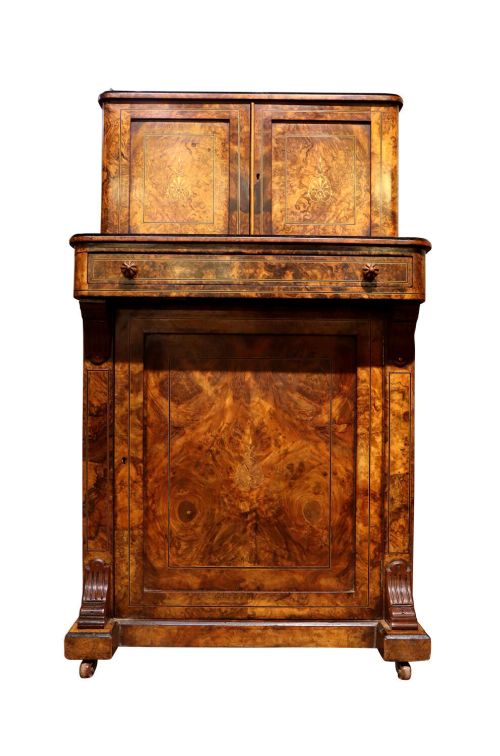
Cabinet makers utilised dense timber carcases veneered in burr walnut, kingwood, amboyna and rosewood to achieve rich grain patterns. Marquetry and parquetry in lighter woods such as satinwood decorated the writing surfaces and perimeters.
Gilt bronze or brass ormolu mounts, brass stringing and porcelain plaques enhanced the French revival aesthetic common to many writing desks. Leather writing inserts frequently lined the sloping or flat tabletops.
Listings here feature nineteenth-century writing furniture in mahogany, satinwood, and burr walnut, alongside brass-mounted French revival designs.
Quality variations
Execution of internal fittings distinguishes standard workshop output from premier London makers. Fitted stationery compartments, secret drawers and finely turned gallery rails separate exceptional examples from simpler counterparts.
Precision in marquetry inlay and the retention of original bronze mounts dictate the standing of a piece. Well-matched timber veneers and sound structural joinery indicate superior nineteenth-century craftsmanship.
Maple and Co·JAS Shoolbred·Edwards and Roberts
The Victorian Ladies Bureau Glossary
- Bonheur du jour
- A small light lady's writing desk featuring a small cabinet or tiered shelves superstructure above the writing surface. This French form gained popularity in England during the Victorian period.
- Davenport
- A compact form of small writing desk featuring a sloping desktop hinged above a pedestal of drawers. It typically incorporates a side-sliding pen drawer and internal stationery compartments.
- Ormolu
- Gilded bronze mounts applied to furniture edges and corners for decorative accent. This technique was favoured in French revival pieces.
- Marquetry
- Decorative veneer patterns assembled from various tinted woods to form floral or geometric pictures. Craftspeople applied these designs to tabletops and cabinet doors.
- Parquetry
- Geometric wood inlay forming repeating patterns such as cubes or chequers across surfaces. It provides textural contrast to burr walnut and kingwood veneers.
Victorian Ladies Bureau: Frequently Asked Questions
What is a bonheur du jour?
A bonheur du jour is a small, elegant writing desk topped with a set of small drawers or shelves. It was designed for personal correspondence in private sitting rooms.
These pieces often feature intricate marquetry and fine wood veneers, making them both decorative and functional additions to a room.
How do I use a bureau in a modern home?
These compact desks serve well as laptop stations or writing desks in bedrooms, studies, or living spaces. Their smaller proportions fit restricted layouts easily.
Fitted interior compartments help organise modern stationery while keeping surfaces clear when not in use.
What timber was used for these desks?
Cabinet makers predominantly used mahogany, walnut, rosewood and satinwood for the primary structures and veneers. Exotic woods like kingwood and amboyna appear on high-end pieces.
Inlays frequently incorporate lighter woods to create contrasting geometric patterns or floral motifs.
How can I tell a Victorian desk from an Edwardian one?
Victorian pieces often display heavier proportions, rich burr walnut or rosewood veneers, and robust ormolu mounts. They lean towards ornate carving and darker tones.
Edwardian interpretations, particularly Sheraton revival items, favour lighter satinwood, delicate painted details, and more restrained neoclassical proportions.