

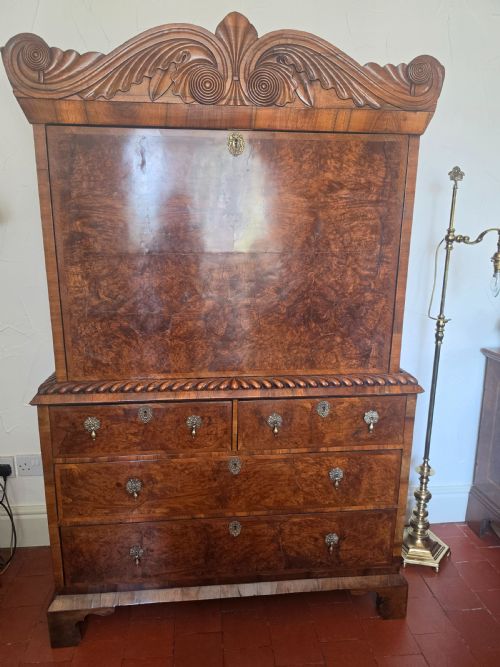

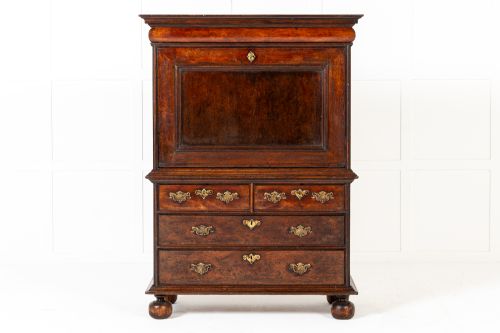


Carved Walnut Escritoire
A carved walnut escritoire offers enclosed writing space and deep timber figuring, and these pieces combine practical storage with decorative presence.
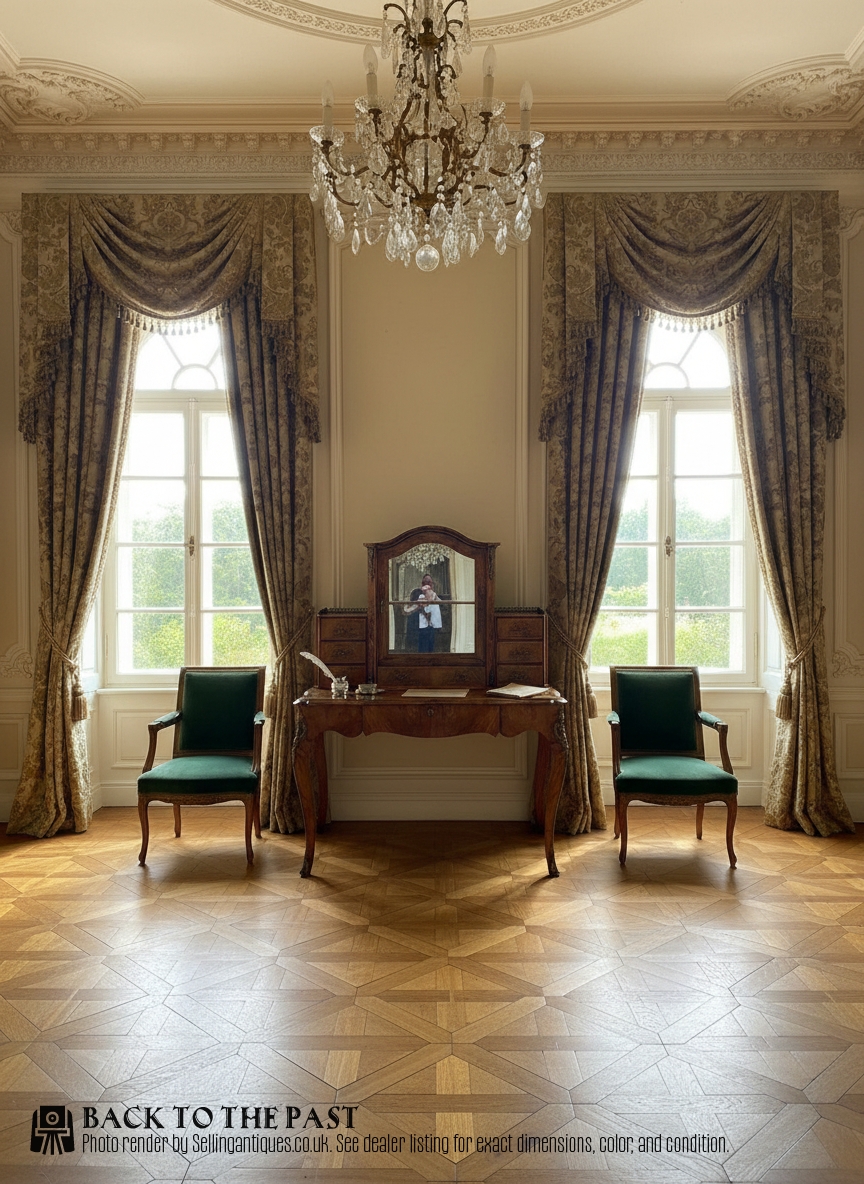
Carved Walnut Escritoire
A carved walnut escritoire is a piece of furniture built for writing and correspondence, featuring a fall-front or slant-front writing surface that conceals internal compartments. Buyers searching this phrase examine refined writing cabinets, ladies writing desks, and secretaire abbatant forms designed for domestic study or boudoir use.
The versions most commonly met on this page span several centuries and regional traditions, ranging from English William and Mary period examples to French revival pieces. Makers constructed these cabinets in various scales, including tall walnut escritoires and compact bonheur de jour desks.
Period influences visible across the selection include Queen Anne, Louis XV, Louis XVI, and Arts and Crafts styles. Walnut remains the unifying material, often paired with burr walnut veneers, brass hardware, and fitted leather writing surfaces.
How they were made
Cabinet makers utilised solid walnut and burr walnut veneers applied over secondary woods such as oak, shaping the timber to highlight natural grain patterns. Carving was executed by hand to render decorative motifs along cornices, drawer fronts, and support frames.
Internal compartments required precise joinery to construct small drawers and pigeonholes within the writing cabinet. Hardware such as brass hinges and escutcheons were fitted to secure fall-front writing desks and internal doors.
Carved Walnut Escritoire Retail Price Guide 2026
Typical asking prices for carved walnut escritoire among the pieces listed under this phrase on Sellingantiques today, from the lower quarter to the upper quarter. They describe what is for sale here now, not the wider market.
Several ladies writing desks include tiny concealed secret compartments behind pigeonholes, designed for hiding love letters and private notes.
What varies in quality
The quality of a carved walnut escritoire rests in the selection of the timber and the depth of the hand carving. Pieces featuring highly figured burr walnut veneer across the exterior display greater cabinet-making ambition than those with plain grain.
Internal arrangement complexity also separates standard examples from exceptional ones. Elaborate internal drawer configurations, original brass hardware, and well-executed relief carving indicate superior workshop production.
Gregory & Co. of London
The Carved Walnut Escritoire Glossary
- Escritoire
- A writing cabinet featuring a fall-front flap that opens to reveal a fitted interior of small drawers and pigeonholes. This form provides both a concealed writing surface and enclosed storage.
- Burr walnut
- A prized timber veneer taken from the warted excrescences of walnut trees, displaying intricate, swirling grain patterns. Cabinet makers utilised this figure to create highly decorative focal points on furniture surfaces.
- Bonheur de jour
- A light lady's writing desk originating in France, typically featuring a small cabinet or set of shelves superstructures above the writing surface. These desks appeared in refined nineteenth-century domestic interiors.
- Secretaire abbatant
- A tall vertical cabinet with a drop-front writing flap that conceals an internal compartment. The form offers upright storage combined with a pull-down writing desk.
- Ormolu
- Gilded bronze mountings applied to furniture for decorative enrichment, frequently seen on revival pieces influenced by French design. The metal is cast and chased before receiving its gold finish.
Carved Walnut Escritoire: Frequently Asked Questions
What is a carved walnut escritoire used for?
These cabinets served historically for private correspondence, letter storage, and keeping financial records organised behind a locked fall-front panel.
Today, owners utilise them as functional writing desks in studies or living spaces, where the enclosed compartments hide modern stationery and laptops.
How do I identify a William and Mary period piece?
William and Mary period examples typically display architectural proportions, finely figured walnut veneers, and characteristic cross-banding on the drawer fronts and writing flaps.
They often feature bun feet or structured leg stands rather than the cabriole legs common in later eighteenth-century furniture.
How should I care for burr walnut furniture?
Burr walnut requires stable indoor humidity and protection from direct sunlight to prevent the delicate veneers from drying out or fading over time.
Applying a traditional beeswax polish helps maintain the lustre of the timber without building up synthetic residues.