


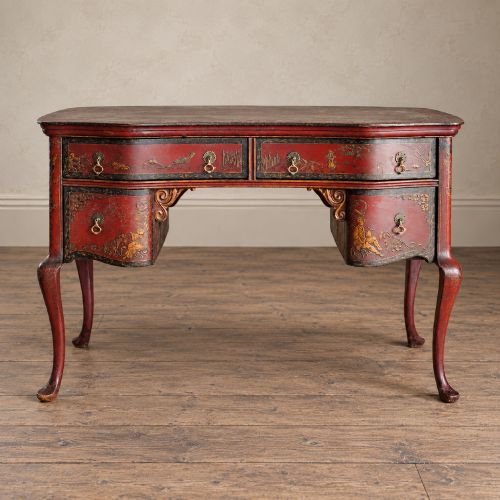

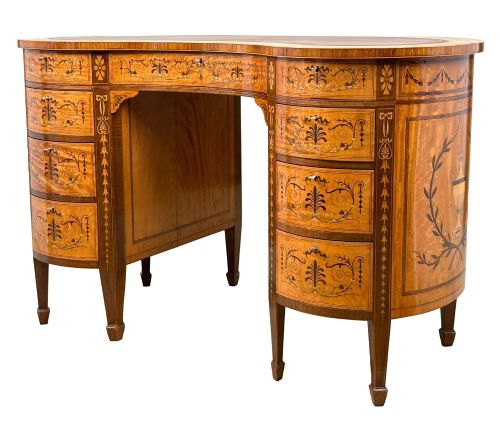
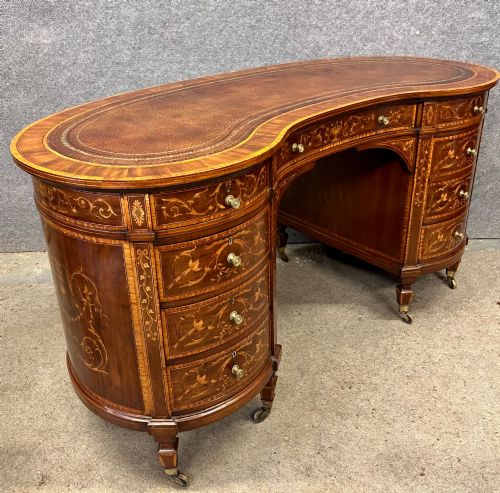
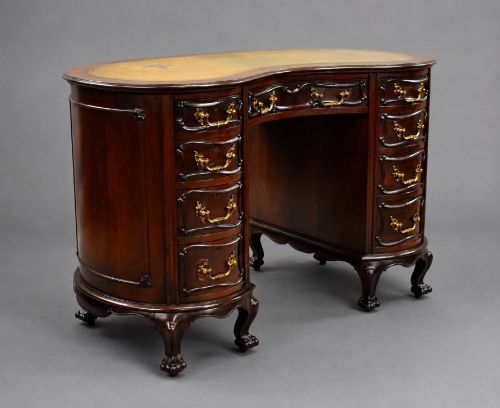


Victorian Kidney Desk
A Victorian kidney desk offers a curved workspace that hugs the writer, combining nineteenth-century elegance with practical comfort.
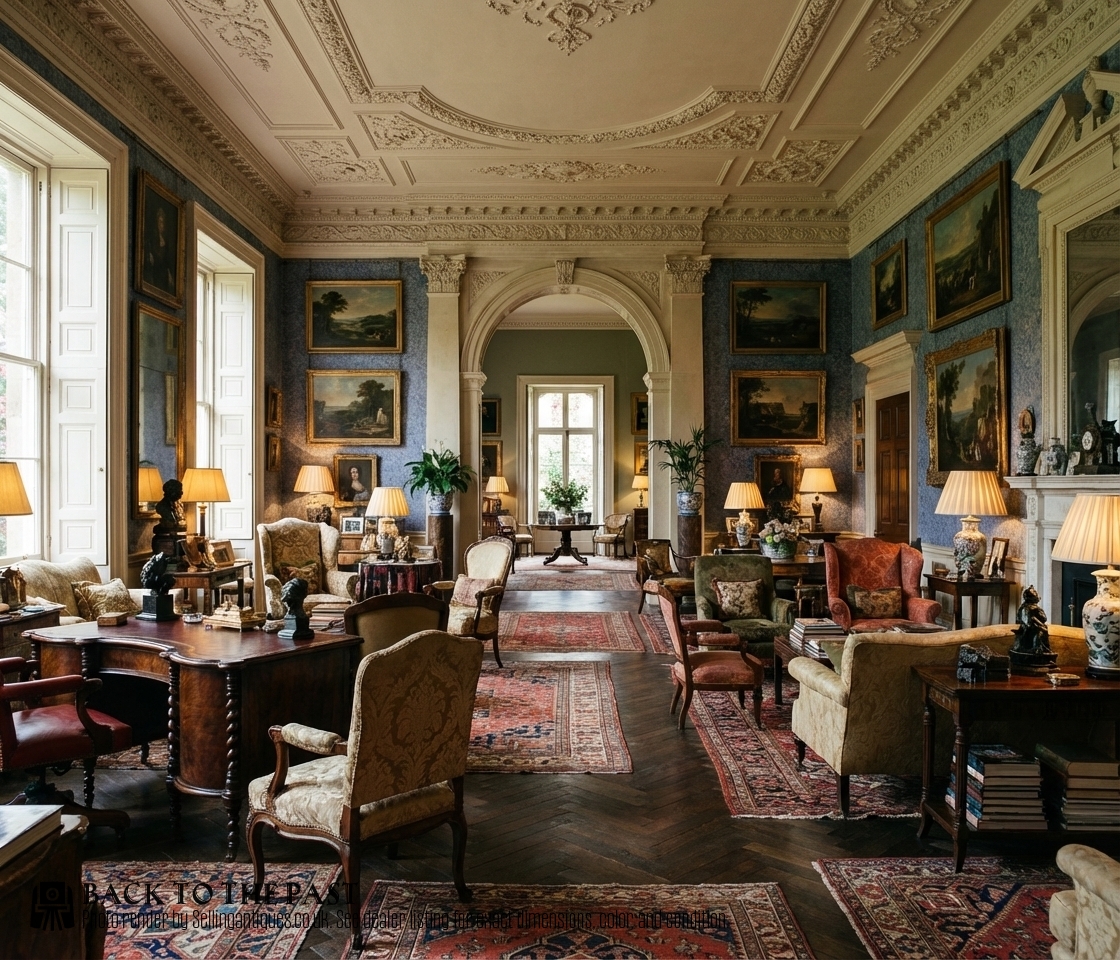
Victorian Kidney Desk
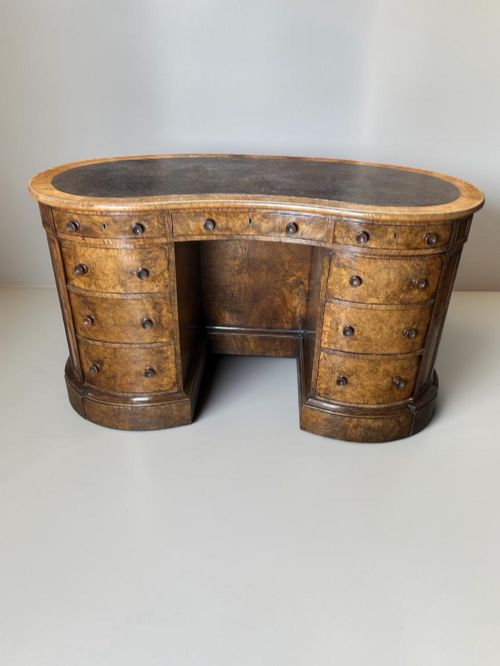
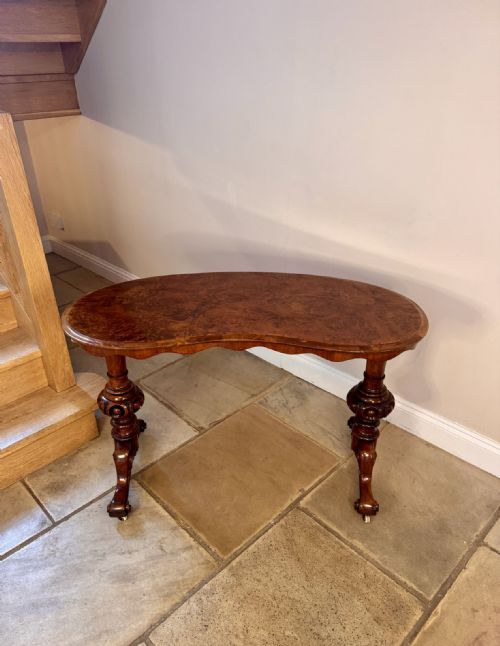
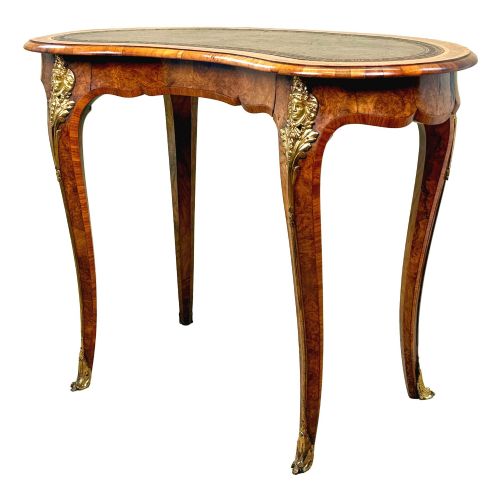
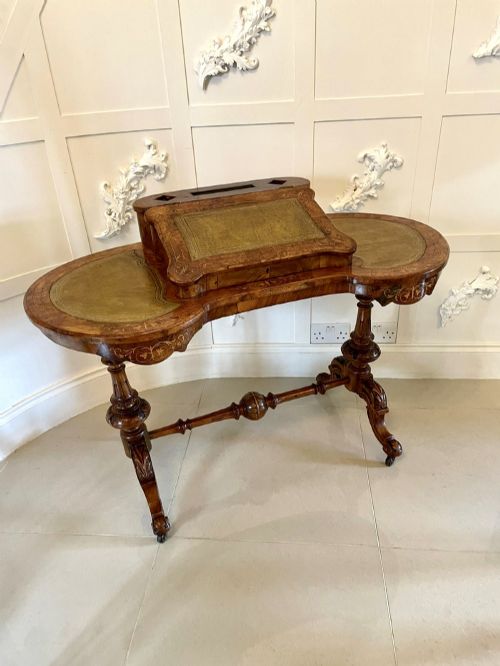
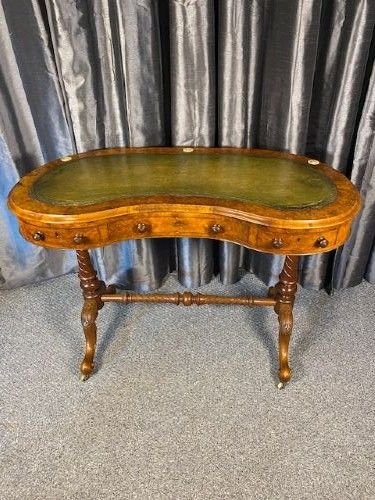
A Victorian kidney desk is a distinctive nineteenth-century writing table defined by its concave, bean-shaped curve at the front, designed to fit snugly against the user. These pieces appear frequently across the period, spanning decades from the mid-nineteenth century through to the late Victorian era.
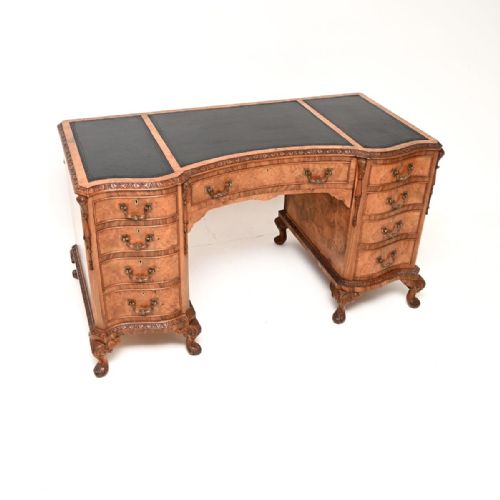
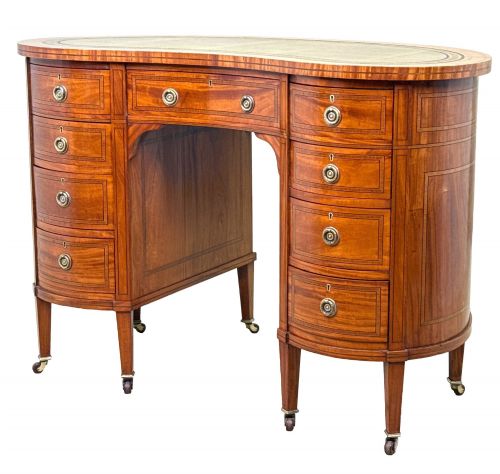
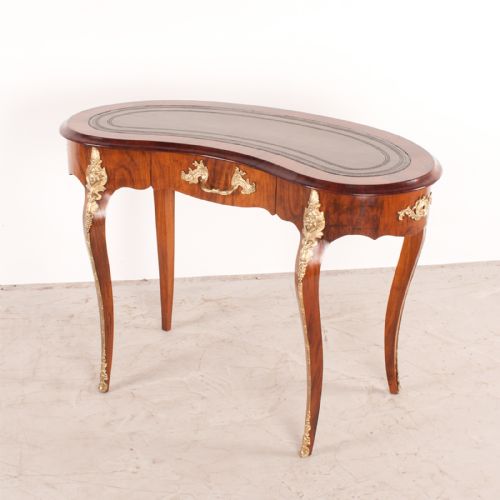
The primary forms on this page include dedicated writing tables, pedestal desks, side tables, and dressing tables. Many examples incorporate leather inserts on the top surface alongside fitted drawers beneath the writing plane.
Originating as graceful ladies' writing tables or compact library desks, these pieces suit placement away from walls due to their finished backs. Freestanding capability remains a defining characteristic of the better examples seen in both current stock and archive records.
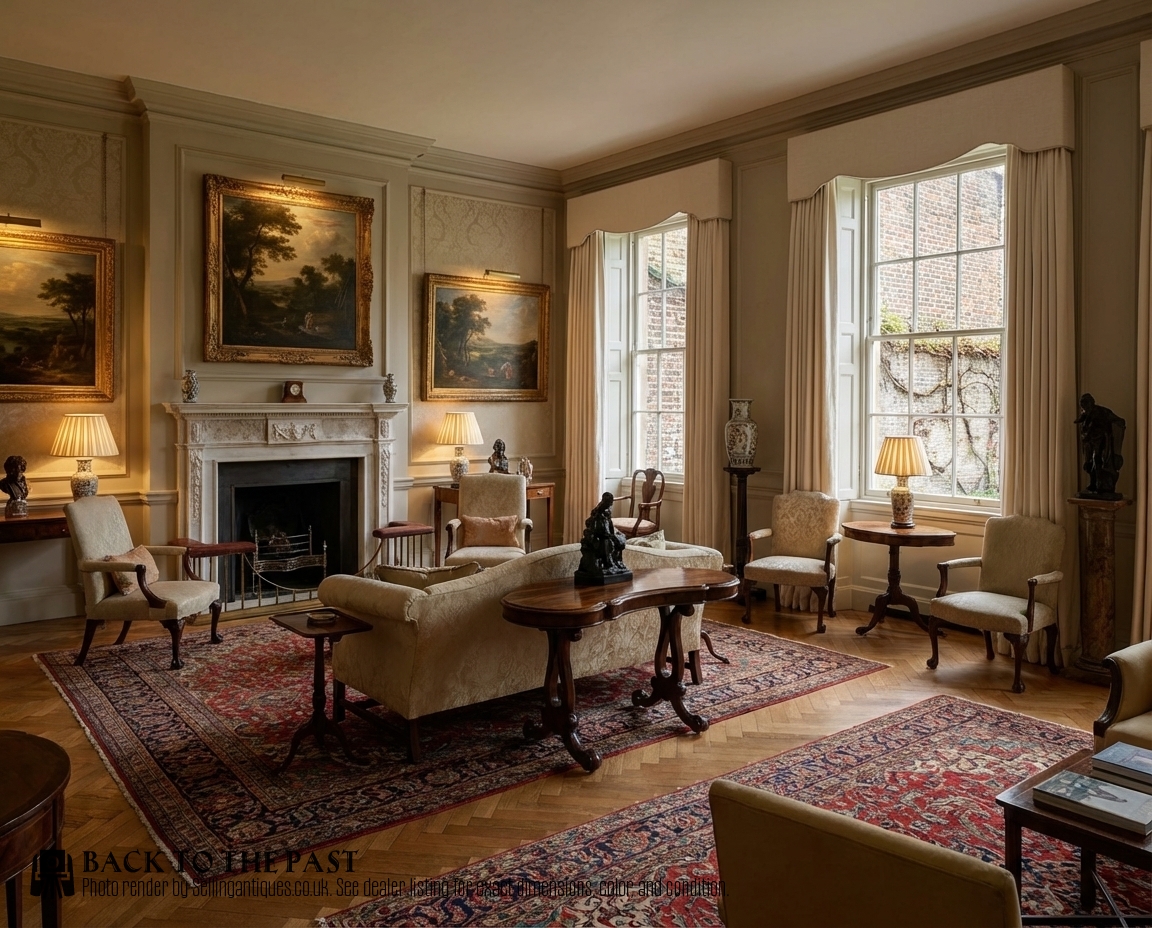
Assessing Quality
The distinction between standard production and the top of the range rests on timber selection and cabinetmaking finish. Highly figured burr walnut, plum pudding mahogany, or intricate satinwood marquetry elevate a piece significantly above plain mahogany or simple walnut versions.
Maker attribution also defines value, with documented workshop output commanding attention. Superior execution shows in the seamless joinery of the tight concave curve and the careful placement of brass hardware and inlaid details.
Victorian Kidney Desk Retail Price Guide 2026
Typical asking prices for victorian kidney desk among the pieces listed under this phrase on Sellingantiques today, from the lower quarter to the upper quarter. They describe what is for sale here now, not the wider market.
The curved top hugs you back.
Maple & Co·Edwards & Roberts
The Victorian Kidney Desk Glossary
- Kidney desk
- A writing table shaped with a concave front curve resembling a bean. This form allows the user to sit closer to the centre of the drawers.
- Burr walnut
- Timber taken from a walnut tree growth that produces swirling, intricate grain patterns. It was highly prized for Victorian veneering.
- Pedestal desk
- A heavy desk supported by two banks of drawers rather than simple legs. Examples in this form provide substantial storage beneath the top.
- Inlay
- Pieces of contrasting timber, metal, or shell fitted into the surface wood to create decorative patterns. This technique appears across many Victorian walnut and satinwood pieces.
Victorian Kidney Desk: Frequently Asked Questions
Where should I place a kidney desk?
These desks suit placement in the centre of a room rather than flat against a wall. Because many feature finished backs and polished timber all round, they work well as freestanding centrepieces in a study or library.
The concave curve allows you to pull the chair right into the centre, providing comfortable access to the drawers positioned around the kneehole.
How do I identify a Victorian piece?
Victorian furniture spans the reign of Queen Victoria through the nineteenth century, showing specific wood choices and construction methods. The use of solid mahogany, walnut, and elaborate burr veneers characterises pieces from this period.
Examining the drawer linings, secondary woods, and hand-cut dovetails helps confirm the nineteenth-century date of manufacture alongside traditional cabinetmaking techniques.
Can I use a dressing table as a desk?
Several pieces recorded in these archives served originally as dressing tables rather than writing desks. While the timber frames and kidney shapes are largely identical, dressing tables often lack the leather insert found on writing surfaces.
Using one as a desk works well provided the knee clearance suits your chair height and you do not require a heavy leather writing plane.