

Victorian Jewellery Chest
A victorian jewellery chest brings small-scale craftsmanship to the dressing table, storing keepsakes in miniature drawers and velvet-lined compartments.
Victorian Jewellery Chest
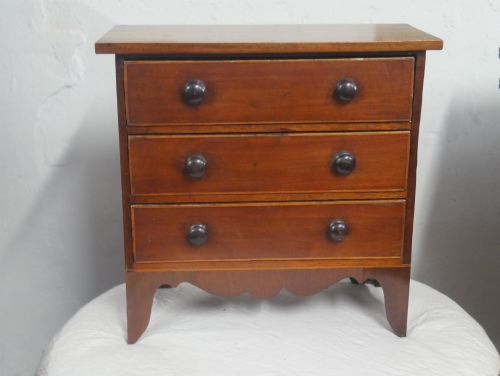
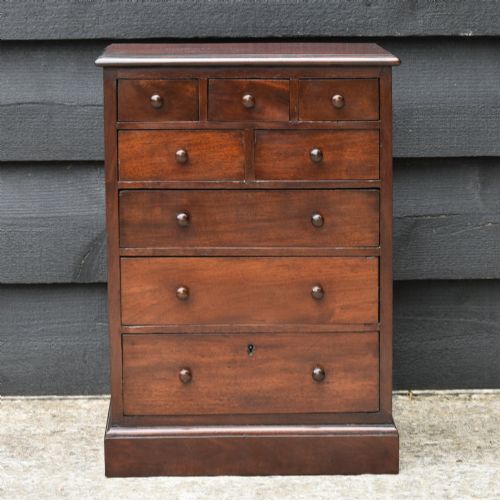
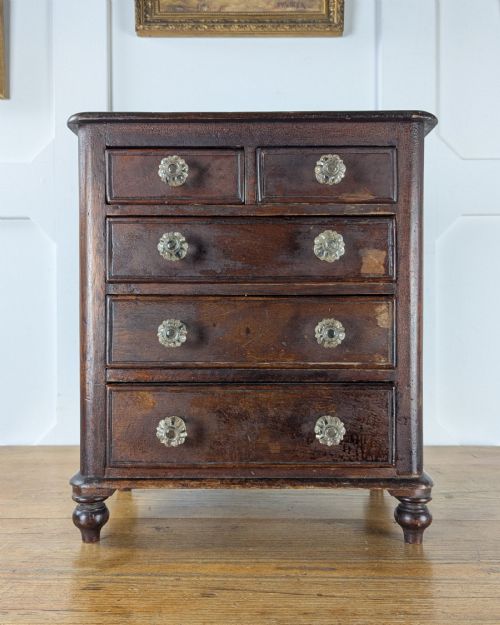
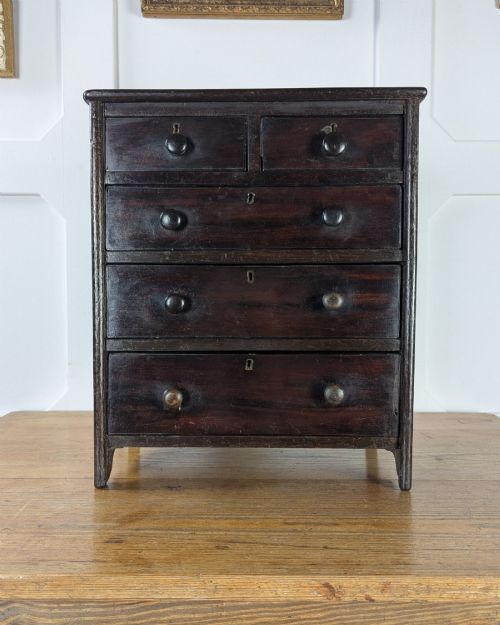
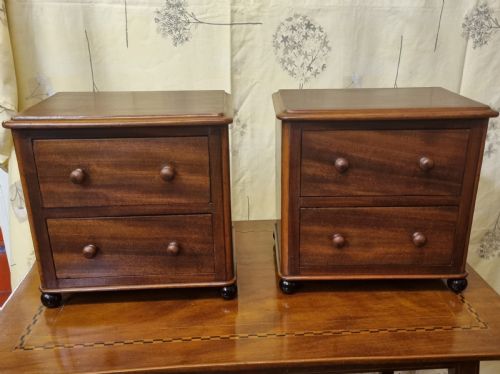
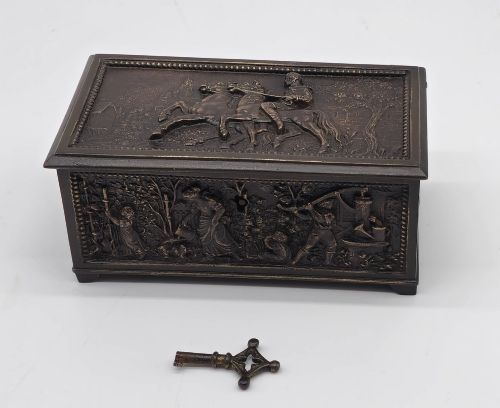
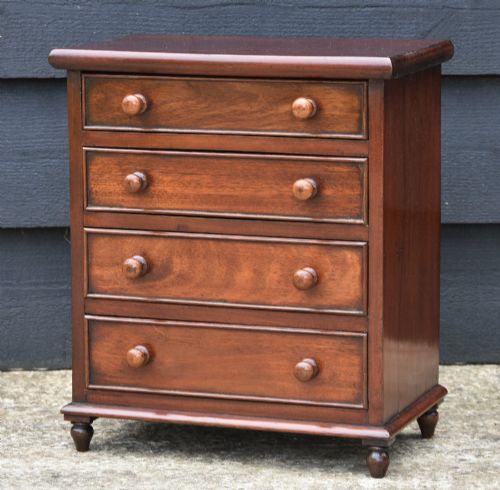
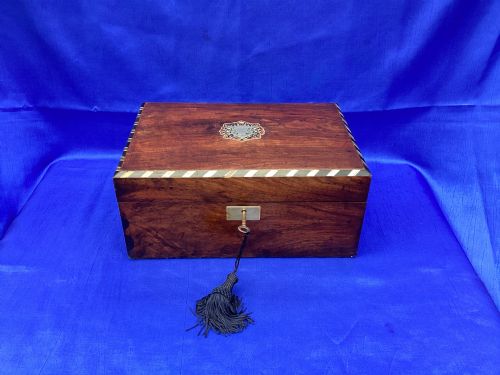
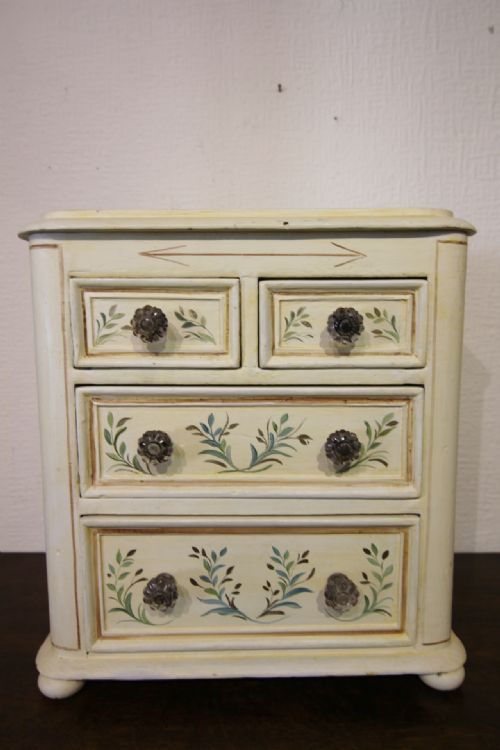
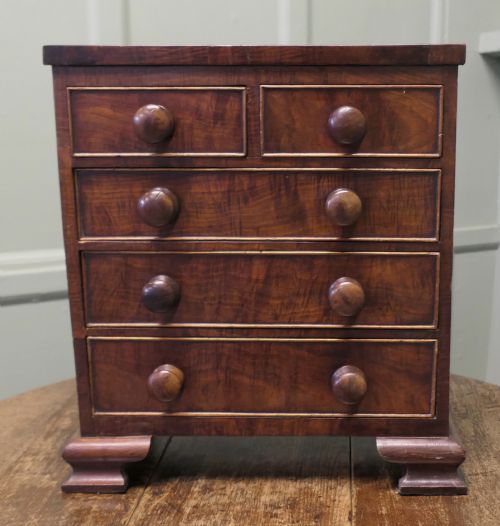
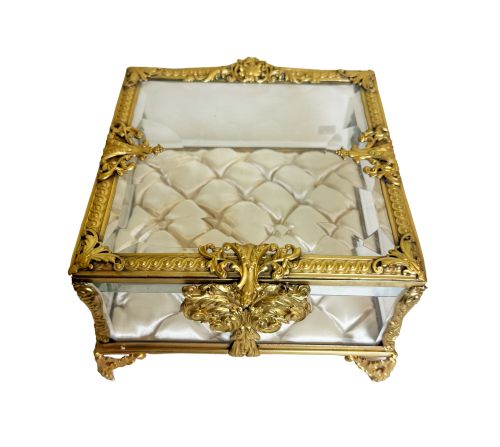
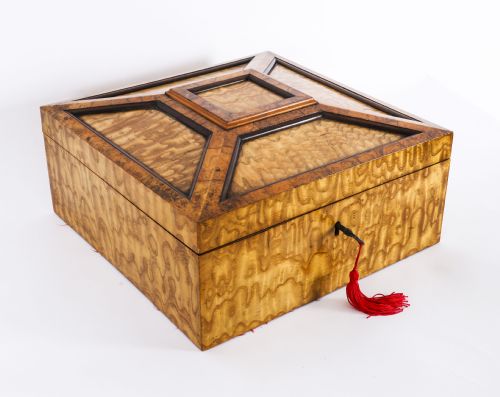
A victorian jewellery chest encompasses miniature furniture, apprentice pieces, table cabinets and fitted caskets dating across the nineteenth century. The selection leans heavily toward mahogany miniature chests of drawers alongside rosewood and walnut boxes fitted with trays and secret compartments.
Makers produced these smaller pieces alongside full-scale furniture, applying the same cabinet-making skills to diminutive forms. Buyers encounter Scottish and French examples alongside English pieces, ranging from plain mahogany to elaborate specimens featuring marquetry and mother of pearl.
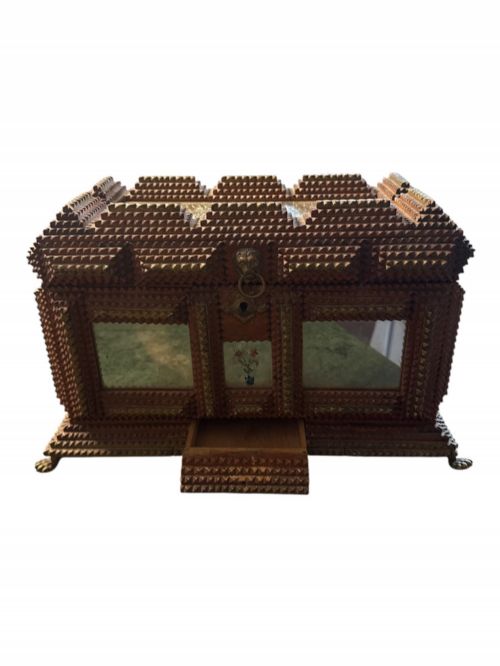
The category also stretches to include folk art models in carved slate and tramp art boxes, reflecting varied domestic uses from sewing cases to dedicated trinket storage.
Materials and technique
Makers constructed these chests primarily in dense hardwoods including mahogany, walnut and rosewood, often enhanced with burr veneers, brass mounts and glass panels. Smaller examples incorporate materials such as tortoiseshell, sterling silver, crystal and carved slate.
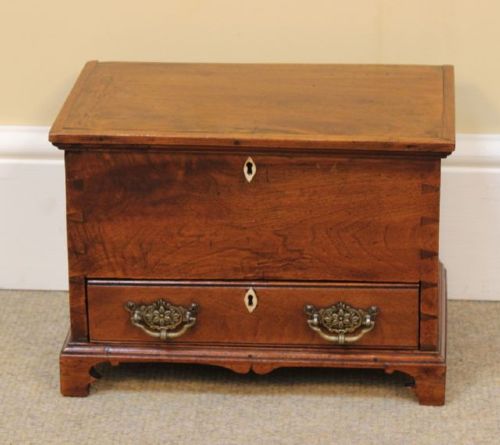
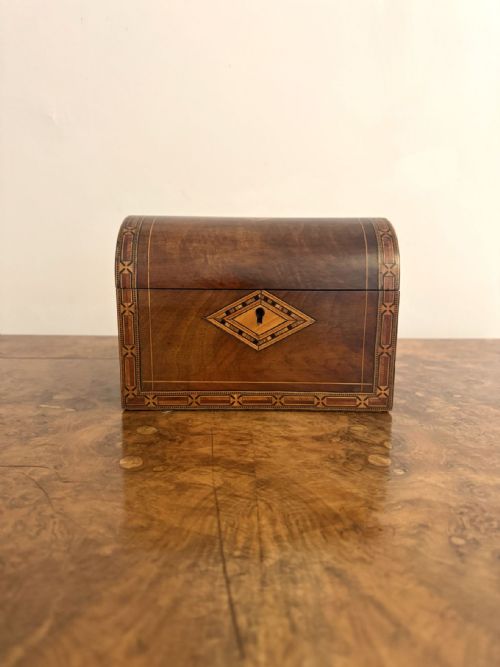
Techniques relied on traditional joinery, dovetail joints for miniature drawers, and detailed surface embellishments like Tunbridge inlay, marquetry and engraved brass work. Interiors typically received silk or velvet linings, fitted trays and occasionally secret drawers operated by hidden mechanisms.
Among the folk art items, a Welsh carved slate model proves that cabinet-makers were not the only ones working in miniature.
Quality factors
Distinctions in quality rest upon the selection of timber veneers, the precision of the dovetail joinery and the complexity of the interior fittings. Pieces featuring secondary timbers, clean brass hardware and well-executed Tunbridge inlay or mother of pearl work stand apart from simpler vernacular items.
The integrity of the original lining, the smooth operation of miniature drawers and the presence of working locks with keys contribute significantly to a piece's standing among collectors.
Edwards & Roberts·Parkins & Gotto
The Victorian Jewellery Chest Glossary
- Apprentice piece
- A small-scale item demonstrated to a guild to prove a cabinet-maker's mastery of their trade. These pieces mirror full-size furniture in every detail.
- Tunbridge inlay
- A form of woodworking originating in Kent utilising thousands of tiny tinted wood blocks to create mosaic pictures. Collectors prize pieces featuring intact geometric panels.
- Mule chest
- A traditional storage chest featuring one or more drawers beneath the main lifting compartment. Miniature versions combine box storage with functional drawer space.
- Wellington chest
- A tall narrow chest of drawers secured by a hinged locking side bar. Miniature adaptations offer highly secure compartments for small valuables.
- Marquetry
- The art of applying decorative veneer pieces to a structure to form pictorial designs. Skilled makers used contrasting timbers to achieve naturalistic shading.
Victorian Jewellery Chest: Frequently Asked Questions
What is an apprentice piece?
An apprentice piece is a miniature item built by a woodworker to demonstrate skill to a guild. These small chests display the exact joinery and proportions of full-size furniture.
Makers poured considerable detail into these items, making them highly sought after by collectors today.
How were these chests used?
Victorian households utilised these small chests for storing jewellery, trinkets, sewing gear and letters. The velvet linings protected delicate items from scratches.
Larger table cabinets and caskets sat on dressing tables or desks as both decorative and functional objects.
How do I identify Victorian timber?
Victorian cabinet-makers favoured dense timbers like mahogany, rosewood and walnut, often finished with a French polish. These woods aged to deep, warm tones with distinct grain patterns.
Secondary woods like pine or oak frequently appear on drawer linings and back panels.
Are secret drawers common?
Secret drawers appear in several miniature chests and jewellery boxes from this period. Makers concealed them behind removable panels or false drawer bottoms.
These hidden compartments added an element of security for valuable keepsakes and personal letters.