




Victorian Ironstone Platter
A victorian ironstone platter is a heavy, durable serving piece built for the nineteenth-century dining table, prized for its sheer scale and bold decoration.
Victorian Ironstone Platter
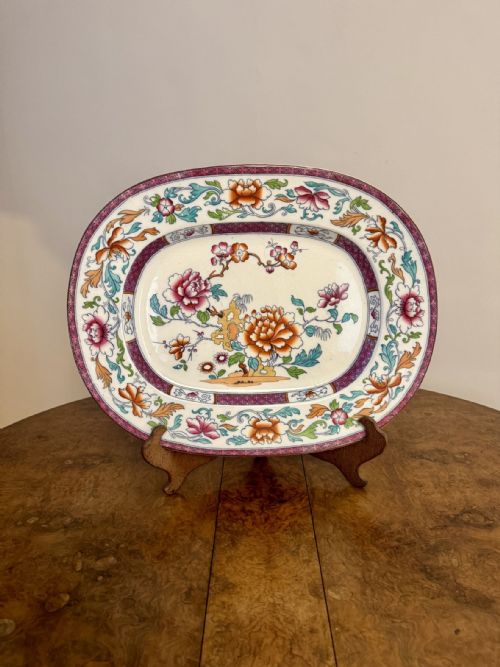
A victorian ironstone platter comes to us from the nineteenth century, most often appearing as a large meat platter, game plate, or serving dish designed for substantial joints of poultry and meat. These robust earthenware forms range from plain utility pieces to highly decorative objects intended to anchor a Victorian dinner service.
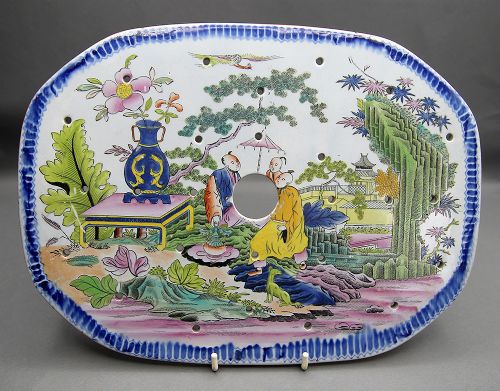
The pieces on this page span the 1800s, including specific dates such as 1850 and 1880, alongside broader Victorian classifications. Alongside standard platters, the forms extend to specialised service pieces like well and tree platters, platter drainers, footed cheese dishes, and large chargers.
Makers and patterns play a distinct role in how these items present, with named examples such as John Ridgway and Mason's Ironstone China appearing frequently alongside uncredited English earthenware. Patterns draw heavily on aesthetic movements of the era, shifting between blue and white transfers, Chinoiserie scenes, Imari palettes, and specific named motifs like Penang, Mogul, and Pagoda.
Materials and Manufacture
The core material of a victorian ironstone platter is dense ceramic earthenware, specifically ironstone and ironstone china, which combines the durability of stoneware with the refined appearance of fine porcelain. This heavy ceramic body was engineered to withstand the rigours of large-scale Victorian dining and heavy carving utensils without chipping easily.
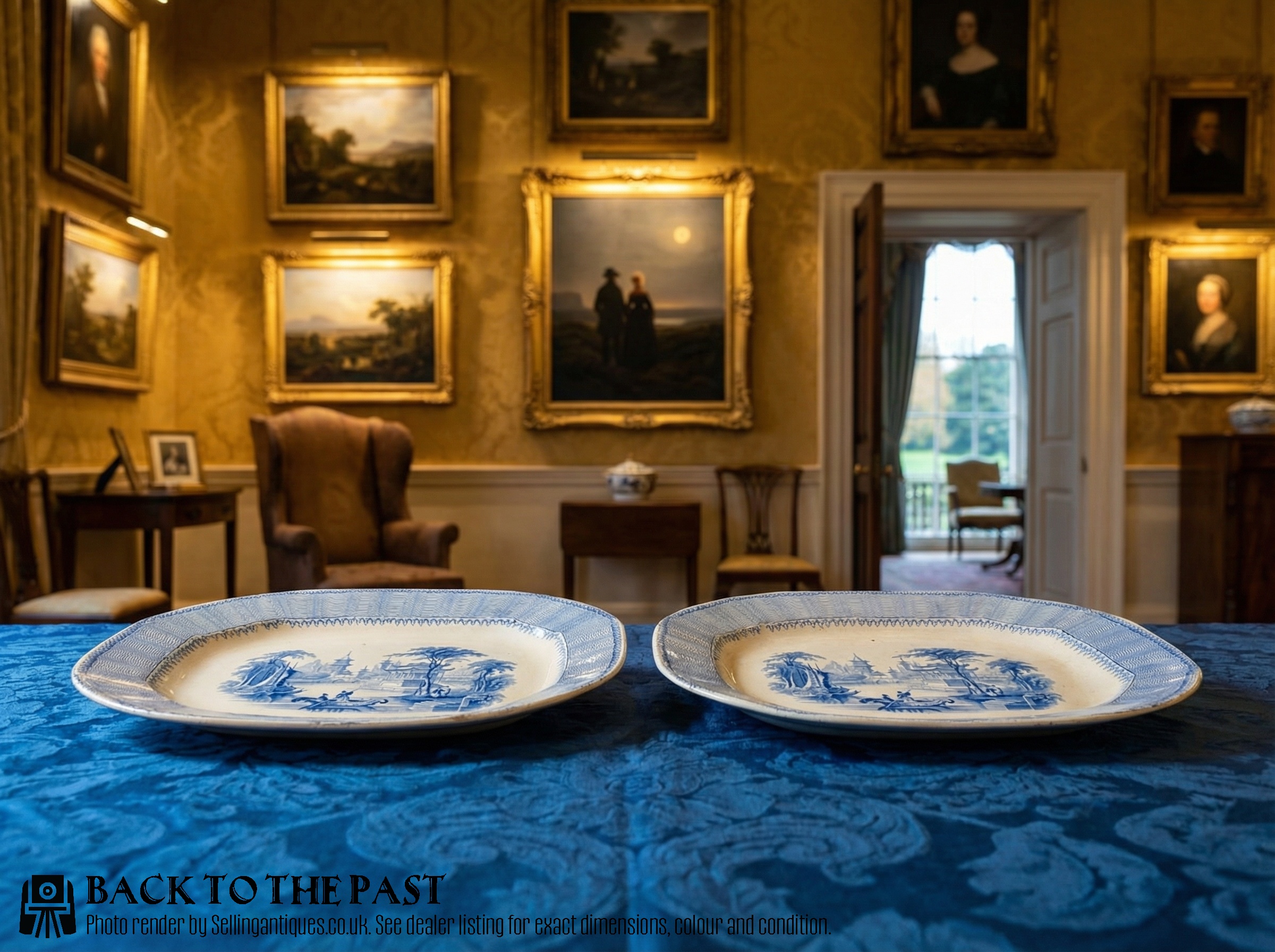
Surface decoration relies on applied glazes, enamels, and occasionally gold leaf to bring out intricate patterns such as Victorian Chinoiserie and Victorian Imari. Many examples utilise blue and white transfer printing, while others incorporate hand-painted enamel details over the ceramic body to achieve rich, lasting colour.
Materials recorded across the selection include ironstone china, stoneware, earthenware, glaze, enamel, and gold leaf.
Distinctions in Quality
Quality in a victorian ironstone platter rests primarily on the ambition of its form and the crispness of its decoration. Pieces featuring complex structural elements, such as well and tree channels or integrated drainers, demand a higher level of ceramic mastery than flat meat dishes.
The finesse of the pattern application also separates standard utility wares from finer examples. Hand-painted enamels, crisp blue and white transfer printing, and touches of gold leaf elevate a heavy earthenware blank into a true display piece.
John Ridgway·Mason's Ironstone China·Minton
The Victorian Ironstone Platter Glossary
- Ironstone
- A heavy, durable type of earthenware patented in the nineteenth century to imitate porcelain. It provides a robust body that resists chipping and holds heavy glazes.
- Drainer
- A perforated ceramic insert that fits inside a platter to separate meat from its juices. These inserts are often found in large Victorian meat dishes.
- Well and tree
- A platter design featuring a recessed well at one end and carved channels radiating across the surface. This system directs meat juices away from the joint during carving.
- Chinoiserie
- A decorative style reflecting European interpretations of Chinese and East Asian artistic traditions. It appears frequently on nineteenth-century ceramic patterns.
- Charger
- A large decorative plate used historically for service or display rather than for individual dining. These pieces often showcase the most elaborate patterns in a dinner service.
Victorian Ironstone Platter: Frequently Asked Questions
What was a victorian ironstone platter used for?
These large ceramic vessels served as the centrepiece for presenting roasted meats, game, and poultry at nineteenth-century dining tables. Their substantial size allowed them to hold large joints while catching juices in service.
Beyond basic meat service, specialised forms like well and tree platters or footed cheese dishes performed specific culinary duties. They transitioned easily from the dining room sideboard to the table during large family meals.
How do I identify a Victorian ironstone piece?
Look for the characteristic weight and dense ceramic body of ironstone china, which feels significantly heavier than standard earthenware. Many pieces feature impressed or printed factory marks on the reverse alongside nineteenth-century aesthetic styles.
Decoration often relies on blue and white transfer printing, Chinoiserie motifs, or Imari palettes. The presence of specific nineteenth-century pattern names further helps anchor a piece to this era.
Can I use an antique platter for serving food?
Most ironstone platters remain structurally sound and capable of holding food, though their porous historic bodies require careful hand washing. Many collectors prefer to use them for dry foods or cold presentation rather than greasy hot meats.
Harsh modern detergents and automatic dishwashers should be avoided to protect the historic glaze, enamel work, and occasional gold leaf. Gentle cleaning preserves the surface integrity for everyday display or occasional festive use.
How should I display a large meat platter?
Due to their considerable weight and size, large platters require sturdy plate stands or secure wall-mounting hardware designed for heavy ceramics. Placing them on a sideboard or dresser allows their transfer-printed patterns and moulded details to be fully appreciated.
Grouping platters with complementary drainage inserts or smaller matching plates creates a balanced visual display. Ensure that any mounting method distributes the weight evenly across the ceramic body.