


Victorian Iron Headboard
A victorian iron headboard brings substantial weight and period character to a bedroom, combining durable metal frames with decorative brass and painted finishes.
Victorian Iron Headboard
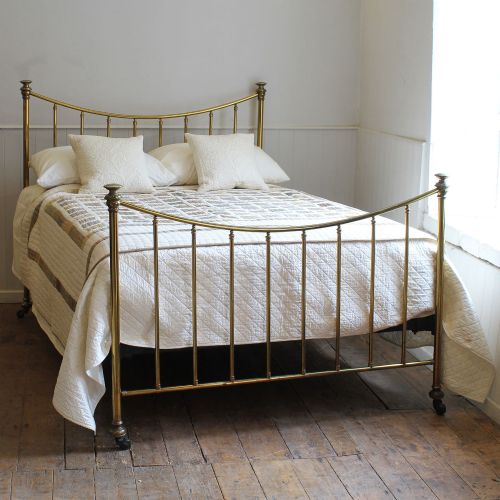
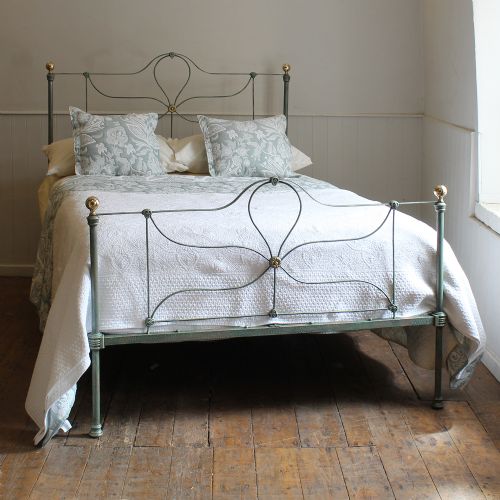
A buyer seeking a victorian iron headboard is actually browsing full bedsteads, single beds, and double frames that incorporate iron and brass components. These pieces span from the 1860s through the Edwardian era, featuring robust metal construction designed to anchor a sleeping space.
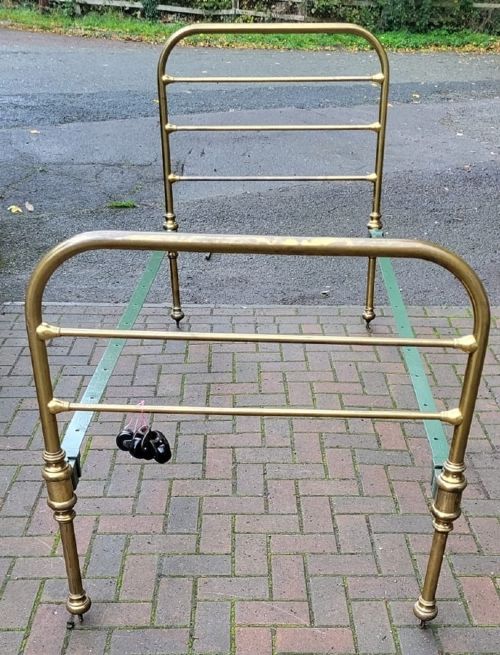
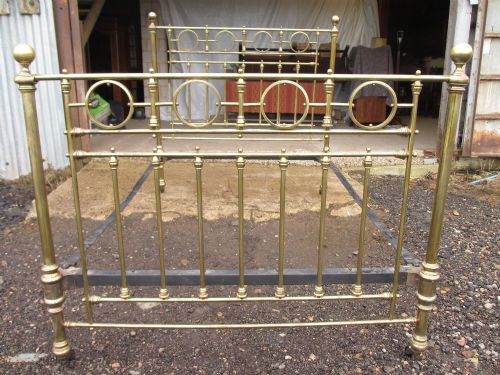
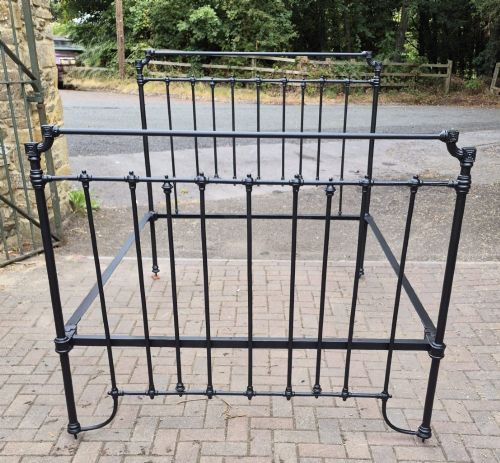
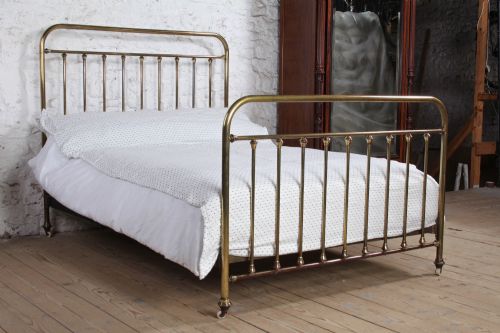
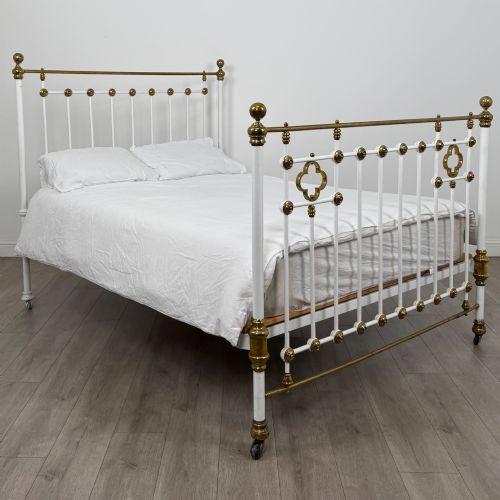
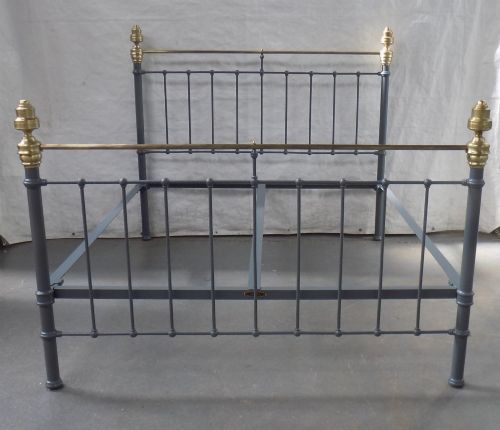
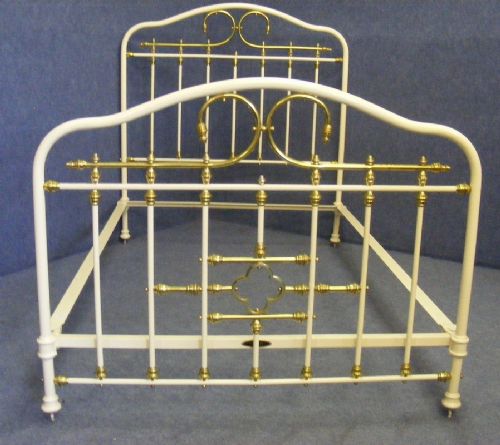
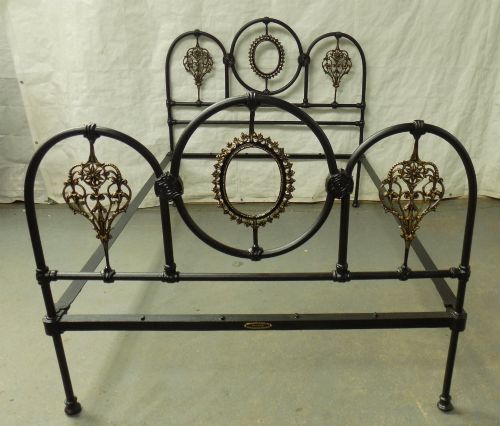
The most common forms on this page include double and king size bed frames, alongside single beds and specialised no end configurations. Many examples pair dark or painted iron with polished brass details, resting on original castors for mobility.
Origins range from classic Victorian British workshops to French provincial designs and Irish Celtic revival pieces. Buyers encounter various sizes ranging from small double frames up to extra wide super king proportions.
Materials and Construction
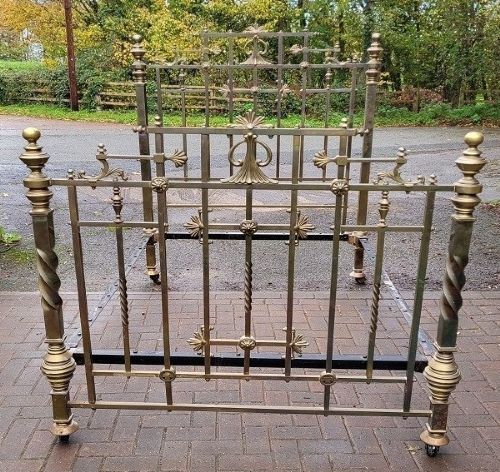
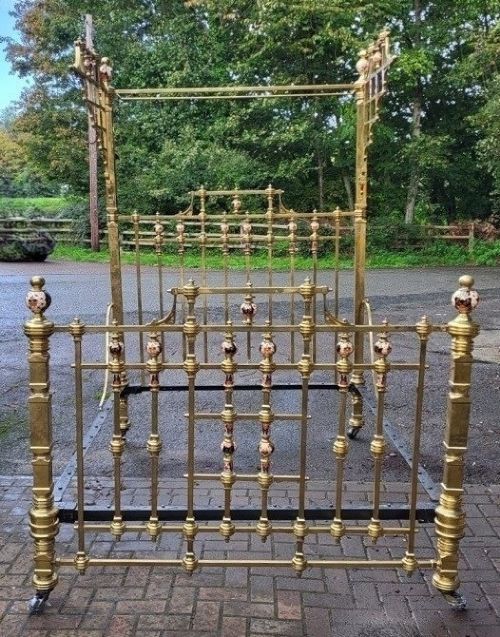
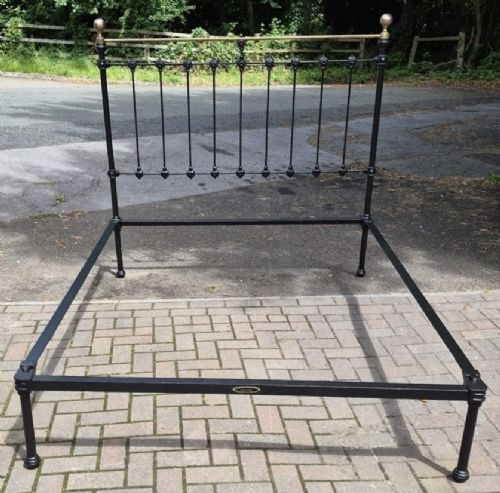
Makers utilised a combination of cast iron, wrought iron, and forged iron for the core structural frames, often integrating steel for added support. Brass tubing and cast brass ornaments provided contrasting metallic detail against the dark or painted iron bodies.
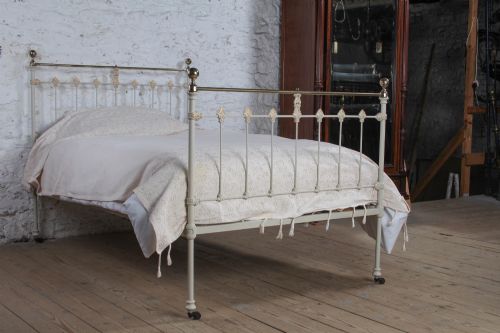
Surfaces were frequently finished with protective paint in shades such as cream or ivory, while brass elements were polished or detailed with ceramic components. Frames incorporated slot-in iron side rails and sat upon small castors to allow movement across the floor.
Listings feature pieces spanning the Victorian period, 1860, 1870, 1880, 1890, 1900, 1910, 1920, and the Edwardian era.
Judging Quality and Execution
Quality rests upon the crispness of the cast iron ornamentation and the weight of the brass mounts. Finer examples display intricate curly motifs, tapered posts, and sophisticated aesthetic movement or art nouveau styling rather than plain utilitarian tubing.
The integrity of the original construction dictates value, particularly the solidity of the slot-in frame joints and the retention of factory components like brass finials and castors. Original paint finishes in good preservation elevate an example above stripped or heavily altered frames.
Winfield·R W Winfield·RW Winfield
The Victorian Iron Headboard Glossary
- Bedstead
- A framework of a bed upon which the mattress rests. This term encompasses the complete head and foot sections joined by side rails.
- Dip Rail
- A horizontal top bar that curves downwards toward the centre. This profile appears frequently on Edwardian and late Victorian designs.
- No End Bed
- A bed frame constructed without a high footboard. This configuration provides an open appearance and accommodates taller sleepers.
- Half Tester
- A bed featuring a canopy extending partially over the head portion. It creates a formal architectural presence within the chamber.
- Castor
- A small wheel fitted to the base of each bed post. They facilitated easy movement of heavy metal frames for cleaning.
Victorian Iron Headboard: Frequently Asked Questions
How do I fit a modern mattress?
Most antique metal bedsteads require custom mattress sizes or standard British dimensions depending on the specific width of the side rails.
Buyers should measure the internal span between the iron irons before ordering a modern base and mattress.
Are these beds stable enough for daily use?
Victorian iron and brass bedsteads were engineered for heavy daily domestic service using robust metallic alloys.
When properly assembled with secure slot-in side rails, they provide rigid and dependable structural support.
How do I distinguish Victorian from Edwardian frames?
Victorian frames typically display heavier ornamentation, cast iron decorative motifs, and robust brass fittings from the mid to late nineteenth century.
Edwardian examples often introduce lighter proportions, dip rails, and art nouveau influences closer to the turn of the century.
Can these beds be dismantled for transport?
The construction relies on slot-in iron side rails that detach easily from the head and foot sections.
This modular design allows the entire bedstead to be broken down into flat components for straightforward moving.