


White Iron Bedstead
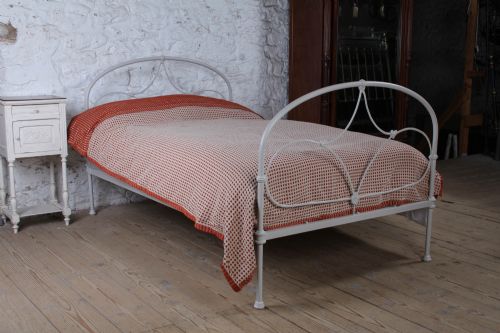
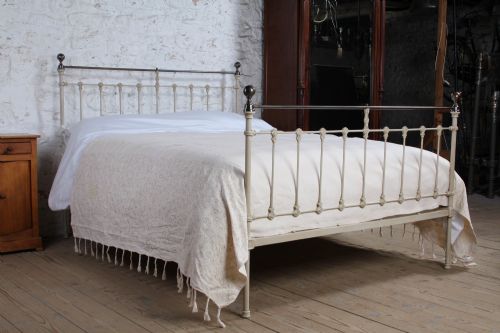
White iron bedstead designs combine sturdy cast and wrought iron frames with polished brass accents, offering a practical yet decorative centrepiece for the bedroom.
White Iron Bedstead
A white iron bedstead provides a sturdy framework for a mattress while bringing a bright, clean aesthetic to sleeping quarters. Buyers seeking a white iron bedstead frequently encounter Victorian and early twentieth-century examples ranging from single and three-quarter sizes up to double, king, and super king dimensions.
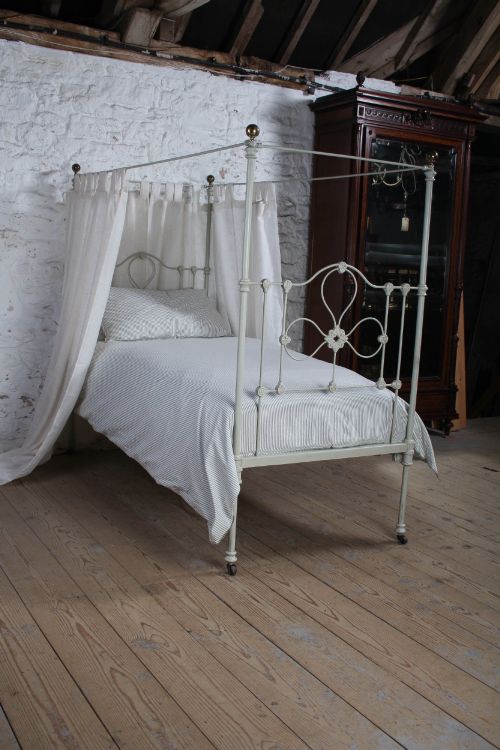
These pieces encompass various forms including standard head and footboard designs, no end variations, and half tester configurations. Many single frames also appear as pairs that can be joined together for flexible arrangement.
Originating largely from the nineteenth century and the year nineteen hundred, these beds often integrate brass details alongside their painted iron structures. Styles span from classic Victorian and French Country to rustic European and Celtic Revival.
How they were made
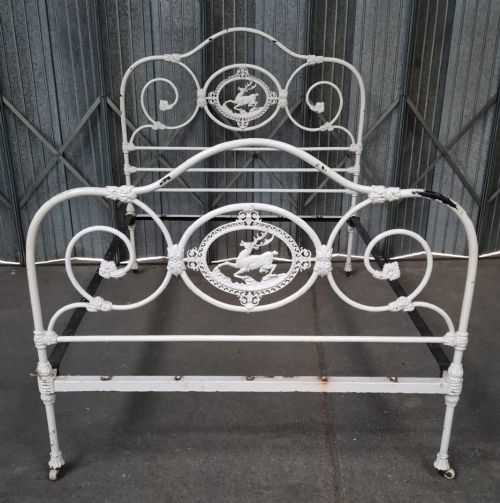
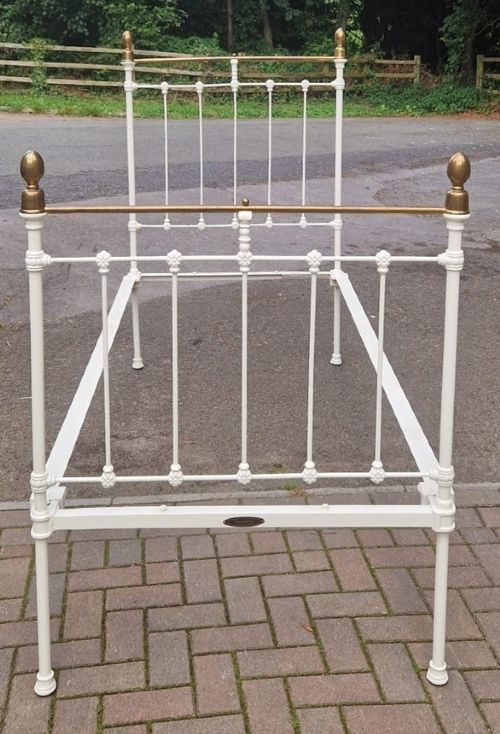
Construction relies on a combination of cast iron, wrought iron, and forged iron elements that provide structural rigidity and durability. Manufacturers utilised painted finishes, often in white or ivory, to coat the metallic surfaces.
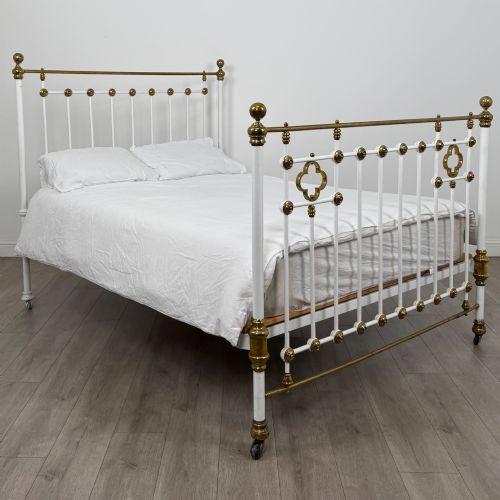
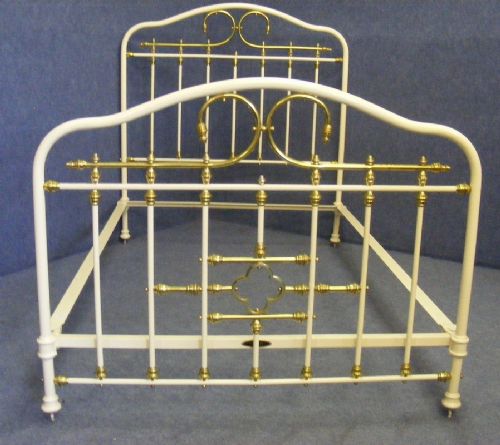
Brass components were frequently incorporated into the upper rails, finials, and mounts to create a visual contrast against the painted ironwork. Individual parts were assembled using mechanical joints and threaded fittings designed to support heavy mattress loads.
Available forms include single beds, double beds, king sizes, and joinable pairs originating from English, French, Irish, and Portuguese makers.
What varies in quality
The sophistication of the casting and forging determines the refinement of each bedstead, with ornate scrollwork and detailed corner mounts reflecting higher craftsmanship. The condition of the painted surface and the proportion of brass components relative to iron also influence the overall finish.
Structural integrity depends on the solidity of the original joints and the stability of the frame when fully assembled. Pieces featuring uncommon configurations such as half testers or specialised sizing display greater complexity in their design.
Heals
The White Iron Bedstead Glossary
- Bedstead
- A framework of a bed upon which mattress supports rest. It typically consists of a headboard, footboard, and side rails.
- Cast iron
- Iron that has been poured into a mould while molten to create complex shapes and decorative structural components. This material forms the rigid backbone of many antique sleeping frames.
- Wrought iron
- Iron that is beaten or hammered into shape while hot, offering high tensile strength and flexibility for linear supports. It differs from cast iron through its fibrous texture.
- Half tester
- A bed with a partial canopy extending only partway over the head of the mattress. This form provides a decorative focal point without enclosing the entire sleeping area.
- Dip rail
- A headboard or footboard rail that curves downward in the centre. This profile lightens the visual weight of the metal frame.
White Iron Bedstead: Frequently Asked Questions
How do I choose the right size?
Bed sizes range from narrow single frames and three-quarter widths up to double, king, and super king proportions. Measure your bedroom space carefully to ensure adequate clearance around the perimeter of the frame.
Consider whether you require standard dimensions or specialised formats such as half testers or joinable pairs. Check the internal dimensions to confirm compatibility with modern mattress standards.
Can modern mattresses fit antique beds?
Many antique frames accommodate modern mattress dimensions, though older Irish, three-quarter, or non-standard sizes may require bespoke mattresses. Slats or base supports can be adapted to provide proper support for contemporary foam or sprung mattresses.
Verify the internal length and width of the side rails before purchasing bedding. Consulting with a specialist supplier helps ensure correct alignment.
How are these beds assembled?
Most iron and brass frames utilise wedge-locked joints or heavy bolts connecting the headboard and footboard to the side rails. This modular construction allows the bed to be dismantled into flat components for transport.
Assembly typically requires basic hand tools and two people to align the heavy metal sections securely. Take care not to over-tighten threaded brass components during the process.
How do I date an iron bed?
Dating relies on stylistic clues, manufacturing techniques, and specific period markers such as Victorian Gothic revival motifs or early twentieth-century minimalist tendencies. Heavier cast ornamentation often points to nineteenth-century production, while cleaner lines frequently indicate later periods.
Documentation or surviving stamps on the ironwork can also provide clues regarding the origin. Compare the brass embellishments and paint application methods against known historical examples.