
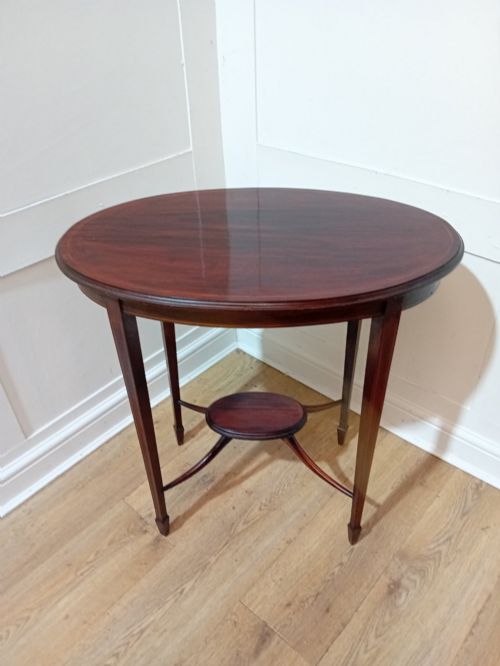
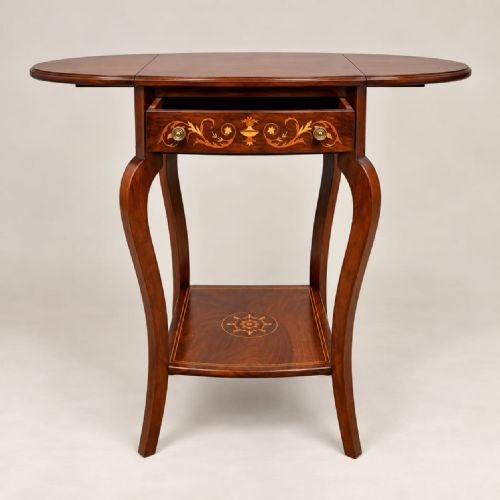


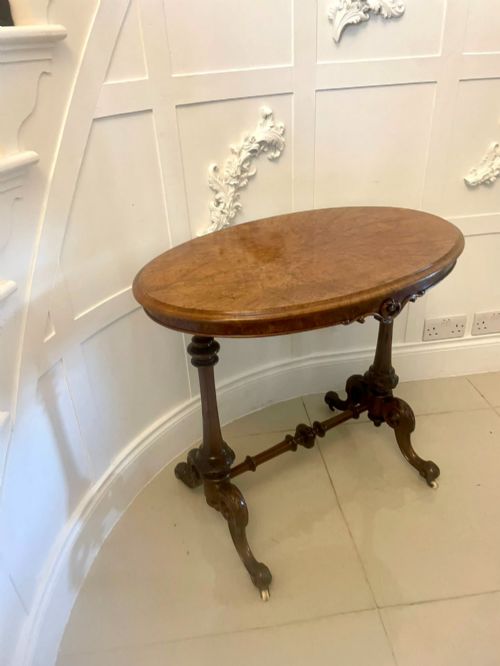
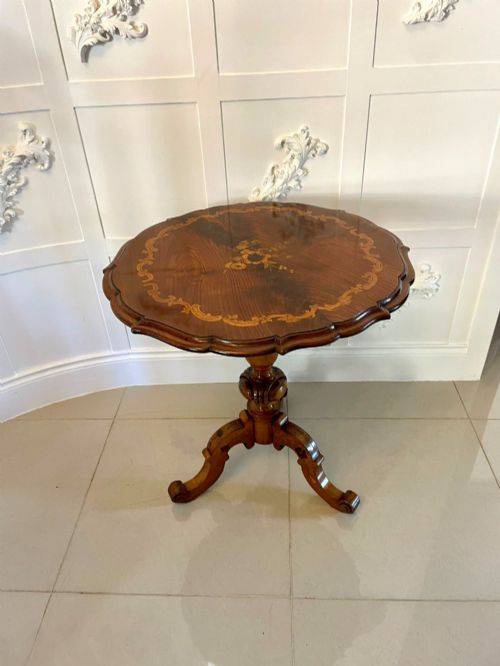
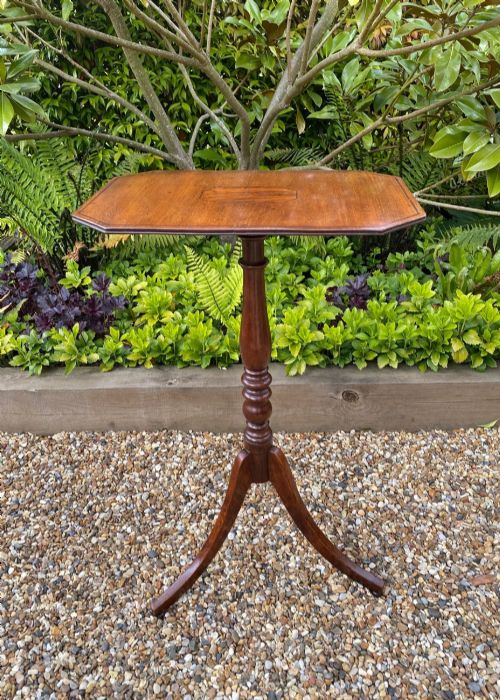
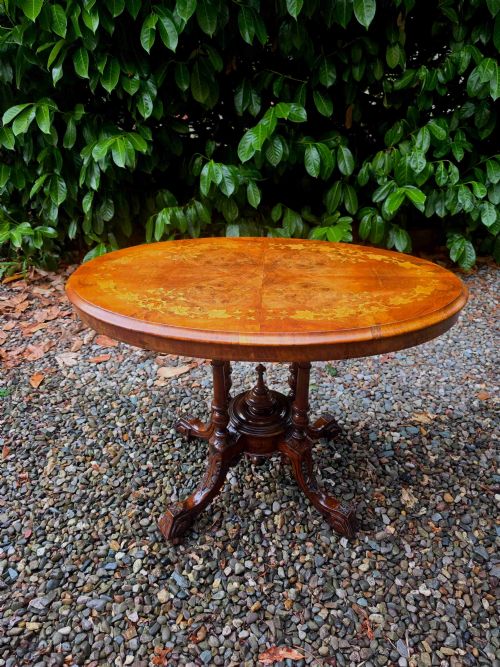
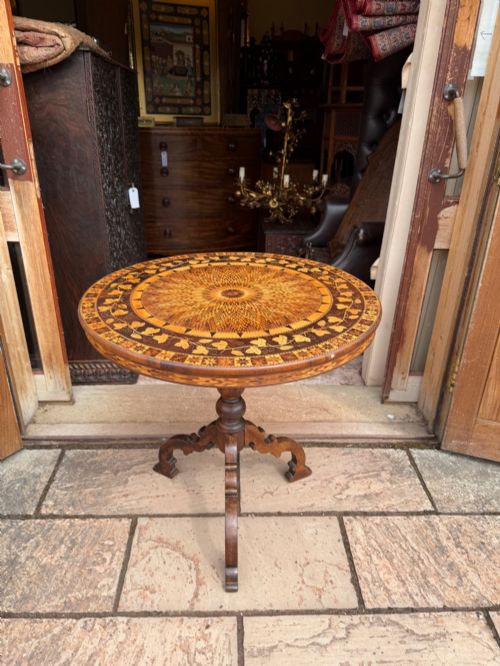
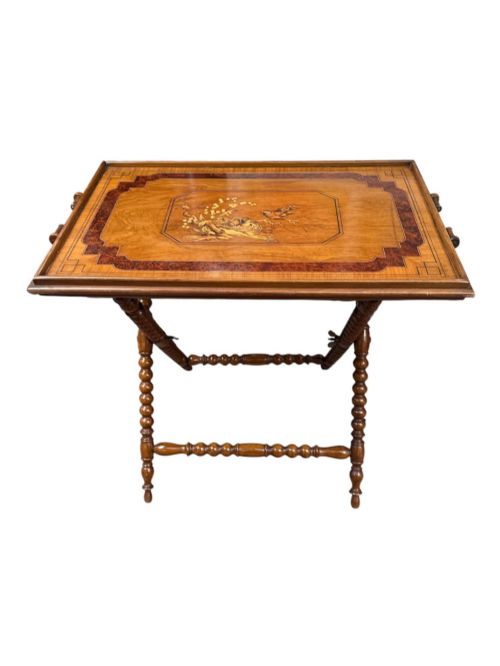
Victorian Inlay Side Table
When you search for a victorian inlay side table, you are looking at nineteenth-century occasional pieces that bring warmth and intricate pattern into a room.
Victorian Inlay Side Table
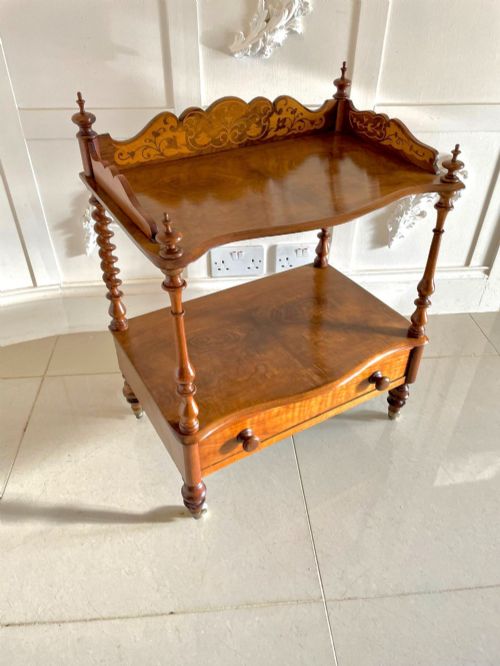
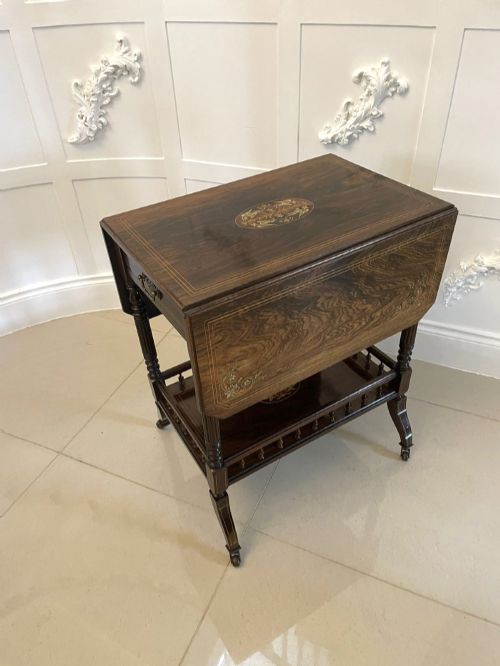
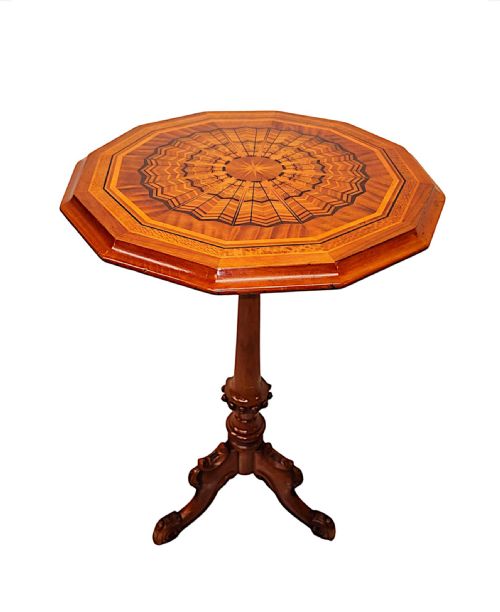
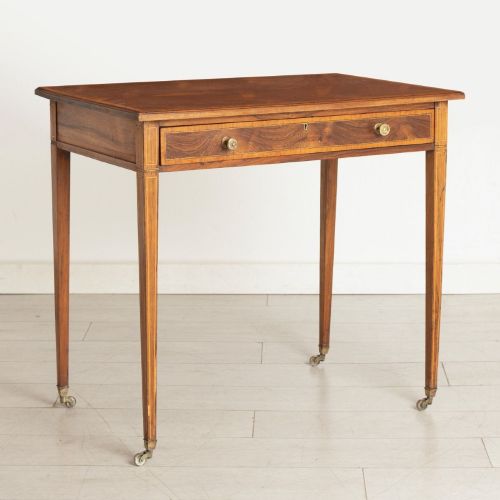
A victorian inlay side table encompasses a variety of occasional forms built during the nineteenth century, ranging from compact lamp tables to games and writing tables. The most frequent examples on this page are lamp and side tables rendered in walnut or rosewood.
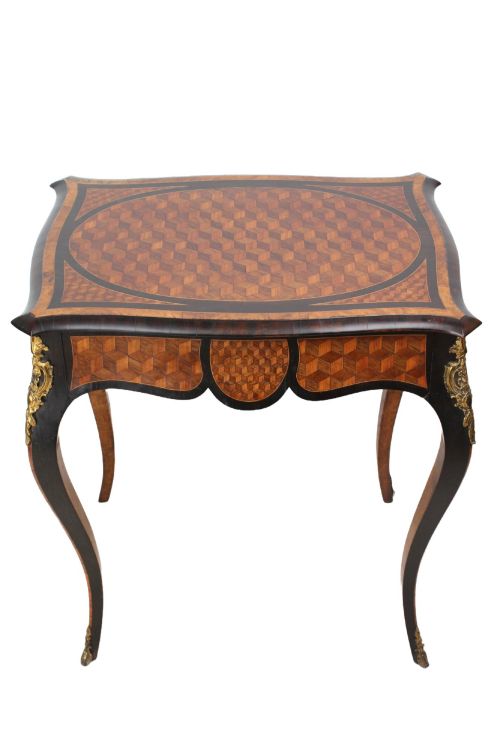
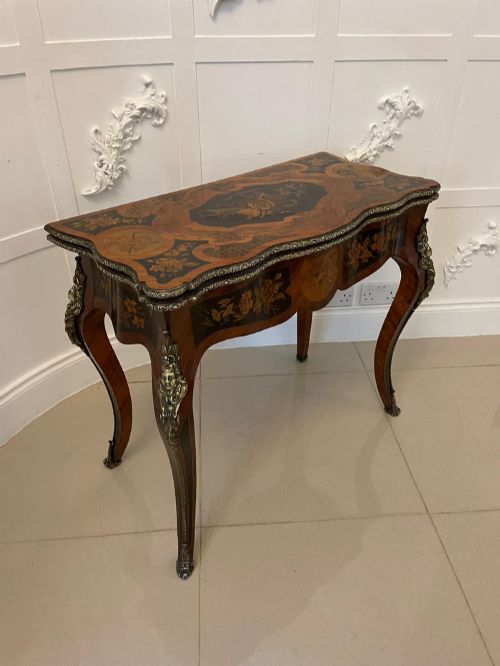
Makers and workshops produced these pieces in several revival styles, including Louis XV, Sheraton, and Moorish. Alongside British manufacturing, the selection includes Anglo-Indian Hoshiarpur tables and French kingwood designs.
Function governed the design, producing drop-leaf, kidney-shaped, and octagonal formats suited for display or practical use. Collectors encounter varied surfaces, from chess boards to floral marquetry.
How they were made
Cabinetmakers constructed carcases using timbers such as walnut, mahogany, and rosewood, often applying burr walnut or satinwood veneers to prominent surfaces. Marquetry inlay and parquetry patterns required precise hand-cutting of contrasting woods.
Brass mounts, ormolu, and occasionally mother-of-pearl or bone inlay embellished the structural timber. French polishing completed the process, sealing the grain and highlighting the natural colour of the wood.
Several tables conceal entire miniature battlefields in their tops, ready for a sudden nineteenth-century chess duel over tea.
What varies in quality
Quality rests on the crispness of the inlay work and the selection of figured veneers such as burr walnut or kingwood. Finer pieces demonstrate precise botanical or geometric marquetry without lifting edges or crude filler.
The choice of secondary timbers and the refinement of base structures, from bobbin legs to carved pedestals, distinguish standard workshop output from exceptional cabinetmaking.
JAS Shoolbred·Gillows·Liberty and Co·Anton Seuffert·Jennings and Betteridge
The Victorian Inlay Side Table Glossary
- Marquetry inlay
- A decorative technique where thin veneers of wood are fitted together to form pictorial or geometric patterns on a surface.
- Parquetry
- Geometric wood mosaic work used for floors or table tops, creating repeating patterns like cubes or squares.
- Ormolu
- Gilt bronze mounts applied to furniture, popular in French-influenced revival pieces.
- Hoshiarpur
- A style of woodwork originating in India known for dense carved and bone-inlaid patterns on octagonal tables.
- Specimen wood
- Furniture constructed from a multitude of different native or exotic woods, often showcasing varied natural tones.
Victorian Inlay Side Table: Frequently Asked Questions
How do I identify a Victorian table?
Look to the combination of timber choices, construction methods, and period design motifs like walnut veneers and marquetry.
Examine the underside and interior joints for nineteenth-century hand tools and fixings that align with the listed dates.
What is the difference between a side table and a lamp table?
Lamp tables generally feature a compact, often round or octagonal surface designed specifically to hold lighting.
Side tables tend to offer broader rectangular or kidney-shaped tops intended for general placement against a wall.
How should I care for an inlaid table?
Keep the wood away from direct sunlight and heat sources to prevent the veneers and inlay from drying and lifting.
Apply a traditional wax polish occasionally to nourish the timber and maintain the lustre of the French polished finish.
Are games tables practical for daily use?
Many games tables feature folding or rotating tops that conceal chess or backgammon boards beneath.
They function well as everyday occasional tables while providing a convertible surface for board games.