

Walnut Tiered Shelf
These walnut tiered shelf pieces span Victorian whatnots to Art Deco coffee tables, bringing rich timber and multiple levels into a room.
Walnut Tiered Shelf
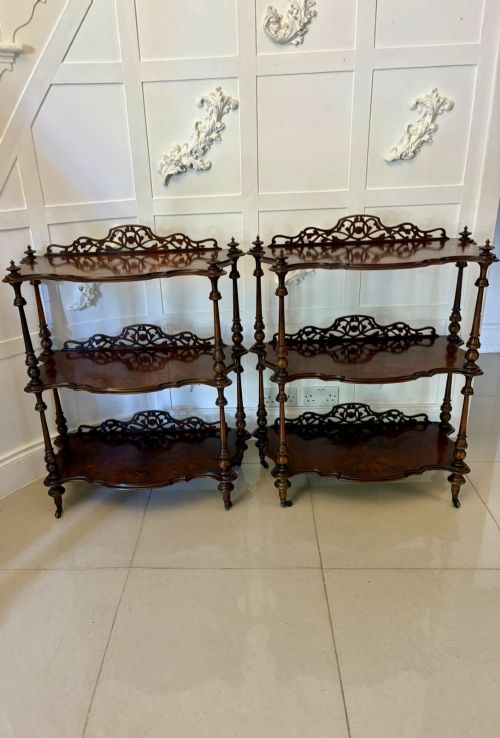
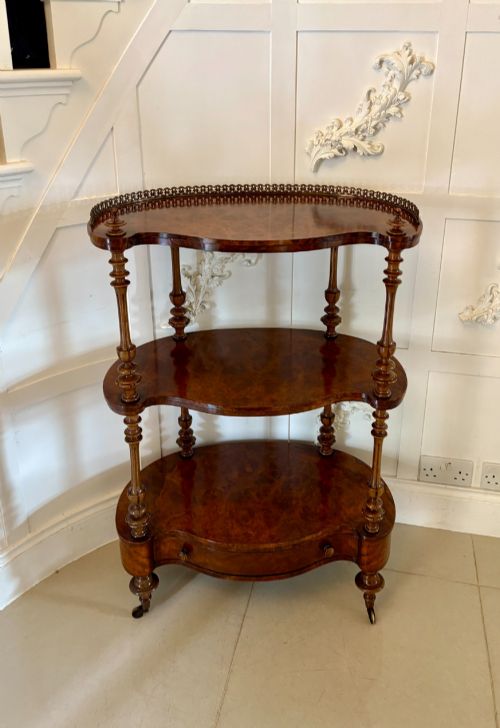
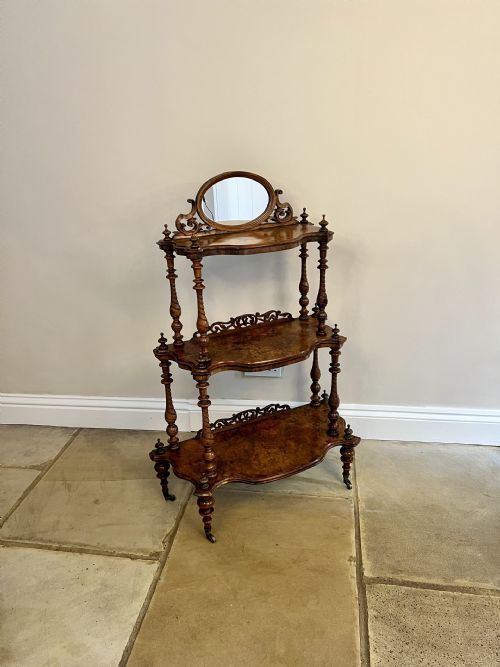
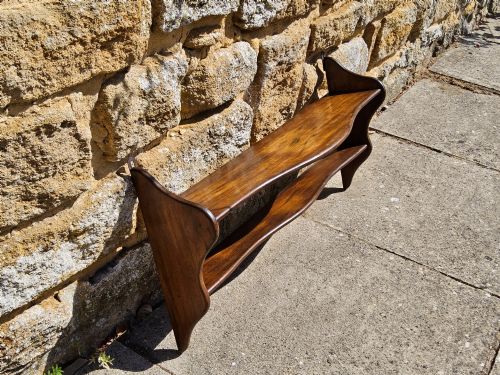
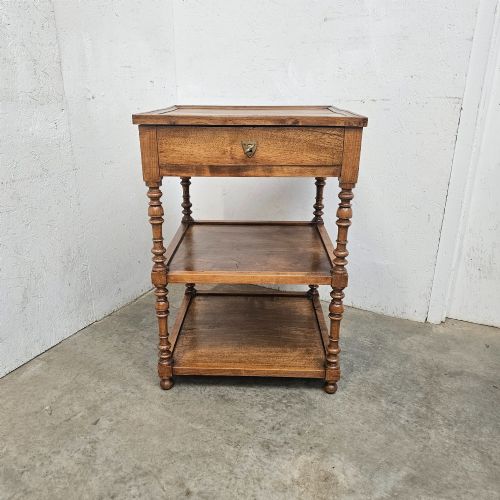
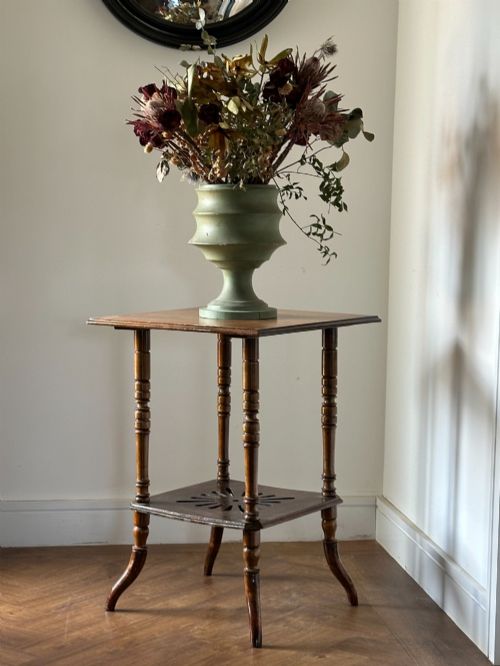
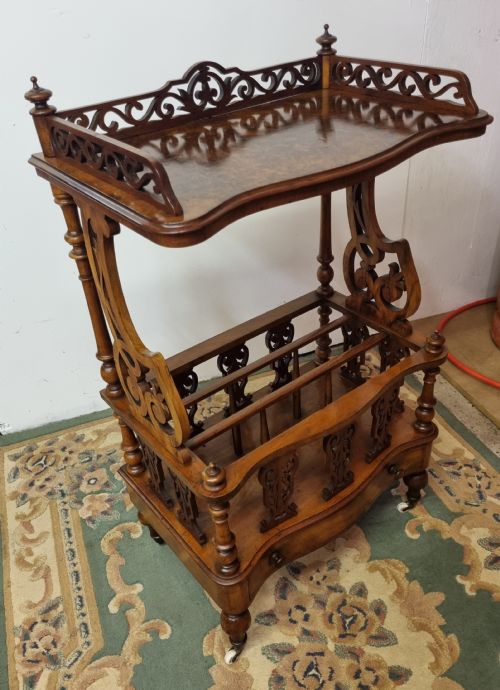
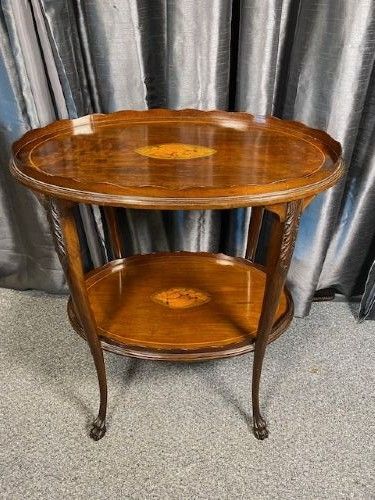
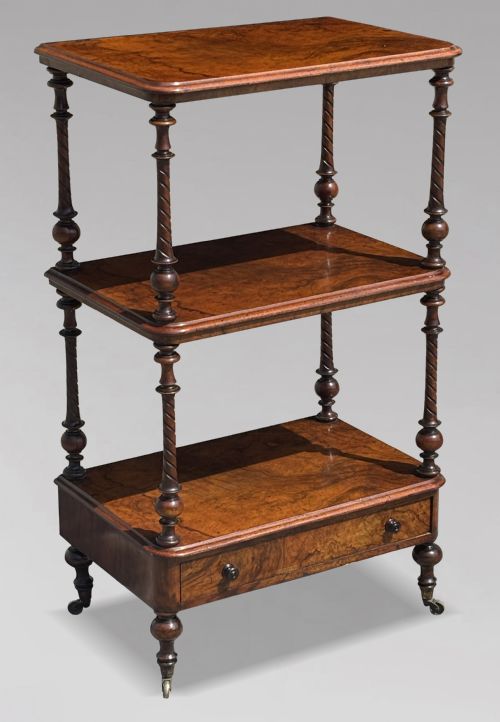
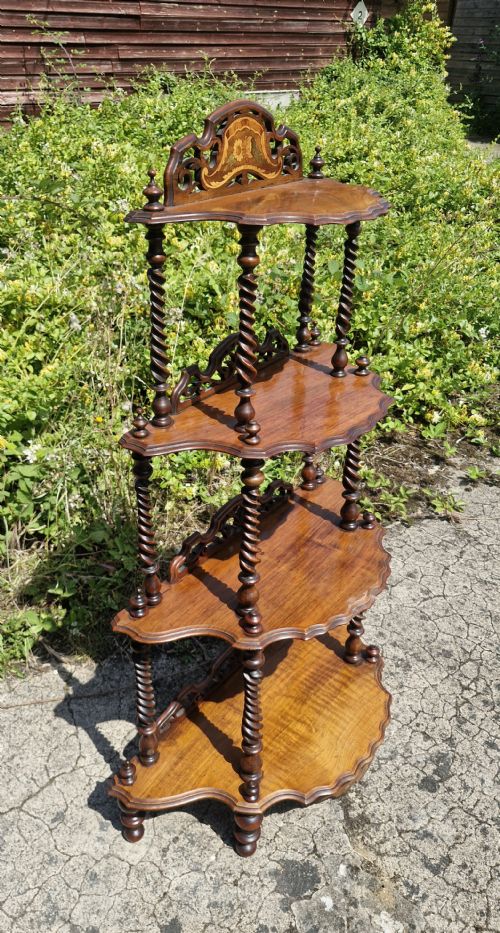
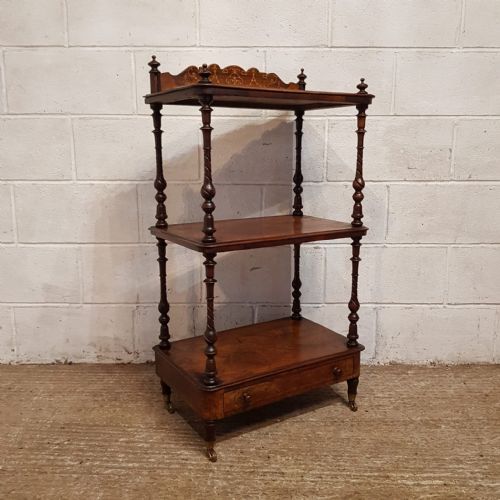
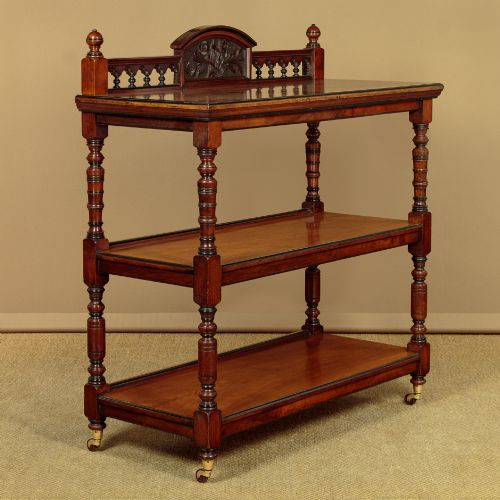
A walnut tiered shelf appears across several historical periods, most prominently in Victorian whatnots, etageres, and multi-tiered occasional tables. These pieces serve to display decorative objects or organise books across stacked wooden platforms supported by turned legs or brass mounts.
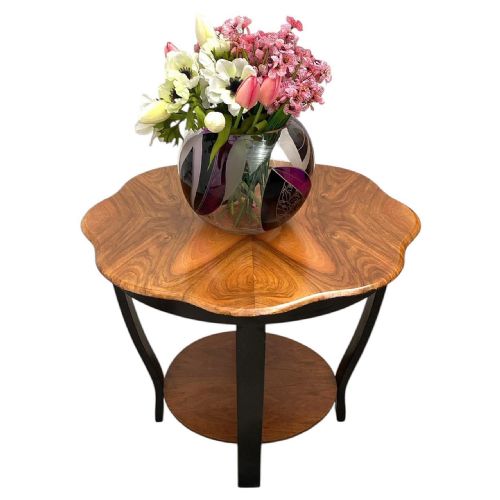
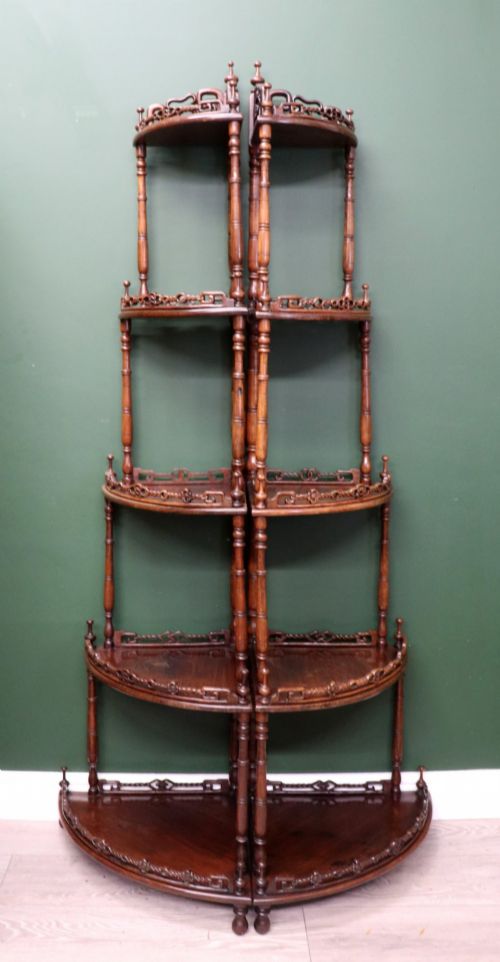
Victorian examples in burr walnut dominate the selection, often taking serpentine shapes or standing as freestanding corner units with multiple tiers. Later 20th-century variations extend into Art Deco figured walnut coffee tables and compact stacking bookcases.
Wall-mounted shelves and hanging cabinets provide alternative formats for smaller spaces, constructed from walnut alongside glass, brass, and ceramic details. French provincial and Aesthetic Movement influences also appear among the listed variations.
Materials and construction methods
Cabinet makers utilised solid walnut and figured burr walnut veneers to surface the tiers and bodies of these multi-level pieces. Timber selection dictated the visual impact of the grain, particularly on the prominent top surfaces of whatnots and etageres.
Metal components such as brass mounts, gilt metal, and ormolu provide structural support or decorative framing for glass and marble elements. Turned wooden legs and carved supports sustain the weight of stacked platforms across nineteenth-century pieces.
Listings feature Victorian, Edwardian, and Art Deco periods, with materials spanning solid walnut, burr walnut, brass, glass, and ceramic.
Distinguishing craftsmanship and finish
The choice between plain walnut and highly figured burr walnut alters the visual depth of the timber surfaces. Exhibition pieces demonstrate superior carving, marquetry inlays, and serpentine shaping that demand advanced carpentry skills.
Hardware integration and metal mounts separate standard utility items from finer decorative pieces. The precision of turned uprights and the stability of multi-tier construction define the structural calibre of each item.
Heal's
The Walnut Tiered Shelf Glossary
- Whatnot
- A piece of furniture consisting of a set of open shelves for displaying small objects or ornaments. It gained popularity during the Victorian era as a multi-tiered display stand.
- Etagere
- A piece of furniture with a set of open shelves for displaying ornaments. These typically feature French influences and lighter frames than standard whatnots.
- Burr Walnut
- Timber taken from the warted excrescences of a walnut tree, yielding highly decorative grain patterns. Cabinet makers prized this veneer for high-end Victorian furniture.
- Canterbury
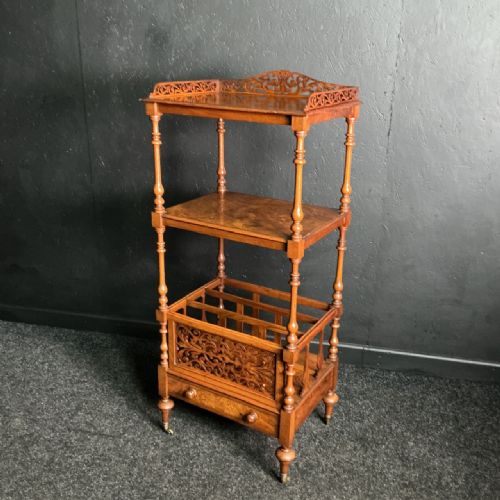
- A low stand with partitions for holding sheet music, books, or newspapers, often incorporated into the base of tiered shelf units. Nineteenth-century examples frequently combine this compartment with display shelves above.
Walnut Tiered Shelf: Frequently Asked Questions
What is a walnut tiered shelf used for?
These items provide stacked surfaces designed for displaying decorative ornaments, holding books, or organising daily items in living spaces. Multi-tiered etageres and whatnots allow for vertical storage without cluttering floor areas.
Victorian variations often held ceramics or glassware, while later twentieth-century formats functioned as coffee tables or stacking bookcases. Their open tiers make them practical for accessible storage and display.
How do I identify a Victorian whatnot?
Victorian whatnots typically feature three or more stacked wooden tiers supported by turned or carved upright wooden columns. Burr walnut and serpentine shapes are common indicators of mid-nineteenth-century manufacture.
Many examples include lower cabinets, drawers, or integrated Canterbury compartments beneath the open shelves. Brass mounts and marquetry inlay further point toward this period of production.
Are walnut tiered shelves sturdy?
Most pieces rely on solid wood uprights, turned legs, and secure tier fixings to maintain stability across multiple levels. Freestanding designs distribute weight across a wide base, though wall-mounted versions require secure installation.
Heavier iterations incorporating marble tops or extensive brass framework provide additional structural weight. Proper placement on level flooring prevents wobbling across upper shelves.
How do French and English styles differ?
French etageres and tables frequently incorporate ormolu mounts, marquetried surfaces, and Louis XV styling influences. These pieces lean toward decorative elegance with curved lines and gilt metal details.
English walnut furniture of the nineteenth century tends to emphasise the natural figure of the burr walnut timber. Structural forms remain upright and architectural, exemplified by Victorian corner whatnots and Aesthetic Movement buffets.