
Victorian Inlay Box
When you search for a victorian inlay box, you meet everything from tea caddies to writing slopes decorated in brass, mother-of-pearl and marquetry.
Victorian Inlay Box
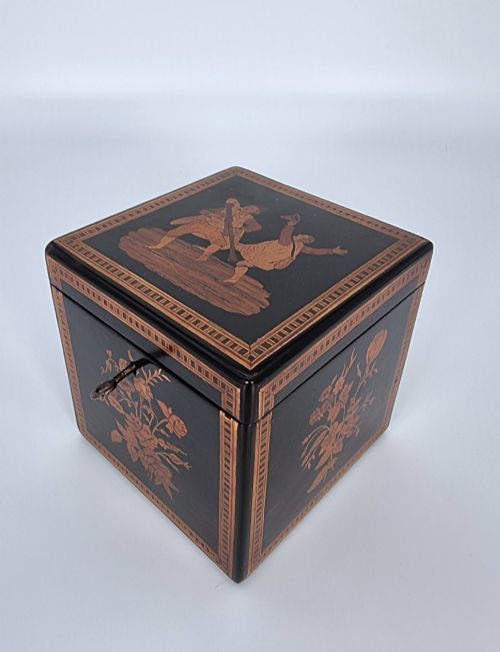
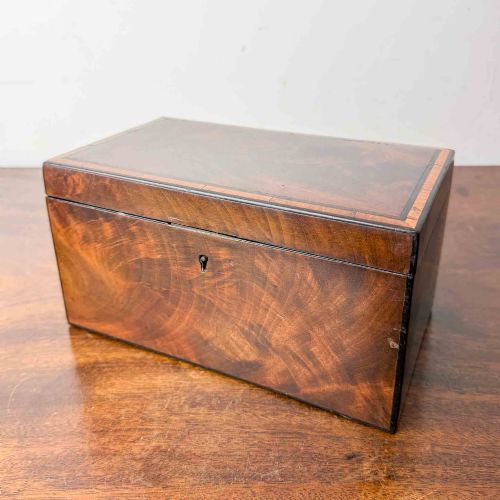
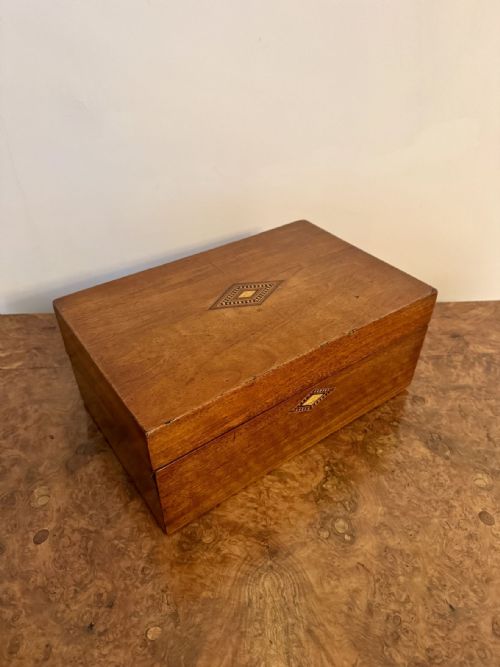
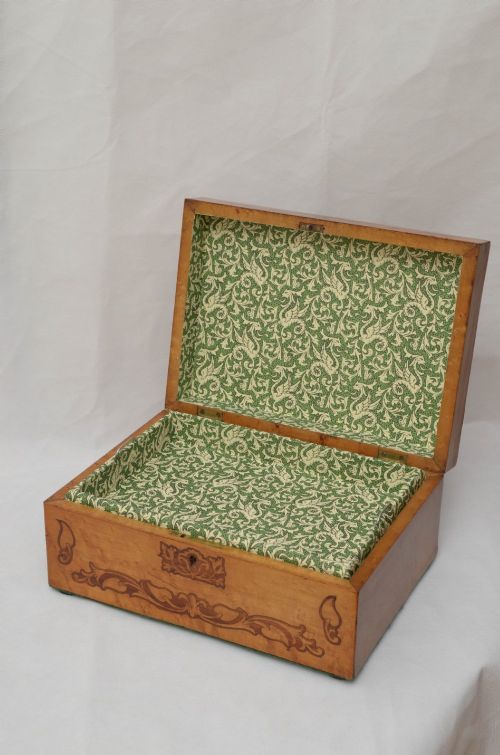
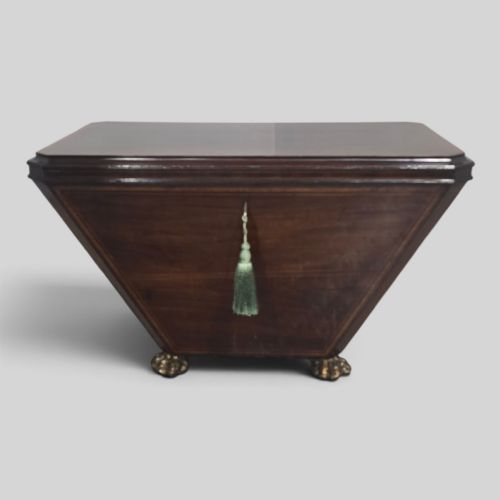
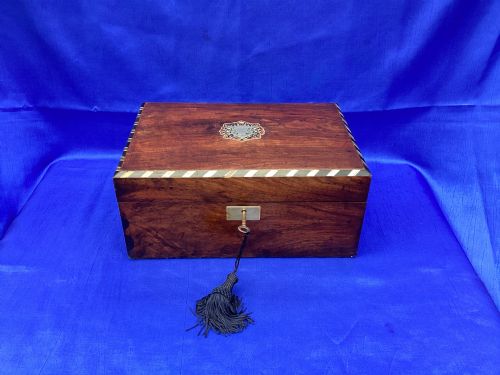
A victorian inlay box covers a wide range of functional containers designed for the domestic interior, including jewellery cases, tea caddies, writing boxes, and stationery cabinets. These pieces served practical organisational purposes for letter writing, sewing, and the storage of valuables. Most examples date from the nineteenth century, spanning from the William IV period through the late Victorian decades.
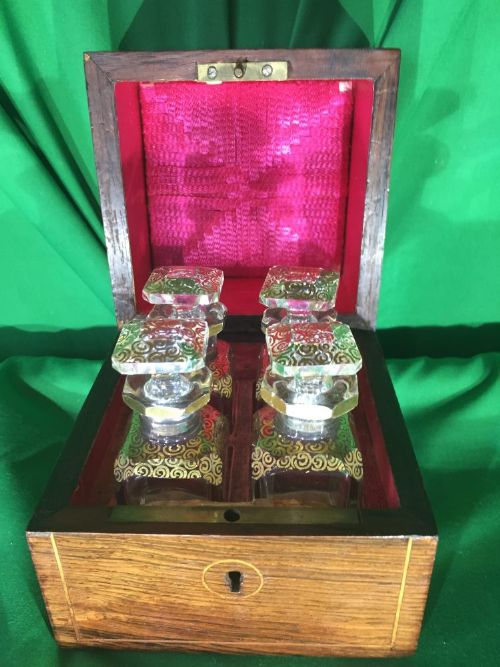
The objects frequently appear in woods such as walnut, rosewood, and mahogany, often embellished with contrasting veneers or geometric bands. Buyers regularly encounter fitted interiors designed for specific contents, such as scent bottles, card packs, or tea canisters. Smaller trinket boxes and snuff boxes also surface alongside larger dressing cases and games caskets.
Materials and Technique
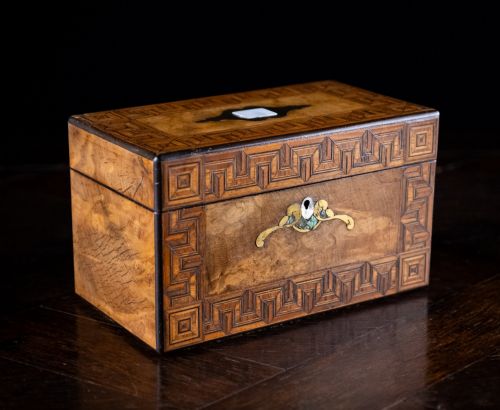
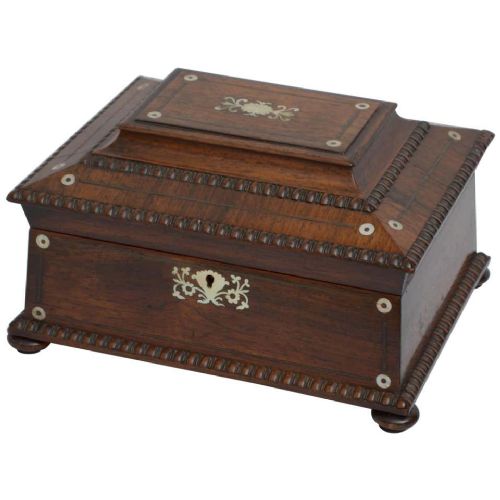
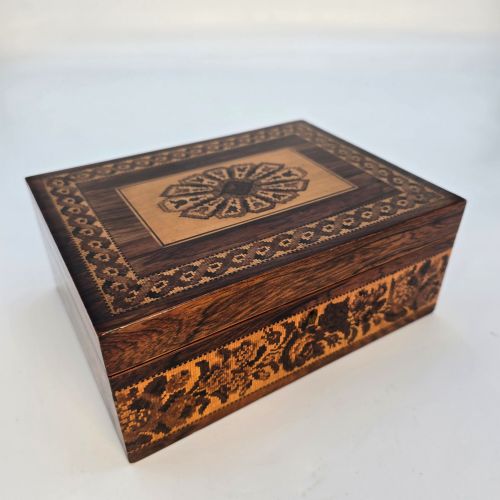
Cabinetmakers constructed these vessels using dense hardwoods like burr walnut, mahogany, and rosewood as a stable base for decorative veneers. The surface ornamentation relied on precise cutting and fitting of contrasting materials, including brass, mother-of-pearl, bone, and lighter woods such as satinwood and boxwood. Tunbridge ware examples utilised thousands of tiny tinted wood blocks assembled to form intricate pictorial mosaics.
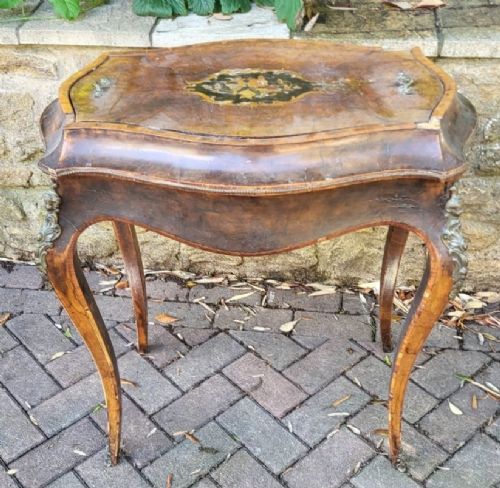
Inlay techniques involved recessing elements directly into the timber surface to create flush, decorative patterns ranging from geometric parquetry to floral marquetry. Metal mounts, escutcheons, and glass components were integrated to reinforce corners, secure lids, and provide internal storage divisions.
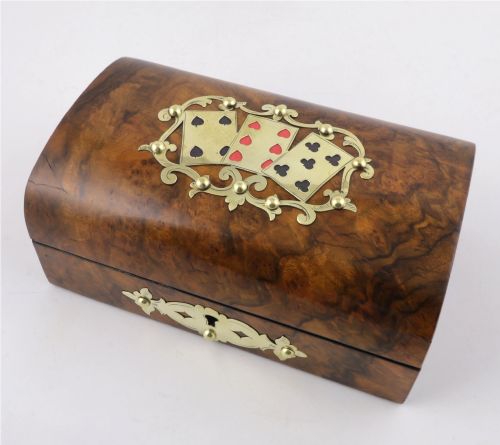
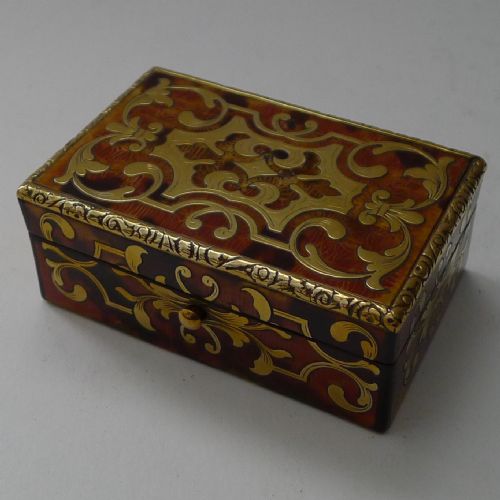
Listings feature walnut, rosewood, and mahogany vessels decorated with mother-of-pearl, brass, and Tunbridge ware.
Quality Variations
The standard of a victorian inlay box depends heavily on the precision of the joinery and the complexity of the surface decoration. Superior pieces display seamless integration of contrasting veneers without gaps or lifting along the grain, whereas lesser examples show simpler geometric borders with visible filler.
Internal fittings also indicate grade, with top-tier items retaining original velvet linings, matched glass bottles, and fully operable brass locks. The choice of primary timber influences worth, with richly figured burr walnut and exotic coromandel commanding greater attention than plain softwood carcasses.
Edwards and Roberts·Edmund Nye·Henry Hollamby·H Mitchell
The Victorian Inlay Box Glossary
- Marquetry
- A decorative technique of applying veneer pieces to a structure to form pictorial or geometric designs. It differs from parquetry through its pictorial and curvilinear scope.
- Tunbridge Ware
- A type of woodwork characterised by mosaic designs made from many small pieces of naturally coloured woods. These items often depict local flora and geometric bands.
- Parquetry
- Geometric mosaic woodwork used for floors and box lids, formed by geometric blocks of wood. The patterns rely on straight lines and repeating grids.
- Escutcheon
- A flat plate surrounding a keyhole, often fashioned from brass or mother-of-pearl on these containers. It protects the surrounding wood from wear caused by the key.
- Casket
- A small ornamental box used for holding valuables or jewellery. These vessels usually feature hinged lids and secure locking mechanisms.
Victorian Inlay Box: Frequently Asked Questions
How were these boxes used?
These containers were utilised in the parlour and bedroom for storing correspondence, writing implements, sewing gear, and personal valuables. Many included specialised internal trays and compartments to organise small items.
Larger variations functioned as portable desks or dedicated storage for tea leaves, which were expensive commodities requiring secure containment under lock and key.
How do I date a piece?
Dating relies on observing the primary timber, hardware styles, and construction methods used in the carcass. Earlier nineteenth-century examples often feature sarcophagus shapes and simple brass stringing, while later decades favour dense marquetry and heavier mouldings.
Maker marks, stamped locks, and documented signatures help narrow the timeline to specific decades like the 1860s or 1880s.
Are the interiors original?
Many surviving examples retain their fitted velvet or silk linings, lift-out trays, and original glass components such as inkwells or scent bottles. Over time, worn fabrics were frequently replaced by owners or restorers.
Examining the glue residue, paper backings, and wear patterns inside helps determine whether the internal layout remains untouched since the nineteenth century.
How do I care for the wood?
Protecting these items requires keeping them away from direct sunlight and maintaining stable room humidity to prevent the wood and delicate veneers from warping or cracking. Gentle dusting with a dry cloth preserves the polished surface.
Harsh chemical polishes should be avoided, as they can damage antique shellac finishes and loosen tiny pieces of inlay.