




Victorian Hot Water Urn
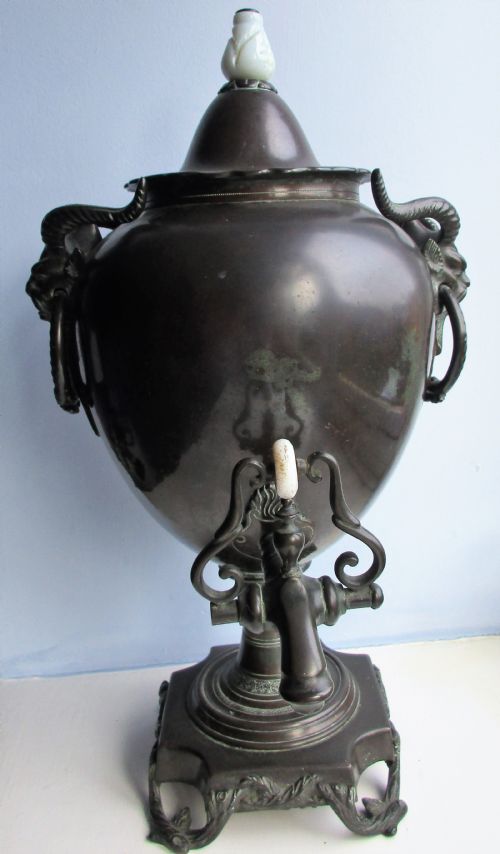
A victorian hot water urn is a heavy metal vessel for heating water at the table, prized for period hospitality and presence.
Victorian Hot Water Urn
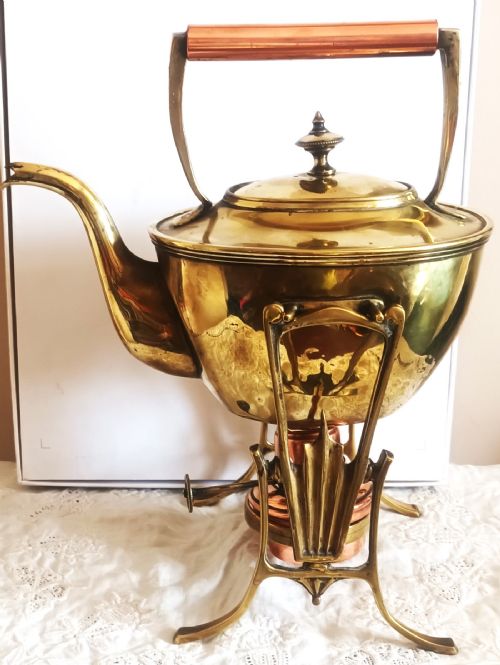
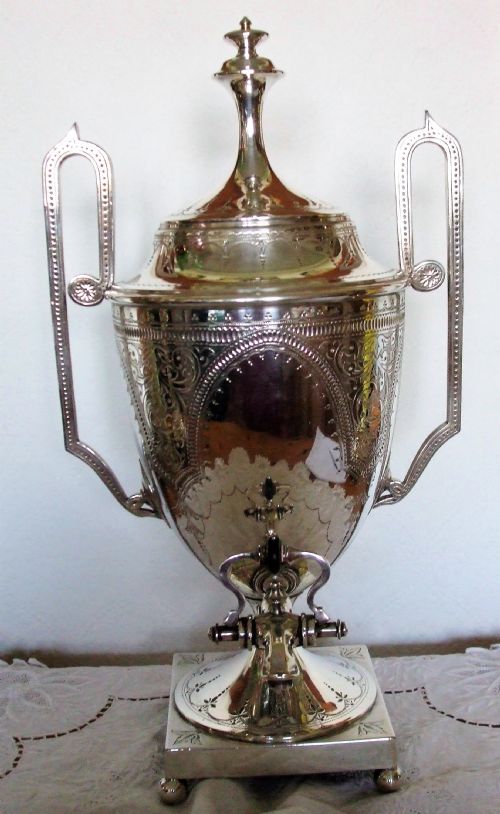
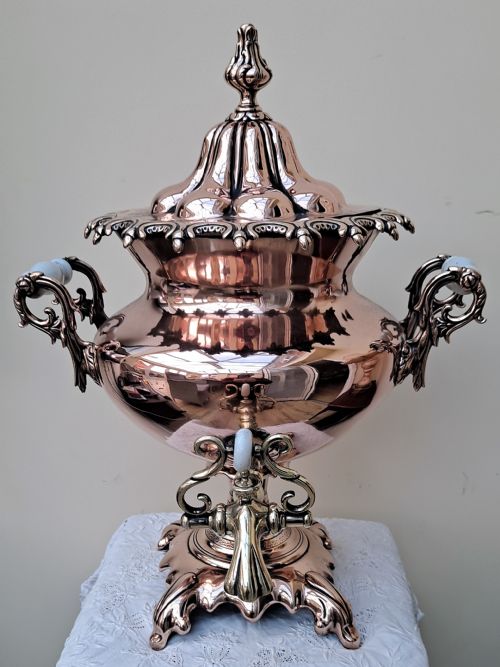
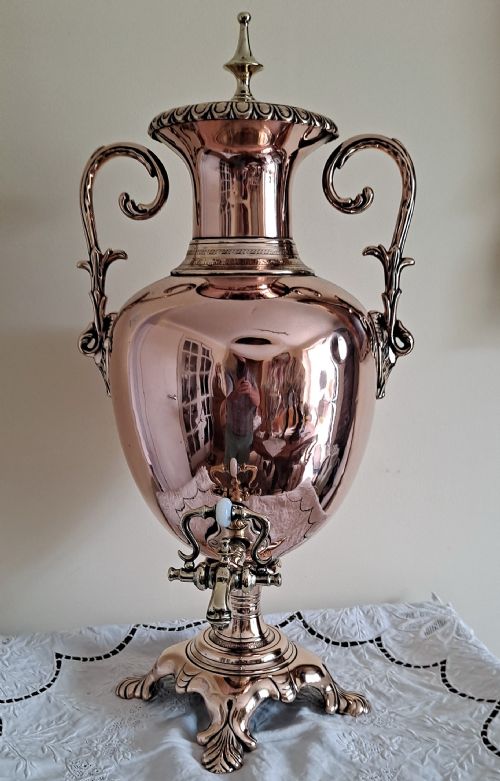
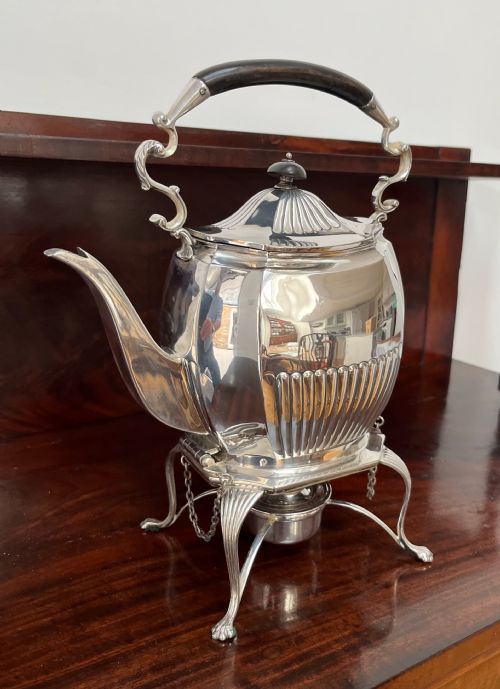
When you search for a victorian hot water urn, you encounter substantial metal vessels designed to supply piping water for tea. The examples gathered here span from the mid nineteenth century into the Edwardian era, taking the form of large samovars, tea urns with taps, and spirit kettles mounted on stands.
While the majority belong to the Victorian period, you also find pieces reflecting Georgian neoclassical lines, Regency taste, and occasional Arts and Crafts or French nineteenth century influences. Makers from London, Sheffield, and Paris contributed to this variety, working in brass, copper, and silver plate.
Metals and construction methods
These pieces rely heavily on copper, brass, and silver plate over base metals, often combined within a single vessel for contrast in handles, taps, and mountings. Many incorporate wooden or bone insulators on the handle grips to protect the hand from heat, alongside ebonised wood details.
Spirit kettles sit on dedicated metal stands equipped with small burners beneath the bowl. Samovars and tea urns feature internal heating tubes or chambers and working brass taps at the base for dispensing water directly into teaware.
Listings feature 19th Century, Georgian, and Edwardian periods, utilising brass, copper, silver plate, ceramic, and ebonised wood.
Distinctions in manufacture and finish
Quality reveals itself in the weight of the metal, the crispness of applied cast mounts, and the integrity of the joints and internal fittings. A finer vessel possesses balanced proportions, secure handles, and a well-fitted tap that remains functional.
Maker attribution elevates certain pieces, particularly those bearing the marks of established silversmiths and metalworkers such as Walker & Hall, William Soutter & Sons, or Benetfink & Co. Pontypool ware examples introduce specialised japanned finishes that require careful preservation.
William Soutter & Sons·Walker & Hall·Benetfink & Co·Risler and Carré Paris·Frederik Ellis Tim & Co
The Victorian Hot Water Urn Glossary
- Spirit kettle
- A portable water kettle suspended on a metal frame above a small spirit burner. This arrangement kept water hot during tea service in a drawing room or dining room.
- Pontypool ware
- British metalware finished with a japanned lacquer technique that produced glossy, decorated surfaces. This treatment often mimics oriental lacquer work on tinplate or iron.
- Sheffield plate
- An early form of composite metal made by fusing a thin sheet of silver to a thicker copper base. It is characteristic of better quality British vessels from the eighteenth and nineteenth centuries.
Victorian Hot Water Urn: Frequently Asked Questions
How do you use a spirit kettle?
A spirit kettle sits upon its metal stand above a small burner filled with methylated spirit or similar fuel. Lighting the burner maintains the temperature of the water inside the kettle during a long tea service.
Most examples include a swivelling handle and a secure frame so the vessel remains steady while lifted or tilted toward a teapot.
What is the difference between an urn and a samovar?
While both terms describe large vessels for hot water, a samovar traditionally incorporates a vertical internal tube or chimney running through the centre of the body. Tea urns often rely on external heat sources or simply serve to hold water heated elsewhere.
In practical nineteenth century use, the terms frequently overlap in descriptions of large hospitality vessels.
Can these metal urns still boil water?
Many of these pieces are antique display items rather than modern kitchen appliances, and internal seals or burners may no longer be fit for active daily use. Testing the structural integrity of the tap and solder joints is necessary before introducing liquid.
Collectors generally treat them as decorative metalwork for a sideboard or dining room.
How do I clean brass and copper vessels?
Maintaining copper and brass requires appropriate metal cleaners formulated to lift tarnish without stripping the historic surface layer. Harsh abrasives will scratch the metal and ruin any remaining original polish.
Silver plated versions need gentler care to preserve the thin layer of precious metal over the underlying base.