


Victorian Horse Racing Prints
Victorian horse racing prints capture the drama of the nineteenth-century turf through framed engravings, aquatints and chromolithographs that bring early trackside action directly to your walls.
Victorian Horse Racing Prints
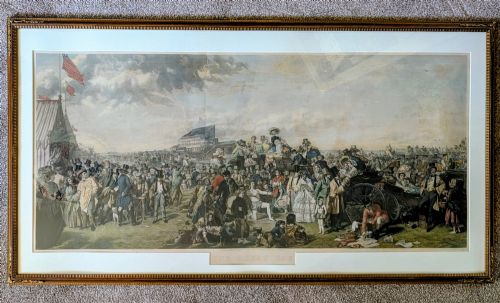
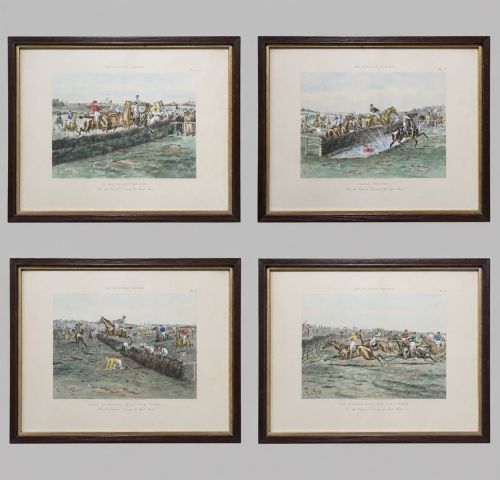
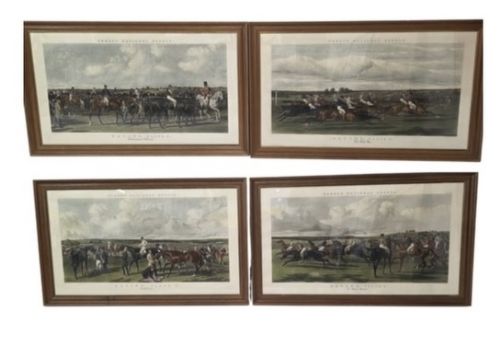
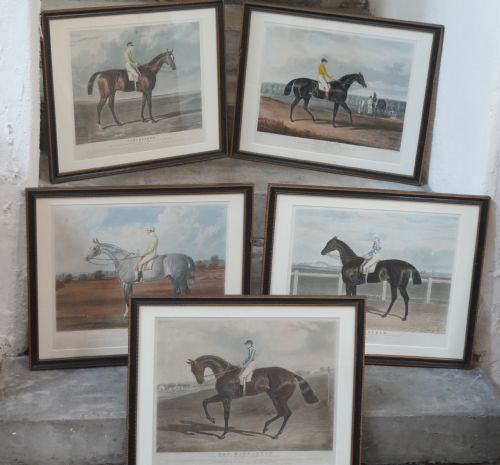
Victorian horse racing prints encompass framed engravings, aquatints and chromolithographs produced during the nineteenth century, often capturing scenes after prominent artists like William Powell Frith and George Finch Mason. These works document the spectacle of the turf through sets of four or five plates, alongside larger single sheets and double-page periodical spreads.
The selections available here range from detailed nineteenth-century sporting engravings dated to the eighteen-fifties and eighteen-nineties through to framed Victorian jockeys and racehorse portraits. Buyers regularly encounter both British and American examples, reflecting the widespread popularity of equestrian subjects during the period.
Framed presentation is a common feature among these pieces, utilising glass, paper, wood, gilded wood and plaster to house the works securely. Whether you prefer a complete set of racing aquatints or a single chromolithograph, each piece offers a direct window into nineteenth-century sporting culture.
Materials and production methods
The production of these works relies heavily on paper sheets marked with ink through engraving, aquatint and chromolithography techniques. Publishers and artists utilised these printmaking methods to reproduce detailed sporting scenes and horse portraits for a receptive Victorian public.
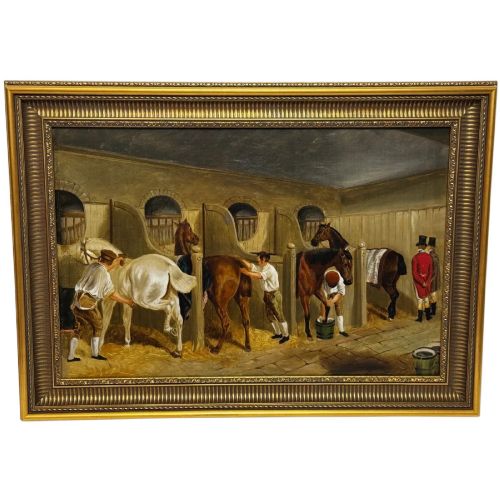
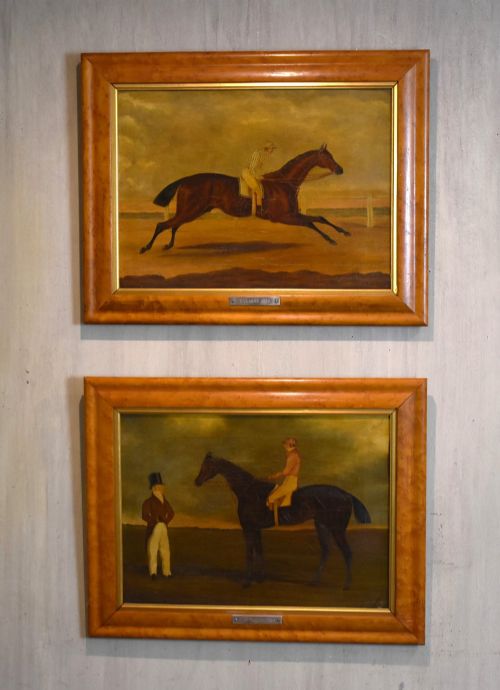
Framing materials complete the construction, incorporating wood, gilt wood and gilded wood alongside protective glass and plaster mouldings. These traditional surrounds preserve the delicate paper prints and oil paintings that complete the grouping.
Even nineteenth-century racehorses needed good press coverage, as proved by snappy portraits of Diamond Jubilee looking remarkably relaxed about his handicap.
Distinguishing quality in the selection
Quality varies according to the crispness of the ink impression and the depth of the plate mark on the paper. Stronger impressions retain finer details of the horses, jockeys and crowd scenes depicted by the artist.
The condition and period suitability of the framing elements, such as gilded wood and glass, influence the overall character of the piece. Complete sets maintained together show greater consistency in tone and preservation than assembled groupings.
William Powell Frith·George Finch Mason·John Frederick Herring Snr·Alfred Wheeler·Thomas Worth
The Victorian Horse Racing Prints Glossary
- Aquatint
- A printmaking technique that produces tonal areas resembling watercolour washes. It was frequently employed in nineteenth-century sporting prints to render atmospheric backgrounds and shadowed forms.
- Chromolithograph
- A multicoloured print produced through lithography, using separate stones or plates for each colour. These vibrant sheets appeared frequently in Victorian publications.
- Engraving
- A method of cutting design lines into a metal plate with a sharp tool to hold ink. It yields precise, sharp lines suited to detailed equine and architectural subjects.
- Gilt wood
- Wood coated with a thin layer of gold leaf or gold paint. This finish frequently borders nineteenth-century sporting frames.
- Sporting art
- A genre dedicated to depicting animals, field sports and racing. In this context, it covers both printed works and oil paintings from the Victorian era.
Victorian Horse Racing Prints: Frequently Asked Questions
How should I hang framed prints?
Hang these framed paper works away from direct sunlight to protect the ink and paper from fading over time. Maintaining a stable indoor environment prevents moisture damage to the wood and plaster frames.
Group sets together at eye level to recreate the intended visual impact of nineteenth-century gallery displays.
Are these pieces original nineteenth-century items?
The listings comprise nineteenth-century artefacts, including engravings, aquatints and chromolithographs dated across the Victorian period. Materials such as aged paper, ink and traditional wood frames reflect the manufacturing practices of that era.
Careful inspection of the paper stock and printing technique helps confirm the historical context of each work.
What subjects appear in these works?
The imagery focuses on nineteenth-century turf subjects, including specific race meetings, jockeys, racehorse portraits and trackside crowds. Artists recorded famous racing events and personalities of the Victorian sporting world.
Political prints and general equestrian scenes also feature alongside pure racing subjects.
Do the prints come ready to hang?
Most pieces arrive within protective wood, gilt wood or gilded wood frames fitted with glass and backing materials. This framing safeguards the fragile paper sheets from handling damage.
Buyers can mount them directly upon receipt, provided the hanging wire or fixtures suit their wall type.