


Framed Horse Racing Prints
Framed horse racing prints bring the urgency of the turf and the tradition of British sporting art directly onto the wall.
Framed Horse Racing Prints
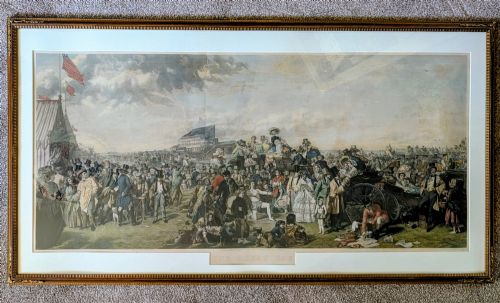
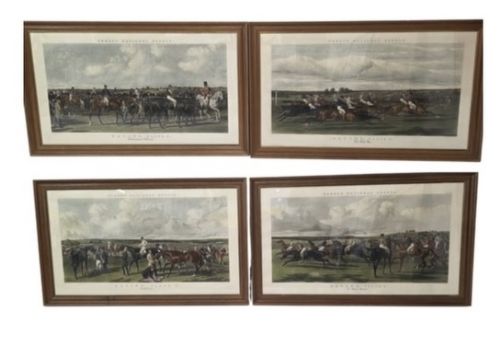
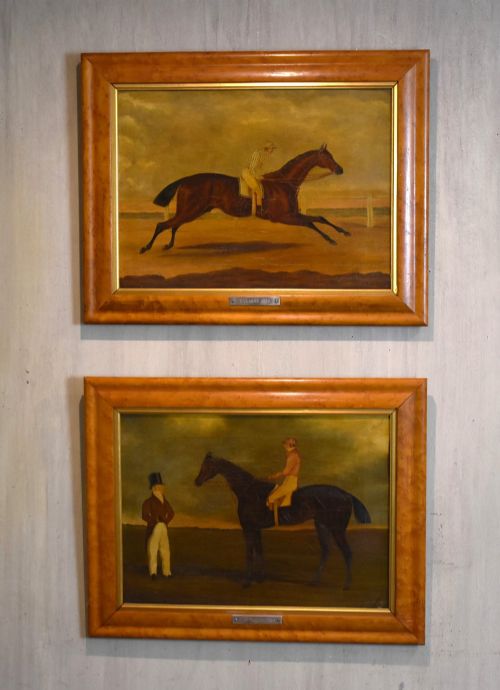
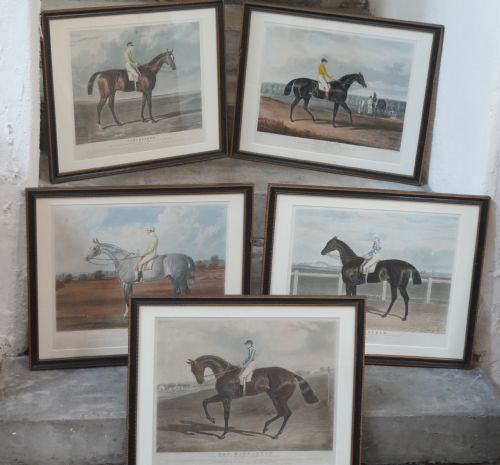
When you search for framed horse racing prints, you encounter works that capture the drama of the track through Victorian engravings, Edwardian aquatints and chromolithographs. These pieces record legendary racehorses, jockeys and classic racing scenes framed for domestic display.
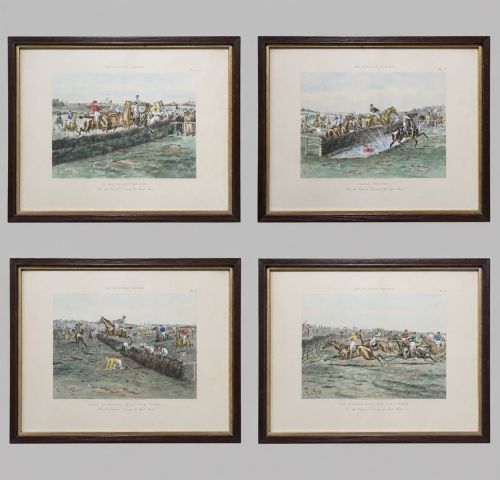
The selection ranges from individual plates after artists like William Powell Frith and George Finch Mason to sets of four or five depicting specific racing sequences. Victorian and early 20th century examples dominate, preserved behind glass within wooden or gilded frames.
Materials and Techniques
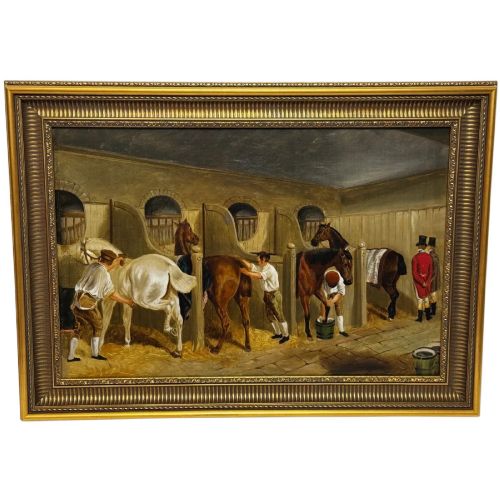
The works rely heavily on paper printed with ink, employing techniques such as aquatint, engraving and chromolithography to achieve sharp detail and rich colour. Some entries incorporate photographic prints or oil on canvas, showing the breadth of sporting art production.
Framing typically involves wood and gilded wood, often enhanced with glass to protect the delicate paper surfaces from environmental damage. Gilt finishes add a traditional shine that complements the equestrian subject matter.
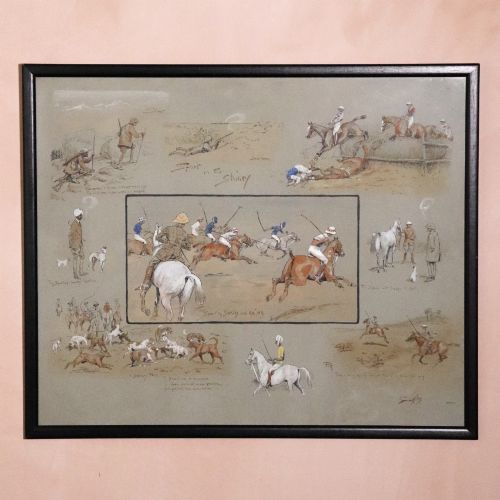
Canines also make an appearance on the turf, alongside jockeys and thoroughbreds.
Judging Quality in Sporting Art
Quality depends upon the clarity of the printed line and the faithfulness of the impression to the original work. Early strikes and well-preserved chromolithographs retain a crispness that later copies or worn plates lose.
The integrity of the framing also dictates value, with original wood and gilt frames providing a more harmonious context for nineteenth and early twentieth century works than modern replacements.
William Powell Frith·George Finch Mason·John Frederick Herring Snr·Alfred Wheeler·John Atkinson·Isaac Cullin·Thomas Worth
The Framed Horse Racing Prints Glossary
- Aquatint
- An intaglio printmaking technique that produces tonal effects similar to watercolour washes. It was frequently utilised for sporting prints to render atmospheric racecourse scenes.
- Chromolithography
- A planographic colour printing method that uses multiple lithographic stones. This technique allowed publishers to produce vibrant multi-coloured reproductions of sporting paintings.
- Engraving
- A printmaking process where an artist cuts lines into a metal plate to hold ink. It creates precise and durable images suited to detailed depictions of jockeys and horses.
- Gilt Wood
- Wood treated with gold leaf or a gold-coloured metallic finish. It serves as a traditional framing material for nineteenth-century artwork.
Framed Horse Racing Prints: Frequently Asked Questions
How do I date an old racing print?
Dating relies on stylistic clues, framing materials, and printed publication dates often found in the margins.
Typography, paper texture, and the specific printing method also indicate whether a piece originates from the Victorian period or later decades.
Are these prints original works?
The inventory includes original prints, engravings, and aquatints published in limited runs or series, alongside unique oil paintings.
Prints are typically mechanical reproductions of original paintings by known sporting artists, though many hold significant age and collectable value.
How should I hang framed sporting art?
Hang these pieces at eye level in spaces with controlled lighting to protect the paper and ink from direct sunlight.
Pairing sets of prints together, such as sequences of four or five, maintains the narrative flow intended by the original publisher.
What styles of frames are common?
Frames typically feature wood, gilded wood, or simple gilt mouldings that reflect the aesthetic of the nineteenth and early twentieth centuries.
Many retain their original glazing, which helps preserve the fragile paper prints beneath.