


Set of Horse Prints
A set of horse prints brings the energy of the nineteenth-century turf and hunting field directly onto your wall.
Set of Horse Prints
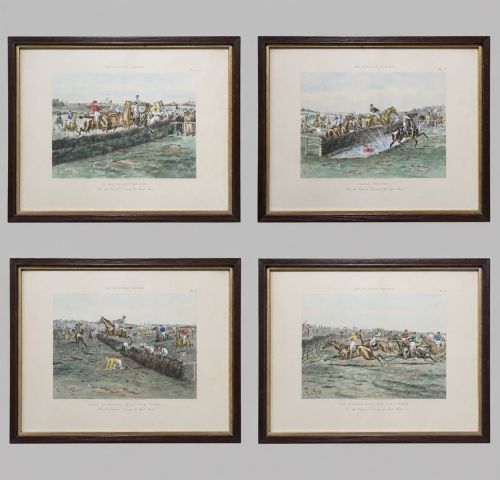
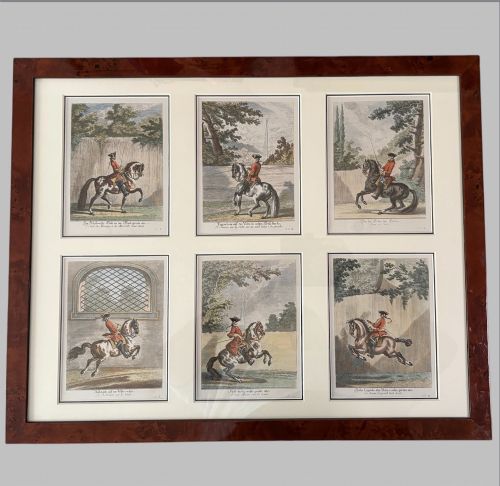
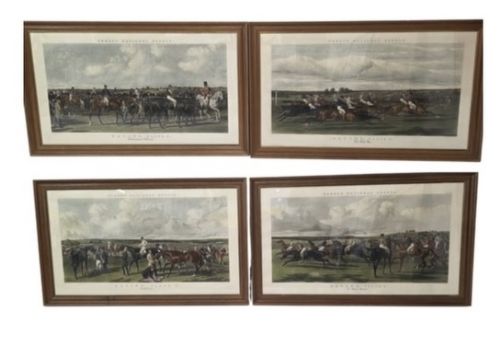
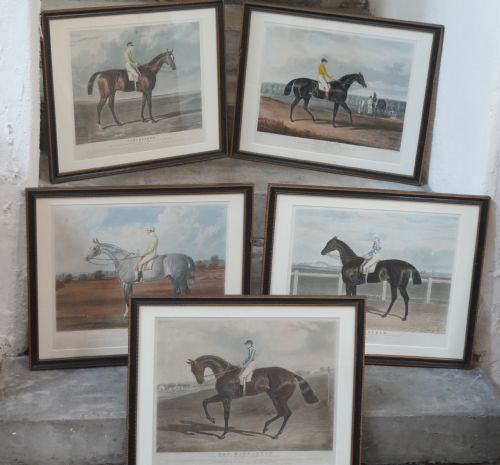
A set of horse prints gathers together multiple framed works depicting racing, hunting, and equestrian portraits across several centuries. You will most frequently encounter nineteenth-century British examples alongside Georgian copper engravings and twentieth-century photographic sets.
The subjects range from famous racehorses and thrilling steeplechases to traditional hunts like the Quorn, Belvoir, and Cottesmore. These groupings were originally published to be displayed together as a cohesive sequence or series on the wall.
Makers and artists whose works appear include George Finch Mason, Ridinger, Charles Johnson Payne Snaffles, Victor Adam, H. Alken, and J. F. Herring. Their output spans hand-coloured aquatints, copper engravings, lithographs, and watercolour sketches.
How They Were Made
Many of these works began as copperplate engravings or aquatints before receiving meticulous hand-colouring with watercolour pigments. Printers pressed inked plates onto heavy rag paper, sometimes adding gold leaf to surrounding mounts or frames.
Later nineteenth and twentieth-century examples utilise lithography and photographic printing techniques to capture detailed paintings and sketches. These are preserved behind glass within wooden frames, frequently incorporating burr wood veneer or oak mouldings.
Materials across these listings include paper, glass, wood, ink, gold leaf, watercolour, burr wood veneer, and oak.
What Varies in Quality
The distinction between ordinary and exceptional sets rests upon the clarity of the original impression and the vibrancy of the hand-colouring. Sharp lines in the engraving and careful, vivid pigment application elevate the visual impact of the entire group.
Original framing and uniform preservation across every piece in the set dictate the overall desirability. Sets that retain their matching historical frames and clean, unblemished paper surfaces represent the highest standard of survival.
George Finch Mason·Ridinger·Charles Johnson Payne Snaffles·Victor Adam·H. Alken
The Set of Horse Prints Glossary
- Aquatint
- An intaglio printmaking technique that produces areas of tone resembling watercolour washes. It was widely used for sporting prints to render atmospheric skies and landscapes.
- Lithography
- A planographic printing method based on the antipathy of oil and water, allowing artists to draw directly onto a stone surface. This technique gained immense popularity for producing vibrant nineteenth-century visual series.
- Burr wood veneer
- A thin decorative slice of wood cut from a tree growth featuring swirling, irregular grain patterns. It adds rich texture and depth to the outer frames of antique artwork.
- Hand-coloured
- The process of applying watercolours by hand to a printed monochrome base. This meticulous finish was standard for high-grade Georgian and Victorian sporting plates.
Set of Horse Prints: Frequently Asked Questions
How should I hang a set of horse prints?
Keep the entire group arranged at eye level as a cohesive block or horizontal line to maintain the visual narrative intended by the publisher.
Ensure the frames have adequate breathing room between them on the wall so each individual plate retains its own distinct presence.
Are these prints originals from the period?
The evidence shows examples dating from the mid-eighteenth century through to the mid-twentieth century, created using period techniques like copper engraving and lithography.
Examine the paper quality, ink consistency, and framing materials to understand the exact era of production.
How do I care for antique paper prints?
Keep framed pieces away from direct sunlight to prevent the ink and hand-applied watercolours from fading over the years.
Maintain stable indoor humidity levels to protect both the historical paper substrate and the antique wooden framing.
What subjects are most common?
Horse racing scenes, steeplechase sequences, and traditional hunting meets form the core of the available subjects.
You will also encounter individual portraits of famous racehorses and charming carriage driving depictions.