


Victorian Horse Racing Pictures
Victorian horse racing pictures capture the speed and atmosphere of the nineteenth-century turf through oils, engravings, and needlework.
Victorian Horse Racing Pictures
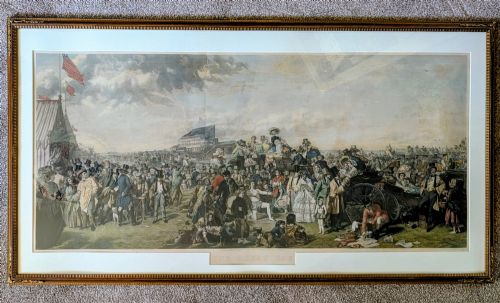
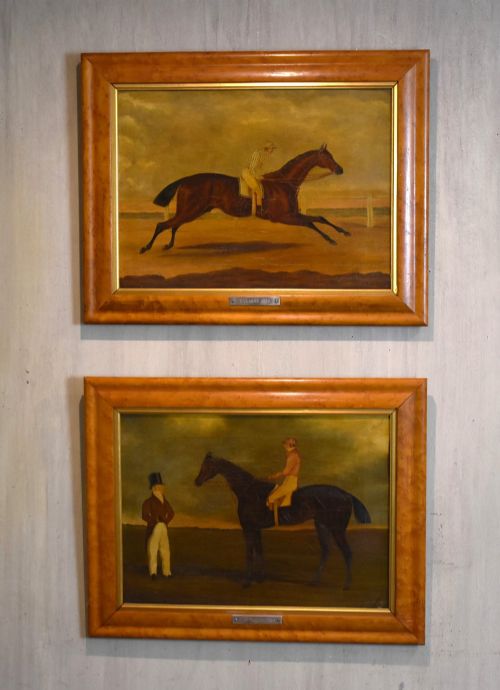
When you search for Victorian horse racing pictures, you encounter a diverse record of nineteenth-century equestrian sport spanning oil paintings, framed prints, and needlework. These works range from grand depictions of the Derby Day and Epsom Park to individual portraits of celebrated racehorses and jockeys.
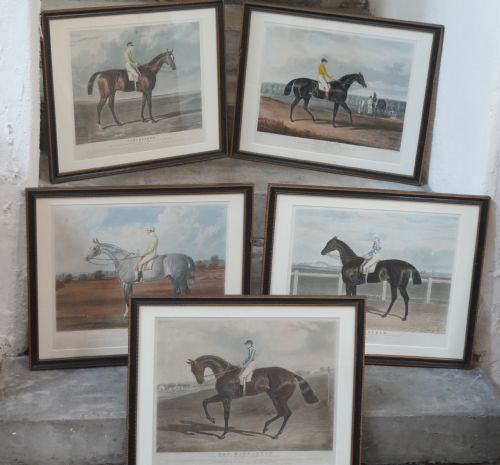
You are most likely to meet framed prints and engravings on this page, often appearing in sets or after notable artists such as William Powell Frith and George Finch Mason. Alongside these printed works, original oil paintings and unusual techniques like reverse glass painting and silk needlework represent the breadth of period craftsmanship.
Materials and methods
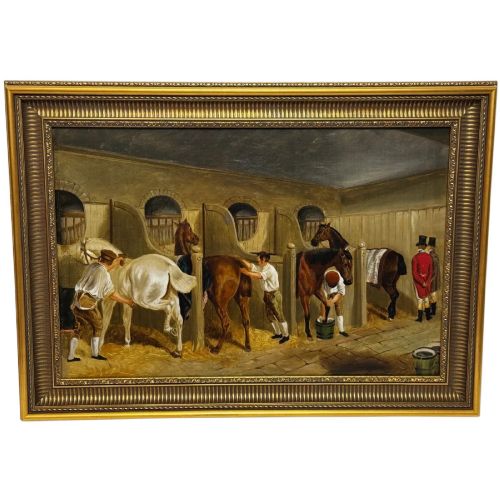
Makers utilised traditional oil on canvas for portraits of racehorses and riders, framing the finished works in gilded wood, gilt wood, and birds eye maple. Paper served as the primary medium for engravings, aquatints, and chromolithographs, often protected behind glass.
Alternative techniques include silk needlework depicting famous tracks and reverse silhouette painting on glass. Plaster and wood frequently formed the structural backing and decorative mouldings of the heavy frames that house these pieces.
Listings feature works from across the nineteenth century, including specific dates from the 1850s, 1860s, 1880s, and 1900.
Judging quality
Quality rests in the fidelity of the draughtsmanship and the clarity of the printed image or brushwork. Original oil paintings and hand-finished silk needlework display a depth of detail distinct from mass-produced runs.
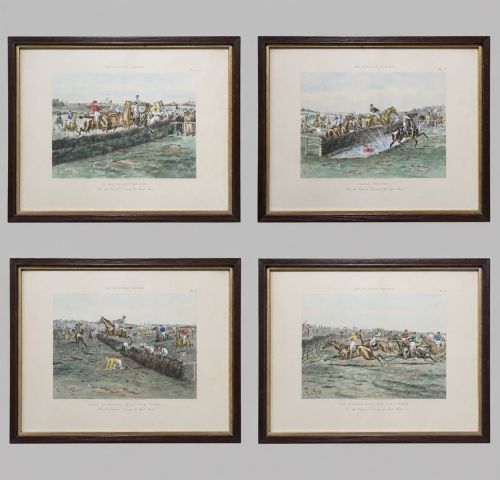
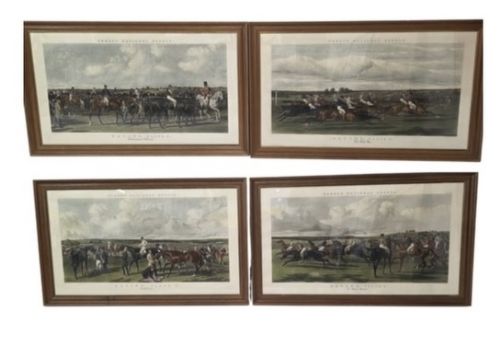
The choice of framing contributes significantly to the character of a piece, with period gilded wood and birds eye maple surrounds indicating careful preservation. Complete sets of prints or aquatints retain greater visual impact than scattered single examples.
William Powell Frith·George Finch Mason·John Frederick Herring Snr·Alfred Wheeler
The Victorian Horse Racing Pictures Glossary
- Aquatint
- An intaglio printmaking technique that produces areas of tone resembling watercolours. This method allowed printmakers to replicate the soft tonal gradations of sporting paintings.
- Chromolithograph
- A multicolour planographic printing process used to produce vibrant reproductions. These prints captured the rich colours of nineteenth-century racing silks.
- Needlework
- A textile picture stitched with silk or wool threads. Examples in this category depict famous racing tracks and courses.
- Reverse glass painting
- An art form where the image is painted directly onto the back of a glass panel. Viewing the work from the front reveals a glossy, protected finish.
Victorian Horse Racing Pictures: Frequently Asked Questions
What subjects appear in these pictures?
The subjects include sweeping views of racecourses like Epsom and Kempton Park, alongside named racehorses and their jockeys.
Specific scenes capture the excitement of events such as the Derby Day alongside formal sporting portraits.
How should I display framed prints?
Framed prints and engravings benefit from placement away from direct sunlight to protect the paper and hand-colouring.
Keeping them in stable indoor conditions preserves both the paper and the original wood or gilt frames.
Are these works original or copies?
The selection includes both original oil paintings and period prints created after works by well-known artists.
Techniques such as engravings and aquatints were produced in multiple impressions to satisfy nineteenth-century demand for sporting art.
What do sets of prints include?
Sets typically comprise multiple matching engravings or aquatints depicting sequential racing moments or related sporting themes.
Displaying them together maintains the visual narrative intended by the nineteenth-century publisher.