


Vintage Riding Art Prints
These vintage riding art prints capture centuries of equestrian heritage through engravings, lithographs, and paintings.
Vintage Riding Art Prints
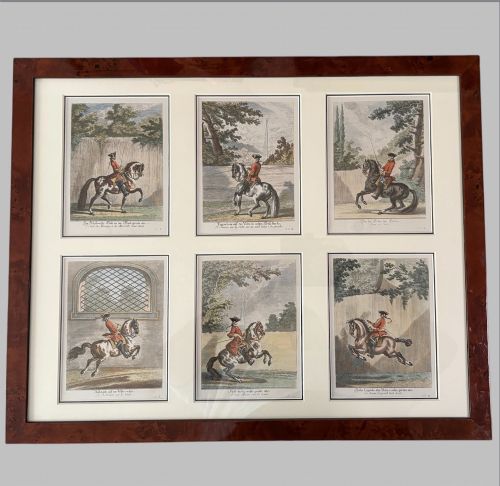
Vintage riding art prints encompass framed works celebrating equestrian subjects, horses, and field sports. The selection ranges from Georgian copper engravings to mid-century paintings and twentieth-century prints.
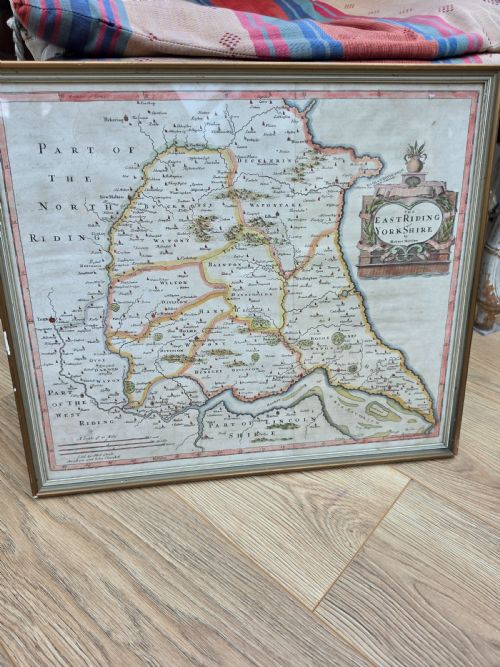
Buyers encountering this category will find various formats including framed prints, antique engravings, and maps. Sporting scenes dominate the selection, spanning periods from the seventeenth century through to the mid-twentieth century.
The assortment reflects diverse aesthetic movements, taking in Regency elegance, Victorian character studies, and mid-century modern interpretations. Each piece records a distinct era of equestrian depiction.
Materials and Methods
These works rely primarily upon paper supports paired with ink, watercolour, and gouache. Hand-colouring frequently enhances early copper engravings to bring vibrancy to the equestrian subjects.
Framing materials form an integral part of the physical pieces, utilising wood, burr wood veneer, and gilt wood. Glazed protection preserves the delicate paper and ink surfaces from environmental degradation.
Represented styles include Georgian, Regency, Victorian, and Mid-Century Modern aesthetics.
Assessing Quality in Equestrian Art
Quality rests upon the clarity of the printed line and the preservation of the paper support. Hand-coloured details executed with precision elevate the visual impact of engravings.
The integrity of the framing materials contributes significantly to the piece. Original or period-appropriate wood and gilt surrounds distinguish superior examples from later replacements.
Ridinger·John Speed·John Rattenbury Skeaping·Snaffles
The Vintage Riding Art Prints Glossary
- Engraving
- A printmaking process where an image is cut into a metal plate with a burin. This technique produces fine, crisp lines characteristic of early sporting works.
- Gouache
- An opaque water-based paint used to add solid colour and highlights. It appears frequently in works alongside traditional watercolour.
- Burr wood veneer
- A thin slice of decorative wood showing intricate swirling grain patterns. It often frames mid-period and antique wall art.
- Gilt wood
- Timber treated with gold leaf or metallic paint to create a lustrous finish. It is standard on many traditional frames.
Vintage Riding Art Prints: Frequently Asked Questions
What periods do these prints cover?
The available works span multiple centuries, starting from the seventeenth century with cartography and extending through the Georgian, Victorian, and Edwardian eras. Later pieces reach into the mid-twentieth century.
This broad chronological range allows collectors to select works matching specific historical aesthetics, from early copperplate engravings to twentieth-century sporting prints.
How should I hang framed prints?
Framed paper works require placement away from direct sunlight to prevent the fading of inks and watercolours. Stable indoor humidity levels protect both the paper support and the wooden or gilt frames.
Secure picture hooks rated for the weight of the frame ensure safe wall display. Grouping pieces by period or subject creates a coherent wall arrangement.
Are these works original or reproductions?
The inventory consists of period pieces, including original antique prints, hand-coloured engravings, and vintage paintings. Items date from their respective eras rather than being modern facsimile reproductions.
Specific dates or periods associated with each item indicate the approximate time of creation. Makers and publishers recorded in the titles provide further historical context.
What subjects feature in the art?
Equestrian themes dominate, covering racing, hunting, rodeo, and dressage. Certain pieces focus on cartography, depicting regional maps alongside specific sporting moments.
Characters, horses, and equine activity form the core narrative across all represented styles. Military and leisure riding traditions are equally well-represented.