

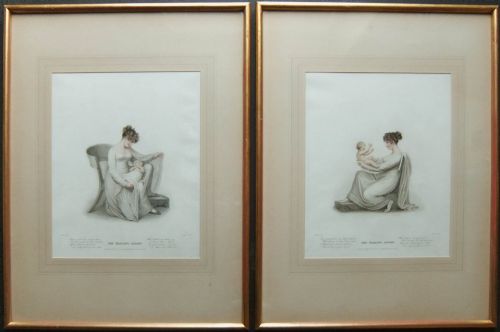


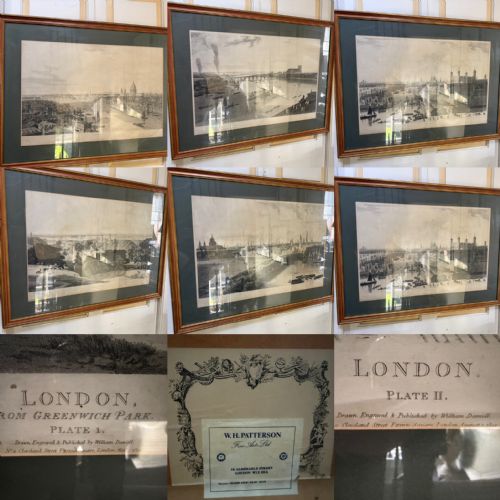


19th Century Aquatint Prints
These 19th century aquatint prints capture maritime scenes, sporting action, and portraiture on paper, offering historical depth and traditional wall art for collectors.
19th Century Aquatint Prints
When you search for 19th century aquatint prints, you encounter framed artwork and wall art reflecting Georgian and Victorian tastes. The selections span naval subjects, maritime history, and equestrian scenes.
You meet pairs, sets of four, and complete series such as cock fighting prints and racing sets. Subjects range from coastal views to portraits and sports like hunting.
The objects appear framed in wood and glass, often accompanied by ink, watercolour, and gilt details. They document visual culture across the nineteenth century.
How they were made
These works utilise paper as the primary medium, combined with ink and watercolour to achieve tonal depth. Many examples incorporate hand-colouring over printed lines.
Makers housed these pieces behind glass within wooden frames, occasionally embellished with gold leaf or gilt wood accents to complement the domestic interiors of the period.
19th Century Aquatint Prints Retail Price Guide 2026
Typical asking prices for 19th century aquatint prints among the pieces listed under this phrase on Sellingantiques today, from the lower quarter to the upper quarter. They describe what is for sale here now, not the wider market.
Periods represented span from the year 1800 through the Georgian and Victorian eras up to 1870.
What varies in quality
Quality rests upon the preservation of the paper surface and the clarity of the printed line. Complete sets maintain higher distinction than dispersed individual plates.
The integration of watercolour application influences the visual depth of the image. Original framing materials, including gilt wood and gold leaf, contribute to the overall integrity of the piece.
Adam Buck·W. Collard·Alken·W J Huggins·Charles Hunt·Francis Calcroft Turner
The 19th Century Aquatint Prints Glossary
- Aquatint
- A intaglio printmaking technique that produces tonal areas resembling watercolour washes. It achieves subtle gradations of light and shade through acid biting on a copper plate.
- Engraving
- A printmaking process where an artist cuts lines directly into a metal plate with a burin. The resulting lines hold ink to transfer sharp details onto paper.
- Gilt wood
- Wood coated with a thin layer of gold leaf or metallic paint. It provides traditional framing splendour for nineteenth century wall art.
- Watercolour
- Paint consisting of pigment suspended in a water-based solution. Artists applied it by hand to enhance monochrome aquatints and engravings.
19th Century Aquatint Prints: Frequently Asked Questions
What are 19th century aquatint prints?
These pieces are graphic works created on paper using specialised etching and printing techniques to produce tonal variations. They depict maritime subjects, sporting events, and portraits.
Publishers issued them individually or in structured sets for domestic display.
How were these prints used?
Owners placed them within wooden frames behind glass to adorn the walls of parlours, libraries, and public rooms. They served as conversation pieces and decorative records of contemporary interests.
Complete sets documented sequential narratives like racing, hunting, and maritime expeditions.
How do I live with them?
Hang these framed artworks away from direct sunlight to protect the paper and watercolour pigments from fading. Maintain stable indoor humidity levels to preserve the wood frames and glass seals.
Pair sets together on large wall spaces to preserve their original visual grouping.
How do I tell periods apart?
Georgian examples often feature robust sporting and maritime subjects with distinct hand-coloured ink lines. Victorian pieces frequently expand into larger decorative sets and varied narrative series.
Stylistic cues in costume and framing assist in dating individual works.