


Victorian Hearth Storage
Victorian hearth storage keeps fuel dry and tidy beside the fire, combining heavy metals and native timbers for daily service.
Victorian Hearth Storage
When you examine Victorian hearth storage on this page, you encounter practical vessels designed to hold coal, peat, and logs beside the fireplace. The selection spans utilitarian buckets and bins to more formal lidded boxes intended for polite sitting rooms.
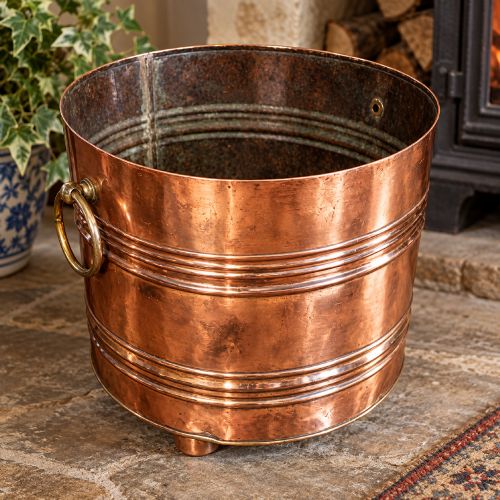
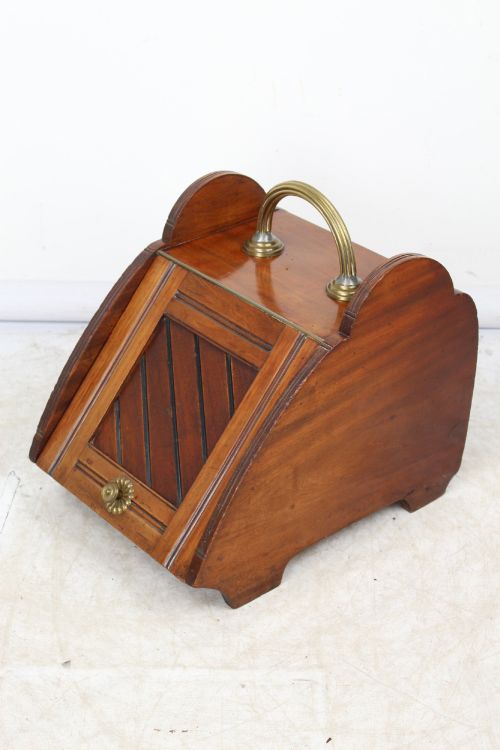
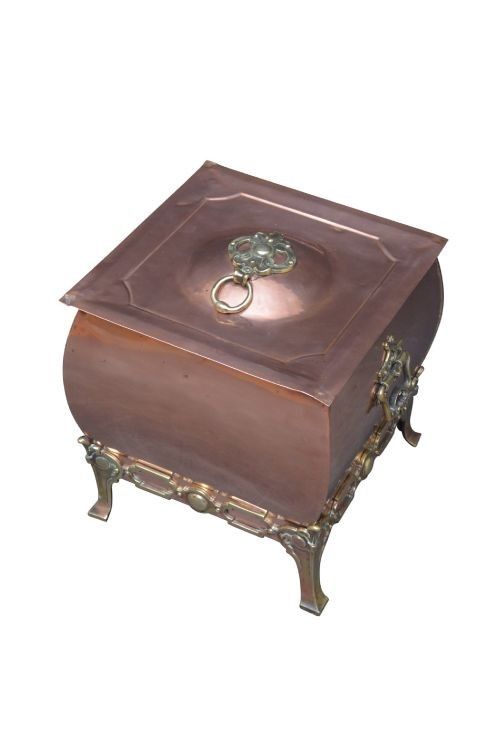
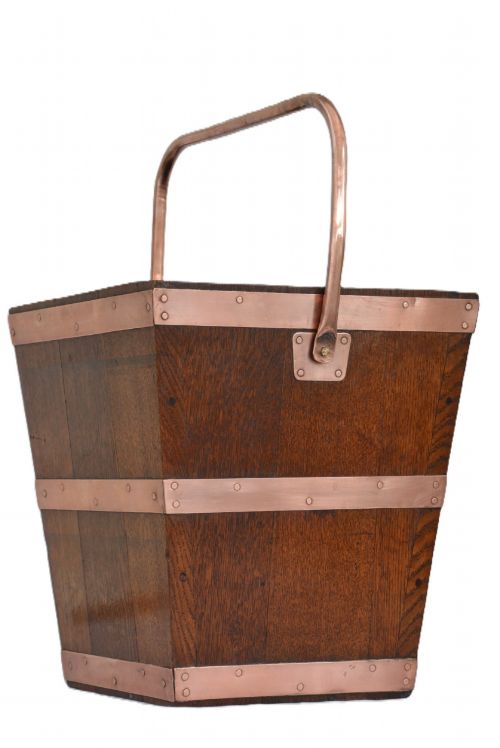
Wooden boxes, often called purdoniums, sit alongside metal helmets, buckets, and cylindrical bins. Oak, walnut, and mahogany provide the structure for enclosed timber boxes, while brass and copper form the majority of open buckets and scuttles.
Most examples date from the nineteenth century, with Victorian and Edwardian periods well represented. Pieces range from plain country pine and iron bins to decorative Arts and Crafts copper vessels and inlaid rosewood display pieces.
Materials and construction
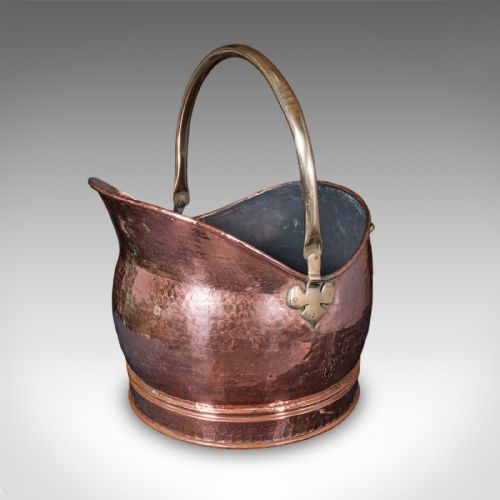
Makers shaped sheet copper and brass into helmets and buckets, frequently adding hand-be hammered details or embossed mounts during the Arts and Crafts period. Rivets, swing handles, and cast brass feet provide both structural strength and decorative contrast to the warm metal surfaces.
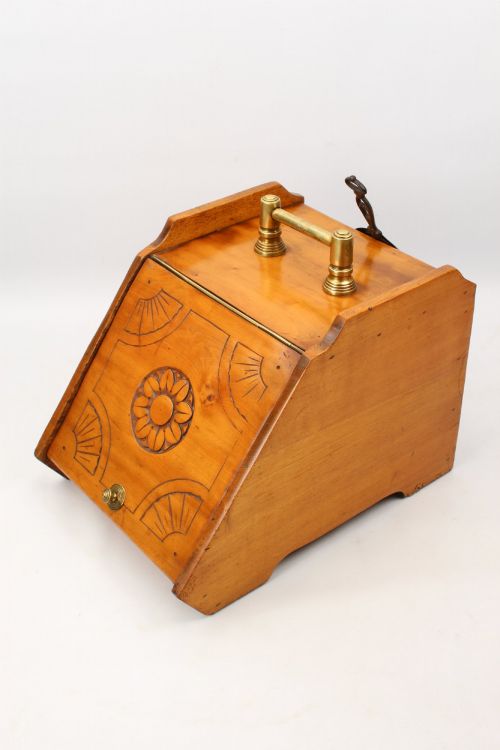
Woodworking traditions dictated the construction of timber coal boxes and purdoniums, utilising solid oak, walnut, mahogany, and pine. Dovetailed joints, metal liners, and brass handles ensure these wooden containers withstand the heavy weight of fuel and the heat of the hearth.
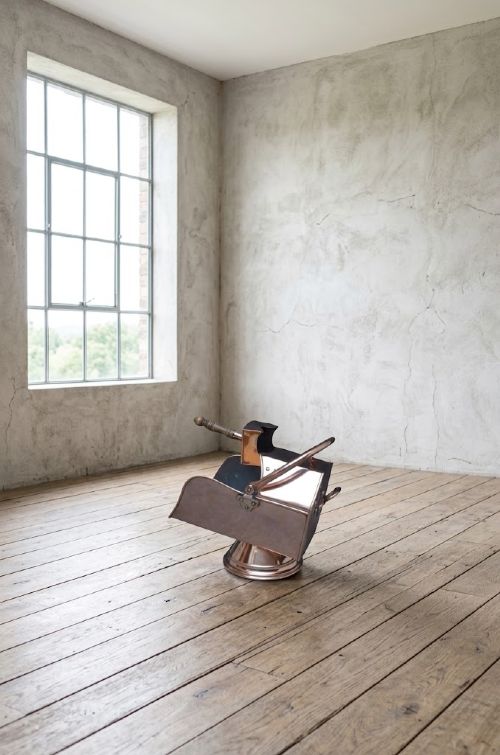
Some coal scuttles arrived with internal compartments specifically sized to keep a small metal shovel hidden from polite view.
Distinctions in quality
The division between standard utility items and superior hearth storage rests on material selection and decorative finish. Heavier gauge metals, substantial timber boards, and intact original liners separate high-grade vessels from simpler workshop output.
Refinement in detail marks the upper tier of pieces, seen in fine marquetry inlay on rosewood, hand-finished brass mounts, and blacksmith-forged ironwork. Makers who invested time in decorative handles and well-fitted internal shovels produced items intended to be seen rather than hidden.
William Soutter and Sons
The Victorian Hearth Storage Glossary
- Purdonium
- A purpose-built coal box with a sloping front drop-down door and an internal metal liner. This design kept coal dust contained while offering easy access for a shovel.
- Coal Scuttle
- A bucket or helmet-shaped vessel with a swing handle and a tapered lip for pouring fuel. These pieces were carried to the grate to replenish the fire.
- Log Bin
- A large freestanding container designed to hold firewood rather than small fuel like coal. They appear in copper, iron, oak, and pine.
- Aesthetic Period
- A late nineteenth-century design movement focusing on visual beauty rather than narrative meaning. Pieces from this time display clean lines and subtle decorative motifs.
- Arts and Crafts
- A design movement valuing hand craftsmanship and honest materials over machine production. Items in this style often feature hammered copper and exposed fixings.
Victorian Hearth Storage: Frequently Asked Questions
What is a purdonium?
A purdonium is a specialised wooden coal box featuring a slanted front door and a removable metal liner. It was designed to keep coal contained and neat within a formal room.
Most examples include a dedicated compartment or clips on the side to hold a small coal shovel.
How were copper scuttles used?
Copper scuttles held coal or other solid fuel close to the fireplace for daily refuelling. Their swing handles allowed homeowners to carry them from the coal cellar to the hearth.
Many featured a wide mouth and tapered body to guide fuel cleanly onto the fire.
Are original liners common?
Original metal liners survive in some wooden coal boxes and purdoniums, protecting the timber from moisture and coal dust. Their presence adds authenticity to the piece.
When a liner is absent, the interior often shows traces of heavy use from fuel storage over the decades.
How do I clean antique brass?
Antique brass benefits from gentle dusting and occasional cleaning with a mild, non-abrasive metal polish. Maintaining a soft patina is generally preferred over achieving a bright mirror finish.
Harsh chemical cleaners can strip away historical age and damage the surface texture of hand-finished metal.