

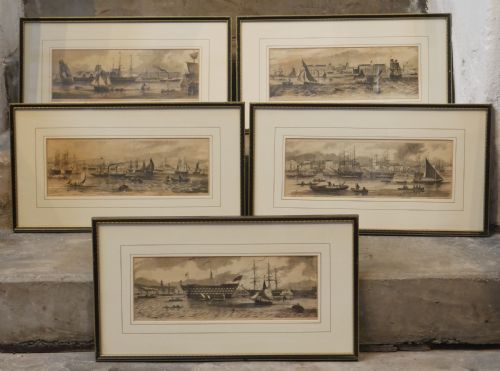


Victorian Harbour Artwork
These Victorian harbour artwork pieces capture bustling coastal scenes and quiet fishing ports across Britain and Europe through the eyes of nineteenth-century painters.
Victorian Harbour Artwork
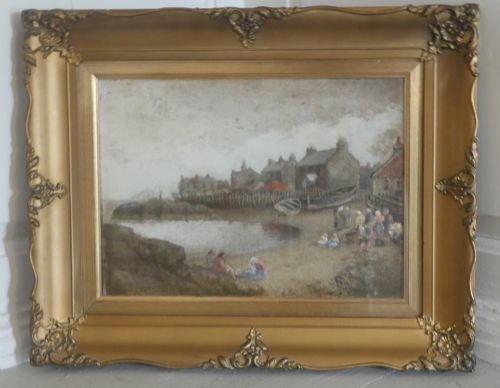
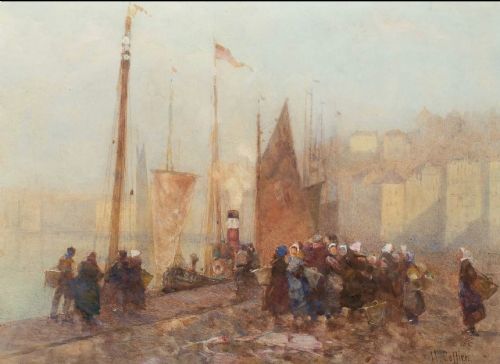
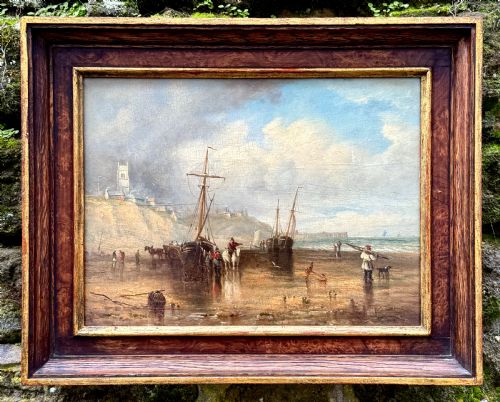
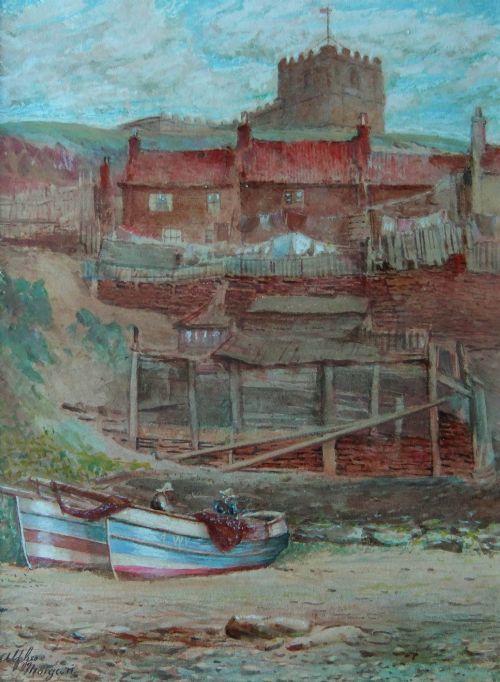
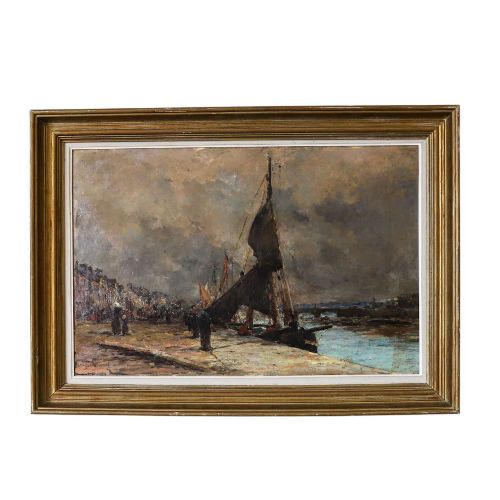
Victorian harbour artwork depicts maritime life, busy quaysides, and coastal villages through traditional paintings and watercolours. These pieces document working ports, fishing fleets, and tidal inlets during a period of immense maritime activity across Britain and beyond.
The selections on this page lean heavily towards original watercolours and oil paintings created during the nineteenth century and the early twentieth century. Common subjects range from northern English fishing ports like Whitby and St Ives to international destinations such as Boulogne and Venice.
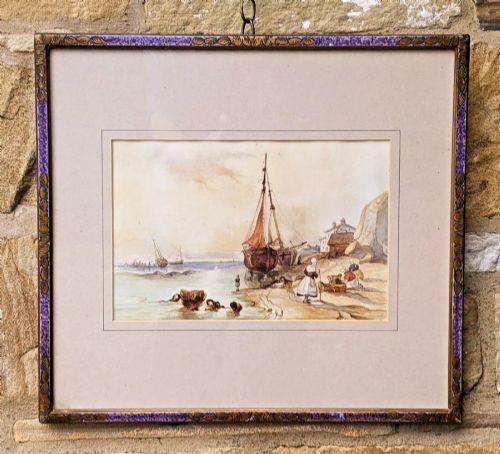
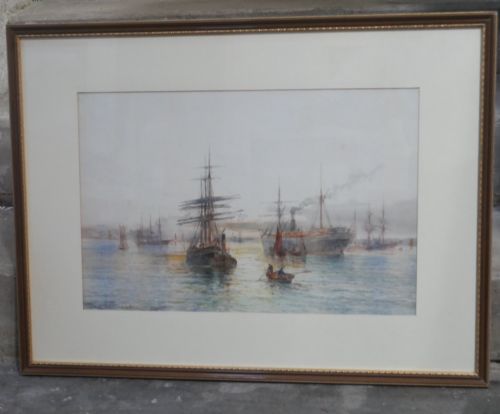
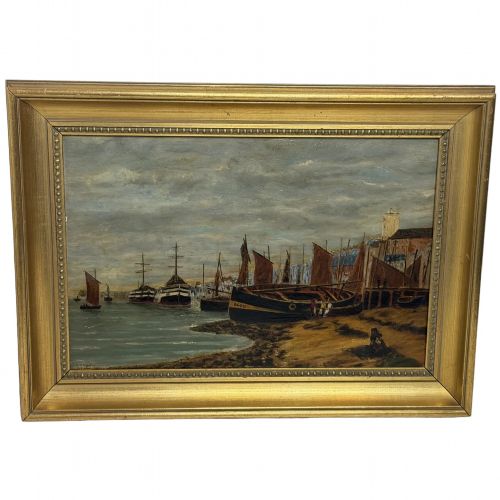
Works appear in various formats, including framed oils on canvas, delicate paper watercolours, and occasional naval engravings. Many capture specific geographical locations, offering a direct window into historical coastal topography.
Materials and methods
Artists relied primarily on oil paint applied to canvas or wood panels, alongside watercolour pigments worked onto paper substrates. These media allowed painters to capture changing light conditions on water, atmospheric coastal haze, and intricate rigging on sailing vessels.
Many surviving pieces retain their period frames constructed from wood and embellished with gesso mouldings. Some watercolours are preserved behind glass within hand-enamelled polychrome frames that reflect the decorative tastes of the era.
Listings feature works spanning the nineteenth century through the early twentieth century, encompassing Victorian, Edwardian, and British Impressionist styles.
Qualities that distinguish individual pieces
Quality rests on the artist's ability to render water, light, and architectural perspective convincingly within the composition. Stronger works demonstrate confident brushwork and precise handling of maritime detail, such as shipping rigging and harbour structures.
The condition of the paint surface and the paper support plays a significant role in visual appeal. Original framing choices, period signatures, and documented provenance further elevate specific pieces above standard decorative works.
Edward Mills·William Banks Fortescue·Hector Caffieri·Thomas Creswick·Alfred G. Morgan·Charles William Wyllie·William Edward Webb·Thomas Bush Hardy·Ernest Dade·James Kyd·Stanley Leader·T.S. Wallis·James Webb·Kate E Booth·Jan van Couver·William Wyld·George Gregory·Alfred Henry Vickers·Sir Edwin Landseer·John Callow·Gustave de Breanski·Ralph Todd·Frank Wasley·Harry Wanless·Edward Henry Holder
The Victorian Harbour Artwork Glossary
- Watercolour
- A painting method where water-soluble pigments are suspended in a water-based solution and applied to paper. This medium was widely favoured by Victorian artists for recording spontaneous effects of coastal light and weather.
- Gesso
- A plaster-like mixture applied to wood frames as a base for moulding and gilding. Period frames often feature detailed gesso decoration characteristic of nineteenth-century framing techniques.
- Seascape
- A work of art depicting the sea, coastal views, ships, or marine subject matter. These scenes form the core of maritime painting from the Victorian period.
- Oil on Canvas
- Pigments bound in a drying oil medium applied directly to stretched woven fabric. This technique provided durability and allowed artists to build rich textures across large coastal compositions.
Victorian Harbour Artwork: Frequently Asked Questions
Where were most of these harbour scenes painted?
Painters recorded locations around the British coastline, including Yorkshire fishing ports, Cornish harbours, and London's busy river pools. Continental European destinations like Venice and French coastal towns also appear frequently.
Artists often travelled specifically to working ports to capture local fishing fleets, boatbuilding yards, and daily maritime commerce.
How do I distinguish watercolours from oil paintings?
Watercolours are painted on paper and typically displayed under glass to protect the delicate pigments from atmospheric moisture. Oil paintings utilise heavier paint layers applied to canvas or wood panels, presenting a textured surface that does not require glass.
Watercolours often display a lighter, more translucent quality, whereas oils allow for deep impasto and rich colour blending.
How should I care for a Victorian oil painting?
Keep paintings away from direct sunlight and steady sources of artificial heat to prevent the canvas and paint layers from drying out. Dust the surface gently with a soft, dry brush without applying pressure to the paint.
Avoid using liquid cleaners or water on the painted surface, and consult a professional conservator if the canvas requires cleaning or re-stretching.
Are these paintings usually signed by the artist?
Many works bear visible signatures, monograms, or studio inscriptions placed by the artist in the lower corners of the composition. Some pieces are further identified by inscriptions on the reverse of the canvas or on the original frame.
Unsigned works still appear from the period, often attributed through stylistic similarities or historical provenance.