
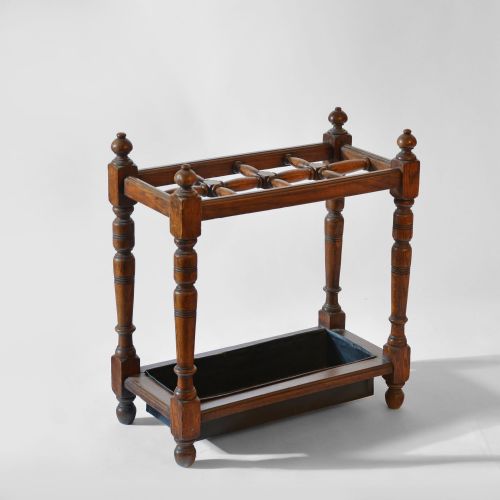
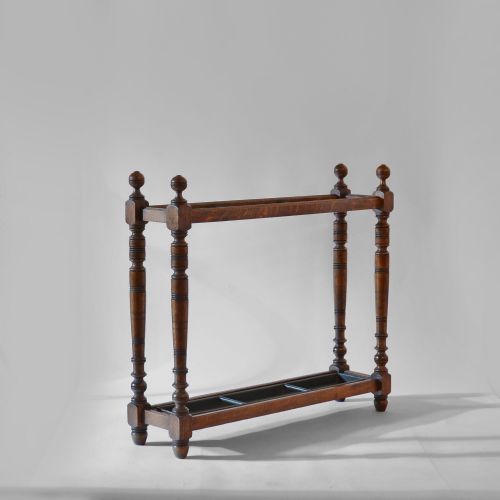
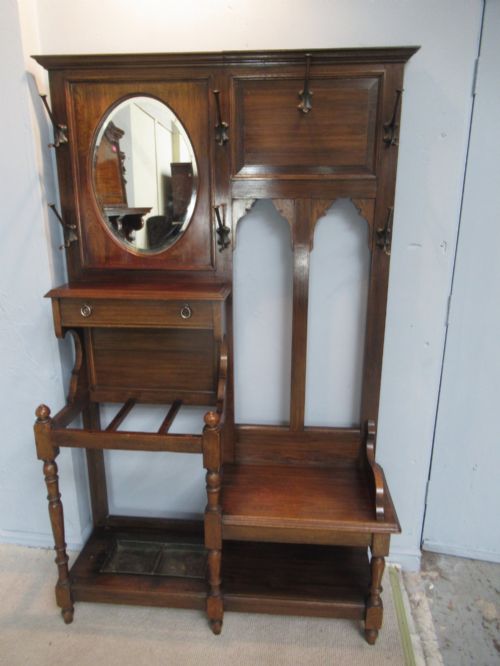
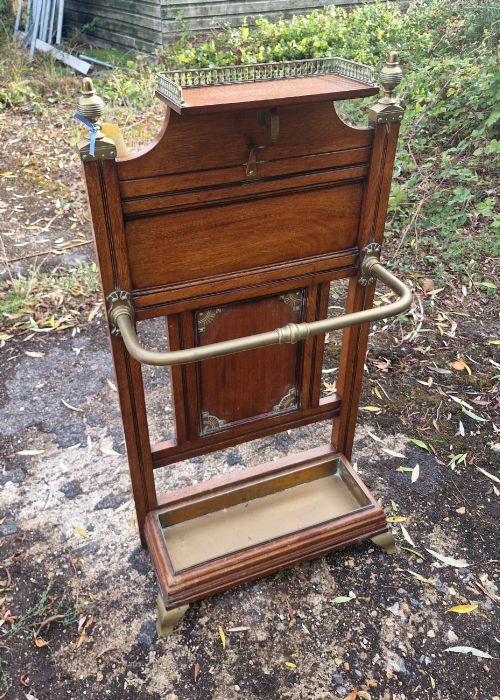
Victorian Hallway Stick Stand
A victorian hallway stick stand organises walking canes and umbrellas while setting a purposeful tone at the threshold of the house.
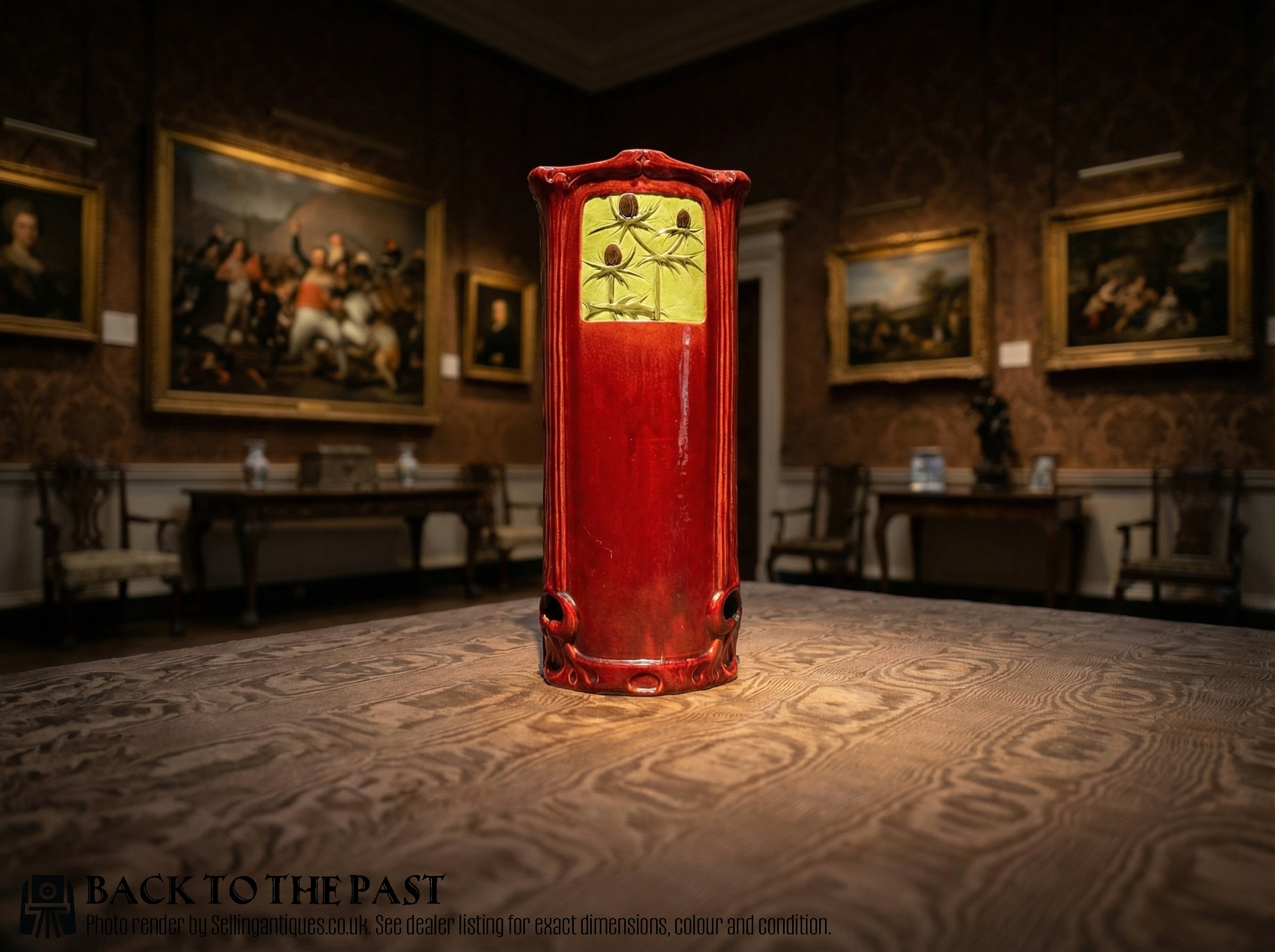
Victorian Hallway Stick Stand
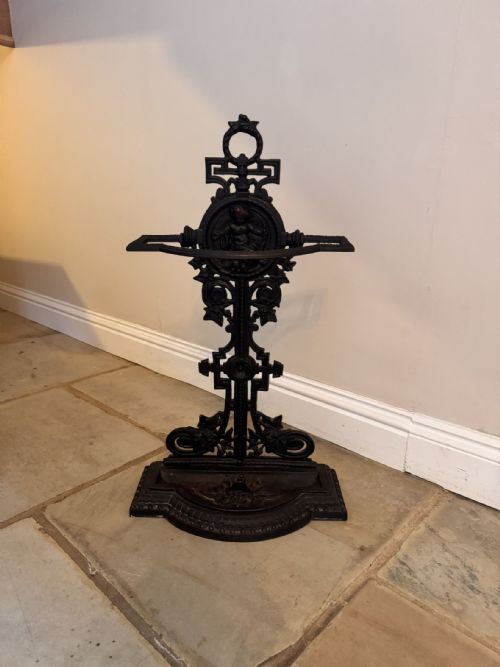
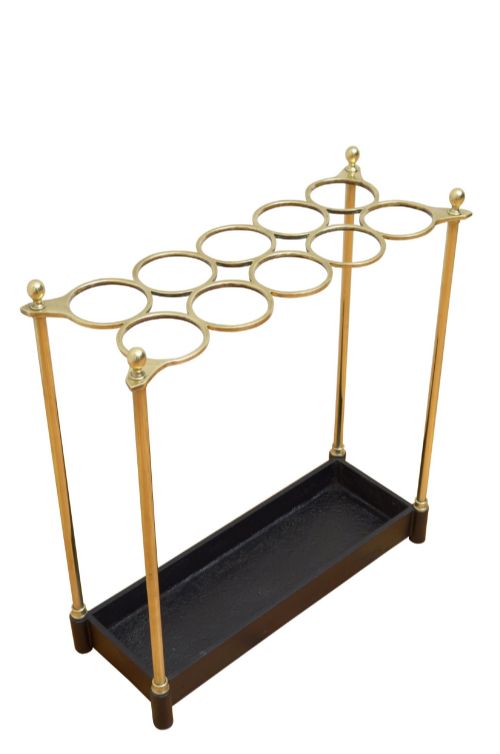
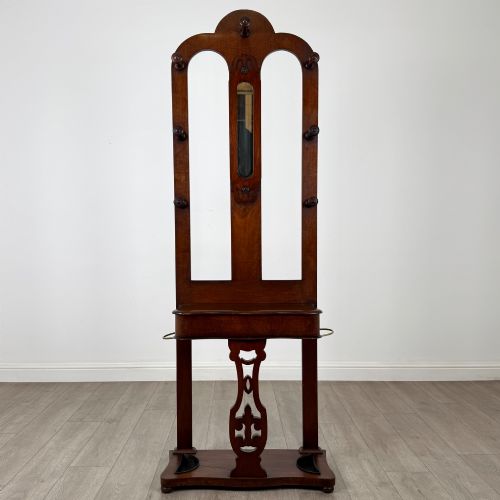
A victorian hallway stick stand serves as a functional piece of entrance furniture designed to hold wet umbrellas and walking sticks. These objects appear in various forms, including dedicated umbrella racks, hall seats with integrated stands, and combined hat and coat furniture.
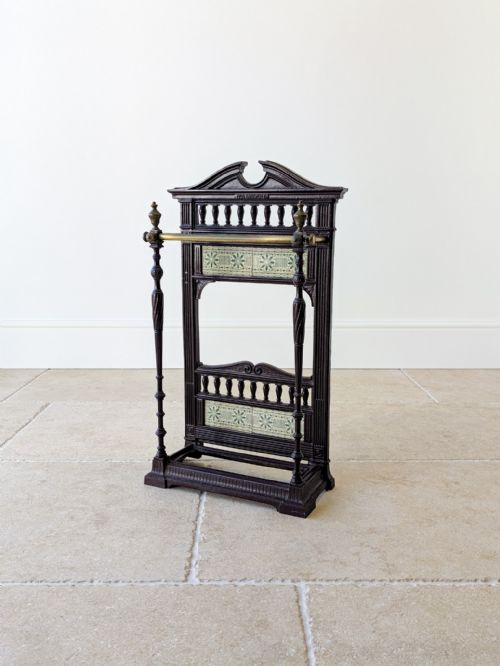
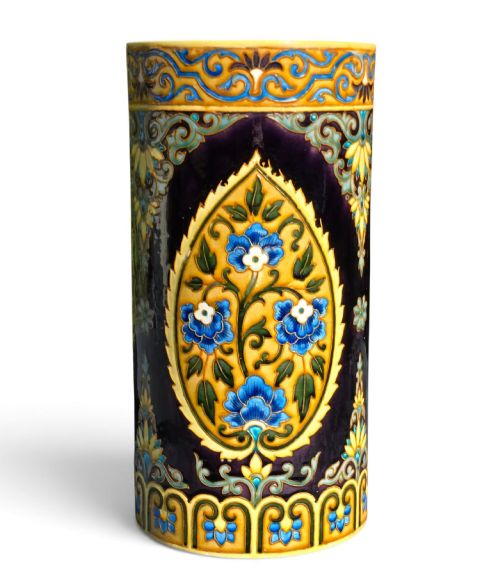
The pieces on this page span the Victorian, Edwardian, and adjacent periods, drawing on styles such as the Aesthetic Movement, Art Nouveau, and Black Forest design. Forms range from compact brass demi lune designs to large timber hallstands and heavy metal racks.
How They Were Made
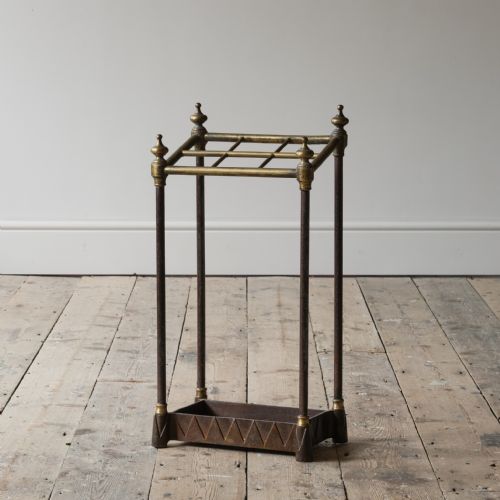
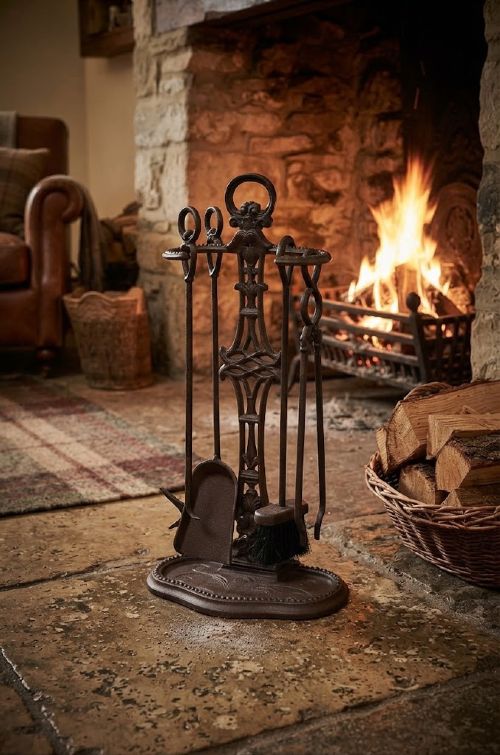
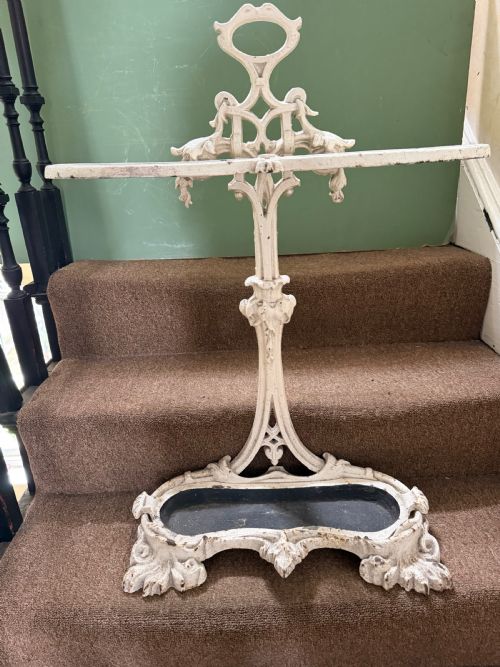
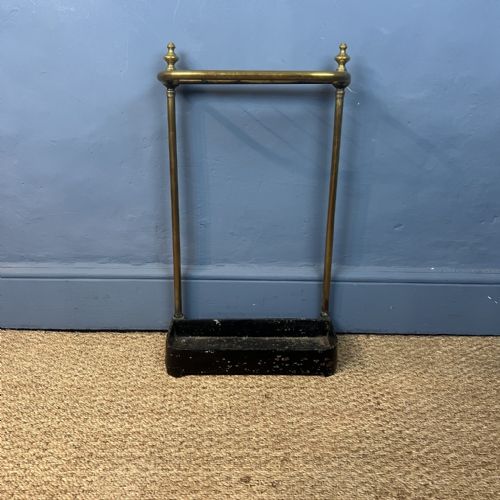
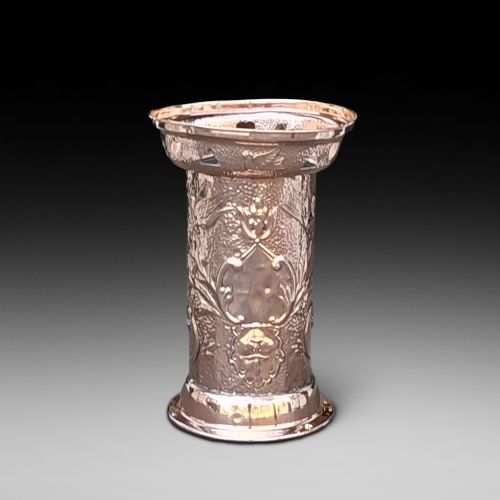
Maker construction relies heavily on metals like cast iron, brass, copper, and steel, often combined to provide weight and durability at the base. Foundry work produces intricate pierced patterns in iron and decorative ball finials or trays in brass.
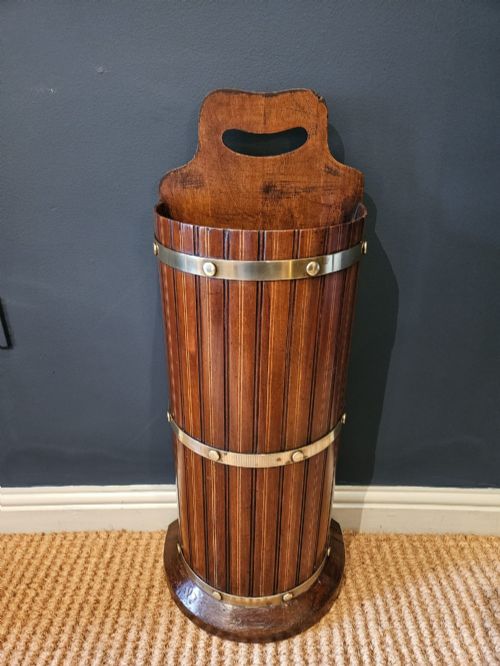
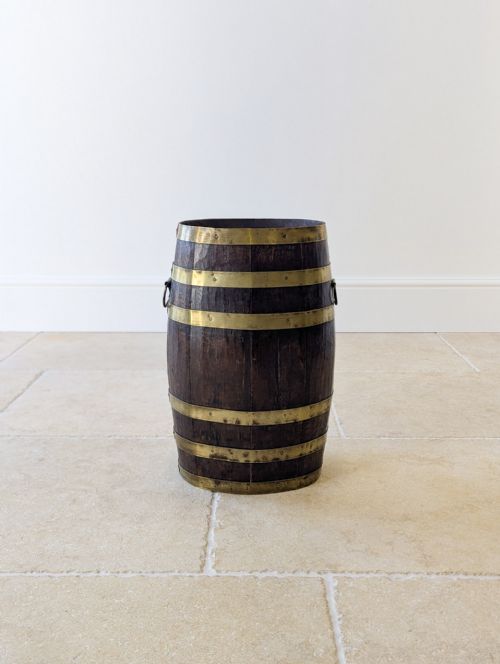
Wooden examples utilise oak, mahogany, pine, bamboo, and bentwood, sometimes employing coopered barrel techniques with brass bands. Carving and joinery define the timber pieces, ranging from simple country house pine to elaborate Black Forest bear carvings.
A carved wooden bear stands ready to hold your walking stick.
What Varies in Quality
Quality rests in the crispness of the casting work and the substance of the materials used in the frame. Heavy cast iron from established foundries displays sharp detail, whereas lower quality examples show softer edges and simpler fabrication.
Coalbrookdale·Thomas Jeckyll·Théodore Deck·Thonet
The Victorian Hallway Stick Stand Glossary
- Demi Lune
- A half moon shape common in wall-adjacent brass and metal stick stands designed to save floor space in narrow hallways.
- Coopered
- Construction using narrow wooden staves bound by metal hoops, typical of barrel-style oak umbrella holders.
- Finial
- A decorative terminal ornament, often cast in brass, topping the vertical posts of a stand.
- Drip tray
- A metal base pan situated beneath the stick rack to catch water from wet umbrellas and protect the floor.
Victorian Hallway Stick Stand: Frequently Asked Questions
Where should a stick stand be placed?
These pieces belong in an entrance hall, porch, or boot room where damp walking sticks and umbrellas need an immediate resting place upon entry.
Their compact footprints, particularly demi lune shapes, allow them to sit flat against a hallway wall without obstructing passage.
How do I protect my floors?
Most traditional stands include an integrated metal base tray designed specifically to catch water runoff from wet items.
Checking for this original component ensures moisture stays contained away from wooden floorboards.
What is the difference between styles?
Victorian and Edwardian metal stands lean towards industrial casting or polished brass, while Aesthetic Movement and Art Nouveau pieces introduce organic motifs and stylized curves.
Country house and Black Forest variants favour carved timbers and rustic construction.
Can these hold heavy walking sticks?
Cast iron and heavy brass models provide substantial weight and robust internal dividers that easily support heavy walking canes and iron-shod umbrellas.
Lighter bamboo or bentwood versions suit standard umbrellas and lighter walking poles.