


Art Nouveau Umbrella Stand
An art nouveau umbrella stand brings fluid, organic lines to the hallway while keeping wet walking sticks and brollies neatly contained.
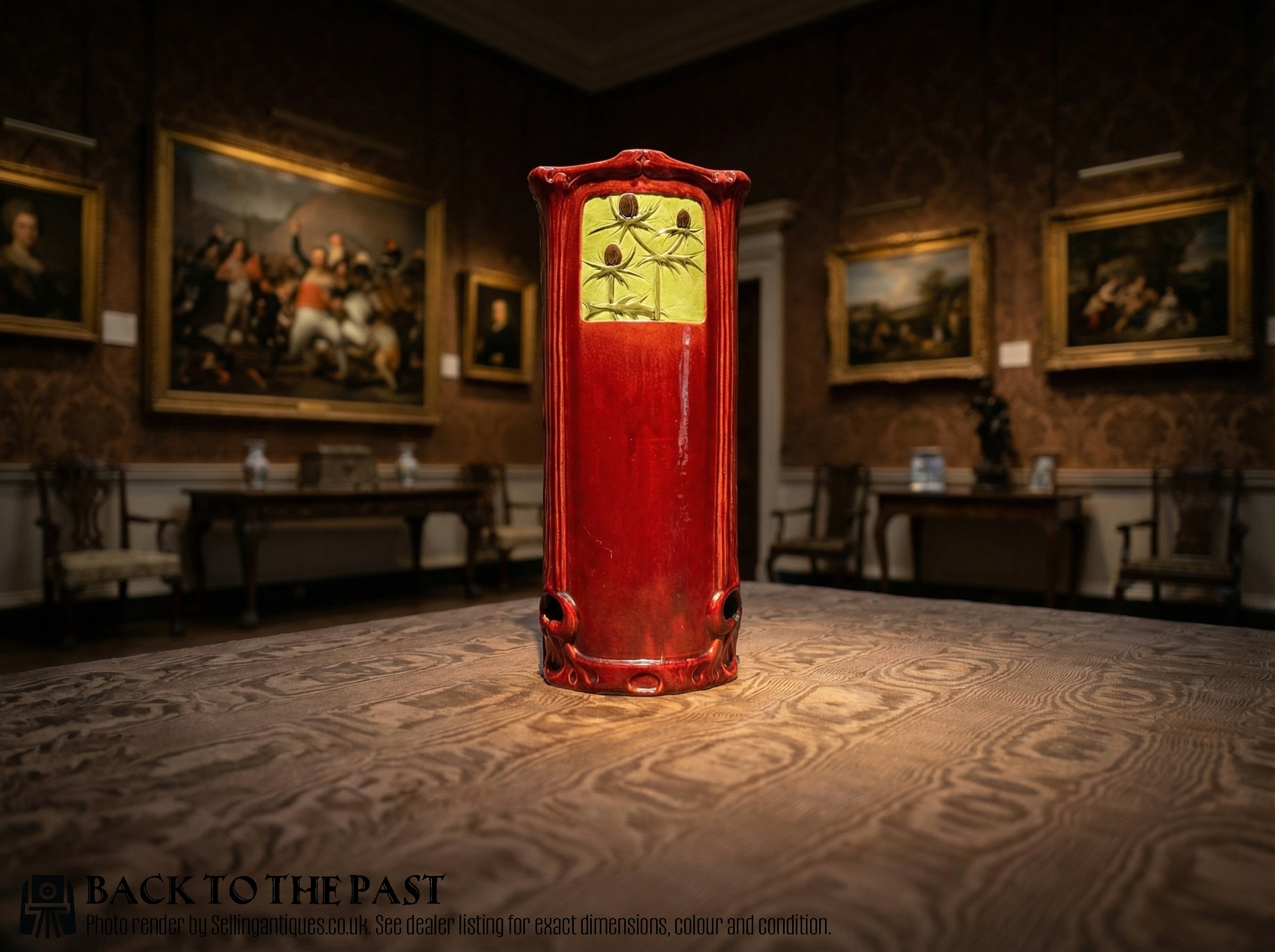
Art Nouveau Umbrella Stand
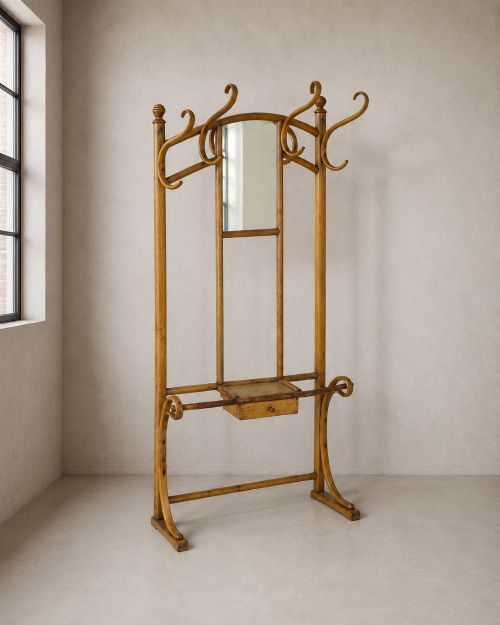
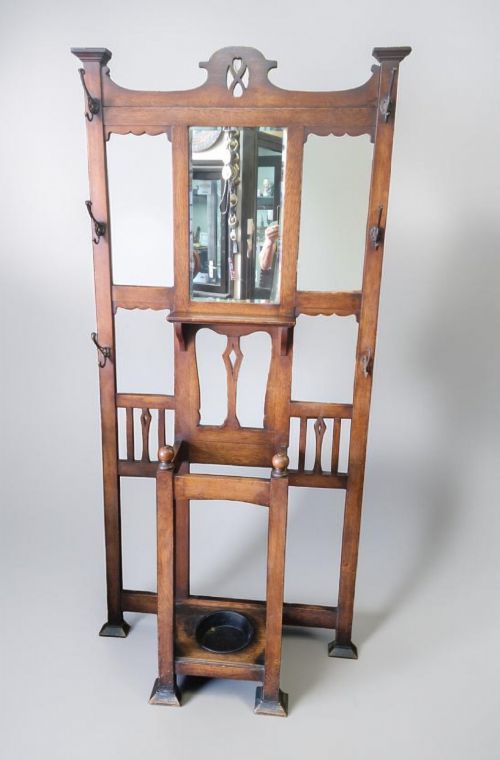
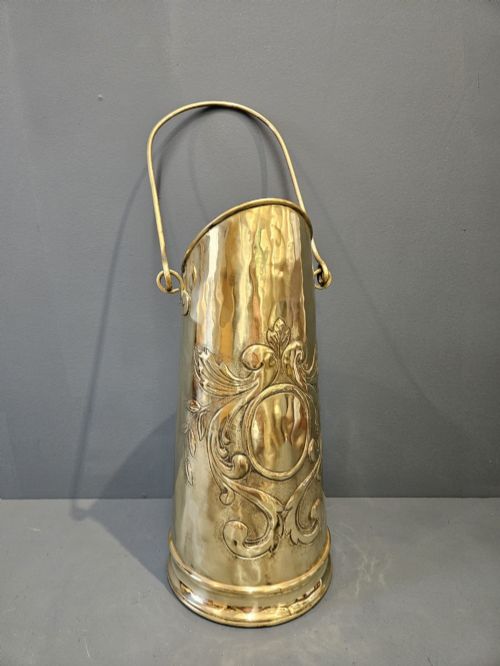
When you search for an art nouveau umbrella stand, you encounter pieces primarily from around nineteen hundred, alongside items from the Victorian era up to the nineteen thirties. The selection spans dedicated umbrella and stick stands, larger hall stands incorporating coat hooks and mirrors, and occasional related items such as copper coal scuttles.
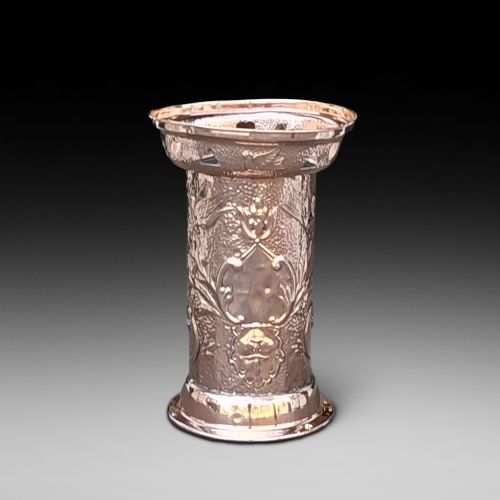
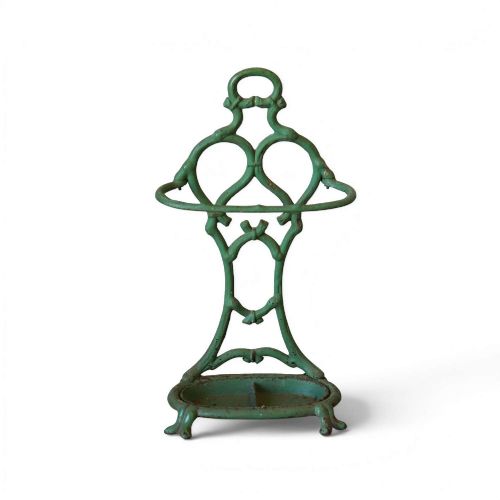
French examples heavily populate this category, frequently rendered in cast iron or beaten copper with distinct botanical motifs. English and Belgian pieces also appear, often utilising oak or brass to achieve the characteristic flowing aesthetic of the period.
How they were made
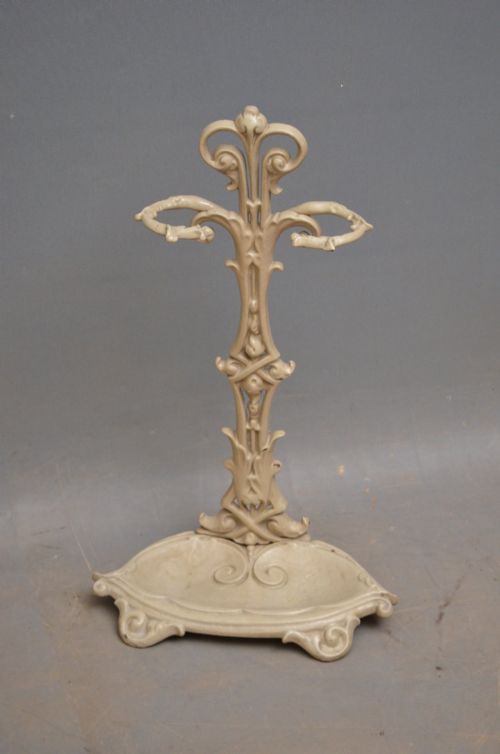
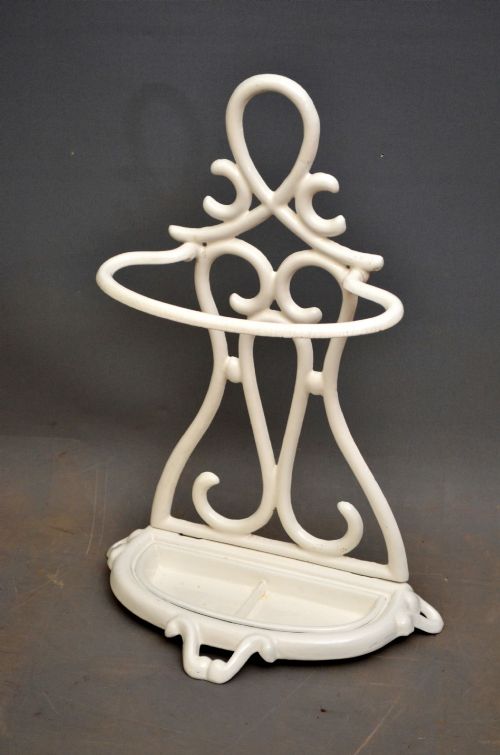
Makers utilised cast iron, brass, copper, and various timbers including oak, beech, and mahogany to construct these pieces. Cast iron versions frequently employed sand-casting techniques to achieve intricate plant or bamboo reliefs, while copper examples show hand-beaten or hammered surfaces.
Wooden pieces relied on traditional joinery and bentwood techniques, sometimes incorporating ceramic faience tiles or enamel finishes. Glazed earthenware and ceramic bodies also provided waterproof wells for dripping water at the base of metal and wooden frames.
Several cast iron stands successfully imitate bamboo stems, proving that Victorian and Edwardian founders loved botanical trickery just as much as we do.
What varies in quality
The sophistication of the metalwork or woodwork dictates the upper tier of these pieces. Crisp casting detail in iron, skilful hand-hammering on copper, and refined linearity in bentwood or carved oak separate superior examples from simpler production items.
Material integrity and originality of surface finishes also determine worth. Intact enamel linings, original drip trays, and unpolished patination on brass and bronze preserve the intended character of the design.
Thonet·Fischel·Burmantofts Faience
The Art Nouveau Umbrella Stand Glossary
- Faux bois
- A decorative technique mimicking wood grain, seen here on cast iron frames styled to resemble bamboo or natural branches.
- Faience
- Tin-glazed earthenware, visible on specific stick stands adding colourful ceramic elements to the hallway furniture.
- Bentwood
- Wood softened by steam and bent into curved shapes, utilised by makers for hallway stands.
- Demi-lune
- A half-moon shape, describing wall-mounted or freestanding hall stand components designed to sit flush against a hallway wall.
- Enamel
- A glassy substance fused to metal surfaces to provide a durable, waterproof coating inside iron trays or bodies.
Art Nouveau Umbrella Stand: Frequently Asked Questions
Are these stands suitable for modern umbrellas?
Most historic stands accommodate standard modern umbrellas and walking sticks without issue, though very slim folding brollies might slip through wide-gauge wire or cast iron dividers.
Measuring the base diameter and the height of the retaining rail helps ensure your specific collection of walking gear fits comfortably inside the frame.
How do I protect my floor from wet umbrellas?
Period stands generally feature an integrated metal tray, a ceramic well, or an open base designed to hold a modern saucer or liner underneath.
Checking for a watertight base or inserting a discreet plastic tray preserves flooring while maintaining the authentic appearance of the hallway accessory.
How do I distinguish art nouveau from Victorian designs?
Art nouveau pieces showcase asymmetrical whip-line curves, stylized floral motifs, and organic plant forms inspired by nature, moving away from strict geometric Victorian symmetry.
Items crossing the periods often blend traditional Victorian furniture forms with emerging art nouveau decorative brass mounts or beaten copper panels.
How should I clean copper and brass parts?
Preserving the dark patination accumulated over a century generally requires only gentle dusting with a dry cloth rather than aggressive chemical polishing.
Harsh metal cleaners strip away the historical surface character that collectors value, so minimal intervention keeps the materials stable and attractive.