
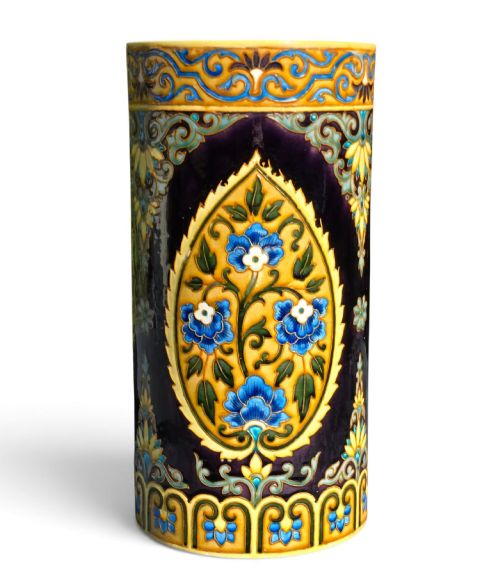


Ceramic Cane Holder
Ceramic cane holder pieces are decorative vessels designed for the hallway, offering a sturdy home for walking sticks and umbrellas.
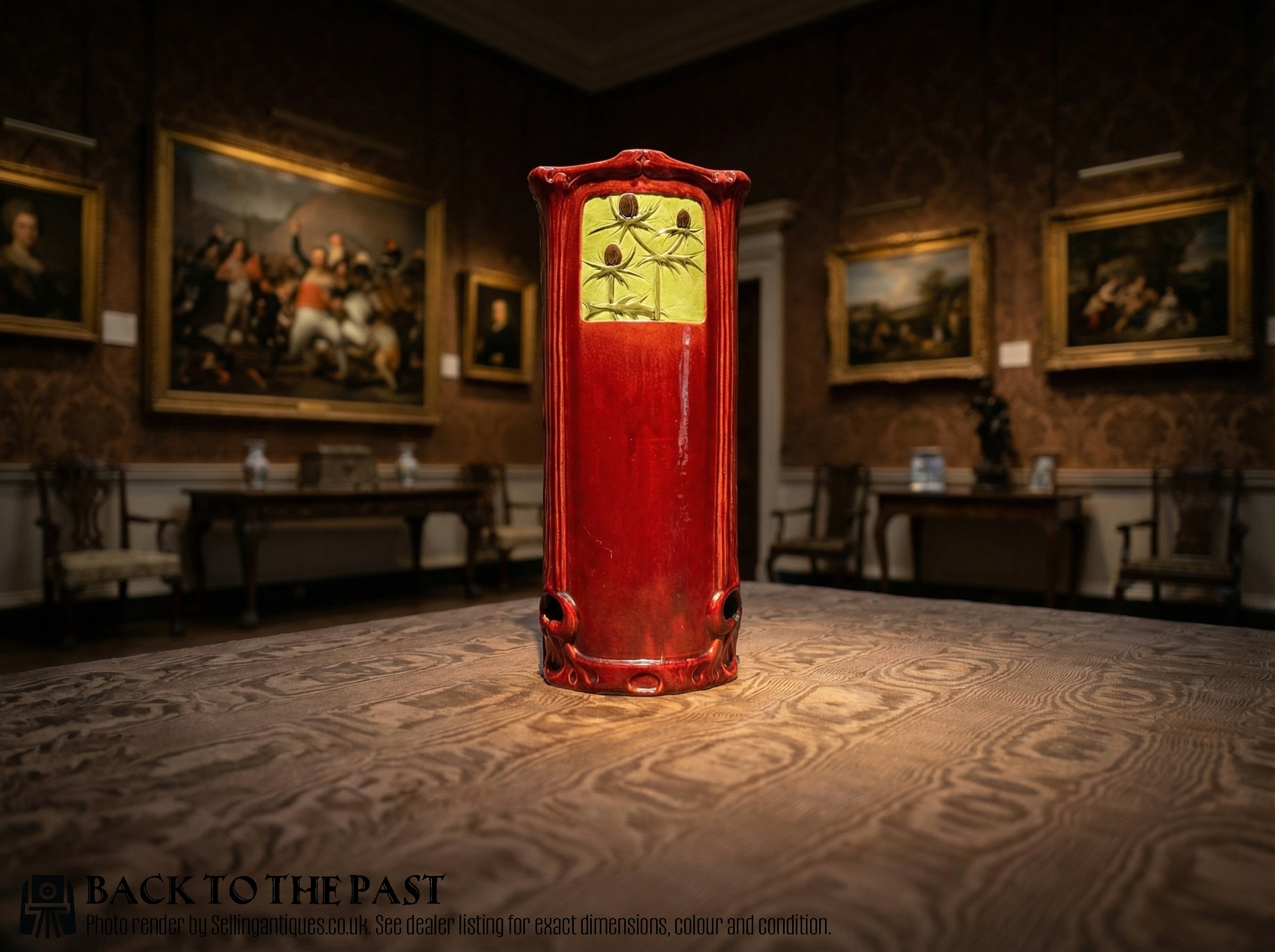
Ceramic Cane Holder
When you search for ceramic cane holder items, you encounter tall cylindrical vessels and barrel forms intended to hold walking sticks, canes, and umbrellas in hallways and entranceways. These functional objects appear in forms designated as umbrella stands, stick stands, and combined umbrella and stick stands across the listings.
The versions most commonly met on this page span the nineteenth century through to the early twentieth century, taking in Victorian, Edwardian, and Arts and Crafts aesthetics alongside imported styles. Materials range from standard earthenware and saltglaze stoneware to fine porcelain and specialised faience.
Origin and production methods vary widely among the pieces, encompassing British art pottery workshops, continental ateliers, and East Asian export wares. Each example brings a distinct profile to the hallway, whether shaped as a simple saltglaze barrel or decorated with hand-painted motifs.
How they were made
Makers shaped these tall vessels using earthenware, porcelain, and saltglaze stoneware, forming heavy walls capable of supporting the weight of damp umbrellas and heavy walking sticks. Potters threw some bodies on a wheel while others utilised moulded construction to achieve large barrel or cylindrical shapes.
Surface decoration relied on glazes, hand-painted designs, and enamels applied before firing, producing glossy finishes or textured surfaces like majolica and faience. Kiln techniques varied from traditional salt glazing to detailed pictorial application in styles such as Chinoiserie and Iznik revival.
Listings feature materials including earthenware, porcelain, saltglaze stoneware, and glazed ceramic across nineteenth-century and early twentieth-century periods.
What varies in quality
The distinction between standard utility vessels and superior examples lies in the ambition of the design and the execution of the glaze or hand-painted decoration. Finer pieces demonstrate careful control in complex decorative styles like Iznik revival or Canton porcelain work.
Structural presence also separates the range, where heavier, well-balanced stoneware and substantial faience offer greater stability than simpler moulded earthenware bodies.
Théodore Deck·Burmantofts Faience·Fukagawa
The Ceramic Cane Holder Glossary
- Saltglaze stoneware
- A heavy ceramic body fired at high temperatures where common salt is thrown into the kiln to produce a pitted, orange-peel texture. This finish is naturally waterproof and robust.
- Majolica
- A type of earthenware coated with an opaque tin glaze and painted with metallic oxide colours. It yields vibrant, glossy surfaces popular in the nineteenth century.
- Faience
- Tin-glazed earthenware produced in imitation of Italian majolica, often associated with decorative British art pottery works. It allows for rich coloured decoration across large surfaces.
- Canton porcelain
- Chinese export porcelain decorated with detailed panels of figures, birds, and flowers in famille rose enamels. These pieces were shipped to Western markets during the nineteenth century.
- Chinoiserie
- European decorative style reflecting Chinese artistic motifs and landscapes. It appears on various ceramic forms adapted to Western tastes.
Ceramic Cane Holder: Frequently Asked Questions
What is a ceramic cane holder?
A ceramic cane holder is a tall, weighted vessel designed to stand in a hallway and hold walking sticks, canes, and umbrellas.
These pieces keep entranceways tidy while serving as decorative elements in domestic interiors.
How were they used historically?
Historically, households placed these stands in hallways and porches to receive wet umbrellas and walking aids upon entering the home.
The heavy ceramic or stoneware base caught dripping water and kept long items upright and accessible.
How do I date a ceramic stick stand?
Dating relies on stylistic clues, manufacturing materials, and any maker marks present on the base of the vessel.
Victorian, Arts and Crafts, and early twentieth-century pieces each display distinct decorative vocabularies and glaze formulations.
Can I use an antique stand for umbrellas?
Many people continue to use these vessels for their original purpose of holding umbrellas and walking sticks.
Using a modern drip tray inside the base protects the historic ceramic interior from prolonged moisture exposure.