
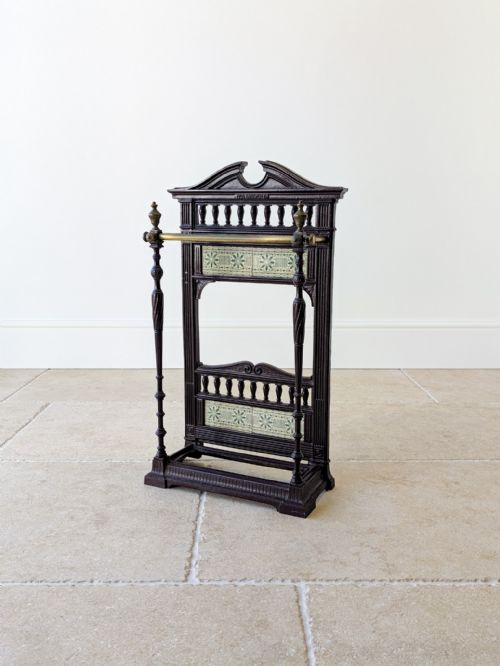
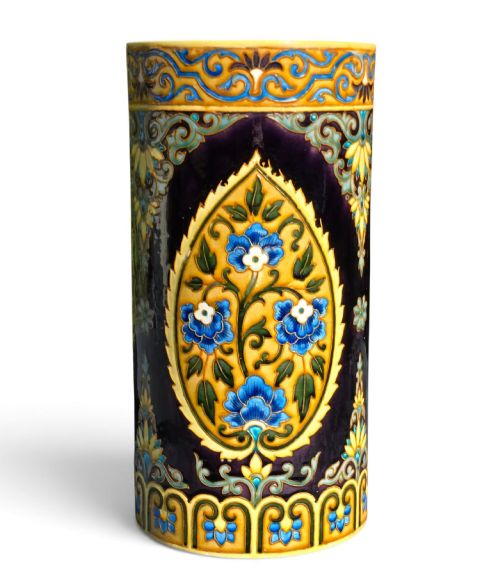
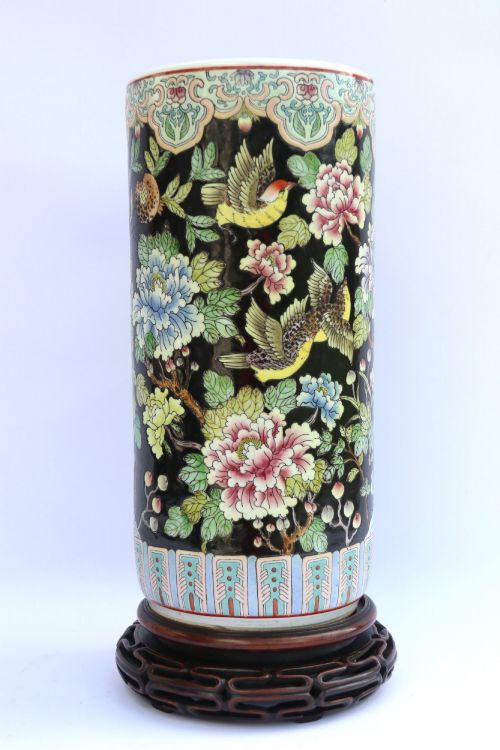


Antique Ceramic Umbrella Stand
These antique ceramic umbrella stand examples offer robust utility and striking hallway presence, combining practical waterproof storage with decorative nineteenth and early twentieth century artistry.
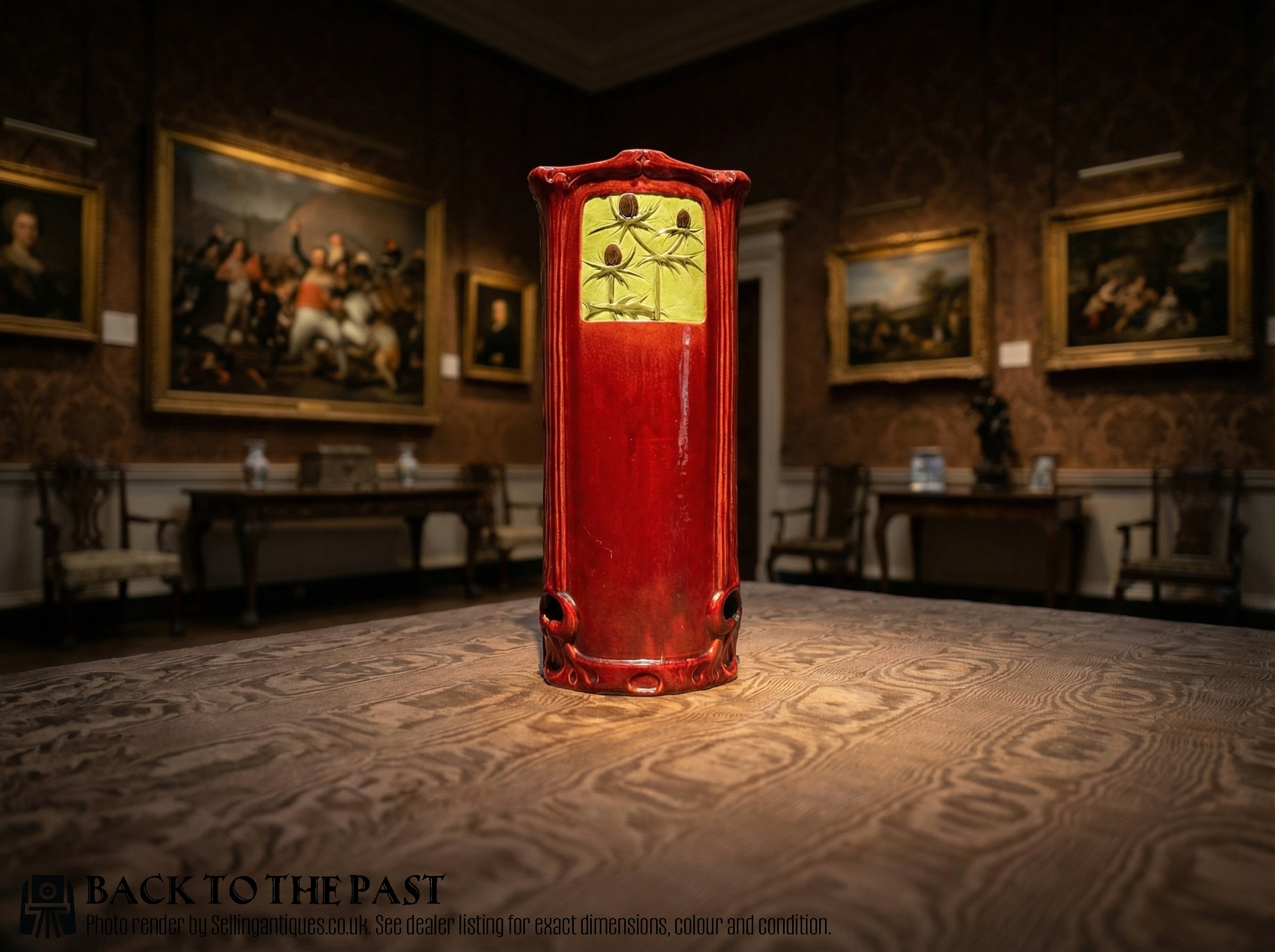
Antique Ceramic Umbrella Stand
When you search for an antique ceramic umbrella stand, you encounter heavy vessels designed to hold wet walking sticks and wet weather gear in entrance halls. These pieces appear in various forms, from cylindrical barrels to square or tapering bodies intended to stand steadily against a wall.
The selections available here span from the Victorian era into the Edwardian period and the 1920s. You will find earthenware, porcelain, and stoneware manifestations carrying styles such as Arts and Crafts, Aesthetic Movement, Chinoiserie, and Iznik Revival.
Most items combine a ceramic body with functional capacity, occasionally incorporating brass elements or cast iron framing. Makers and potteries from Britain, Europe, and Asia shaped these receptacles to meet the domestic demands of grand townhouses and modest homes alike.
Materials and construction methods
Potters built these stands using robust ceramic bodies like earthenware, stoneware, and heavy porcelain, often applying thick glazes to ensure the interior remained waterproof against dripping umbrella tips. Saltglaze techniques and majolica glazing provided durable, lustrous surfaces that resisted moisture and daily wear.
Decoration involved hand painted motifs, cream sprigging, and transfer printing, alongside specialised faience finishes developed during the Arts and Crafts movement. Some pieces relied on contrasting brass or cast iron fittings to secure the base and frame.
Some nineteenth century makers thoughtfully included internal wells to catch the drips from damp gamp umbrellas before they ruined the hallway parquet.
Assessing quality and finish
Quality rests upon the crispness of the ceramic moulding and the depth of the glaze, distinguishing mass produced utilitarian vessels from ambitious exhibition pieces. Finer examples display meticulous hand painted decoration or intricate relief work that remains sharp beneath the glossy surface.
The integrity of the body determines durability, with dense stoneware and heavy porcelain offering greater resistance to hairline cracks than softer earthenware. Successful integration of applied metallic elements and clean interior glazing also mark the distinction between standard commercial output and superior studio or factory production.
Coalbrookdale·Théodore Deck·Fukagawa·Burmantofts Faience
The Antique Ceramic Umbrella Stand Glossary
- Majolica
- A type of earthenware coated with an opaque tin glaze and painted with metallic oxide colours. It creates vibrant, glossy finishes popular during the nineteenth century.
- Saltglaze
- A stoneware finish achieved by throwing common salt into the kiln during high temperature firing. This creates a characteristic textured surface resembling orange peel.
- Faience
- Tin glazed earthenware associated with decorative pottery traditions. The term frequently describes British art pottery developments from the late Victorian period.
- Sprigging
- A ceramic decoration technique where moulded clay reliefs are applied to the surface of an unbaked vessel using slip. These motifs stand out in contrasting textures and tones.
- Canton Porcelain
- Chinese export porcelain decorated in the Canton style with panels of figures, birds, and flowers. These wares were widely shipped to Western markets.
Antique Ceramic Umbrella Stand: Frequently Asked Questions
How do I clean an antique ceramic umbrella stand?
Wipe the exterior gently with a damp microfibre cloth to remove dust without disturbing the glaze. Avoid harsh chemical cleaners that might damage nineteenth century surfaces or painted decoration.
Dry the interior thoroughly after rainy days to prevent moisture accumulation. Placing a small plastic tray inside the base protects the historic ceramic from standing water.
Can these stands hold heavy walking sticks safely?
Sturdy earthenware, stoneware, and porcelain bodies easily support the weight of standard umbrellas and walking sticks. Their heavy bases provide natural stability against tipping.
Exercise caution with metal ferruled sticks dropping sharply against unglazed interior floors. Ensure the stand rests on a level surface to distribute the weight evenly.
Where should I place an umbrella stand in my hall?
Position the stand near the primary entrance door for practical convenience upon entering the house. Corner placements or spaces beside a console table work particularly well.
Keep the piece away from heavy foot traffic areas where visitors might accidentally knock against it. Adequate clearance allows safe retrieval of long umbrellas.
How do I identify the period of a ceramic stand?
Examine the glaze characteristics, decorative style, and bottom markings to determine the era. Victorian and Edwardian examples often reflect prevailing tastes like the Aesthetic Movement or Arts and Crafts.
Consult the clay body and manufacturing technique for clues regarding date. Heavier saltglaze stoneware typically suggests nineteenth century Victorian production.