
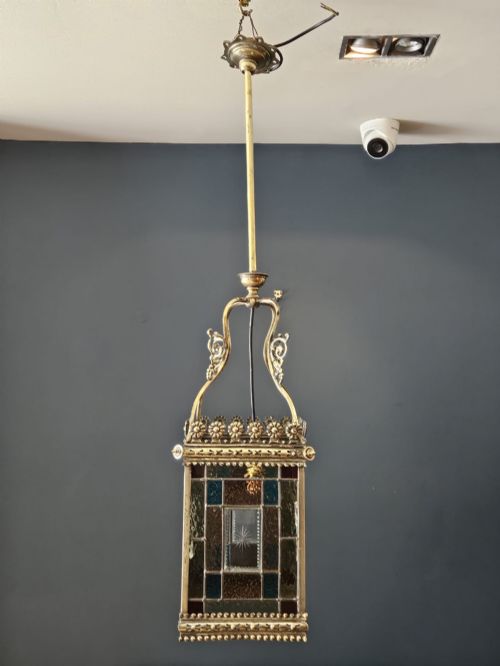
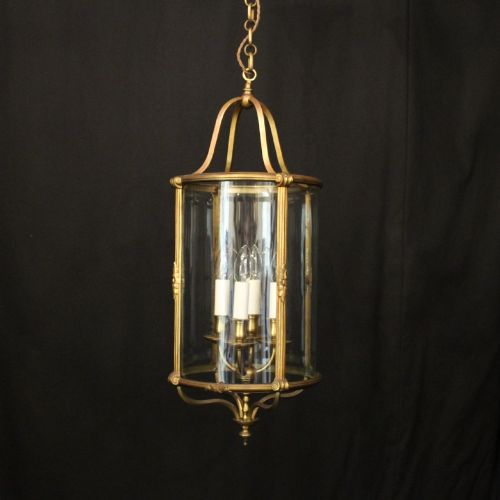
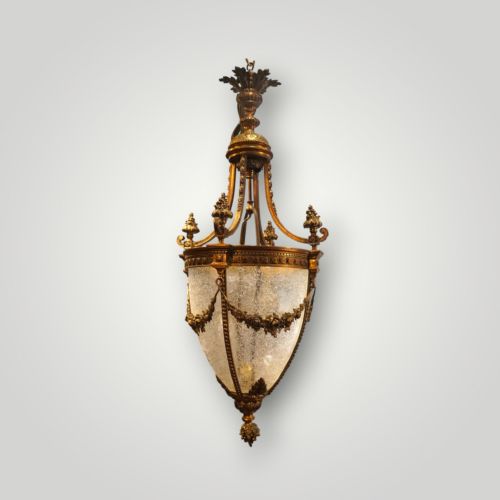
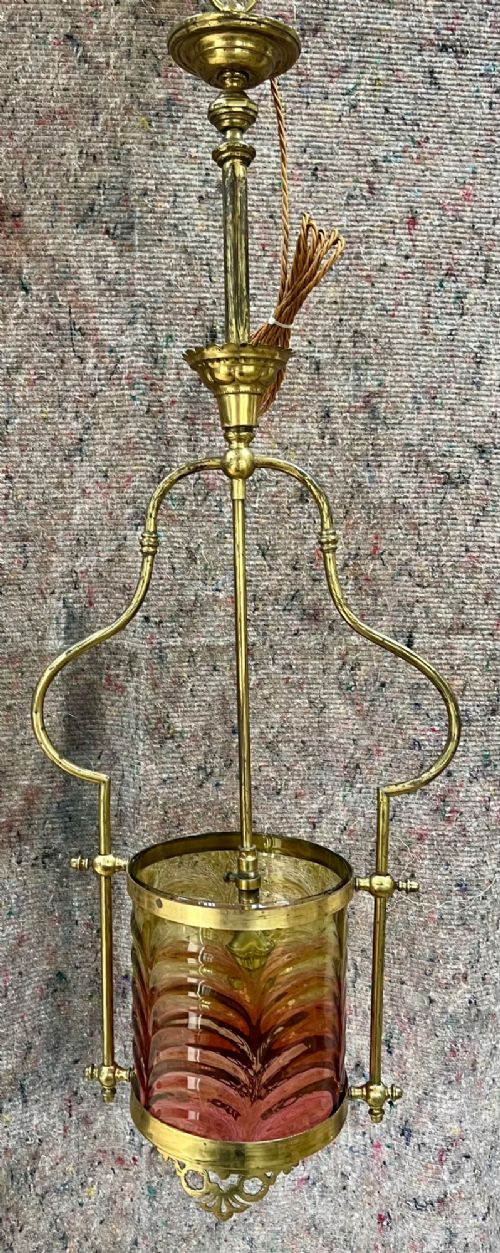
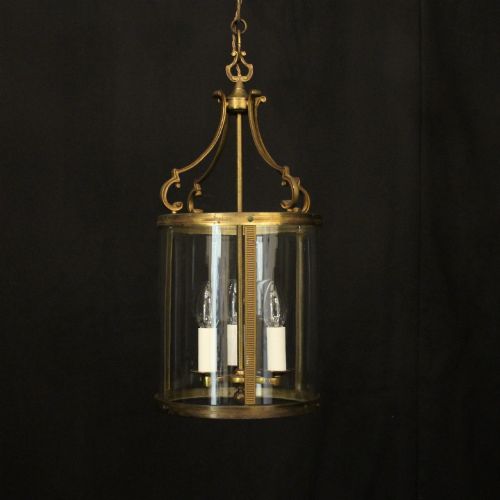
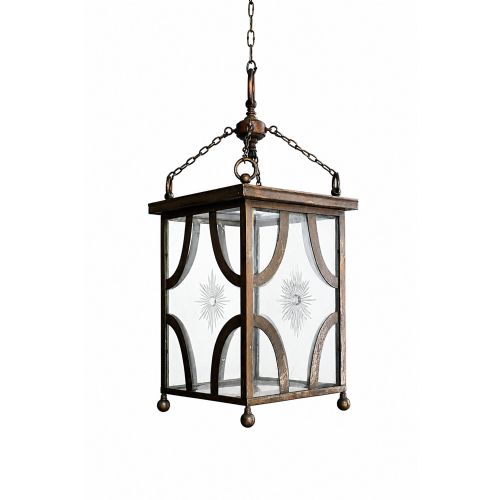
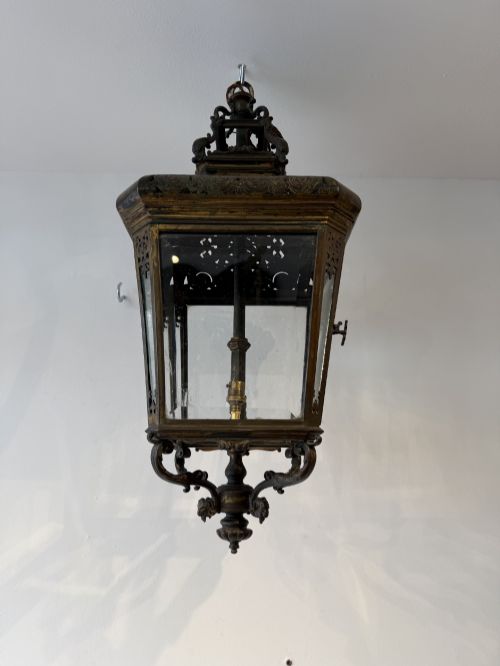
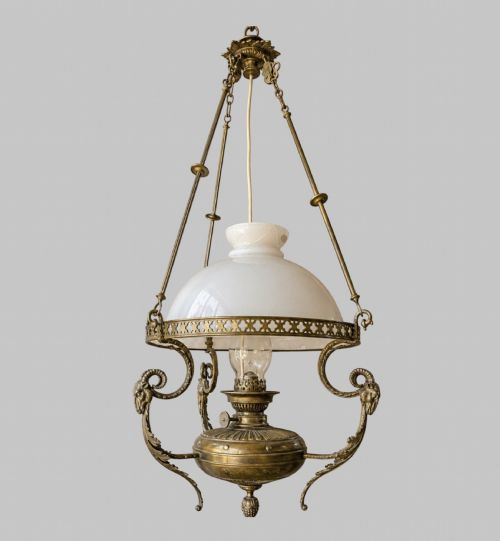
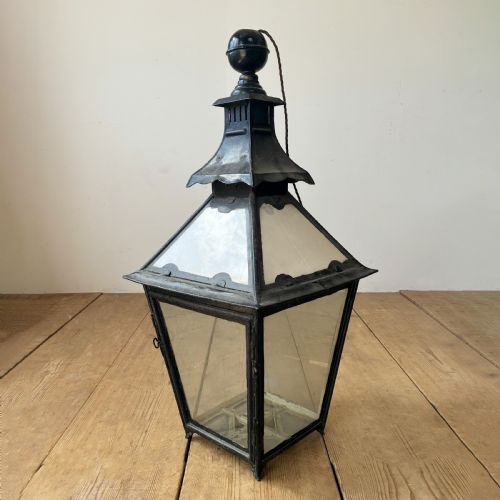

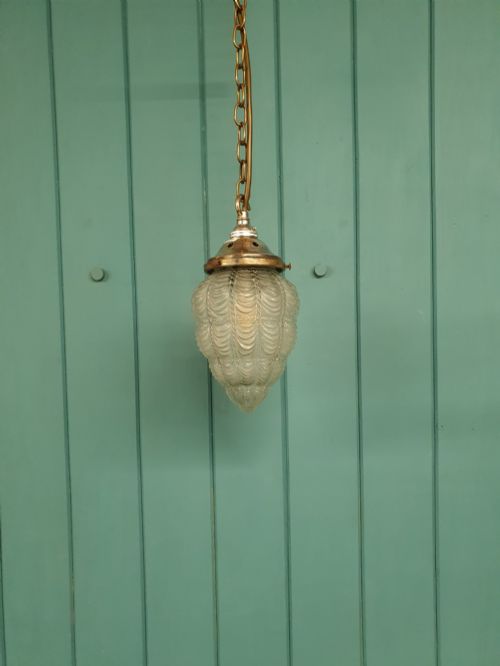
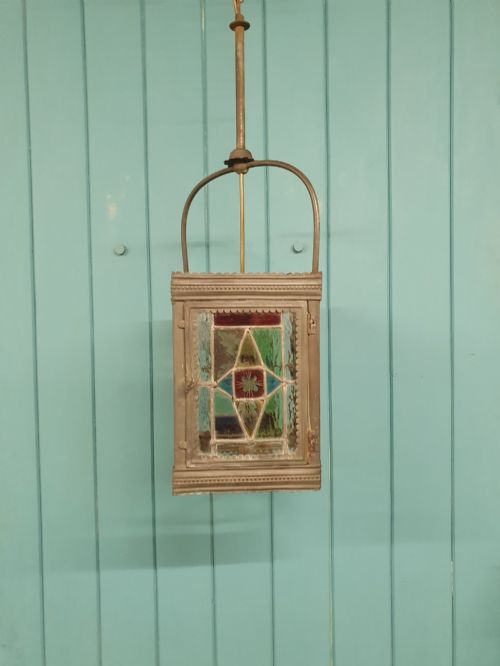
Victorian Glass Pendant Lantern
A victorian glass pendant lantern brings immediate character to a hallway, combining functional illumination with period metalwork.
Victorian Glass Pendant Lantern
A victorian glass pendant lantern is a ceiling-hung light fixture designed principally for entrance halls, corridors, and porches. These pieces illuminate spaces using enclosed glass panels held within metal frameworks, shifting over the decades from candle and paraffin oil to electricity.
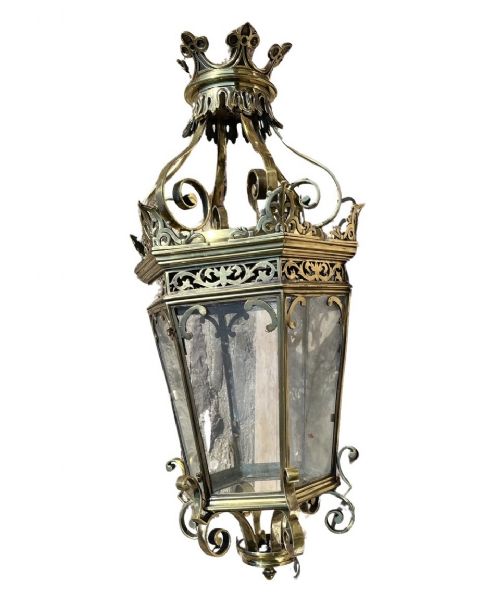
The versions most commonly met on this page span the nineteenth century through the Edwardian era, featuring brass, bronze, and copper constructions. Forms range from simple hexagonal frames to ornate Gothic Revival designs and French gilded bronze models.
Buyers seek these lights to restore period authenticity to older properties or to introduce architectural weight into modern interiors. The combination of clear, coloured, or opaline glass with patinated metal creates focal points that standard modern ceiling fixtures cannot replicate.
How they were made
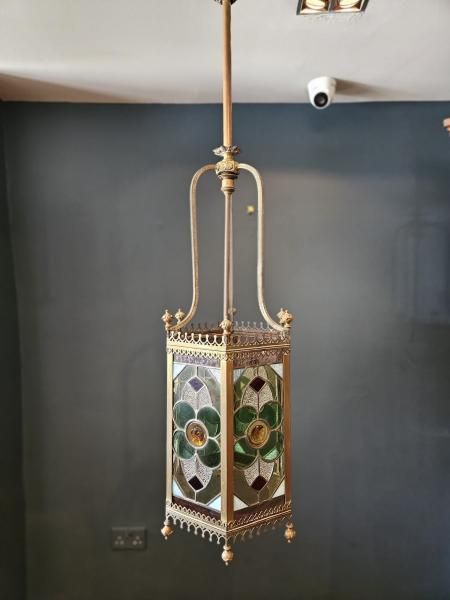
Makers constructed the structural frames of a victorian glass pendant lantern using cast or forged metals such as brass, bronze, copper, and wrought iron. Lead came into play particularly for securing individual glass panels within framed geometric designs, whilst gilding and patination finished the metal surfaces.
Glass production combined hand-blown techniques, leaded sections, and mould-blown panels, sometimes incorporating etched, dimpled, opaline, or coloured finishes. Workshops integrated functional elements like hinged doors, ventilation caps, and specialised burners such as the Hinks system for paraffin models.
What varies in quality
The caliber of a victorian glass pendant lantern rests primarily in the weight and detailing of its metal casting. Finer examples display crisper chasing on bronze or brass work, more substantial gauge metal, and robust structural joinery rather than thin pressed sheet metal.
Glass selection and assembly further divide the standard, with heavy leaded joints, hand-blown crystals, or complex coloured and etched panels demonstrating superior workshop execution. Original suspension mechanisms, maker signatures, and intact period burners elevate a piece well beyond standard utility lighting.
Perry And Co·Pugin
The Victorian Glass Pendant Lantern Glossary
- Gilt bronze
- Bronze that has been treated with a thin layer of gold or gold-coloured leaf. This technique provides a rich, durable surface finish popular in French and high-status English lighting.
- Opaline glass
- A milky, semi-translucent white glass used to diffuse light softly. It gained popularity during the nineteenth century for interior lamps and shades.
- Hinks burner
- A specific type of double-wick duplex oil burner patented in the nineteenth century. Its presence indicates a conversion from paraffin lighting to electricity.
- Gothic Revival
- An architectural and decorative style drawing on medieval forms, pointed arches, and heavy tracery. This aesthetic strongly influences mid-nineteenth-century hall lanterns.
Victorian Glass Pendant Lantern: Frequently Asked Questions
How do I hang a heavy lantern safely?
Heavy lanterns require direct attachment to ceiling joists using a steel mounting hook or bracket capable of supporting the combined weight of the metal and glass. Electricians should inspect the internal wiring and ensure the hanging chain is load-rated.
Older fixtures often lack modern earth wires, meaning professional rewiring is essential before installation. Secure the canopy flush to the ceiling to conceal the mounting junction box.
Can these lanterns be used with modern bulbs?
Most antique lanterns accept standard modern LED or incandescent bulbs once they are professionally rewired with appropriate lamp holders. Low-heat LED bulbs are particularly useful to protect fragile historical glass and internal solder from excessive thermal stress.
Consult your electrician to ensure the chosen bulb wattage matches the safe operating capacity of the vintage lampholder and wiring.
How do I clean antique glass and brass?
Clean glass panels using a soft cloth and a gentle glass cleaner, taking care not to disturb fragile lead cames or painted surfaces. Avoid harsh chemical polishes on patinated brass or bronze to preserve the aged surface colour built up over decades.
Dust intricate metalwork regularly with a dry, soft-bristled brush. Excessive cleaning can strip valuable original patination from the metal frame.
Were these lights originally wired for electricity?
Nineteenth-century lanterns relied on candles, paraffin oil, or gas before being adapted for electricity during later modernisations. Many surviving examples retain conversions or require rewiring to meet contemporary safety standards.
Evidence of early oil burners, such as internal fonts or specific galleries, often remains visible inside the frame even after electrical conversion.