
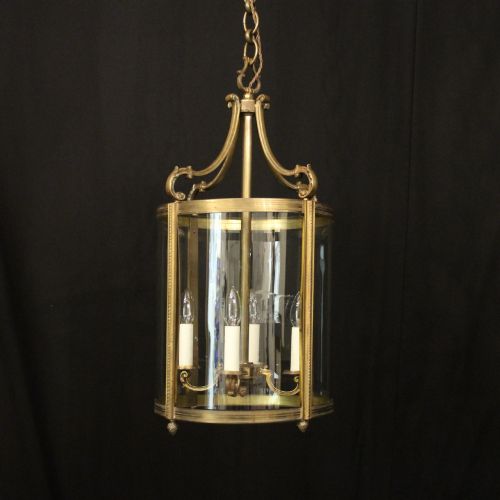
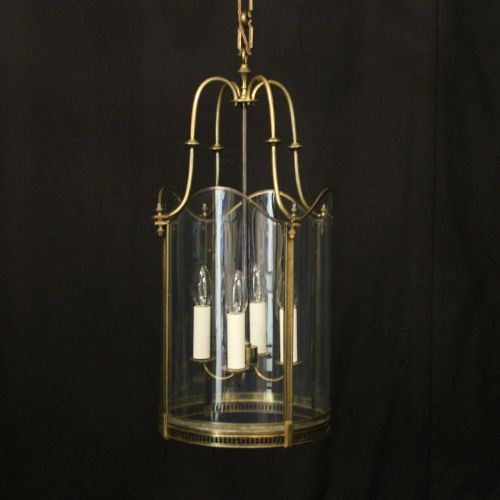
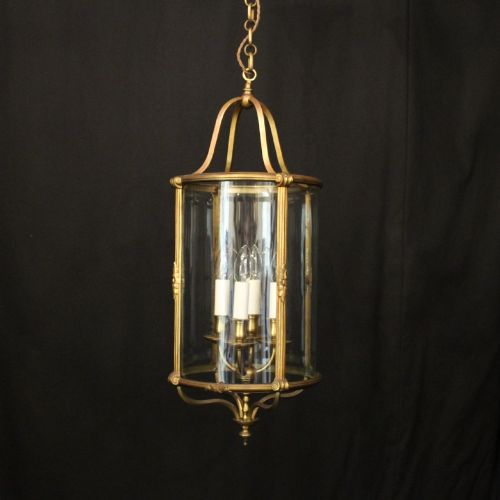
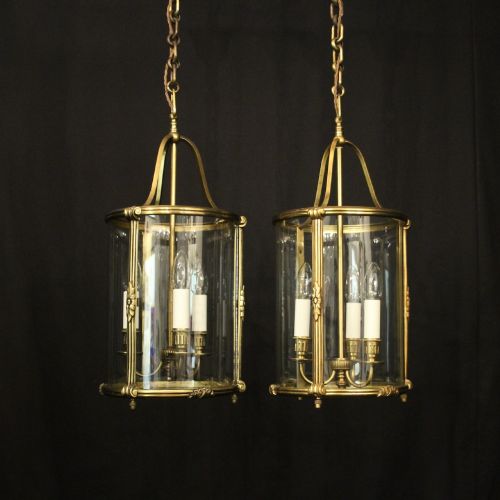
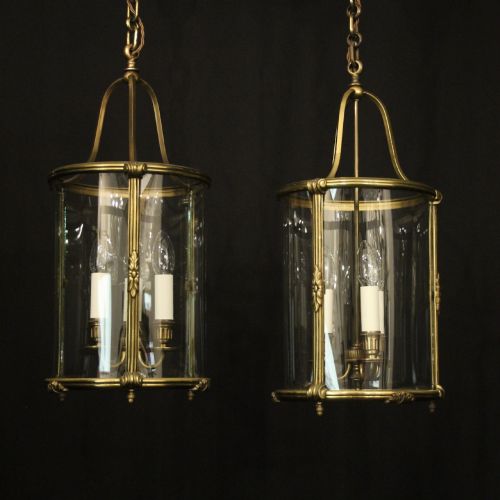
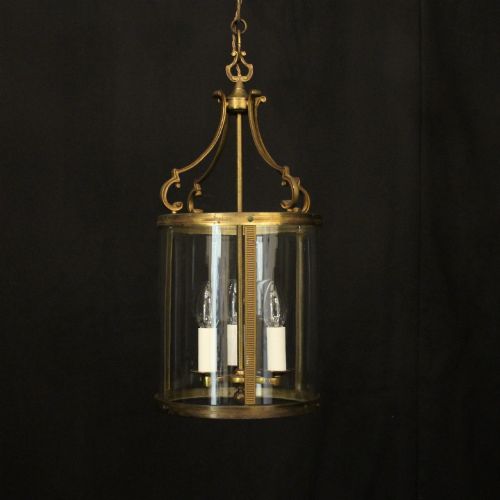
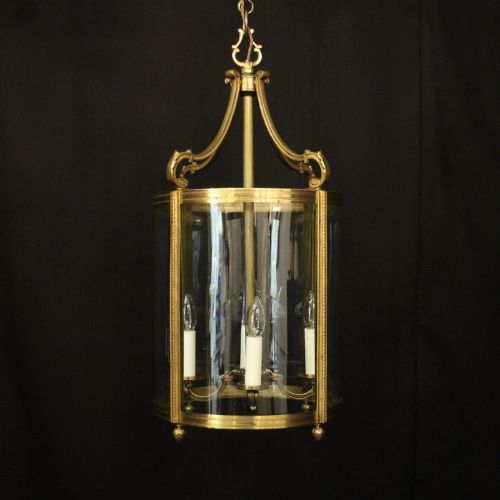


Gilded Bronze Foyer Lantern
A gilded bronze foyer lantern delivers immediate grandeur to an entrance hall, combining cast metalwork and glass to throw a welcoming reception light from above.
Gilded Bronze Foyer Lantern
A gilded bronze foyer lantern brings historical French design straight to your hallway, drawing largely from nineteenth-century origins and early twentieth-century revivals. You will frequently encounter ceiling-hung fixtures designed to illuminate grand entrances and corridors with considerable presence.
The pieces on this page span several stylistic iterations, notably French Neoclassical, Louis XVI, and Rococo Revival. These lanterns vary from single-bulb hall fixtures to substantial four-light hanging configurations suited for higher ceilings.
Most examples originate from French workshops, though occasional English interpretations appear within the selection. Formats include convex glass panels and large vertical designs built to handle multiple interior bulbs.
Materials and construction methods
Construction relies heavily on cast bronze or brass, finished with a layer of applied gilding or silvering to catch the interior light. These metal frames support heavy glass panes, often shaped with convex curves or precise bevelling.
Makers utilised traditional foundry techniques to cast ornate floral scrolls, ribbons, and classical motifs into the bronze structures. Individual glass panels were then secured within the metal framework using internal clips and traditional glazing methods.
Some convex lanterns were practically designed to make guests check their hair in the curved glass before entering the drawing room.
Assessing quality in hanging lanterns
Quality rests primarily in the crispness of the bronze casting and the depth of the original gilding. Finer lanterns exhibit sharply detailed acanthus leaves, crisp cast mounts, and substantial metal thickness rather than light, stamped sheet elements.
The integration of the glass significantly dictates the piece's refinement. Heavy, thick bevelled or convex glass panels fitted snugly into the bronze frame represent a higher tier of production than thin, flat replacements.
The Gilded Bronze Foyer Lantern Glossary
- Gilded bronze
- Metal cast and subsequently coated with a thin layer of gold leaf or gold powder suspended in size. This finish protects the underlying alloy and produces a warm, reflective surface under interior illumination.
- Bevelled glass
- Glass panes featuring an angled edge cut and polished around the perimeter. This treatment refracts light into prismatic colours as it passes through the lantern panels.
- Convex glass
- Curved glass panels blown or slumped outward to create a rounded profile. They offer wider light dispersion and add optical depth to the lantern silhouette.
- Rococo Revival
- A nineteenth-century design movement favouring asymmetrical scrollwork, naturalistic shell motifs, and exuberant floral ornamentation. It heavily influenced many French hall lanterns from this era.
- Hall lantern
- A ceiling-hung lighting fixture specifically scaled for narrow spaces, vestibules, and entrance corridors. These pieces hang closely to the ceiling or suspend on short chains.
Gilded Bronze Foyer Lantern: Frequently Asked Questions
Where should a foyer lantern hang?
These fixtures work best suspended in entrance halls, high-ceilinged vestibules, and stairwell landings where their vertical drop can be fully appreciated.
Ensure there is adequate clearance beneath the bottom of the lantern for foot traffic and door swings.
How do I clean gilded bronze?
Dust the metal gently with a soft, dry ostrich feather duster or microfiber cloth to remove surface particles.
Avoid all liquid brass cleaners, abrasive polishes, and chemical solvents, as these will strip away the delicate historical gilding.
Can modern bulbs be fitted?
Most antique lanterns are adapted to accept standard modern electrical wiring and candelabra-base LED bulbs.
Consult a qualified electrician to inspect the internal socket assembly and ensure the fixture safely handles current electrical loads.
How do I date a lantern?
Dating relies on stylistic markers such as Neoclassical symmetry or Rococo asymmetry, alongside the casting quality of the bronze frame.
Material composition, such as the use of heavy bevelled glass or silvered bronze finishes, also points toward specific early twentieth-century or nineteenth-century production periods.