

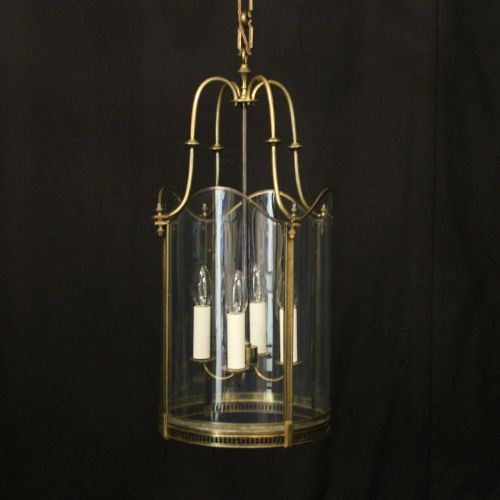
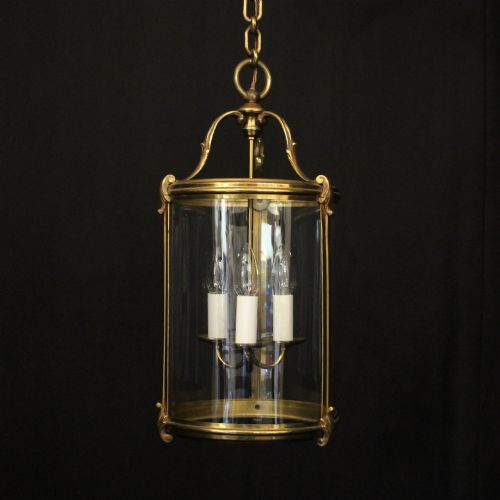
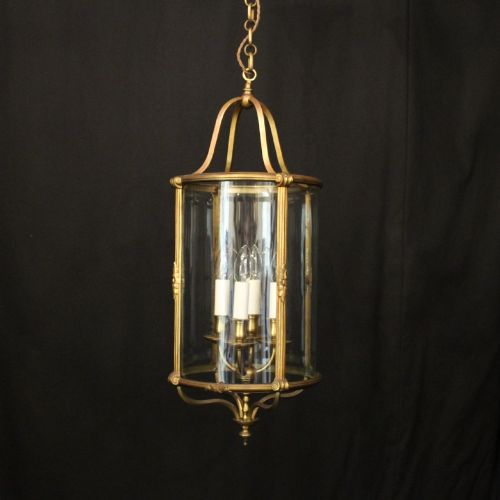
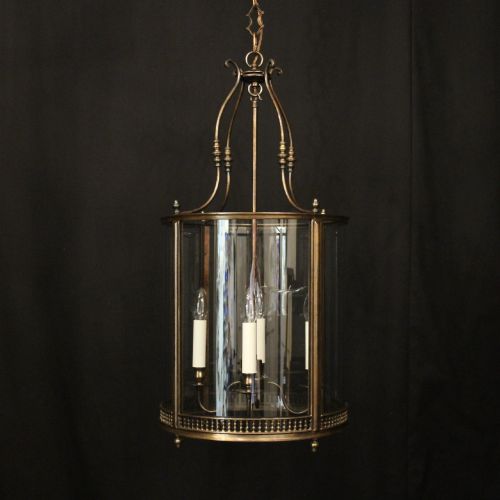
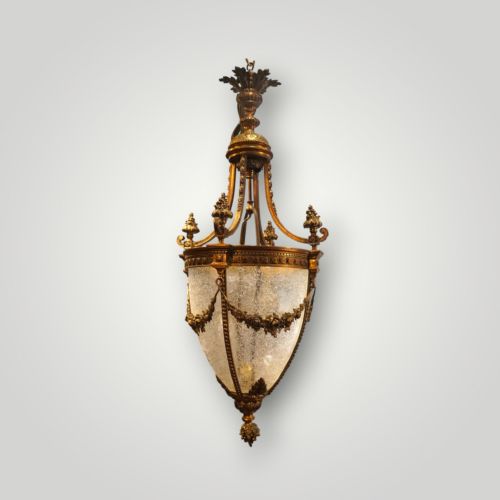
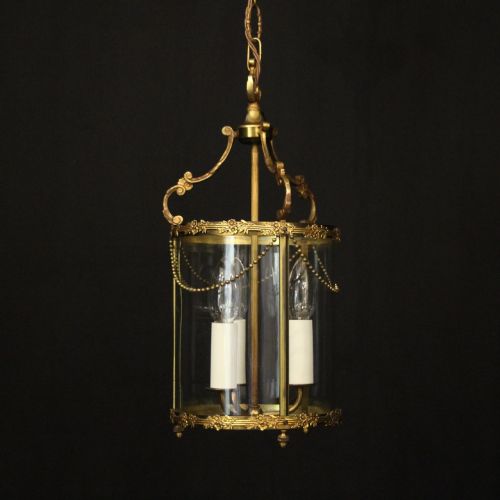
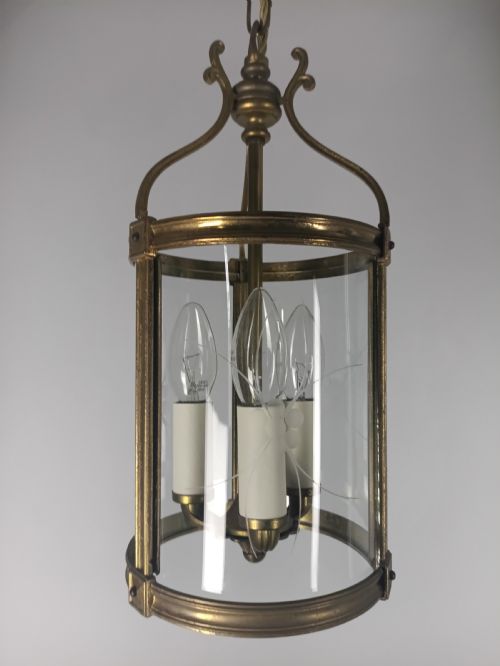
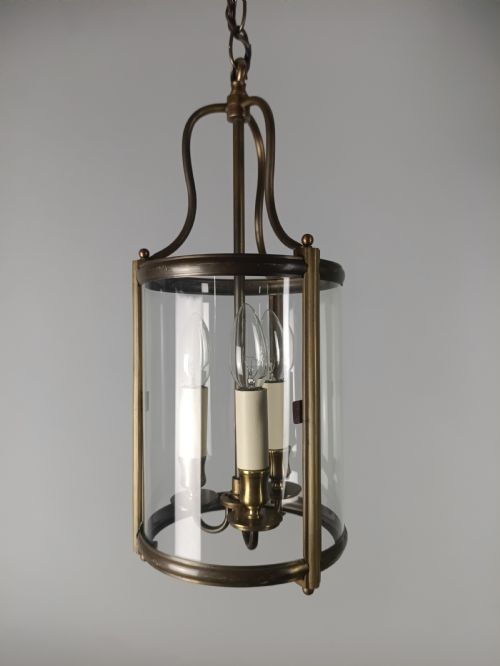
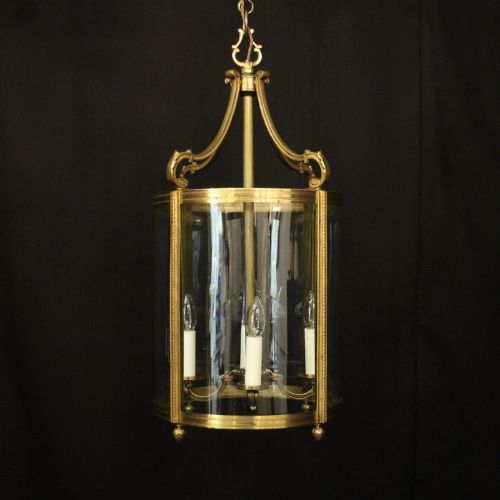
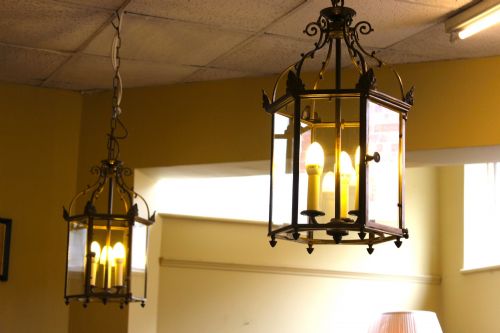

Gold Glass Hall Pendant
A gold glass hall pendant illuminates an entryway with warm metalwork and transparent panes.
Gold Glass Hall Pendant
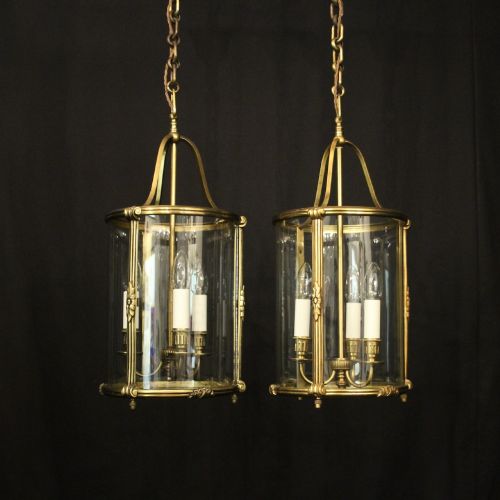
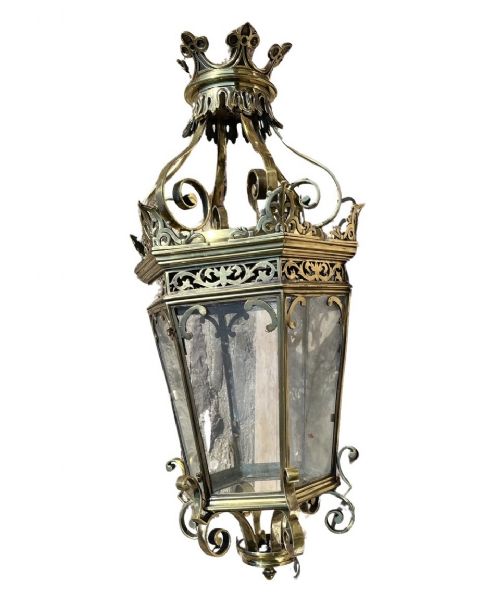
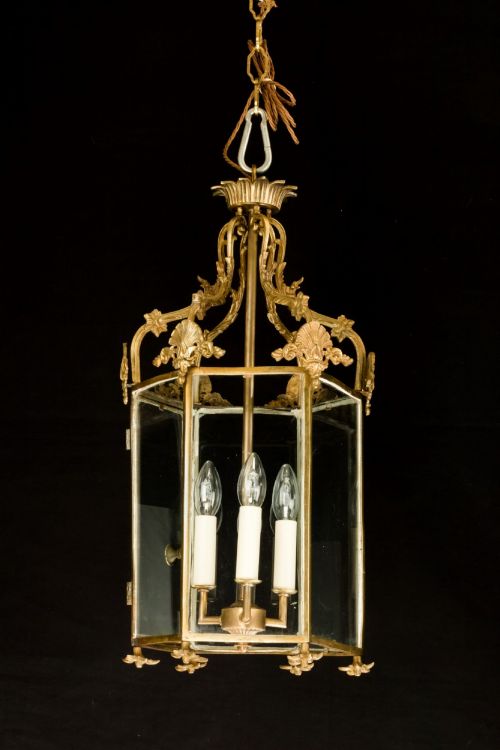
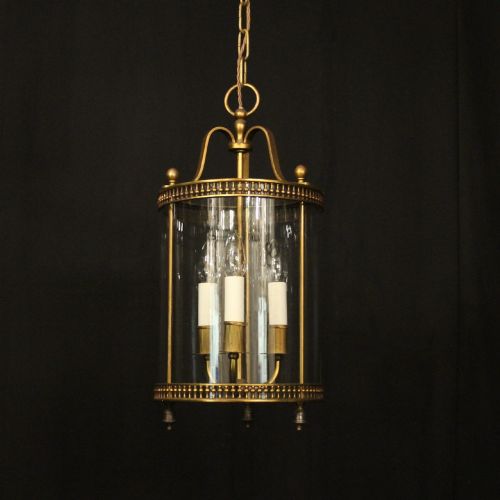
A gold glass hall pendant takes the form of a hanging lantern suspended in an entrance or corridor to cast downward illumination. When you search for gold glass hall pendant, you encounter ceiling lighting framed by metal and glass enclosures designed to hang securely from hallways and vestibules. The pieces span periods from the nineteenth century through the Edwardian era and into the 1920s and 1930s.
Most examples originate from French workshops or English makers, adopting styles such as French Neoclassical, Louis XVI, Rococo, and Edwardian designs. The primary object types include hall lanterns, pendant lights, and ceiling lanterns configured with single or multiple interior light fittings. You find convex glass panels, hexagonal frames, and door-fitted compartments among the structural variations.
Materials and Technique
Makers construct these hanging lanterns using metal frames formed from brass, gilt bronze, or gilded brass to support the glass panels. The metal surfaces receive gilding or polishing to achieve a golden finish that complements the surrounding hallway decor.
Panels consist of clear glass, bevelled glass, frosted glass, etched glass, or opaline glass held securely within the metal armature. Glazing techniques incorporate flat panes or curved convex shapes to disperse the light emitted from the interior bulbs.
Materials recorded across the listings include brass, gilt bronze, frosted glass, bevelled glass, and opaline glass.
Judging Quality
The standard of craftsmanship shows in the weight and definition of the cast bronze or brass framework. Superior examples display crisp ornamentation, securely seated glass panels, and well-fitted opening doors.
Finishing details distinguish finer pieces, particularly the depth of the gilding on the metal components and the clarity or bevelling of the glass. The integration of multiple light fittings within a balanced, symmetrical cage indicates higher production ambition.
Perry & Co
The Gold Glass Hall Pendant Glossary
- Convex glass
- Curved glass panels that project outward to soften and disperse the internal illumination. This form appears frequently on twentieth-century hallway lanterns.
- Gilt bronze
- Metalwork treated with a gold-coloured surface layer to provide a bright, reflective appearance. It serves as a durable frame material for decorative light fixtures.
- Hall lantern
- A ceiling-hung lighting fixture designed specifically for narrow entrance spaces and corridors. These fixtures direct light downward while enclosing the bulbs behind glass panes.
- Bevelled glass
- Glass panes featuring angled edges cut along the perimeter to refract light through the transparent surface. This technique adds visual depth to the lantern sides.
- Hexagonal
- A six-sided geometric frame configuration utilised in various brass and bronze hall lanterns. This shape provides balanced angles for viewing the interior light sources.
Gold Glass Hall Pendant: Frequently Asked Questions
Where should I hang a hall pendant?
These lanterns suit entrance halls, vestibules, and stairwells where downward illumination is required. They mount directly to ceilings on chains or rigid rods.
Ensure adequate ceiling height and clearance for passage beneath the hanging fixture before installation.
How do I identify a 1920s lantern?
Pieces from the 1920s often feature French gilt bronze or brass frames with convex glass panels. They frequently house multiple internal light bulbs.
Compare the metal finishing and structural proportions against Edwardian and nineteenth-century examples in the selection.
What is the difference between brass and gilt bronze?
Brass is an alloy of copper and zinc providing a natural golden metallic tone. Gilt bronze involves a bronze base coated with a gold finish.
Both materials appear widely across the recorded lanterns to create the desired golden framework.
Can these pendants use modern electrical bulbs?
Most historic lanterns receive updated internal wiring to accommodate standard contemporary bulbs safely. Professional rewiring preserves the original metal frame while meeting current standards.
Check the interior fitting capacity to ensure appropriate bulb dimensions for the glass enclosure.