
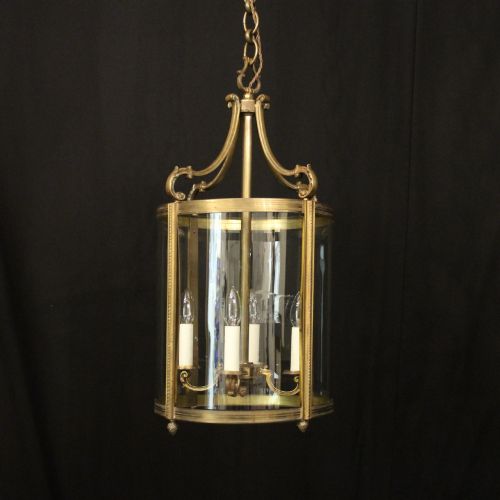
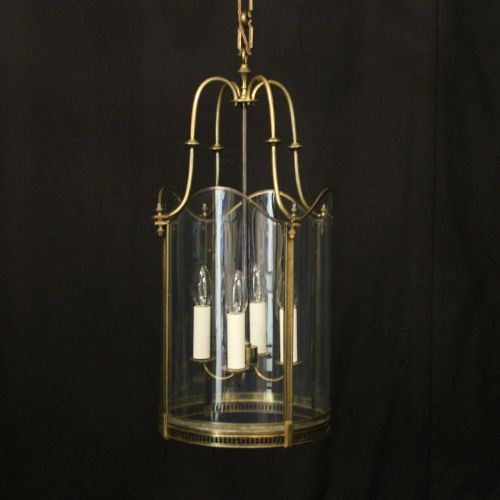
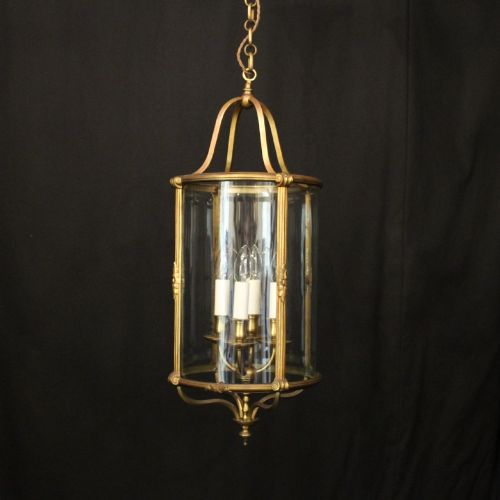
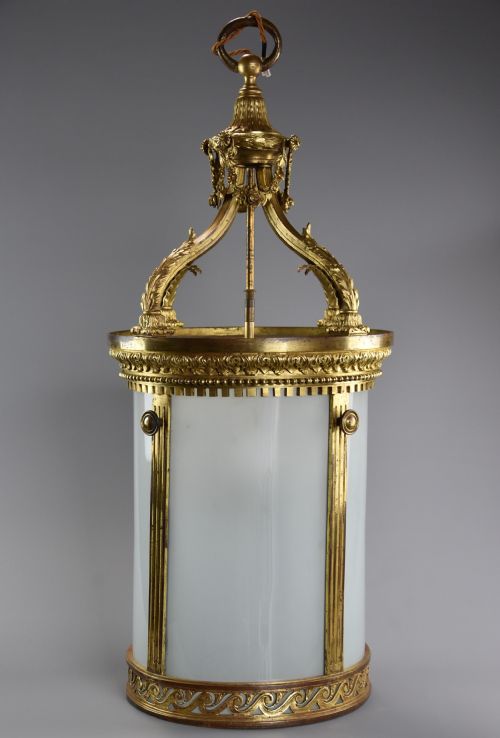
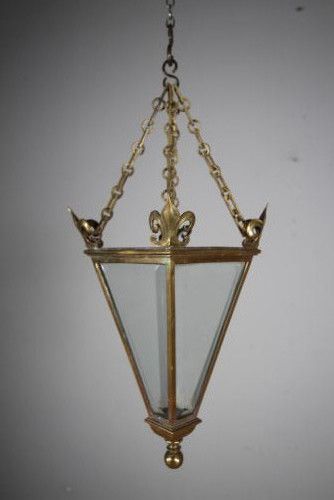
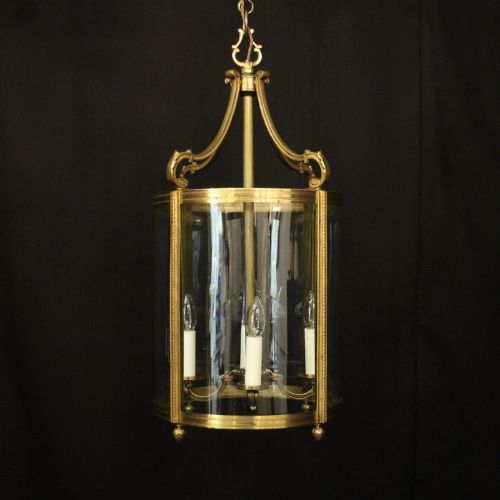


French Gilt Bronze Lantern
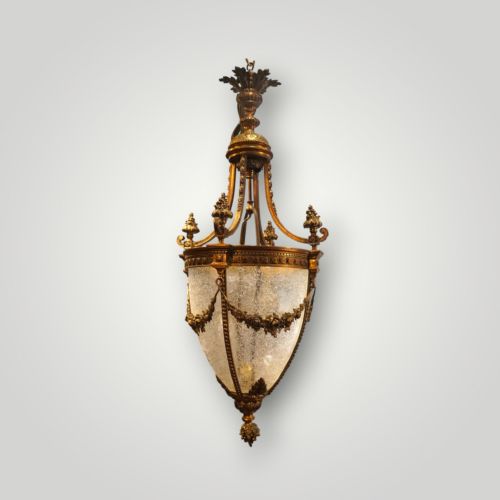
A french gilt bronze lantern brings weight and warm illumination to an entrance hall, combining cast metalwork with leaded glass panels.
French Gilt Bronze Lantern
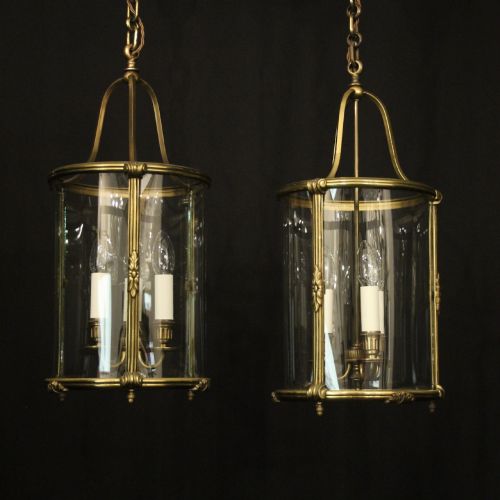
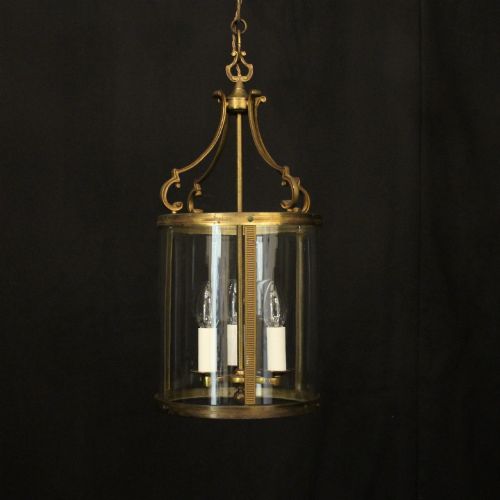
A french gilt bronze lantern is a hanging ceiling light designed primarily for hallways, vestibules and grand stairwells. The pieces on this page span from the nineteenth century through the early decades of the twentieth century, with strong representation from the Victorian era and the nineteen-twenties.
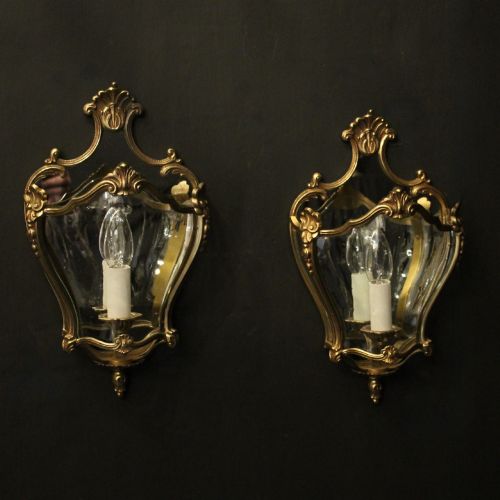
Form variations range from single bulb pendants to four light configurations, alongside convex and hexagonal shapes. Most examples follow traditional French design vocabularies including Louis XVI style, Neoclassical motifs and Rococo revival details.
How They Were Made
These light fittings combine cast metal frameworks with transparent panes. Metal components are cast in bronze or brass, then finished with gilding, silver gilding or ormolu treatment.
The glazing involves clear glass, bevelled glass, cut glass or curved convex panes. Some variations incorporate opaline glass or coloured crystal to alter the quality of the emitted light.
Materials across these listings include gilt bronze, brass, opaline glass, and cut crystal.
What Varies in Quality
The distinction between ordinary and superior pieces rests on the crispness of the metal casting and the depth of the gilding. Heavier gauge bronze provides structural integrity that lighter brass frames lack.
Detailing on the mounts and the complexity of the glass work separate standard hall lights from exceptional examples modelled on palace lighting.
Perry And Co
The French Gilt Bronze Lantern Glossary
- Gilt bronze
- Metal cast and coated with a thin layer of gold or gold leaf. This finish provides a warm, reflective surface that resists tarnishing over decades.
- Ormolu
- Finely ground high-carat gold mercury-gilded onto a bronze base. The technique creates a rich, matte yellow lustre characteristic of high-end French decorative metalwork.
- Convex glass
- Curved panes that project outward from the lantern frame. This shape disperses light across a wider angle than flat glass panels.
- Bevelled glass
- Panes featuring angled edges ground and polished around the perimeter. The angled facets catch and refract light to create subtle prismatic effects.
- Hall lantern
- A hanging light fixture proportioned for narrow passages and entrance spaces. These fixtures typically suspend from chains or fixed rods close to the ceiling.
French Gilt Bronze Lantern: Frequently Asked Questions
Where should I hang a french gilt bronze lantern?
These fixtures suit entrance halls, vestibules and high-ceilinged landings where their downward illumination and decorative metalwork can be appreciated from below. They also function effectively in large stairwells.
Ensure the ceiling height allows sufficient clearance underneath the drop of the lantern for passage.
How do I date a french gilt bronze lantern?
Dating relies on stylistic markers such as Louis XVI neo-classical swags, Victorian proportions or Arts and Crafts influences. Material finishes and wiring methods offer further clues to the period of manufacture.
Records show pieces ranging from the early nineteenth century through the nineteen-thirties.
Can these lanterns be rewired for modern electricity?
Most antique lanterns require updating to meet current electrical standards and safety codes. Professional rewiring preserves the original metal framework while integrating modern bulb holders and safe internal wiring.
Consult a qualified electrician to adapt the fitting for contemporary power supplies.
What is the difference between gilt bronze and brass?
Gilt bronze uses a copper and tin alloy base that takes finer chisel work and holds gilding securely. Brass is an alloy of copper and zinc, which tends to have a brighter, yellower natural tone and lower density.
Many antique listings use both terms interchangeably based on visual inspection of the metal surface.