


Louis XVI Style Lantern
A louis xvi style lantern brings classical French elegance to an entrance hall, offering refined illumination through gilded metalwork and glass.

What They Are
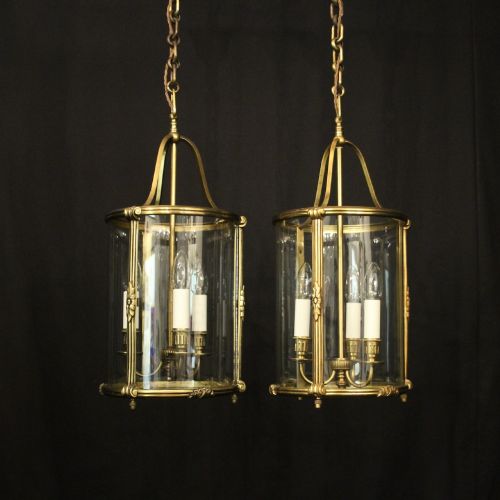
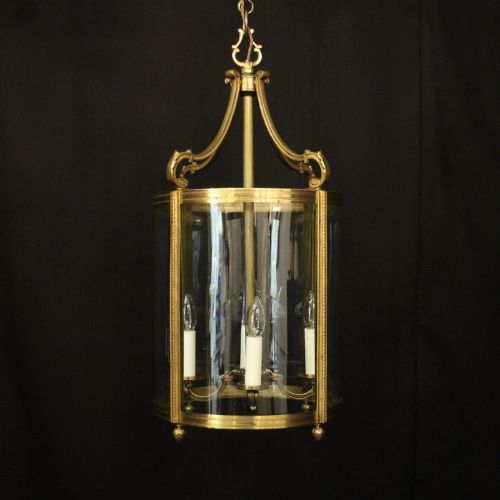
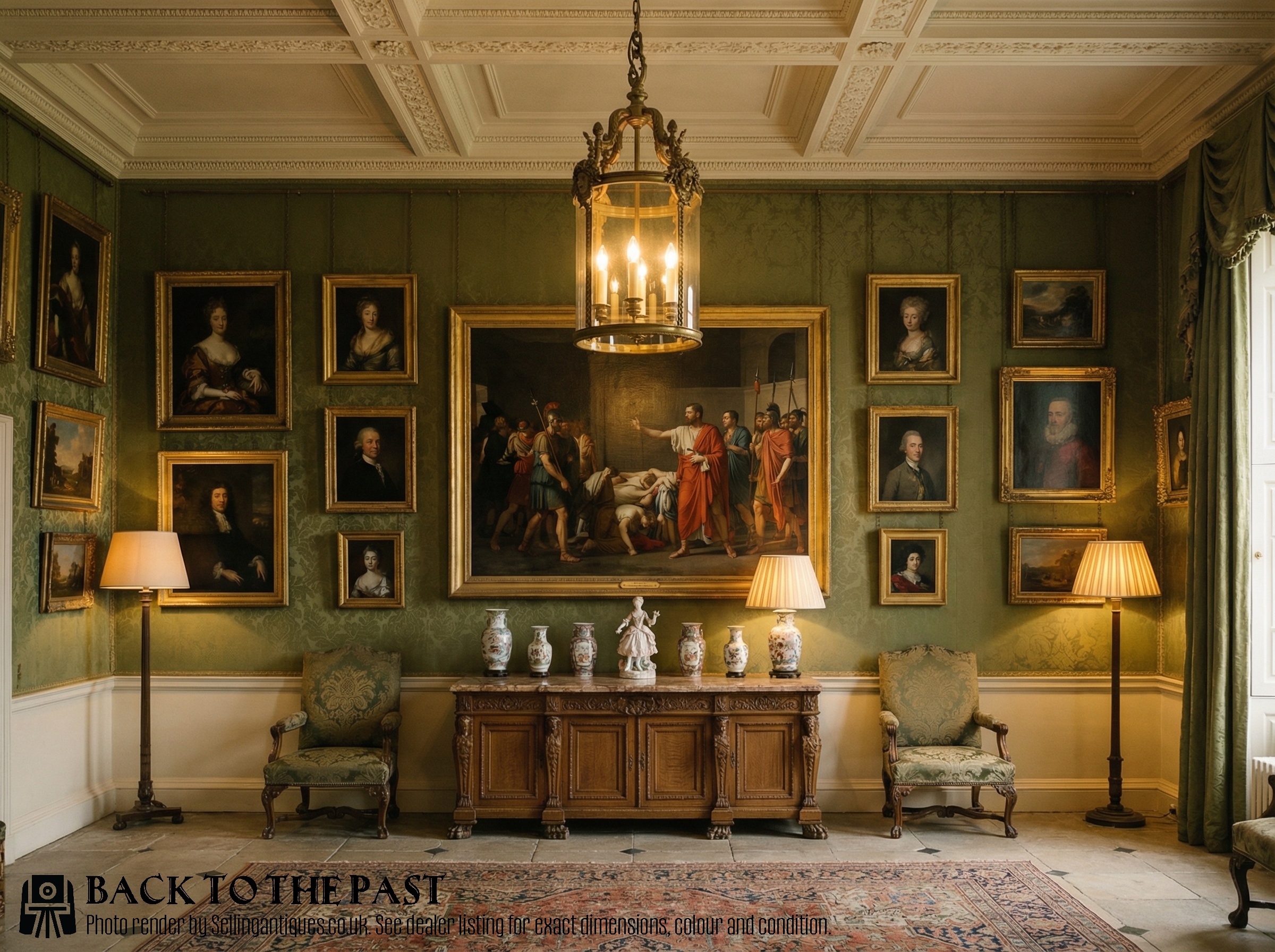
A louis xvi style lantern is an architectural ceiling light drawing upon French Neo-Classical design principles. These pieces typically take the form of hall lanterns designed to illuminate grand entrances and corridors.
The versions most commonly met on this page originate from France and date across the nineteenth and early twentieth centuries, specifically spanning the eighteen-eighties to nineteen-twenty.
Examples appear both as single fixtures and as matched pairs, incorporating multi-light internal fittings to cast a warm glow through glass panels.

How They Were Made
The structural frames are constructed from cast and chased metals, recorded as gilded bronze, gilt bronze, and gilded brass. These metal mounts exhibit the crisp foliage and classical geometry associated with French Louis XVI design.
Glazing takes several distinct forms to diffuse the internal light, utilising plain glass alongside frosted, etched, and cut glass panels. Convex glass panels also appear, adding a rounded profile to the metal framework.
Retail Price Guide 2026
Typical UK retail prices for louis xvi style lantern, calculated from the Sellingantiques database of over a million retail prices indexed since 2003. This retail price guide relies exclusively on Sellingantiques data; no external sources or auction records are used, so the figures do not describe the wider market.
Listings span the nineteenth century up to nineteen-twenty, featuring materials such as gilded bronze, brass, and frosted or cut glass.
What Varies in Quality
Quality rests upon the crispness of the metal chasing and the richness of the gilding applied to the bronze or brass framework. Finer examples display deeply carved classical motifs that remain sharp and well-defined across every scroll and acanthus leaf.
The treatment of the glass further distinguishes the tier of the piece, with heavy cut glass or delicately etched panes representing a higher standard of manufacture than simple flat glazing. The integration of four-light internal configurations also points to more ambitious scale and design.
The Louis XVI Style Lantern Glossary
- Gilded Bronze
- Bronze that has been coated with a thin layer of gold or gold-coloured leaf. This technique provides a durable, luxurious finish that resists tarnish.
- Convex Glass
- Glass panels that curve outward from the metal frame. This shape softens the light output and adds visual depth to the lantern silhouette.
- Hall Lantern
- A ceiling-hung lighting fixture specifically scaled for corridors and entrance vestibules. They provide both functional illumination and a decorative focal point.
- French Neo-Classical
- A style inspired by the classical art and architecture of ancient Greece and Rome. It prioritises symmetry, straight lines, and restrained classical ornamentation.
Frequently Asked Questions
Where should I hang a hall lantern?
These fixtures are traditionally suspended in entrance halls, high-ceilinged corridors, and stairwells where their downward illumination and decorative metalwork can be fully appreciated.
Because they hang from chains or rods, you must ensure your ceiling height allows adequate clearance for people passing underneath.
How do I date an antique lantern?
Dating relies on examining the casting methods of the bronze or brass, the wear on the gilding, and the style of the glass panels. Nineteenth-century examples often display hand-chased details that differ subtly from later twentieth-century reproductions.
Archival records and matching pieces from the same period help establish a reliable timeline for construction.
What maintenance do gilded bronze surfaces need?
Gilded metal requires very little intervention beyond gentle dusting with a soft, dry cloth to prevent the accumulation of grime. Avoid all chemical cleaners and abrasive cloths, which can strip away the historic gilt finish.
Glass panels can be removed carefully or wiped in place using a standard glass cleaner applied to a cloth rather than sprayed directly onto the metal.