
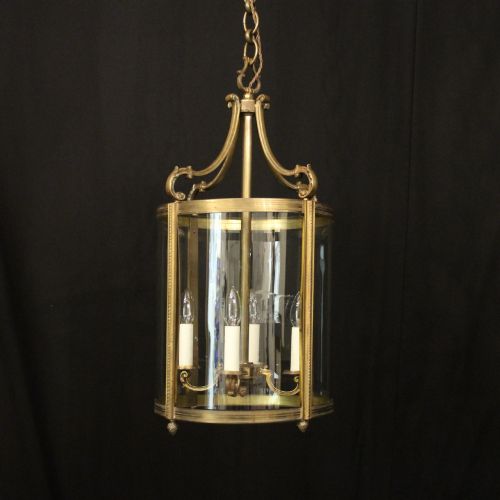
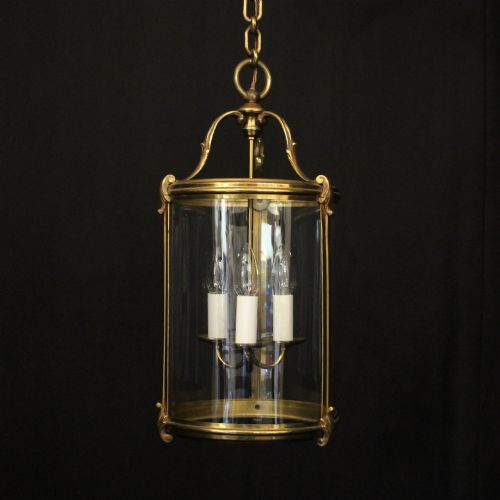
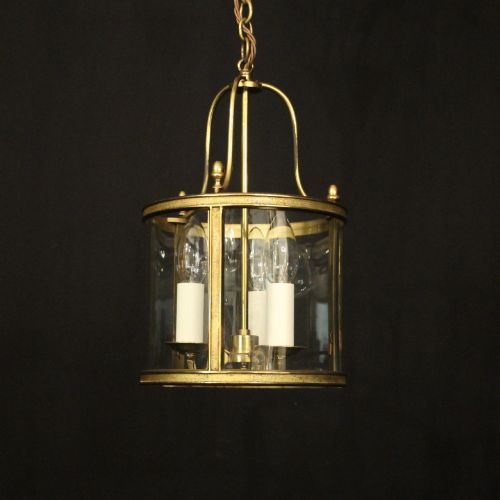
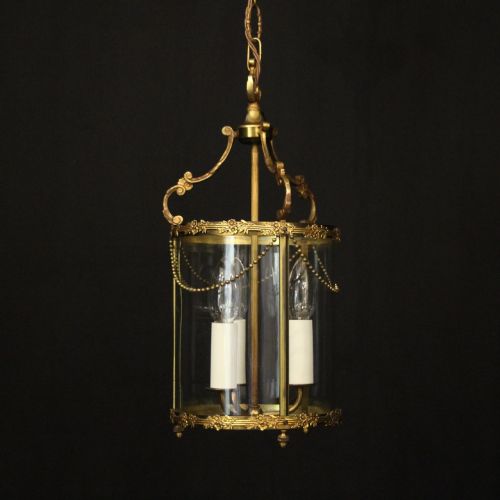
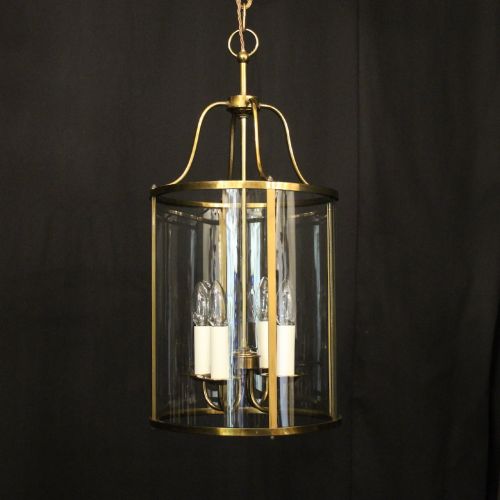
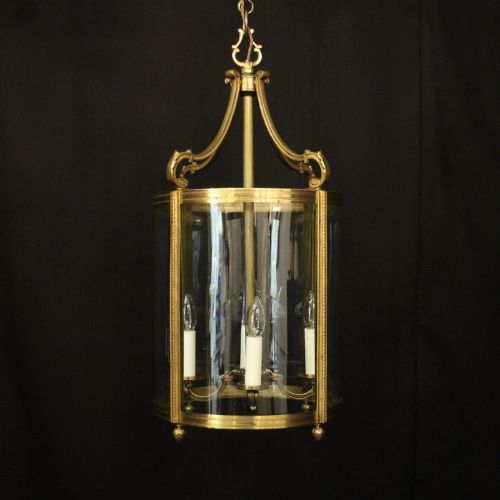


Cylindrical Glass Pendant Lantern
A cylindrical glass pendant lantern brings immediate presence and crisp illumination to a high-ceilinged hallway or entrance.
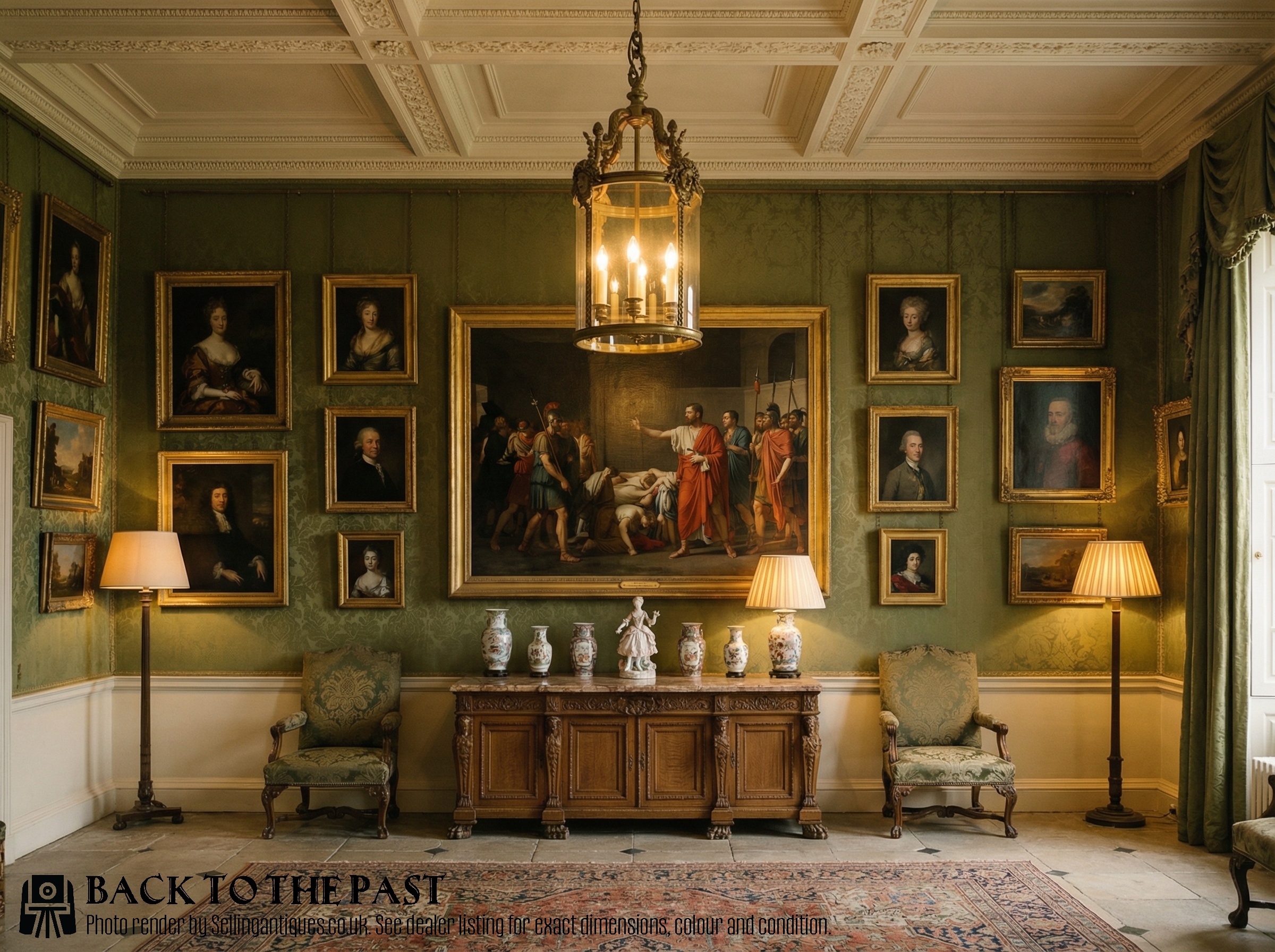
Cylindrical Glass Pendant Lantern
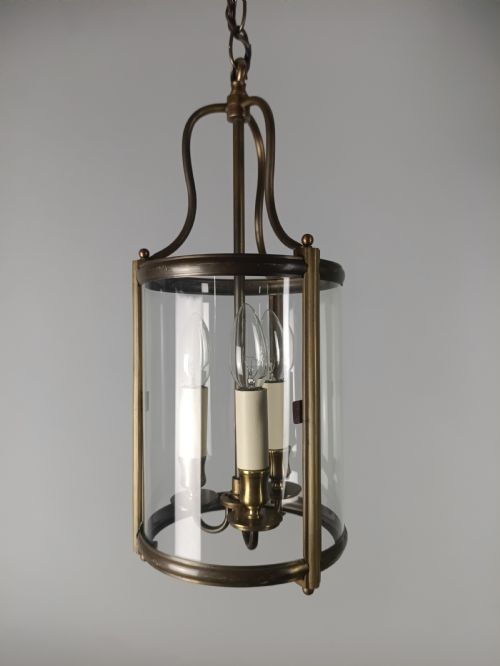
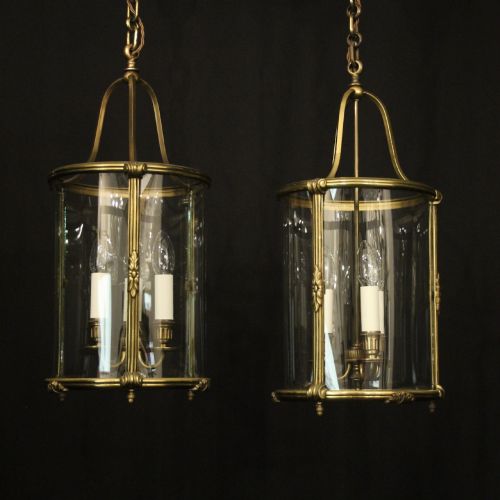
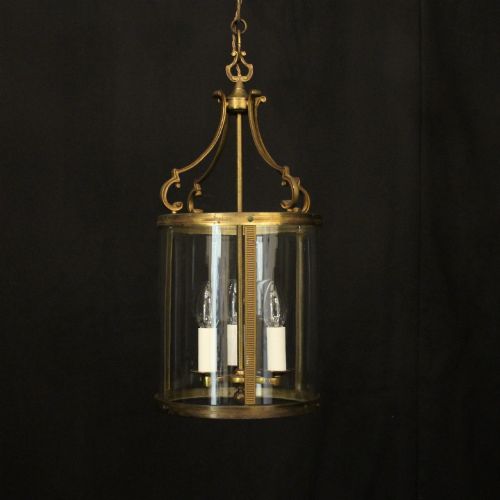
A cylindrical glass pendant lantern is a hanging light fixture designed primarily for halls, corridors and entryways. These pieces combine vertical glass bodies with metal frames to distribute light evenly across a space.
The selections available here stem predominantly from the nineteenth century, the Edwardian era, and the nineteen-twenties and thirties. French origins dominate the inventory, accompanied by English and American examples.
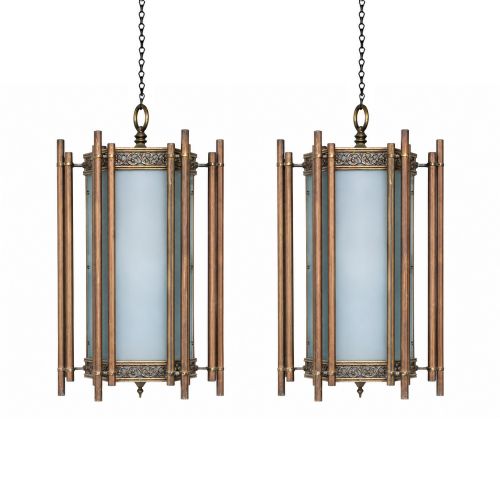
Makers often drew upon classic design vocabularies, producing pieces styled in French Neoclassical, Art Deco, and Empire traditions. Hall lanterns and ceiling lights form the core of the object types found in this group.
Materials and Construction
Workshops built the structural frames using brass, bronze, and gilt bronze, often applying a gilded finish to enhance reflectivity. These robust metal skeletons support the weight of the glazing while defining the silhouette.
Glazing typically involves clear or convex glass panels fitted snugly into the metal framework. Frosted glass also appears occasionally to diffuse the internal illumination.
Construction techniques range from single-bulb mountings to triple and four-light configurations housed within the cylindrical glass body.
Convex glass panels act like miniature funhouses for your hallway, stretching reflections just enough to make every visitor look slightly more cinematic.
Evaluating Quality
Quality rests significantly on the precision of the metal casting and the thickness of the bronze or brass used in the frame. Heavier, crisper castings retain sharper decorative details along the mounts and suspension rings.
The glass panels themselves dictate much of the visual character, particularly when convex panes are utilised to bend light dynamically. Seamless fit and the absence of distortion in the glass elevate the standard of the piece.
Finishing work, such as the depth and durability of the gilding or the polish of the bronze, distinguishes standard production from more ambitious commissions.
The Cylindrical Glass Pendant Lantern Glossary
- Convex glass
- Curved glass panels that bulge outward, adding optical distortion and a softer reflection of interior light. These panes require specialist forming techniques.
- Gilt bronze
- Bronze metal coated with a thin layer of gold or gold-coloured alloy. This treatment prevents tarnish and provides a warm, luminous surface.
- Hall lantern
- A ceiling-hung lighting fixture specifically scaled for narrow passageways and entrance halls. They provide directional downward light alongside ambient glow.
- Empire style
- A neoclassical design movement popular in the nineteenth century, characterised by military motifs, classical restraint, and rich metal mounts. It heavily influences many French lanterns of this period.
Cylindrical Glass Pendant Lantern: Frequently Asked Questions
Where should I hang a cylindrical glass pendant lantern?
These fixtures suit high-ceilinged entrance halls, stairwells, and wide corridors where their vertical proportions can be fully appreciated.
Ensure adequate clearance below the lowest point of the lantern for foot traffic and door swings.
How do I date a glass and brass hall lantern?
Dating relies on examining the metal casting techniques, screw threads, wiring channels, and stylistic cues such as Art Deco geometry or Empire ornamentation.
Earlier nineteenth-century pieces often feature heavier hand-finished bronze frames compared to later twentieth-century production.
Are these lanterns suitable for modern electrical systems?
Most antique lanterns have been adapted for contemporary wiring during their lifespan, though professional inspection by an electrician is recommended prior to installation.
Internal bulb sockets can accommodate standard modern LED or incandescent lamps.
What is the difference between brass and gilt bronze?
Brass is an alloy of copper and zinc, valued for its bright metallic appearance and ease of polishing.
Gilt bronze, orormolu, uses a copper and tin base finished with a gold coating to offer a richer, deeper tone that resists corrosion.