
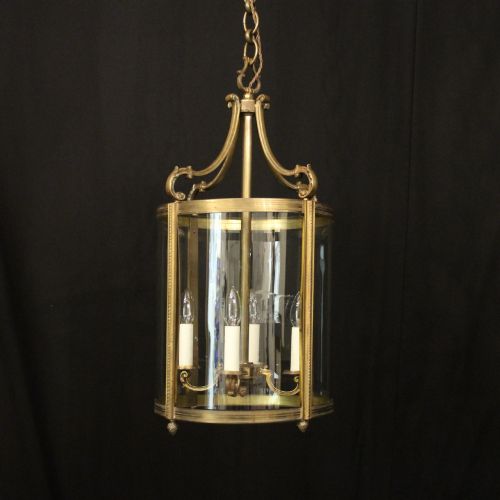
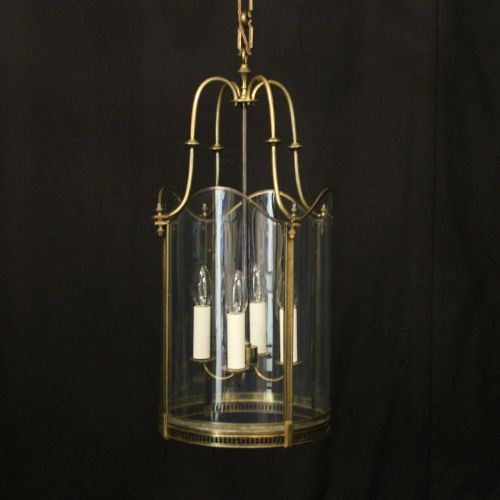
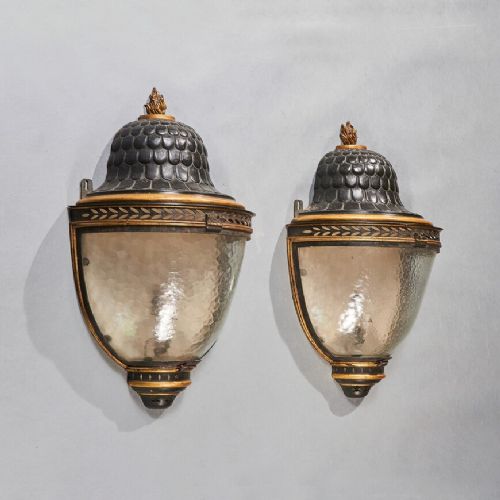
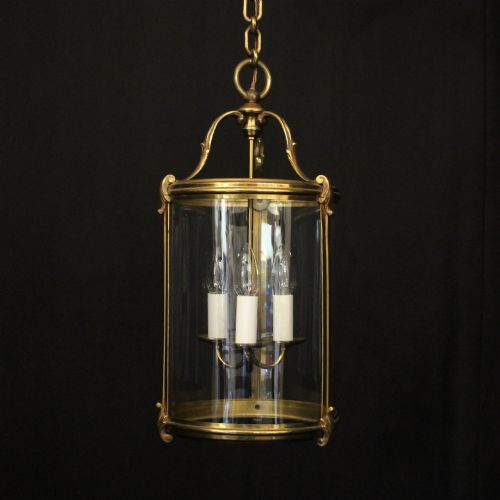


Gilt Brass Hall Lantern
A gilt brass hall lantern brings a warm, polished presence to an entryway, combining structural metalwork with clear glass to illuminate a threshold.
Gilt Brass Hall Lantern
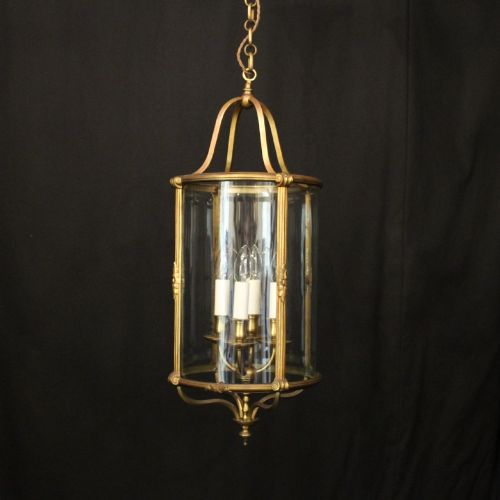
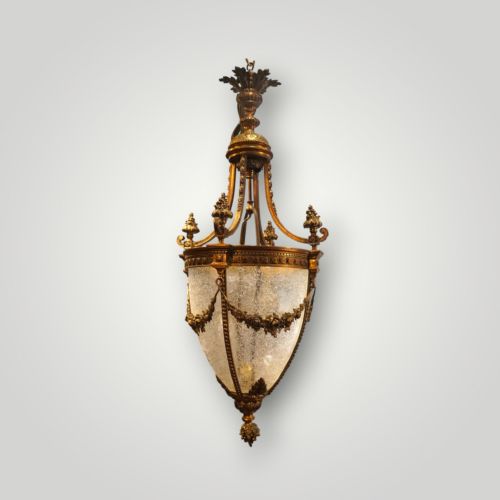
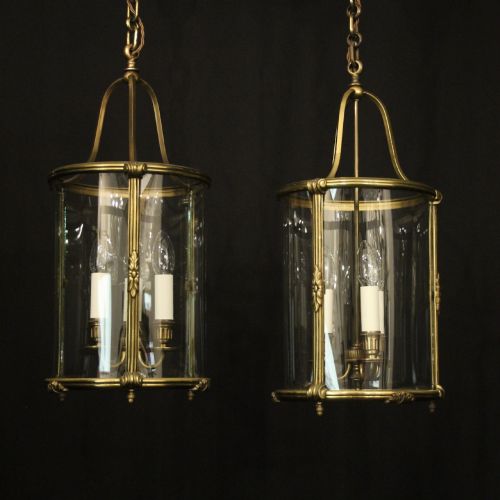
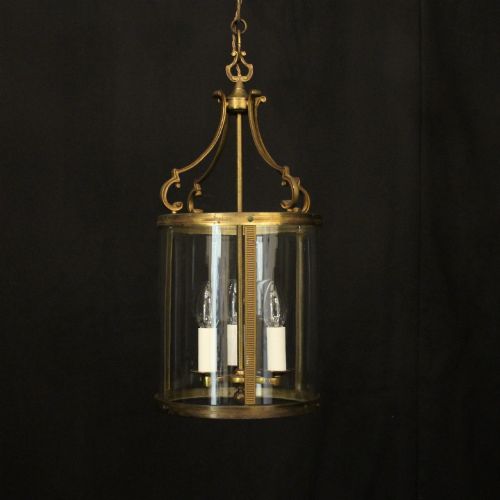
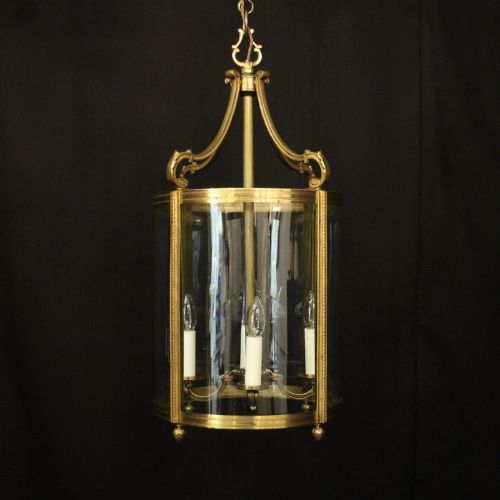
A gilt brass hall lantern is a ceiling-hung light fixture designed primarily for corridors, vestibules, and entrance spaces. These pieces span the nineteenth and early twentieth centuries, with a strong representation of French designs inspired by neoclassical, rococo, and Louis XVI styles.
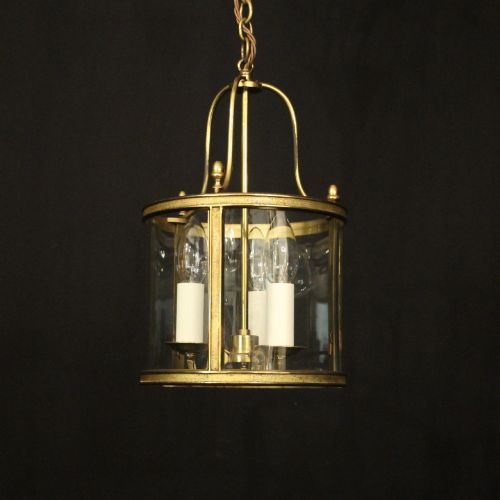
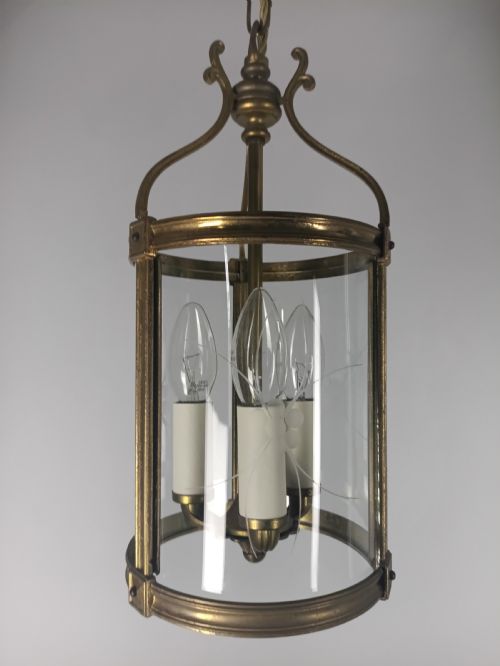
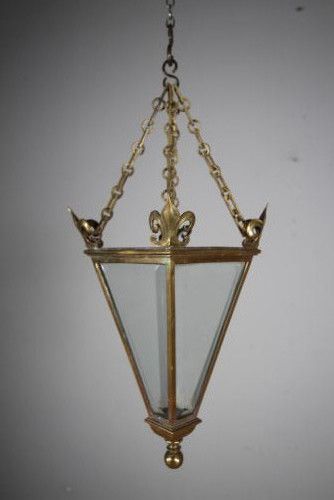
The form typically involves a metal frame enclosing glass panels, configured to hold one or multiple internal lights. Buyers encounter examples ranging from simple hexagonal shapes to large, ornate fixtures with convex or bevelled glass panes.
Origins lean heavily toward French workshops, alongside examples associated with English makers and specific historical commissions. Dating stretches from the early nineteenth century through the Victorian era into the 1920s and 1930s.
How they were made
Construction relies on cast or sheet brass and bronze, finished with fire-gilding, ormolu, or parcel gilt accents to create a bright, reflective surface. Frames are assembled with mechanical joints or soldering, securing individual panes of glass within the metal ribs.
Glass components vary from plain flat panels to complex convex, bevelled, etched, or opaline sheets that diffuse the interior light. Specialised variations incorporate painted tole peinte elements or silver-gilded bronze to achieve distinct visual textures.
Listings feature items spanning the 1880s through the 1930s, utilising brass, bronze, and glass with French stylistic influences.
What varies in quality
Quality rests in the crispness of the metal casting and the depth of the gilding applied to the bronze or brass framework. Finer pieces demonstrate meticulous hand-finishing on decorative mounts and balanced proportions between metalwork and glass.
The sophistication of the glasswork also separates standard examples from superior ones, particularly where curved convex panels, heavy bevels, or intricate hand-etching are employed. Maker attribution, such as work originating from established firms like Perry & Co or George Bullock, elevates historical interest.
Perry & Co·George Bullock
The Gilt Brass Hall Lantern Glossary
- Gilt bronze
- Metal cast in bronze and treated with a gold application, providing a durable and luminous finish. This material is frequently found on French examples from the nineteenth century.
- Convex glass
- Curved panes shaped outward to distort reflections and cast light across a wider angle. This technique appears often on circular or hexagonal lantern designs.
- Ormolu
- Finely chased and gilt bronze used for decorative mounts and decorative trim. The term derives from the French for ground gold.
- Tole peinte
- Painted sheet metal, typically tin, used to add colourful decorative accents to lighting fixtures. It offers a matte contrast to polished brass frames.
- Bevelled glass
- Panes with angled edges cut and polished to a thinner perimeter, catching and refracting light. This detail signals higher production standards in lantern construction.
Gilt Brass Hall Lantern: Frequently Asked Questions
Where should a hall lantern be hung?
These fixtures suit entryways, corridors, and high-ceilinged stairwells where their pendant format can command the space. They provide ambient illumination for transitional areas.
Ceiling height dictates the drop length, ensuring the fixture clears head height while remaining a focal point upon entry.
How do I identify the period of a lantern?
Dating relies on stylistic clues such as neoclassical symmetry, rococo curves, or the simpler geometric lines of the 1920s and 1930s. Material patination and casting techniques also offer clues to age.
Victorian and Edwardian pieces often share characteristics with French imports of the same decades, reflecting cross-channel design influences.
Are these lanterns wired for modern electricity?
Many surviving examples have been rewired for contemporary electrical standards during their history. Conversion methods vary from single bulb fittings to multi-light cluster arrangements.
Buyers should inspect the internal wiring setup to ensure compatibility with domestic electrical systems and ceiling load requirements.
What is the difference between brass and bronze frames?
Bronze is an alloy of copper and tin, while brass combines copper and zinc, though both accept gilding similarly. Bronze historically permitted sharper casting detail in decorative mounts.
In marketplace descriptions, the terms are sometimes used interchangeably for gilded hanging lights from the nineteenth century.