
Brass Lantern Chandelier
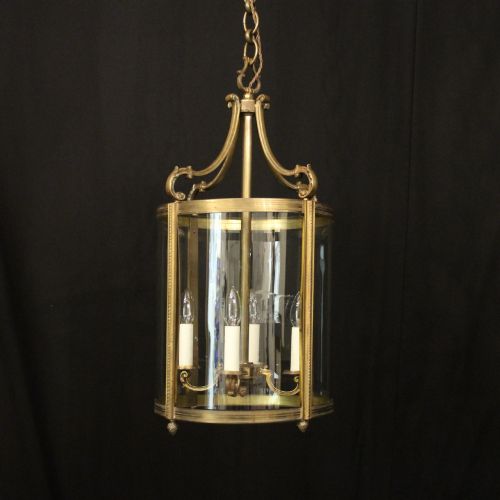
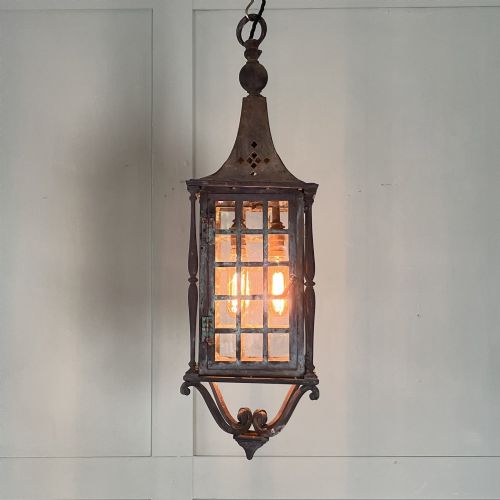
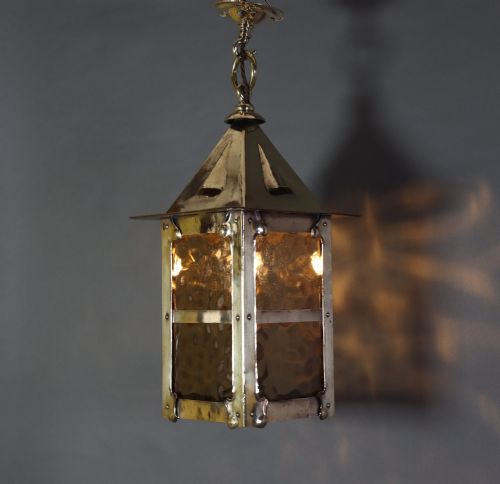
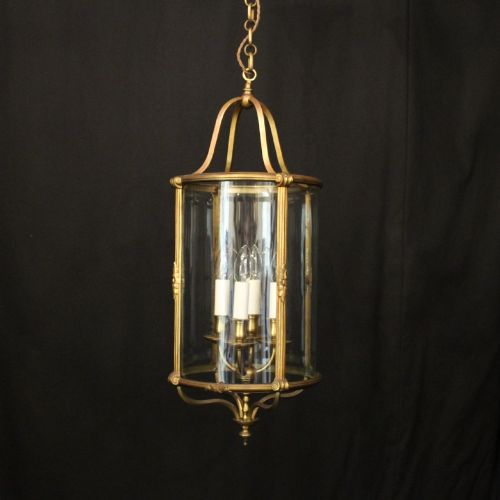
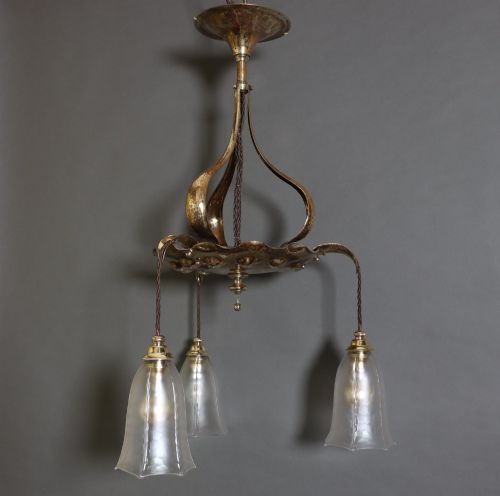
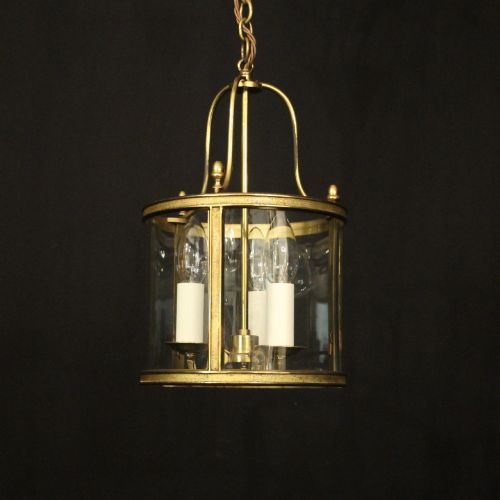
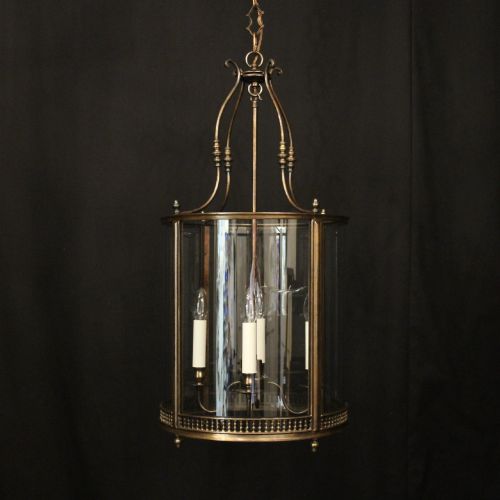
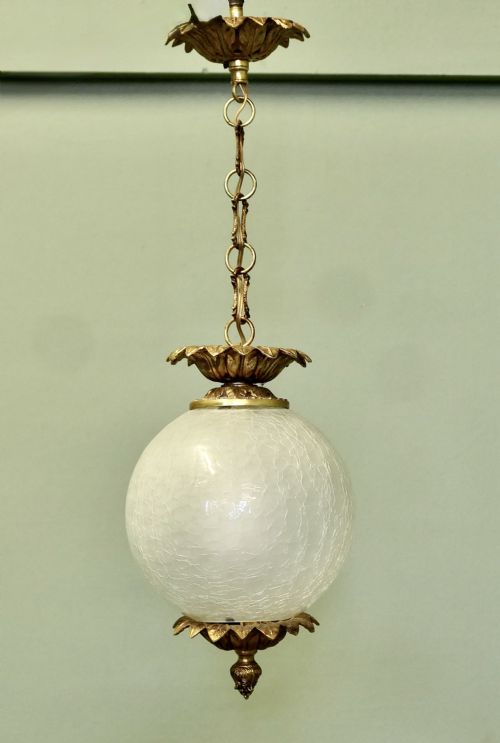
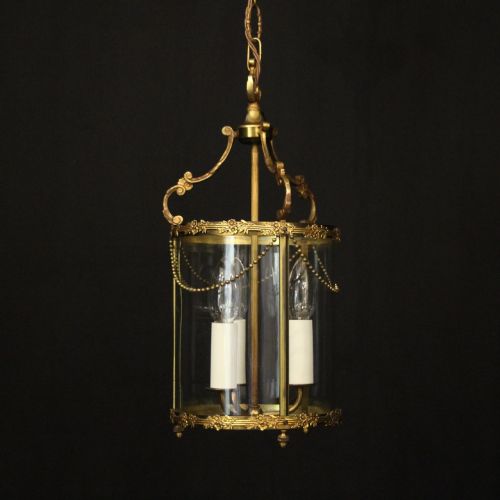
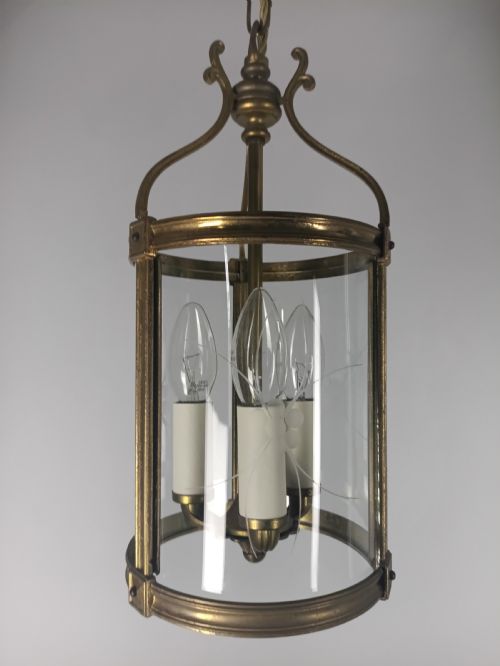
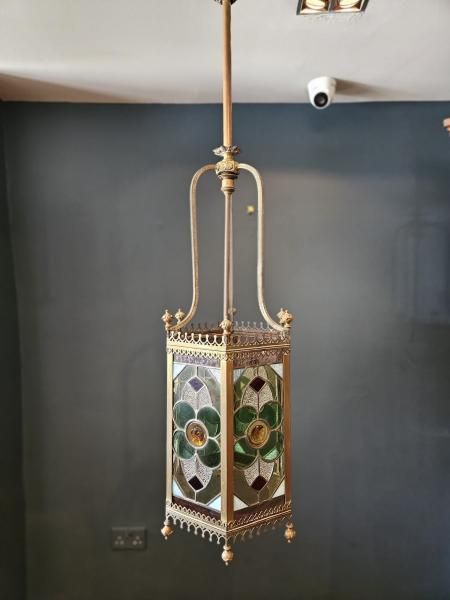
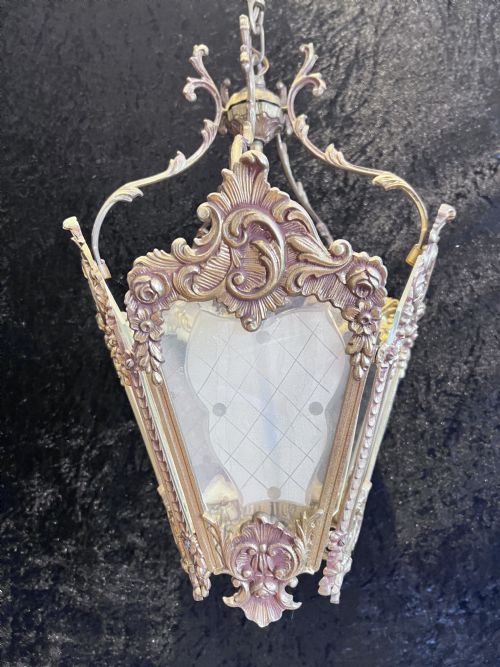
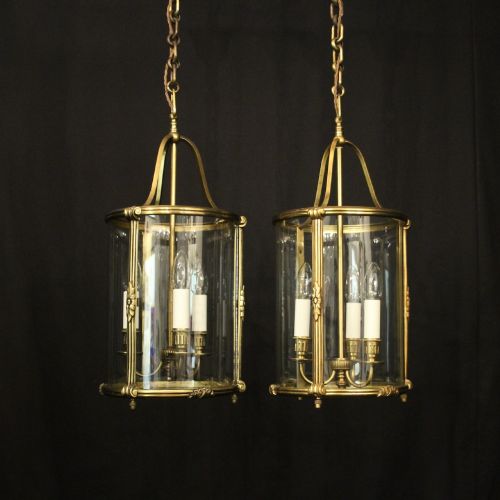
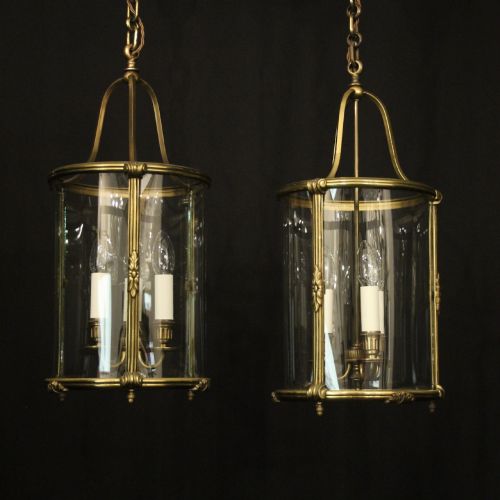
A brass lantern chandelier hangs in a hallway or entrance, casting clear or amber light through glass panes set in a metal frame.
Brass Lantern Chandelier
A brass lantern chandelier brings vertical illumination to hallways, stairwells and high-ceilinged rooms, combining the enclosed form of a lantern with the multi-bulb arrangement of a chandelier. You will most frequently encounter French examples from the early twentieth century, alongside Victorian and Edwardian English pieces.
The selection ranges from simple hexagonal frames to elaborate gilded bronze creations featuring multiple internal lights and curved glass panes. These pieces served primarily to light transitional spaces where a low-hanging fixture would impede movement.
Construction and materials
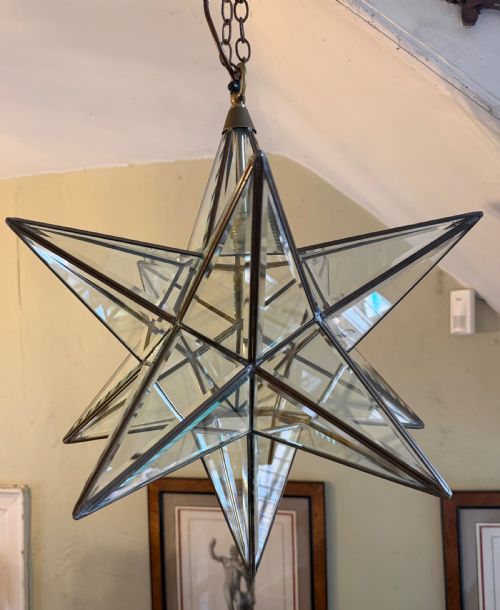
Makers constructed these fixtures using brass, bronze or gilded metal frames soldered or bolted together to hold individual panes of glass. Glazing methods vary from flat bevelled panels to convex and moulded glass that diffuses the internal light.
Metalwork often includes cast decorative elements in French Neoclassical, Rococo or Arts and Crafts styles, secured with patinated or gilded finishes. Internal brass or bronze fittings hold single bulbs or clusters of three and four lights.
Gradations of quality
Quality depends upon the weight of the metal casting and the clarity and thickness of the glass panels. Heavy bronze or thick brass frames maintain their structural rigidity and crispness of cast detail much better than lighter stamped metal.
The sophistication of the glasswork sets finer examples apart, particularly where panels are bevelled by hand or curved to convex shapes. Original gilding and integrated cast ornamentation indicate a higher tier of production.
The Brass Lantern Chandelier Glossary
- Convex glass
- Curved glass panels that project outward from the metal frame, magnifying the internal light source and adding visual depth to the lantern.
- Gilt bronze
- Bronze metal treated with a thin layer of gold or gold-coloured alloy, also known as ormolu on French decorative objects.
- Hall lantern
- A ceiling-hung lighting fixture designed specifically for narrow spaces like corridors, vestibules and entrance halls.
- Bevelled glass
- Glass panes with angled edges cut and polished to a specific slope, which refracts light into prismatic colours.
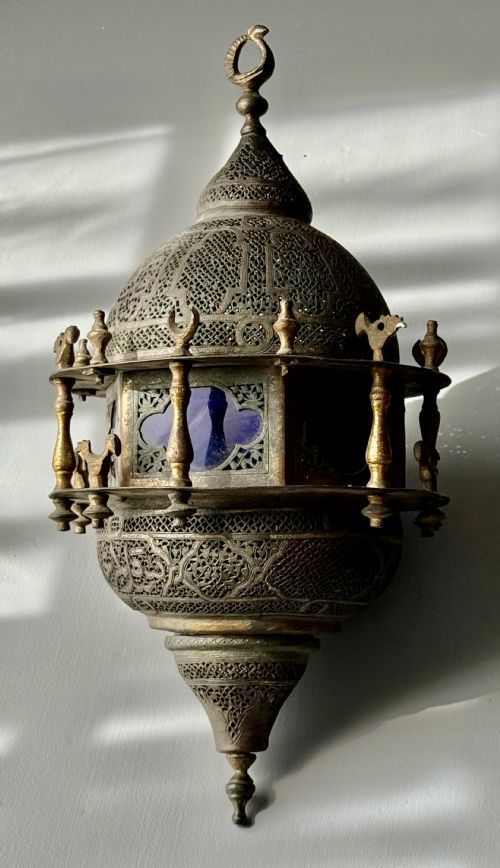
- Moorish revival
- A nineteenth-century design style incorporating Islamic architectural motifs, often seen in pierced metal lanterns.
Brass Lantern Chandelier: Frequently Asked Questions
Where should a brass lantern chandelier be hung?
These fixtures suit entrance halls, stairwells and high ceilings where a vertical drop provides adequate clearance below. They work well in transitional spaces that require focused illumination rather than spread light.
Ensure the hanging height allows comfortable clearance beneath the lowest point of the frame, particularly in heavy foot traffic areas.
How do I identify a French lantern?
French pieces often display cast bronze or gilded brass frames with decorative mounts reflecting Louis XV, Neoclassical or Art Deco movements. They frequently utilise convex glass panels and heavy multi-light internal clusters.
English equivalents tend to rely on simpler brass framing with bevelled glass and straighter structural lines.
Are these lanterns electrified?
Most surviving examples have been wired for modern electrical supplies, using single or multiple internal lamp holders. Rewiring ensures safe operation within modern domestic electrical circuits.
Original wiring is rarely retained for daily use due to safety standards, though period bulb holders are sometimes preserved.