
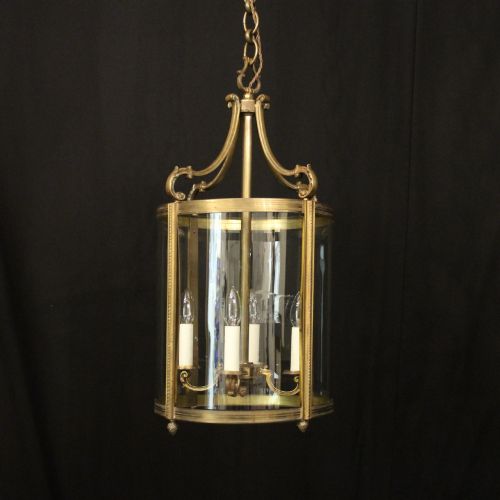
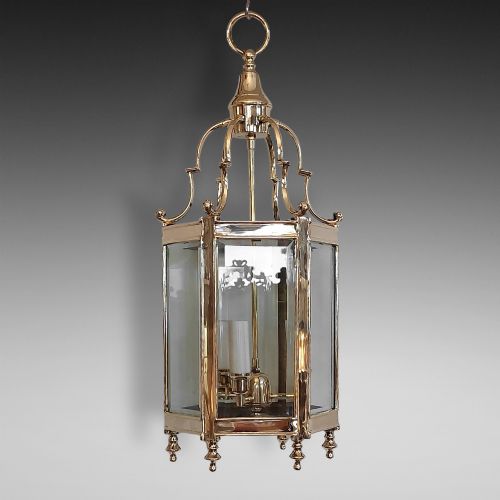
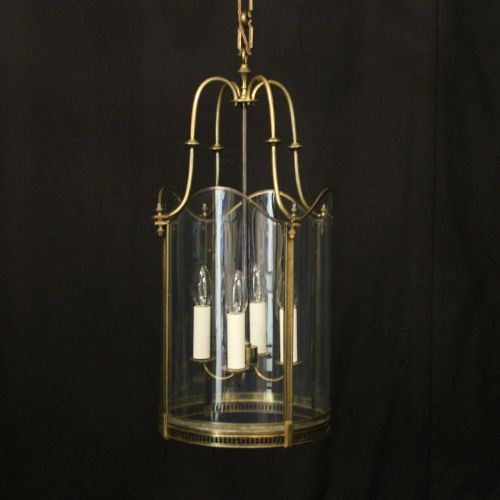
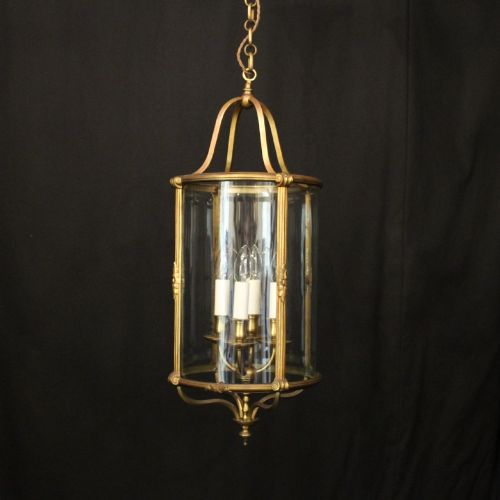
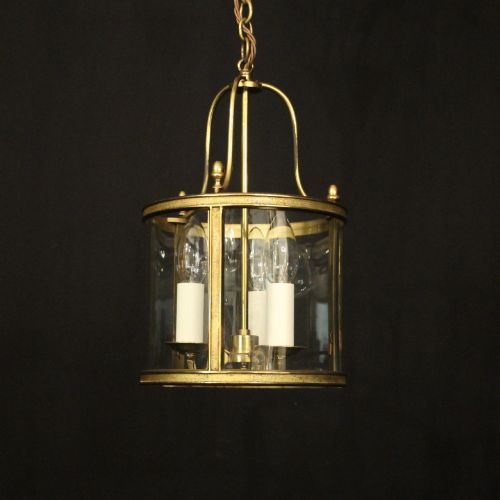
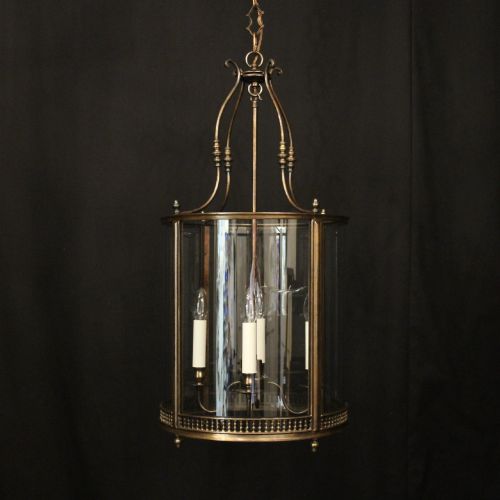
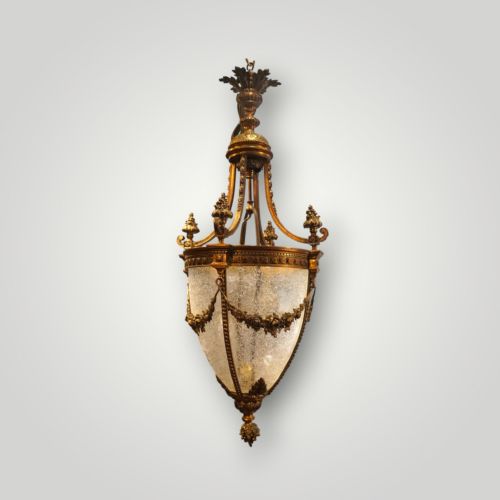
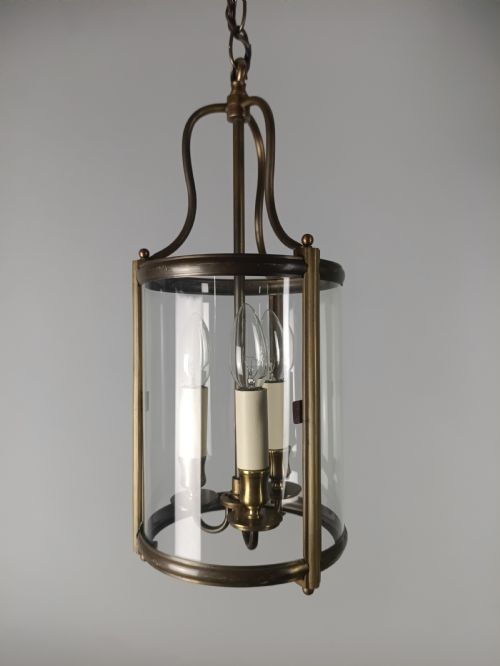
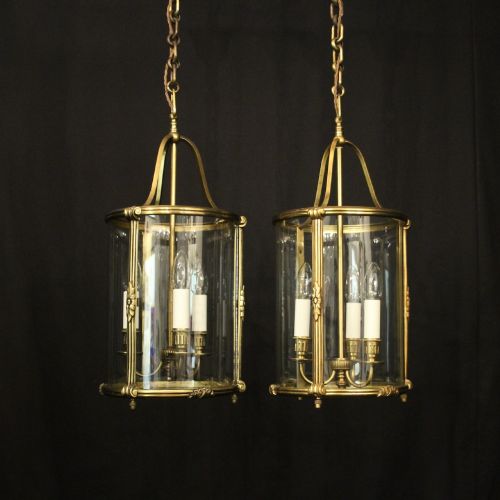
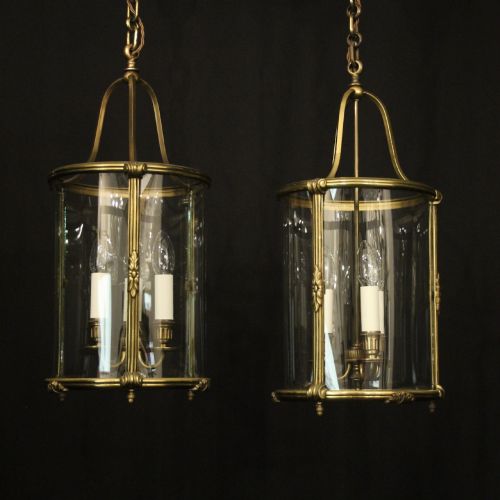
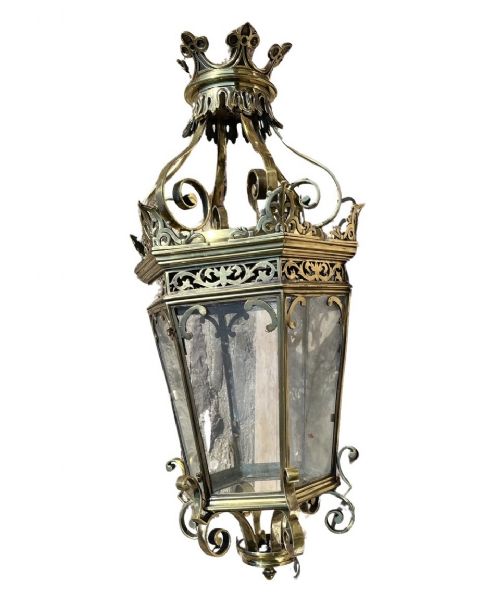
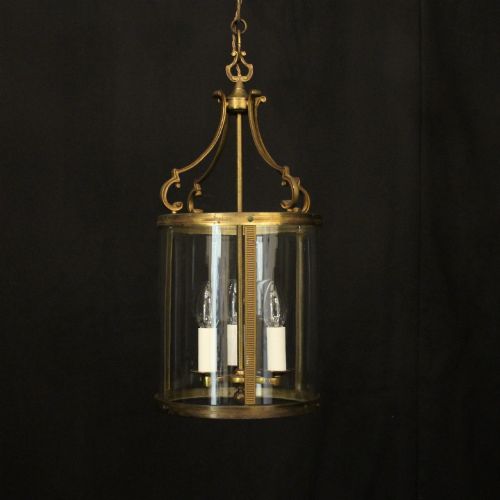
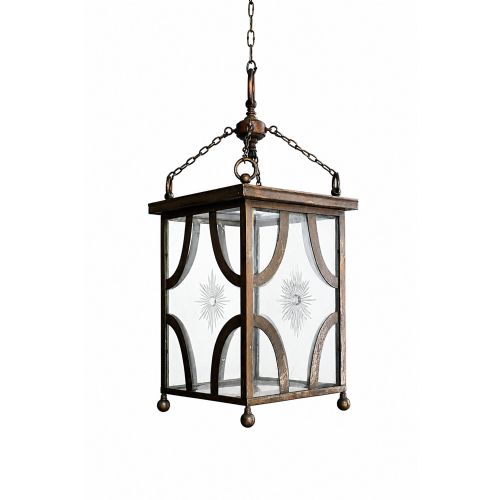
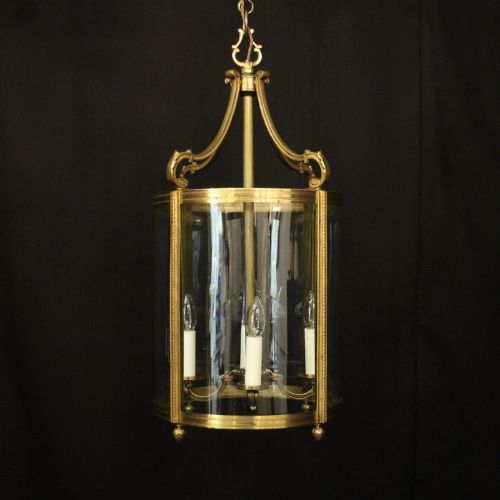
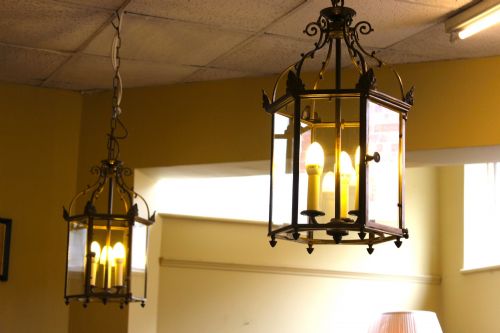
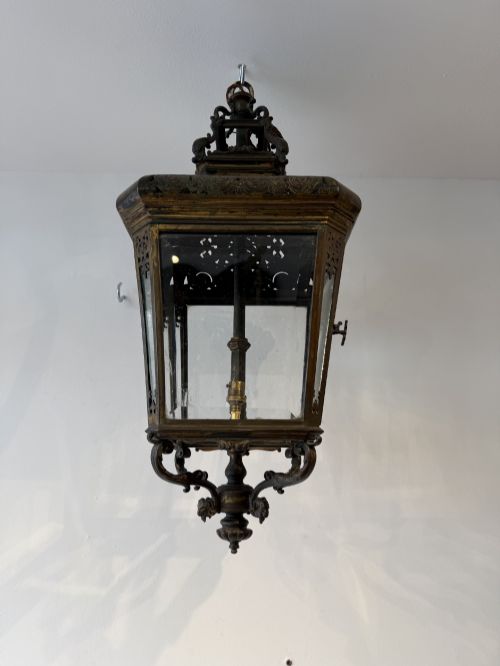
Brass Foyer Lantern
A brass foyer lantern brings presence to an entrance hall, offering warmth and structure before guests even step inside.
What these pieces are
The selections available here span from the late nineteenth century through to the interwar period, capturing Victorian, Edwardian and continental tastes. Buyers frequently encounter hexagonal forms, gilded finishes and robust metal frames that reflect early twentieth-century manufacturing standards.
How they were made
Construction relies heavily on cast and sheet brass or bronze, formed into structural frames that hold panels of clear, convex or frosted glass. Metalworkers joined components using mechanical fasteners or solder, applying surface gilding where a brighter decorative effect was desired.
Glazing techniques required skilled cutting to fit curved or multi-sided frames precisely, ensuring stability within a hanging fixture subject to movement. Each lantern combines structural metalwork with transparent or translucent mediums to diffuse light evenly across an interior space.
Retail Price Guide 2026
Typical UK retail prices for brass foyer lantern, calculated from the Sellingantiques database of over a million retail prices indexed since 2003. This retail price guide relies exclusively on Sellingantiques data; no external sources or auction records are used, so the figures do not describe the wider market.
Listings feature brass, bronze, and frosted glass across Edwardian and early twentieth-century periods.
What varies in quality
Quality rests in the weight of the metal casting, the crispness of decorative detailing on the frame, and the integrity of the glass panels. Substantial bronze or heavy brass construction indicates a higher standard of manufacture than lighter, stamped alternatives.
The sophistication of the silhouette and the quality of the original gilding or patination set superior examples apart from standard production pieces. Details such as convex glass or multi-light interior clusters demonstrate a more ambitious original design.
The Brass Foyer Lantern Glossary
- Hall lantern
- A ceiling-hung lighting fixture designed to illuminate corridors and entrance spaces. These pieces combine metal frames with glass panels to protect the flame or bulb from drafts.
- Convex glass
- Curved glass panels that project outward from the frame. This technique adds depth and softens the light output.
- Gilt brass
- Brass metal treated with a thin layer of gold or gold-coloured leaf. This finish provides a bright, reflective surface popular in formal interiors.
- Hexagonal
- Having six sides and six angles in plan view. This geometric form creates multiple viewing angles for internal illumination.
Frequently Asked Questions
Where should I hang a hall lantern?
These fixtures suit entrance halls, high ceilings, stairwells and vestibules where overhead illumination sets the tone for the interior.
Ensure sufficient clearance beneath the lowest point for people to pass comfortably.
How do I date an antique lantern?
Dating relies on the alloy composition, the method of glass manufacture, and stylistic cues from periods such as the Edwardian era or the 1920s.
Examination of fixings and wiring channels also provides clues to the era of manufacture.
Are these lanterns wired for modern electricity?
Many period pieces have been adapted to accept contemporary electrical fittings while retaining their historic frames and glass.
Buyers should inspect the internal lamp holders to confirm compatibility with current standards.
What is the difference between brass and bronze?
Brass is an alloy of copper and zinc, whereas bronze is primarily copper combined with tin.
Bronze generally yields a darker, richer natural patination over time compared to bright brass.