
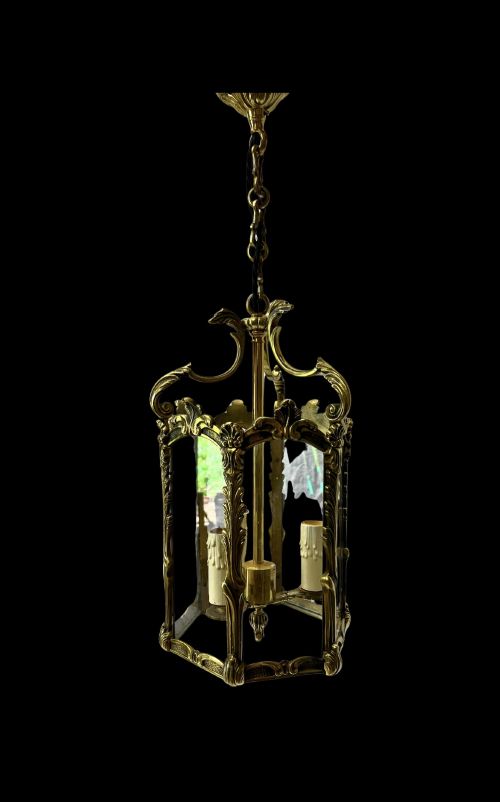


French Glazed Ceiling Lantern
A french glazed ceiling lantern brings an unmistakable architectural gravity to an entrance hall, casting light through disciplined brass and glass frames.
French Glazed Ceiling Lantern
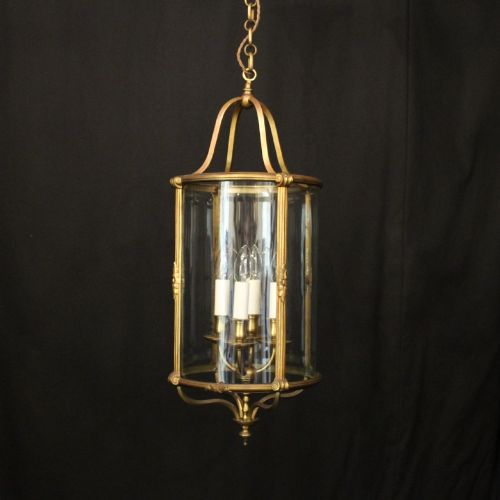
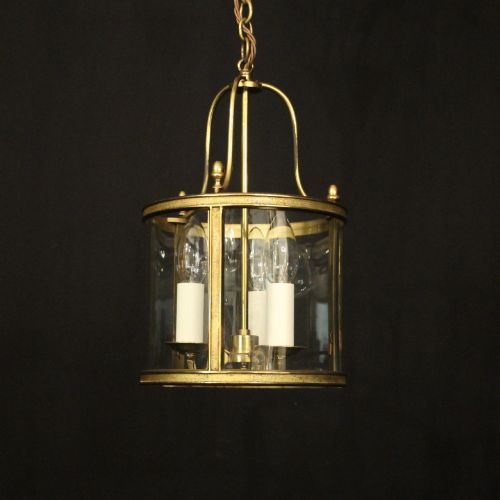
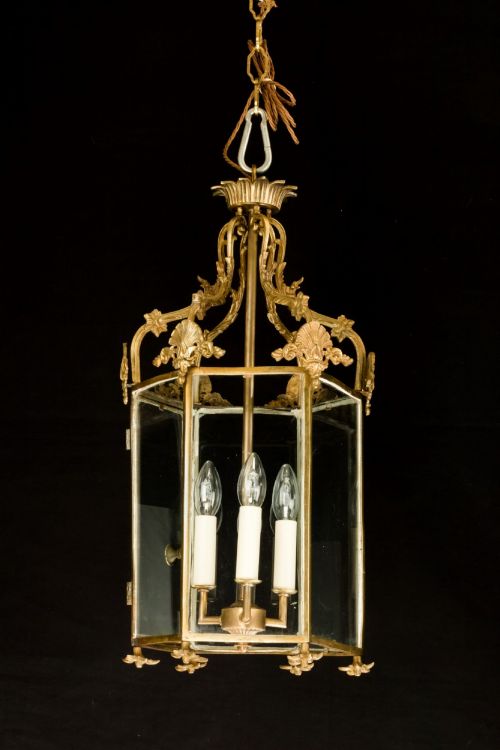
A french glazed ceiling lantern is primarily a hanging hall light fixture designed to illuminate vestibules, corridors, and high-ceilinged stairwells with historic presence. These pieces emerge from periods spanning the late nineteenth century through the early twentieth century, incorporating Edwardian sensibilities alongside distinct continental revivals.
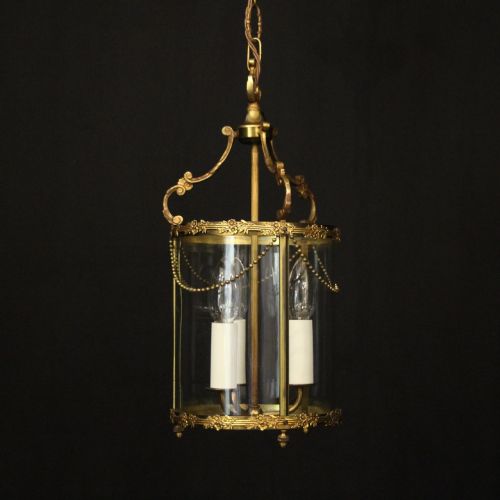
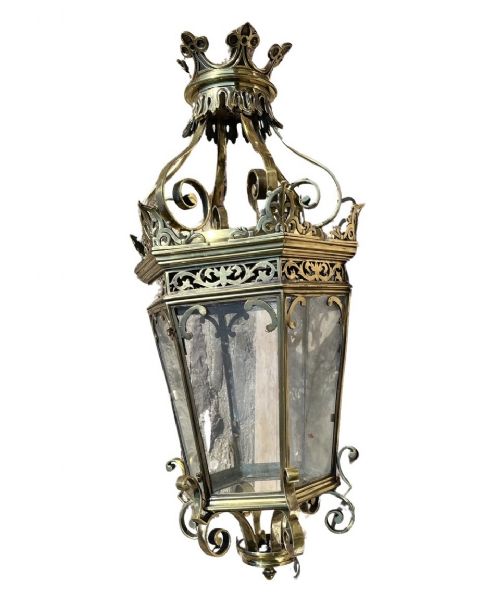
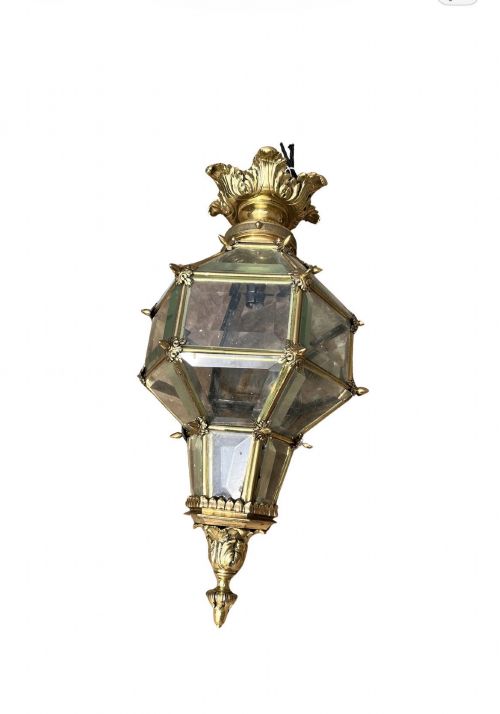
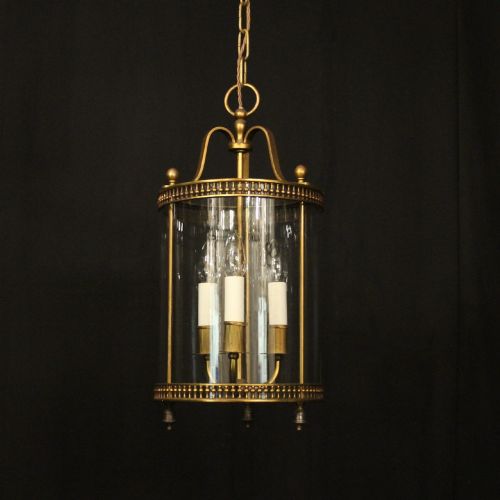
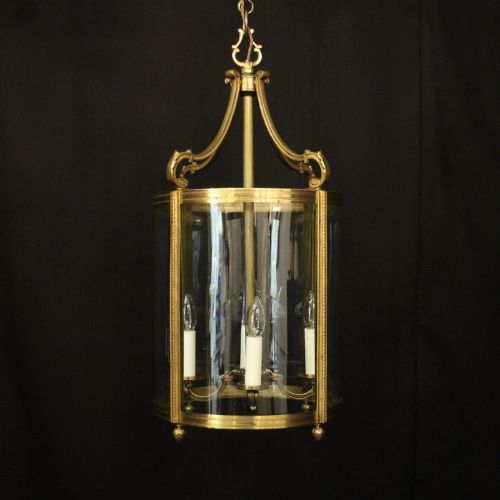
Buyers will most frequently encounter brass and bronze frames fitted with clear or bevelled glass panels, often suspended on short chains or fixed mounts. The forms range from simple hexagonal shapes to elaborate multi-light structures drawing upon classical and rococo design traditions.
The heavy metal framework houses internal candle-style bulb fittings, turning utilitarian hallway illumination into a decorative focal point. Examples often display regional characteristics, such as the gilded finishes typical of French chateau and neoclassical interiors.
Construction materials and methods
Foundational structures rely heavily on cast and fabricated brass, bronze, and steel, providing the rigid skeleton necessary to support heavy glazing. Many frames receive a surface application of gilt or gold-toned finishes to enhance their decorative impact in formal spaces.
Panels of glass are individually cut and fitted into metal channels, occasionally featuring bevelled edges or convex curvature to refract the internal illumination. Structural integrity is maintained through mechanical joints, screws, and hinged access doors that allow for bulb replacement and maintenance.
Current listings feature pieces spanning the 1860s to the 1930s, constructed primarily from brass, bronze, and bevelled glass.
Separating grades of quality
Quality diverges notably in the heft and purity of the metal casting, where dense bronze and substantial brass outclass thinner, pressed sheet alternatives. Superior examples exhibit crisper detailing in chased ornamentation and tighter tolerances where the glass panes meet the metal frame.
The complexity of the glass work also dictates overall standard, particularly where panels are hand-bevelled or curved rather than flat-cut. Furthermore, the presence of original gilding and integrated multi-light clusters separates standard utilitarian fixtures from finer salon-grade pieces.
The French Glazed Ceiling Lantern Glossary
- Bevelled Glass
- Glass with edges cut and polished at an angle to create a framed, prismatic border. This technique adds structural thickness and catches passing light.
- Gilt Bronze
- Bronze metal coated with a thin layer of gold or gold-coloured alloy. Also known as ormolu, it provides a lustrous and durable surface.
- Convex Lantern
- A hanging light featuring outward-curving glass panels. The curved surface diffuses light more widely than flat panes.
- Neo-Classical
- A style drawing inspiration from the art and culture of classical antiquity. It emphasises symmetry, straight lines, and restrained ornamentation.
- Rococo Revival
- A nineteenth-century movement reviving the ornate, asymmetrical curves and natural motifs of the eighteenth century. It appears frequently in decorative metalwork.
French Glazed Ceiling Lantern: Frequently Asked Questions
How do I hang a heavy ceiling lantern safely?
Suspension requires securing the hanging chain directly into a ceiling joist or substantial structural noggin rather than relying solely on plasterboard or lath. A professional electrician should check that the electrical box and mounting hook are rated to bear the full weight of the metal and glass fixture.
Once anchored overhead, the height of the lantern is adjusted using matching links of chain to position the fitting correctly within the volume of the hallway or stairwell.
Can these antique lanterns be wired for modern bulbs?
Most surviving lanterns have already undergone rewiring to accommodate standard modern lamp holders and contemporary electrical safety standards. Internal wiring runs discreetly down through the suspension loop to feed the bulb clusters housed within the frame.
Using low-heat LED bulbs shaped like traditional candles helps protect the aged metal and fragile wiring from excessive thermal stress during prolonged use.
How do I clean the glass panels without damaging the metal?
Cleaning requires removing the dust with a soft brush before applying a mild glass cleaner directly to a cloth rather than spraying it onto the fixture. This prevents moisture from seeping into aged metal joints or tarnishing vulnerable gilt surfaces.
Metal components should be dusted gently with a dry microfiber cloth, avoiding aggressive chemical polishes that might strip historic patination or applied gold leaf.
What is the difference between brass and bronze frames?
Brass is an alloy of copper and zinc, typically yielding a brighter golden tone that responds well to polishing or develops a warm, darker patina over time. Bronze contains copper and tin, resulting in a heavier, tougher material that often takes on a deeper, earthier coloration.
Both metals were used extensively across nineteenth and twentieth-century French lighting, with bronze generally indicating a heavier and more costly original commission.