
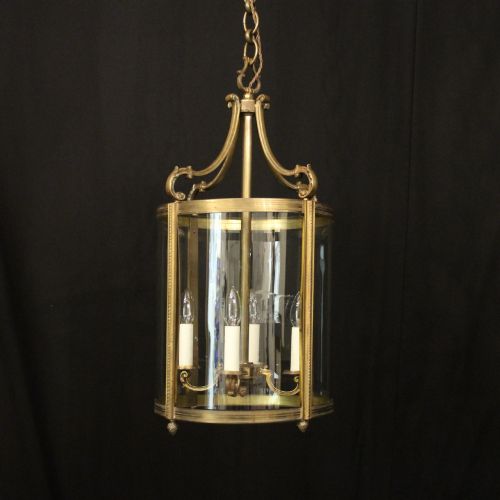
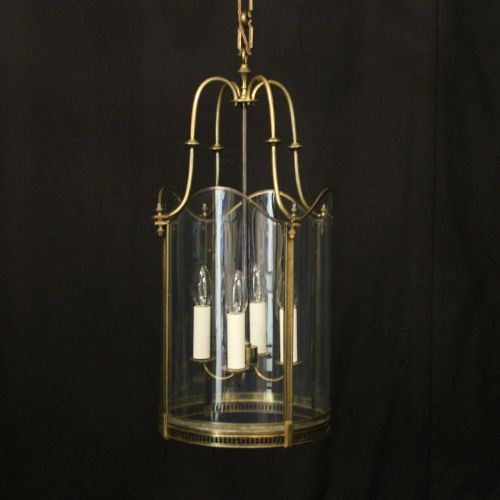
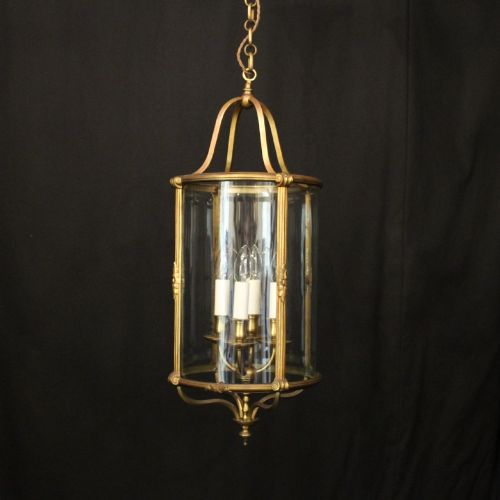
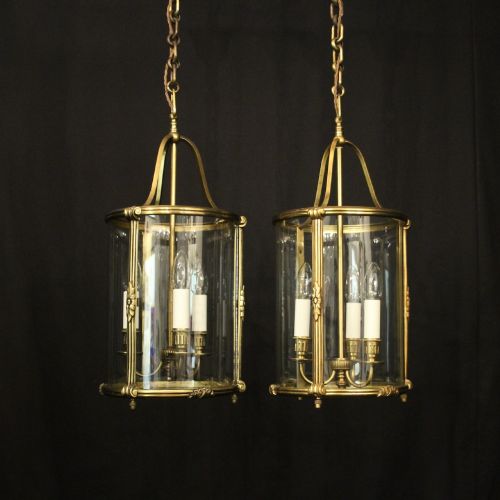


Gilded Bronze Hall Lantern
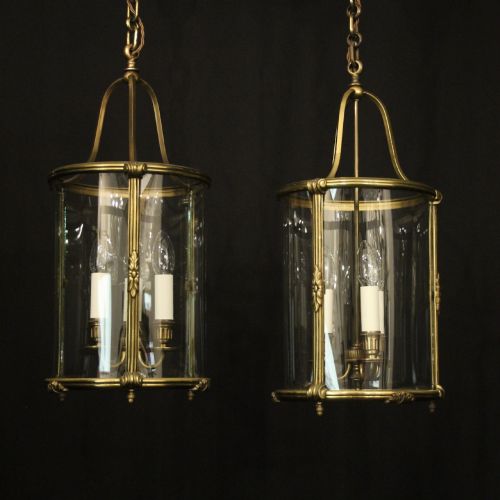
These gilded bronze hall lanterns offer a striking focal point for a grand entrance, bringing period illumination and decorative weight to a hallway.
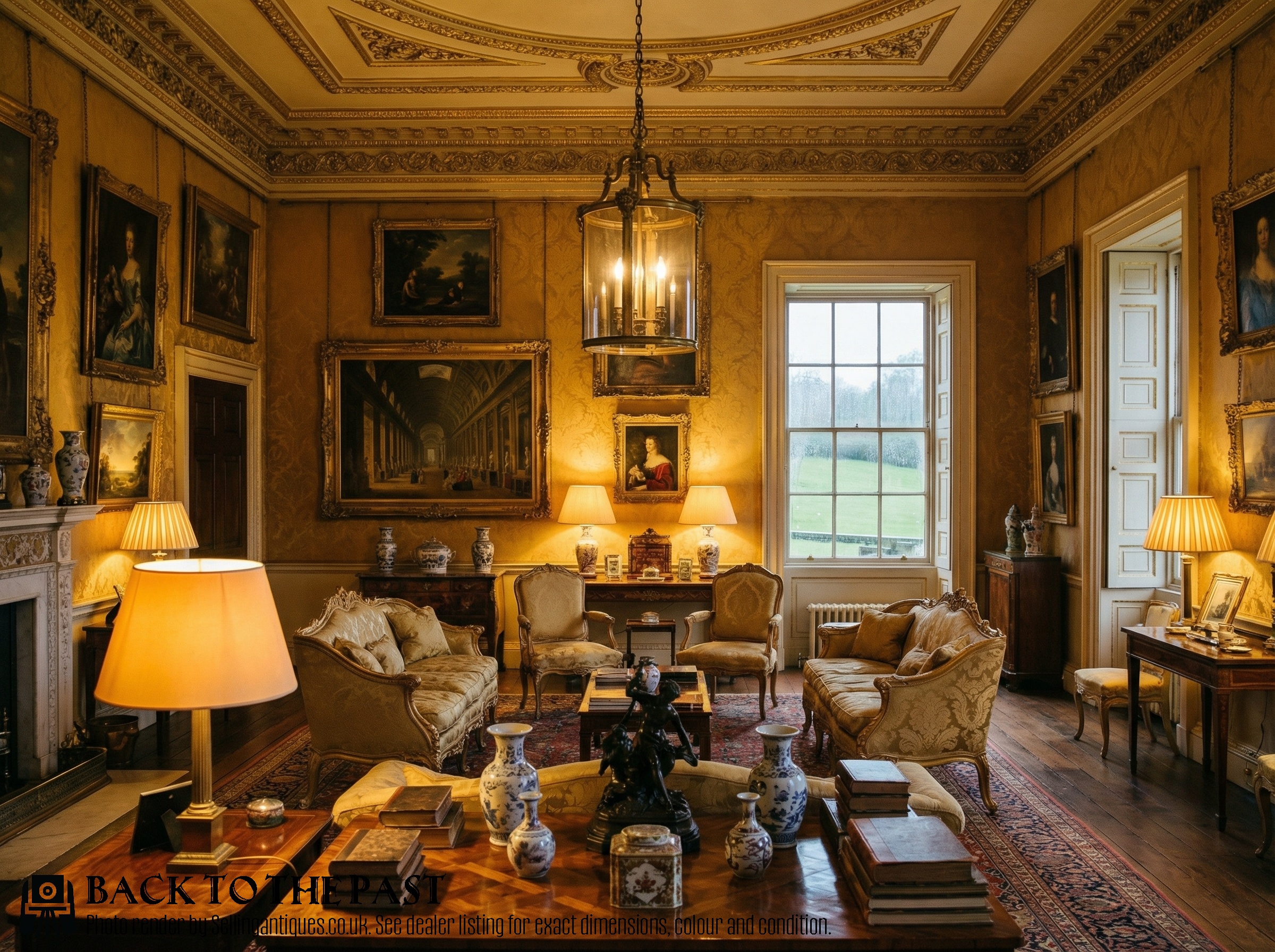
The Form
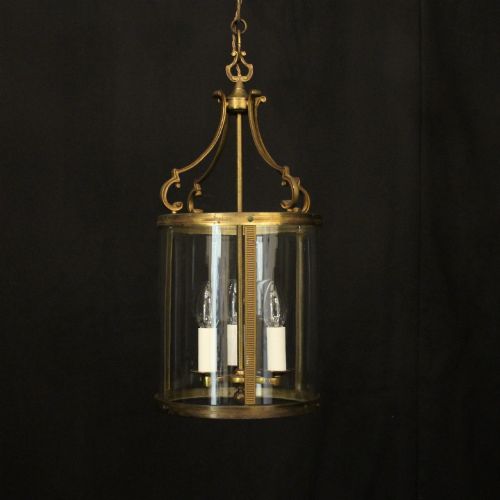
A gilded bronze hall lantern is a ceiling light designed to hang in an entrance or corridor, primarily French in origin and appearing across the nineteenth century and into the early twentieth century. These pieces function as both practical lighting and decorative statements, often seen in large formats that suit high ceilings.
The dominant design on this page is the French hall lantern, frequently incorporating styles such as Louis XVI, Neo-Classical, and Rococo Revival. English examples also appear occasionally, sharing similar hanging configurations and metalwork.
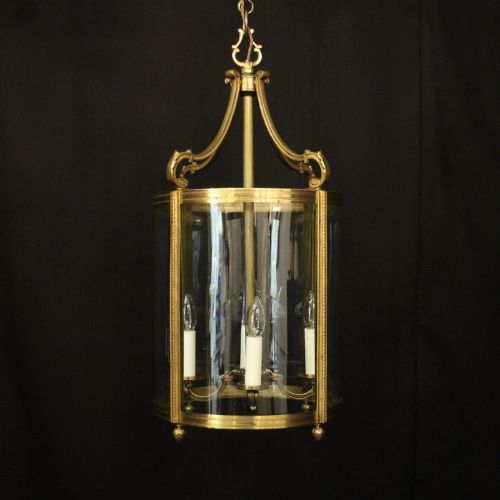
Most examples house internal bulb arrangements described as twin, triple, or four light setups. Convex variants feature curved glass panels that alter the diffusion of light and add visual depth to the silhouette.
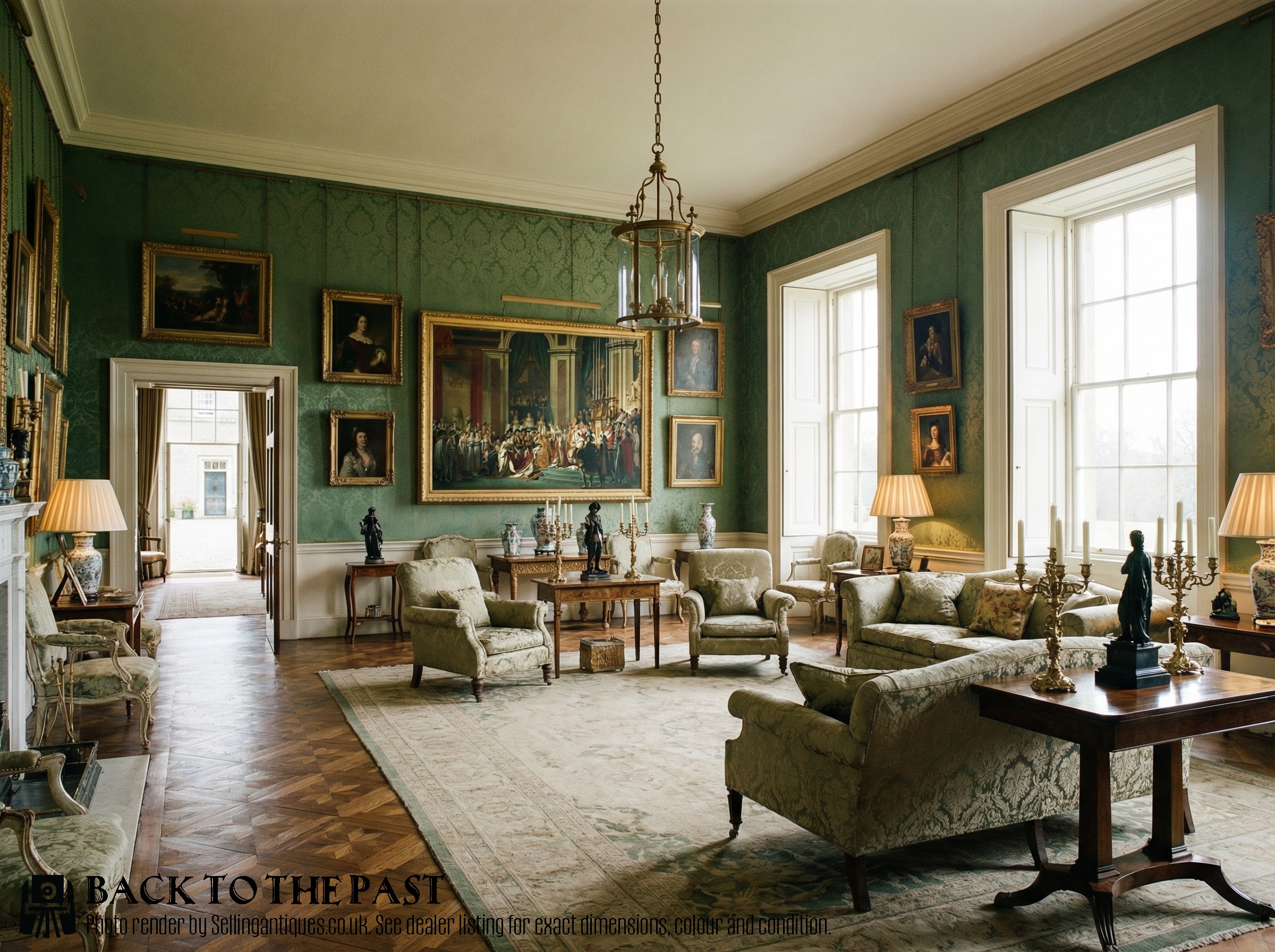
Materials and Construction
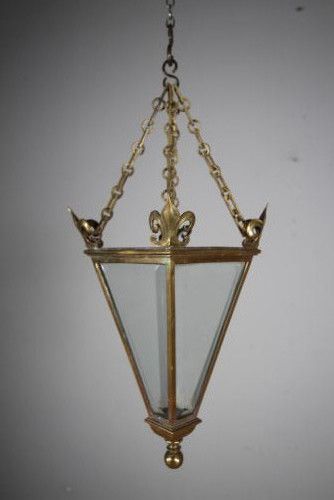
These fixtures are constructed predominantly from bronze and brass, finished with a layer of gilding that provides a reflective golden surface. Glass panels enclose the frame, held securely within the metal armature to protect the internal candle or electric light clusters.
The fabrication relies on cast metal components shaped into classical motifs, foliage, and architectural frames. Metal parts join via mechanical fasteners or solder, supporting the weight of the glass and the internal electrical fittings where rewiring has taken place.
Retail Price Guide 2026
Typical UK retail prices for gilded bronze hall lantern, calculated from the Sellingantiques database of over a million retail prices indexed since 2003. This retail price guide relies exclusively on Sellingantiques data; no external sources or auction records are used, so the figures do not describe the wider market.
Several lanterns carry the ghost of old candle smoke trapped inside their gilded frames for over a century.
Distinction in Craft
Quality separates objects through the crispness of the metal casting and the depth of the gilding applied to the bronze or brass surface. Finer examples display sharp definition in decorative motifs and robust structural joinery that maintains rigidity over time.
The presence of convex glass panels and complex multi-light configurations alters the visual presence of the lantern. Larger dimensions and sophisticated styling, such as Versailles or elaborate Neo-Classical detailing, elevate certain pieces within the selection.
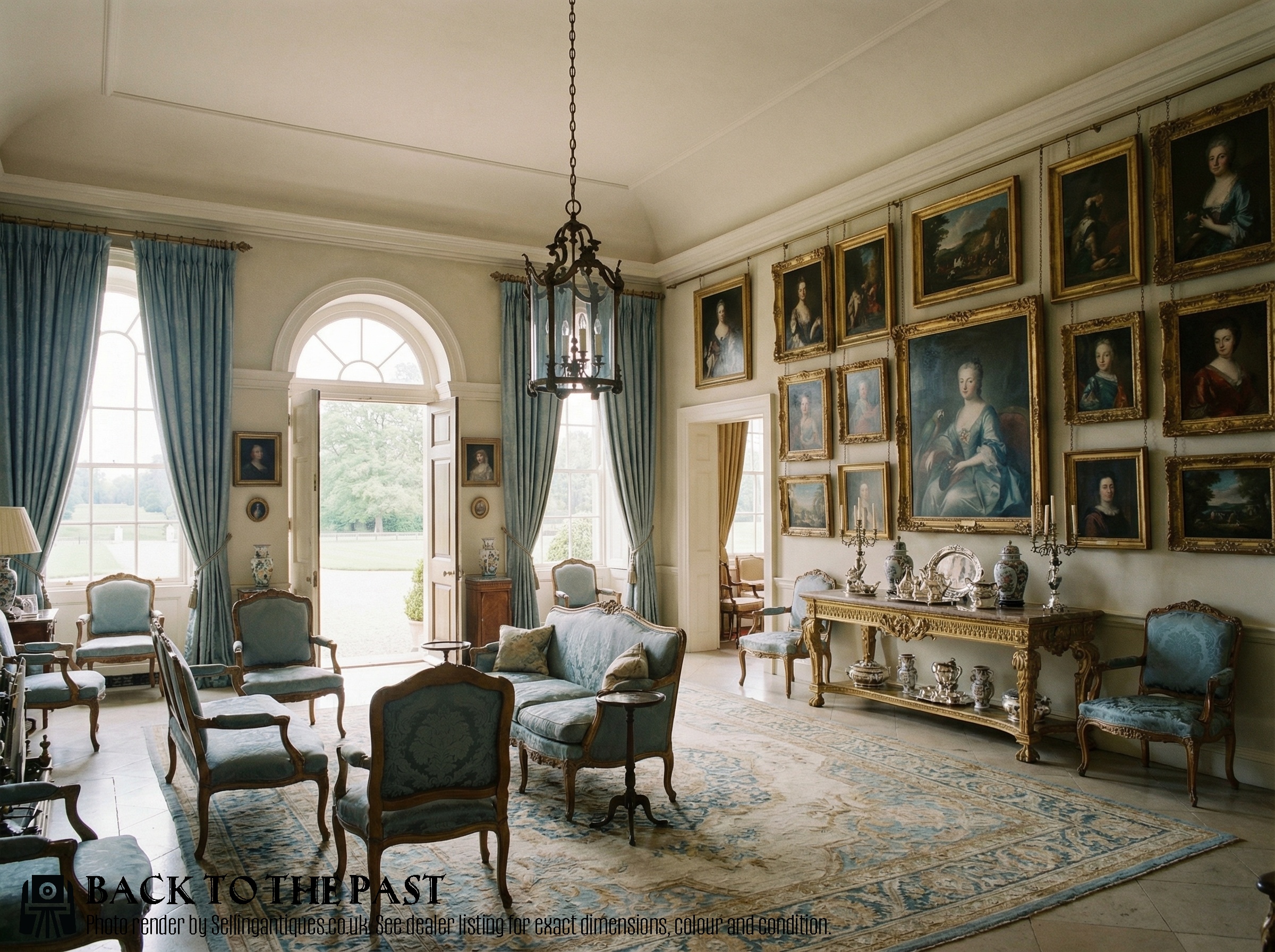
The Gilded Bronze Hall Lantern Glossary
- Gilded Bronze
- Bronze metal coated with a thin layer of gold or gold-coloured alloy to produce a bright, enduring finish. This material resists tarnishing better than plain brass.
- Convex Lantern
- A hanging light fixture featuring curved glass panels that bulge outward. This shape softens the emitted light and increases the internal volume.
- Louis XVI Style
- A classical decorative movement characterised by straight lines, symmetry, and ancient Roman motifs. It appears frequently in the metalwork and proportions of these lanterns.
- Hall Lantern
- A ceiling-mounted lighting fixture specifically proportioned for corridors and entranceways. They hang by chains or rods to distribute downward illumination.
- Rewired
- A descriptor indicating that the internal electrical wiring has been updated to meet modern safety standards. This preserves the historic body while ensuring functional utility.
Frequently Asked Questions
How do I hang a hall lantern?
These lanterns suspend from ceilings using chains or matching metal rods attached to a secure mounting point overhead. Professional installation is recommended to support the weight of the bronze frame and glass.
Ensure the hanging height clears head height while positioning the fixture centrally within the entrance space for optimal visual balance.
What periods do these lanterns date from?
The pieces span the nineteenth century, nineteen hundred, and nineteen twenty. Most items reflect nineteenth-century design idioms and later twentieth-century interpretations.
Stylistic markers such as Neo-Classical detailing help anchor the manufacturing period when direct documentation is absent.
Are these lanterns wired for electricity?
Many listings indicate that the fixtures are rewired for contemporary electrical use. This process updates internal cables while keeping the exterior metal and glass intact.
Buyers should verify the specific configuration of light clusters, which range from twin to four light setups.