
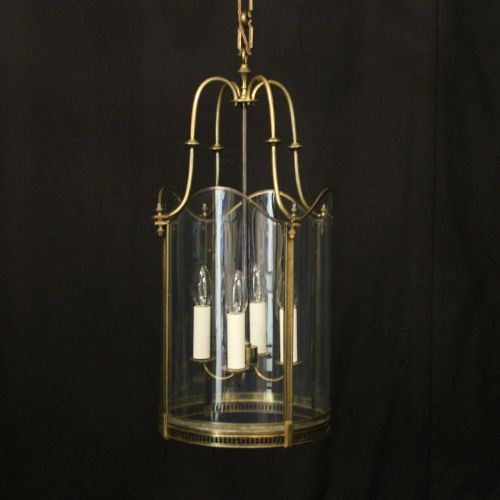
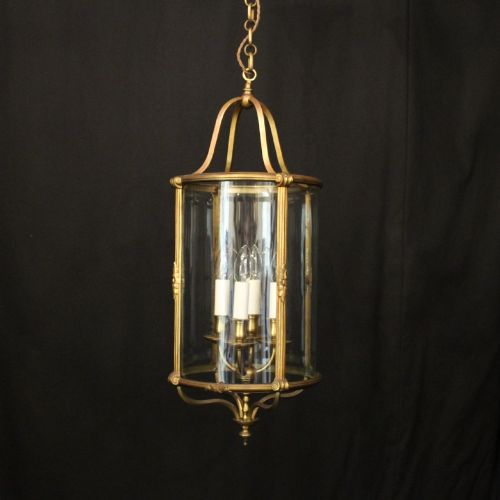
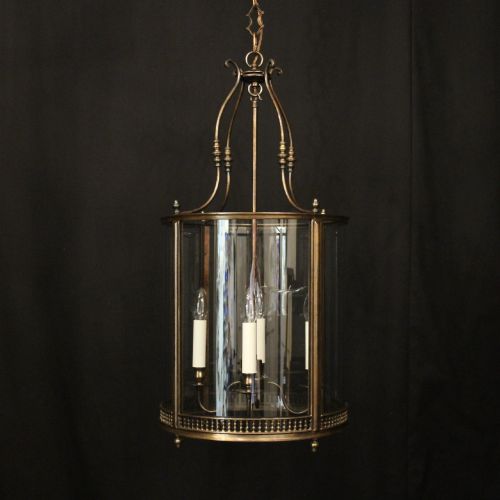
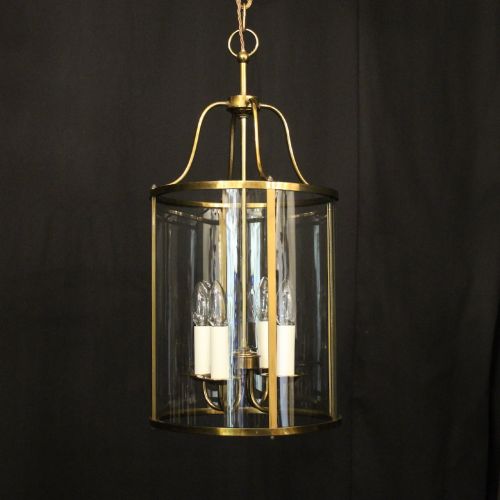


Four Light Hall Lantern
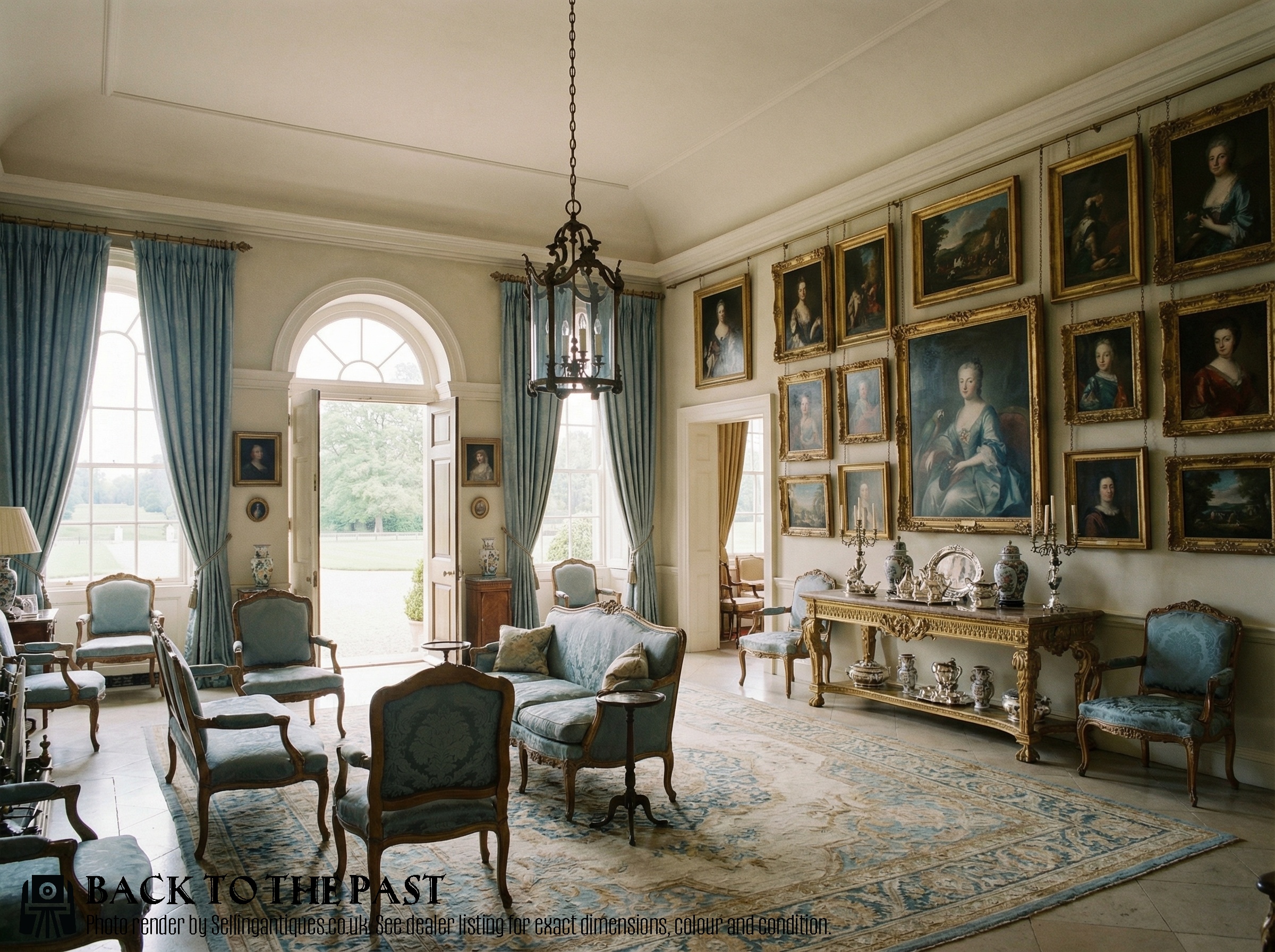
A four light hall lantern brings generous illumination and architectural presence to an entrance passage, drawn primarily from French and English workshops.
Four Light Hall Lantern
A four light hall lantern is a substantial hanging ceiling light designed to illuminate entrance spaces, stairwells and corridors with multiple internal points of illumination. When you search for a four light hall lantern, you encounter ceiling lighting and pendant forms ranging from the nineteenth century through the 1920s and 1930s.
The pieces appearing on this page originate predominantly from French and English makers, styled in variations of French Neoclassical, French Chateau, Rococo Revival, English Regency and Grand Regency designs. These fixtures frequently employ convex glass panels to diffuse light outward across the hallway.
Most examples documented in the archive and current listings display a four-branch internal cluster housed within a glazed metal cage. Buyers looking for these lanterns will find both single fixtures and matched pairs suited to grand architectural settings.
How they were made
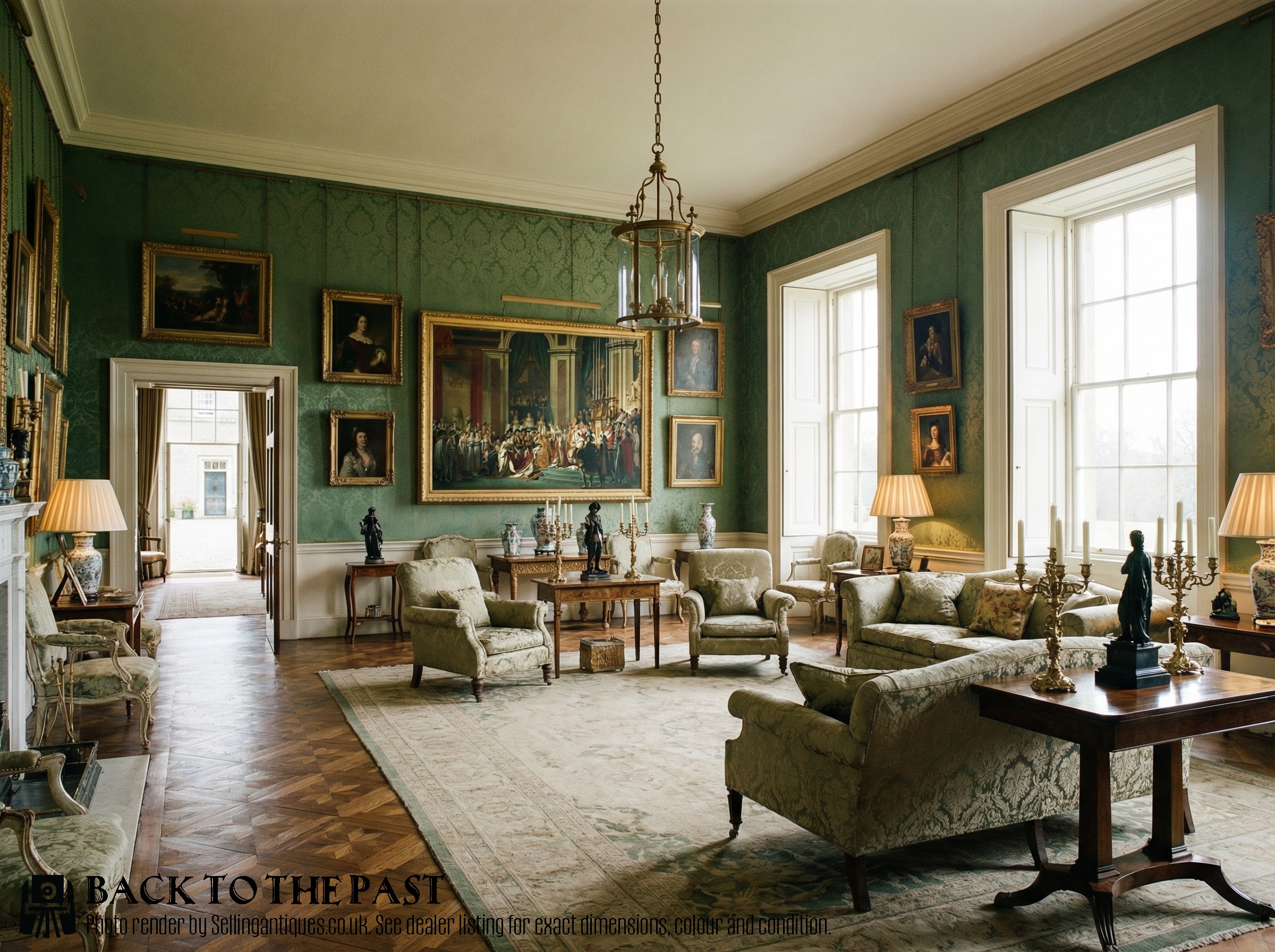
Makers constructed the structural frames of these lanterns using cast bronze, brass, gilded bronze, gilt brass, gilded brass and steel. Metal components were cast, chased and finished with gold leaf or chemical patination to achieve gilded or dark bronze surfaces.
Glazing typically involves clear or convex glass panels fitted snugly into the metal framework to enclose the internal cluster of four lights. Steel and brass combinations appear in larger twentieth-century formats, providing structural rigidity for oversized ceiling installations.
Materials recorded in these listings include brass, bronze, gilded bronze, steel and glass.
What varies in quality
Quality in a four light hall lantern rests upon the crispness of the metal casting and the depth of the original gilding or bronze patination. Finer examples display hand-chased enrichment along the foliate mounts and canopy rather than plain stamped or cast surfaces.
The weight and clarity of the glass panels also distinguish standard production from superior pieces, particularly where convex glass is bent to precise curves. Structural substance in the suspension arms and the solidity of the internal light cluster determine the overall architectural integrity.
The Four Light Hall Lantern Glossary
- Convex glass
- Curved glass panels that project outward to soften and disperse the light emanating from the internal bulbs. This technique enhances the visual volume of the lantern.
- Gilded bronze
- Bronze metal coated with a thin layer of gold leaf or applied gold amalgam. It provides a warm, reflective surface popular in neoclassical lighting.
- Hall lantern
- A ceiling-hung lighting fixture specifically scaled for corridors, vestibules and entrance halls. These fixtures combine protective glazing with decorative metalwork.
- Rococo Revival
- A nineteenth-century design style characterised by asymmetrical scrolling foliage, shell motifs and organic curves. Pieces in this style often feature elaborate cast ornamentation.
Four Light Hall Lantern: Frequently Asked Questions
Where should a four light hall lantern hang?
These lanterns suit high-ceilinged entrance halls, wide corridors and grand stairwells where their scale can be fully appreciated.
Ensure adequate clearance beneath the fixture for foot traffic while positioning the light to illuminate key architectural transition points.
How do I distinguish French and English lanterns?
French examples frequently exhibit neoclassical or chateau detailing with gilded bronze and elaborate cast mounts.
English pieces tend to favour restrained brass or bronze framing aligned with Regency styles.
What periods do these lanterns represent?
The pieces span from the nineteenth century into the 1920s and 1930s.
Earlier nineteenth-century works display traditional casting methods, while twentieth-century examples incorporate steel elements and cleaner geometric proportions.
Are these lanterns wired for modern use?
Most fixtures have been adapted over time to accept standard electrical fittings for contemporary illumination.
Internal clusters are typically configured to hold four bulbs, maintaining the original lighting distribution intended by the maker.