
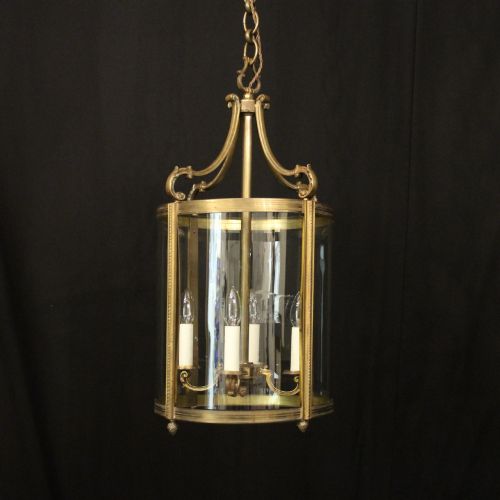
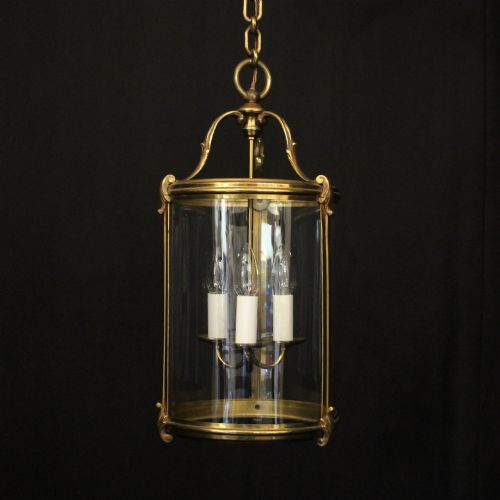
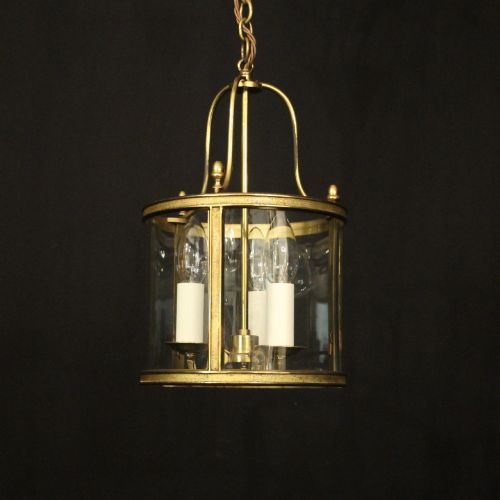
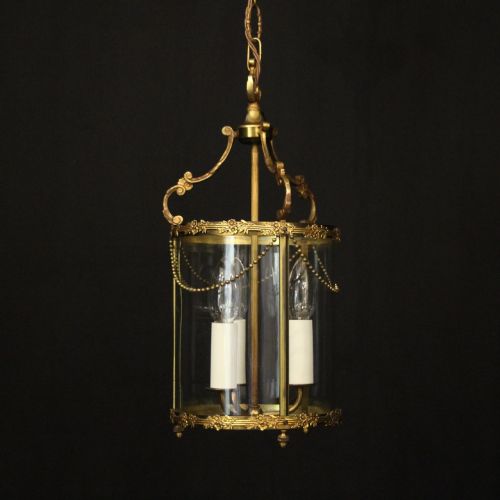
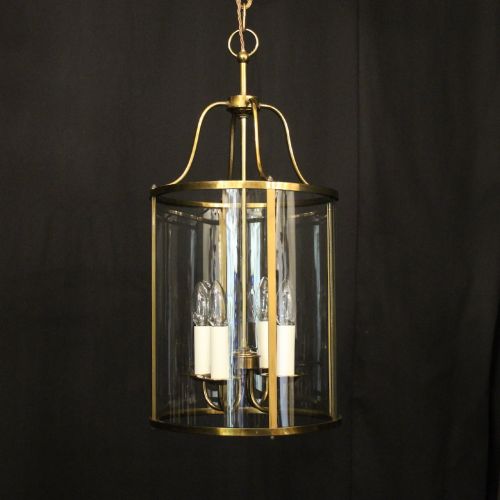
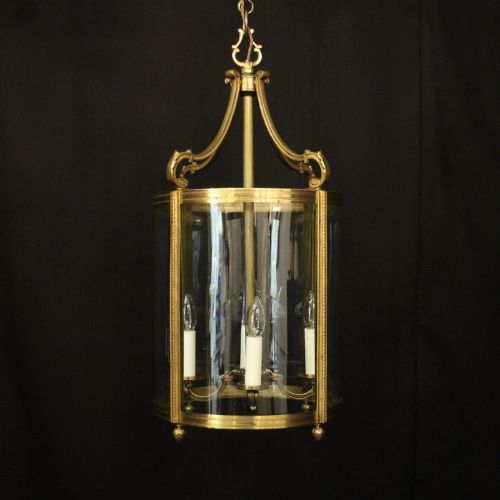


Brass Cylindrical Pendant Lantern
A brass cylindrical pendant lantern lights an entrance hall with a warm, measured glow cast through glass and metal.
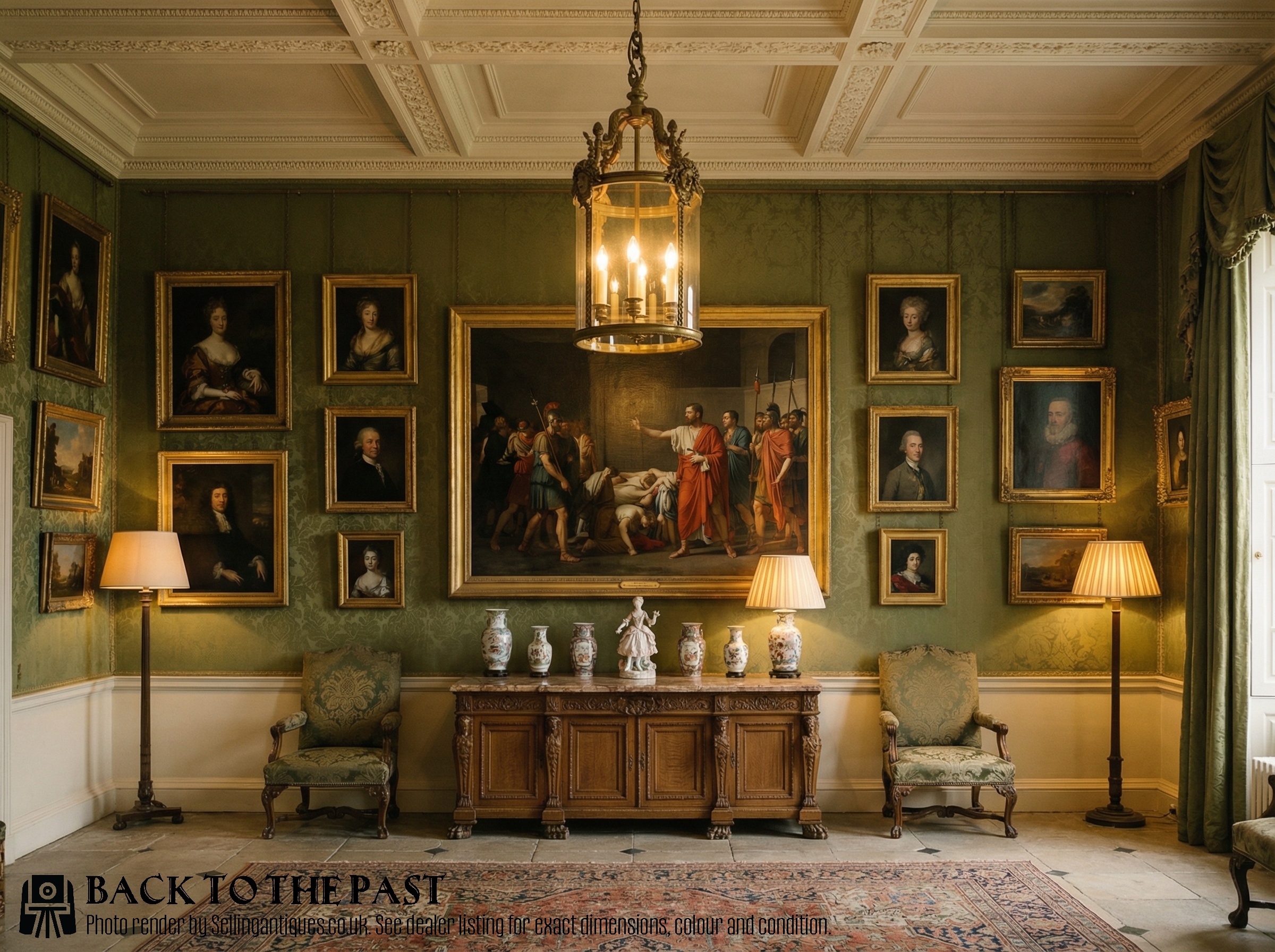
Brass Cylindrical Pendant Lantern
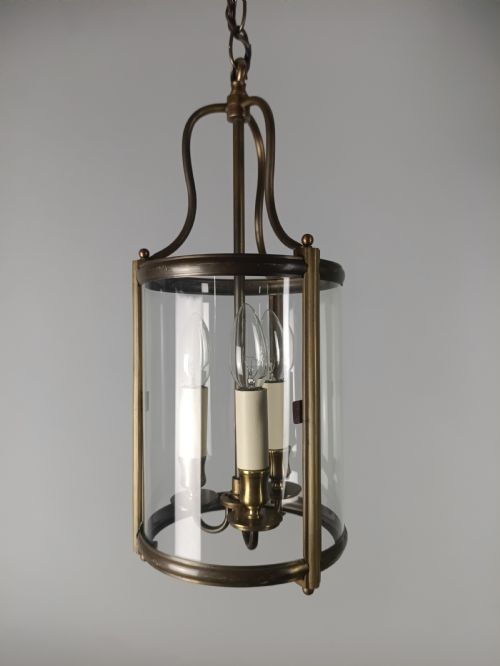
A brass cylindrical pendant lantern is a hanging light fixture designed primarily for entrance halls, corridors and stairwells. When searching this phrase, buyers look for vertical glazed enclosures that distribute illumination evenly downwards and outwards.
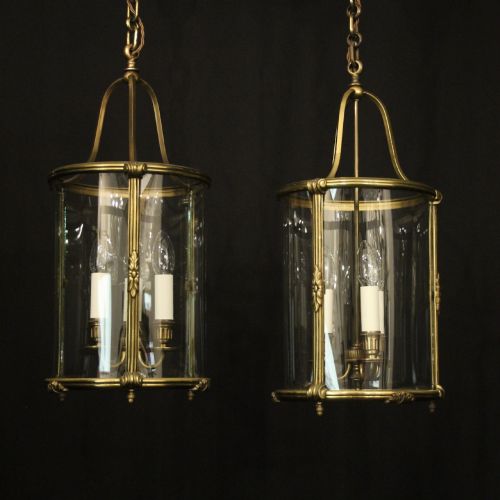
Most examples found here originate from the nineteenth century, the Edwardian period, and the interwar decades of the nineteen-twenties and nineteen-thirties. French designs dominate the selection, often drawing on neoclassical, empire and art deco aesthetic traditions.
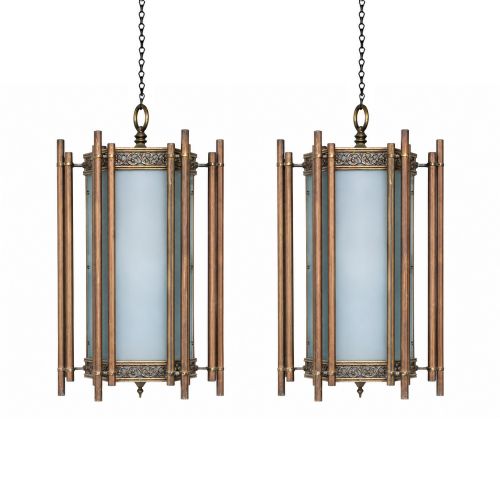
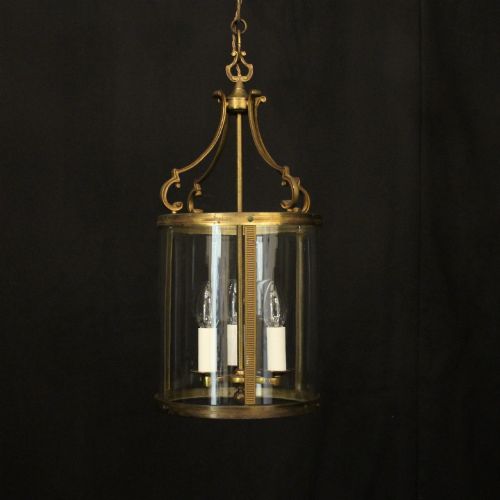
The standard configuration involves a metal frame fitted with transparent or frosted glass panels, suspended by chains or rods from the ceiling. Single and multiple light variants appear regularly, accommodating one up to four internal bulbs.
Materials and construction
The structural framework relies heavily on brass, bronze, and gilt variants that provide both rigidity and a rich metallic sheen. Founders cast these metals into decorative mounts, collars and frames, frequently applying gilding to enhance the reflective quality of the fixture.
Panels of clear, convex, or frosted glass form the cylindrical body, held securely within the metal armature by subtle clips or bezels. Artisans shaped the glass to bend light softly, reducing harsh glares while maintaining high luminous output in narrow spaces.
Some lanterns feature subtly bowed convex glass designed to make hallways look wider than they actually are.
Quality differences
The sophistication of the casting and the crispness of the chased detail separate ordinary lanterns from exceptional ones. Heavier gauge bronze and thick, fire-gilded brass retain their definition and lustre far better over decades of exposure.
The quality of the glass components also marks the division between standard production and high-end pieces. Convex glass panels require skilled glassblowing and grinding to fit tightly within curved metal frames without distortion.
The Brass Cylindrical Pendant Lantern Glossary
- Convex glass
- Curved glass panels that project outward from the frame to diffuse light more widely across a room. This technique adds depth and volume to the cylindrical silhouette.
- Gilt bronze
- Bronze metal treated with a thin layer of gold or gold-coloured alloy to create a durable, opulent finish. It is frequently associated with grand French decorative arts.
- Hall lantern
- A ceiling-suspended lighting fixture specifically proportioned for narrow vestibules and corridors. They provide practical illumination while serving as a decorative focal point upon entry.
- Art Deco
- A design style characterised by sleek geometric shapes, stylised motifs and streamlined modernity. Pieces from this era often feature simplified metalwork alongside industrial brass and copper elements.
Brass Cylindrical Pendant Lantern: Frequently Asked Questions
Where should I hang a cylindrical lantern?
These fixtures suit entrance halls, high-ceilinged corridors, and landings where vertical space allows proper suspension. Their enclosed design protects the internal bulbs from drafts in busy thoroughfares.
Ensure you hang the lantern high enough for clearance underneath, typically allowing at least seven feet from the floor to the bottom of the drop.
How do I clean the glass panels?
Carefully remove the glass panels from the metal frame if the retaining clips allow safe detachment. Wash them in warm soapy water and dry thoroughly before reassembly.
Avoid using harsh abrasive cleaners on gilded or polished brass frames, as these can strip the historical finish off the metal.
Are these lanterns wired for modern electricity?
Many vintage and antique lighting fixtures have been updated with modern internal wiring to meet current safety standards. It remains wise to have a qualified electrician inspect any historical piece prior to installation.
Rewiring preserves the original decorative housing while ensuring safe integration into contemporary domestic electrical circuits.
What period styles are most common?
French classical and neoclassical styles feature prominently among these designs, alongside Edwardian practical forms and later art deco interpretations. These influences bring decorative motifs such as acanthus leaves, urns, and geometric banding.
Recognising these aesthetic markers helps date a specific piece and match it to an interior design scheme.