
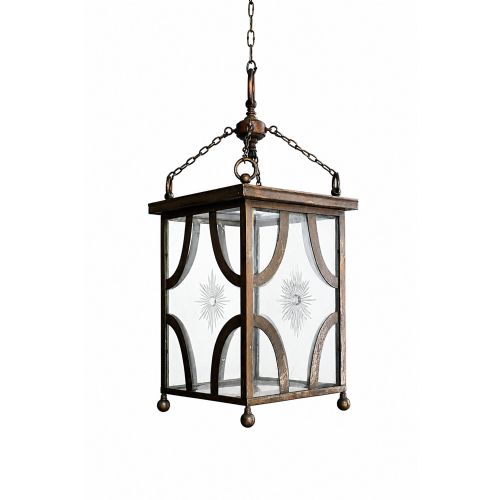
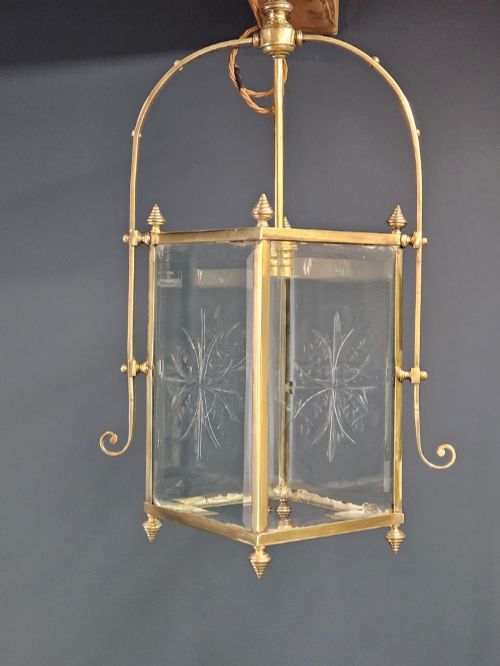
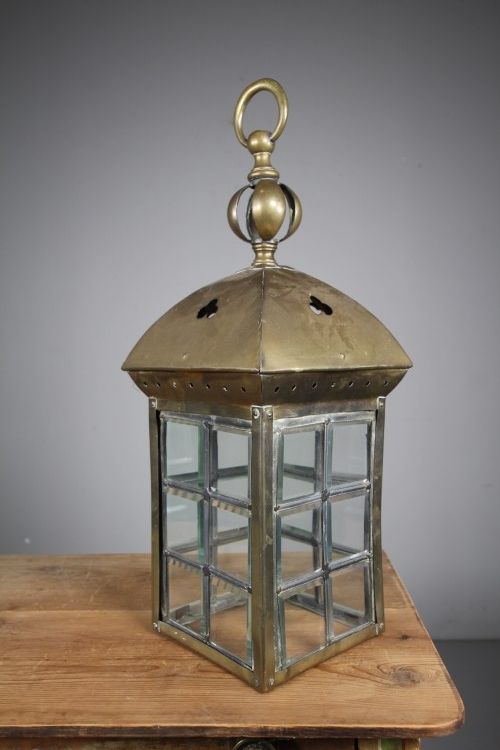


Traditional Brass Vestibule Light
A traditional brass vestibule light brings immediate warmth and formal symmetry to an entrance hall, combining durable metalwork with clear glass to illuminate transitional spaces.
Traditional Brass Vestibule Light
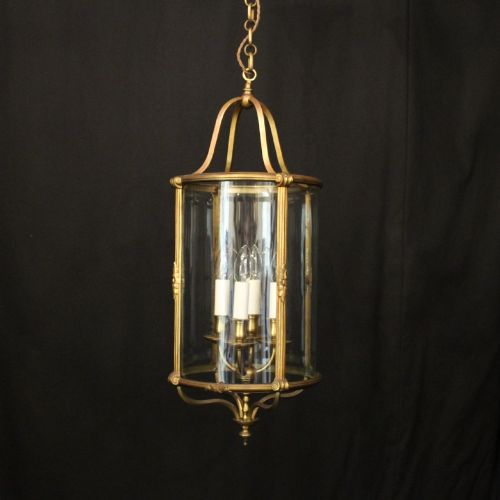
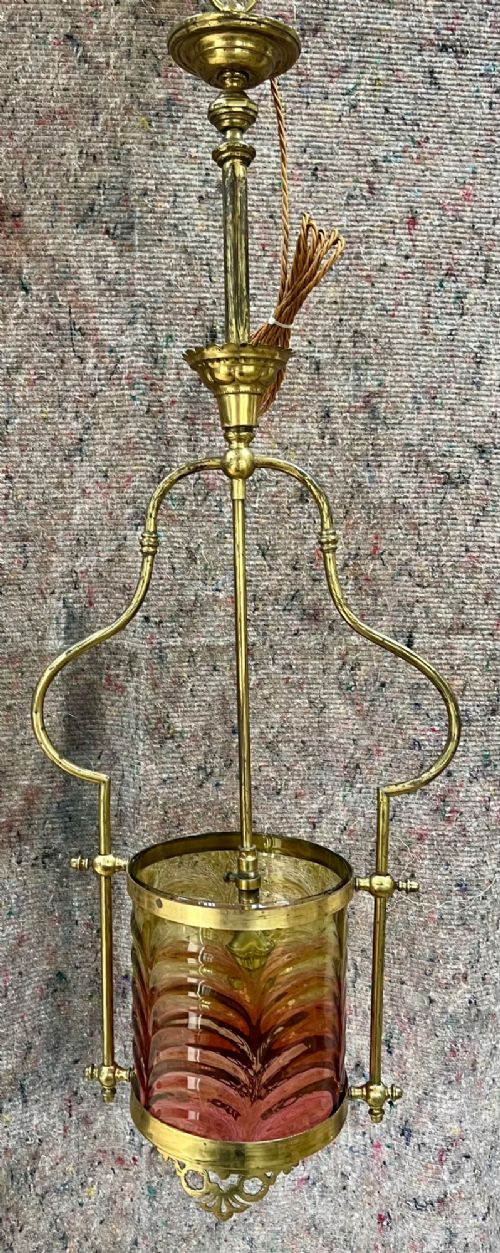
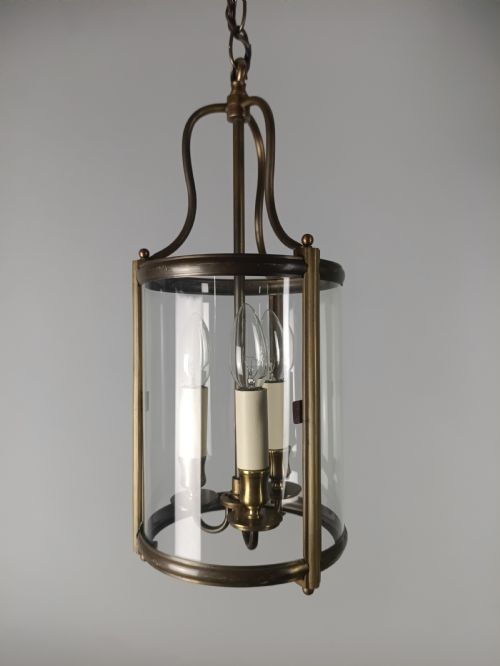
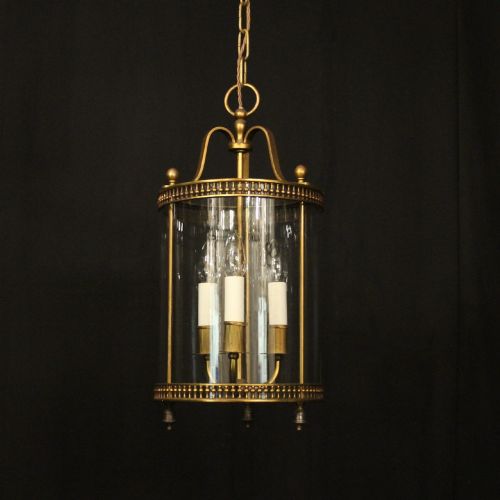
The versions you are most likely to meet on this page span the nineteenth century through the early twentieth century, taking the form of ceiling lights, hall lanterns, and pendant lights. Originating from English and French workshops, they showcase distinct regional interpretations of classic lighting.
Stylistically, the selection encompasses Victorian, Edwardian, Grand Regency, and French Neoclassical designs. These pieces range from simple, understated brass frames to elaborate gilded bronze constructions housing multiple internal light sources.
How they were made
Construction relies heavily on robust brass or gilt bronze frameworks that provide structural integrity while supporting glazed panels. Metal components are cast, chased, or joined to form rigid cages and frames designed to hold glass securely in place overhead.
Glass panels, sometimes featuring convex shapes, are fitted directly into the metal armature to enclose the interior lamps. Gilt finishes applied to bronze or brass surfaces add a reflective layer that catches and amplifies the light emitted within.
Listings feature items dated across the Edwardian era, the nineteenth century, and the early twentieth century up to nineteen-thirty.
What varies in quality
The distinction between standard examples and finer pieces often lies in the weight and complexity of the metal casting. Heavier brass frameworks and detailed gilt bronze mounts indicate a higher level of craftsmanship and material investment.
Finishing details also separate categories, with crisp chasing on the metalwork and specialised glass elements such as convex panes commanding greater attention. The presence of multiple light fittings integrated harmoniously into a balanced frame demonstrates superior design intent.
The Traditional Brass Vestibule Light Glossary
- Hall lantern
- A ceiling-suspended lighting fixture designed primarily for corridors and entrance passages. These units typically feature enclosed glass panels held within a metal frame.
- Gilt bronze
- An alloy of copper and zinc treated with a gold-coloured finish or gold leaf layer. This material provides both durability and a rich decorative surface.
- Convex glass
- Curved glass panels that project outward from the frame. This technique distorts reflections softly and disperses light across a wider angle.
- Edwardian
- A stylistic period spanning the early twentieth century, known for lighter, refined interpretations of earlier historical designs. In lighting, this often translates to cleaner lines combined with traditional materials.
Traditional Brass Vestibule Light: Frequently Asked Questions
Where should a hall lantern be hung?
These fixtures belong in entrance halls, vestibules, and high-ceilinged corridors where their vertical drop can be fully appreciated. They provide practical illumination for guests arriving at an entryway.
Ensure there is sufficient clearance beneath the lowest point of the lantern for people to walk underneath safely. Positioning them centrally in the space creates a balanced and welcoming focal point.
How do I identify an Edwardian brass light?
Edwardian brass lighting generally exhibits a refined lightness compared to heavier Victorian counterparts. Look for simplified geometric frames and balanced proportions typical of the early twentieth century.
Makers of this era frequently paired polished brass with clear glass to maximise brightness in smaller vestibules. The absence of heavy ornamentation distinguishes these pieces from earlier styles.
What is the difference between brass and gilt bronze?
Brass is an alloy composed primarily of copper and zinc, valued for its warm metallic tone and strength. It forms the structural basis of many standard hanging lanterns.
Gilt bronze involves a bronze base coated with a gold finish, offering a deeper and more lustrous surface appearance. This material is frequently associated with French Neoclassical and chateau-style lighting.
How do convex glass panels affect lighting?
Convex glass panels curve outward from the metal framework of the lantern. This specific curvature helps to scatter light more evenly across the surrounding walls.
In addition to functional illumination, the curved surface creates subtle optical distortions that catch ambient light from other rooms. It adds texture and depth to the appearance of the fixture.