
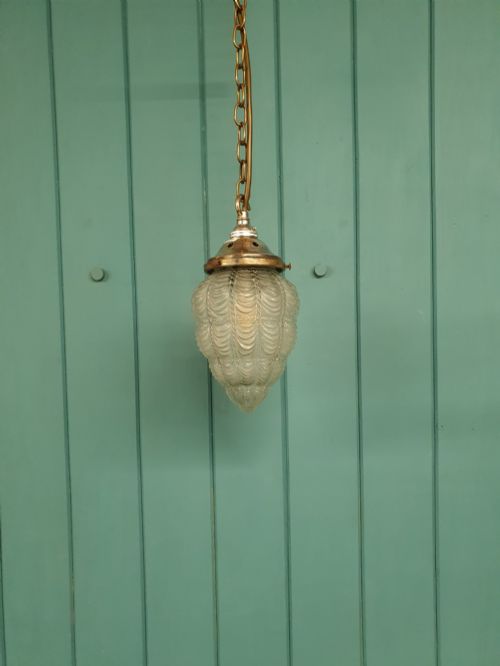


Frosted Glass Lantern
A frosted glass lantern softens the interior atmosphere while casting a clear, even light across hallways and reception spaces.
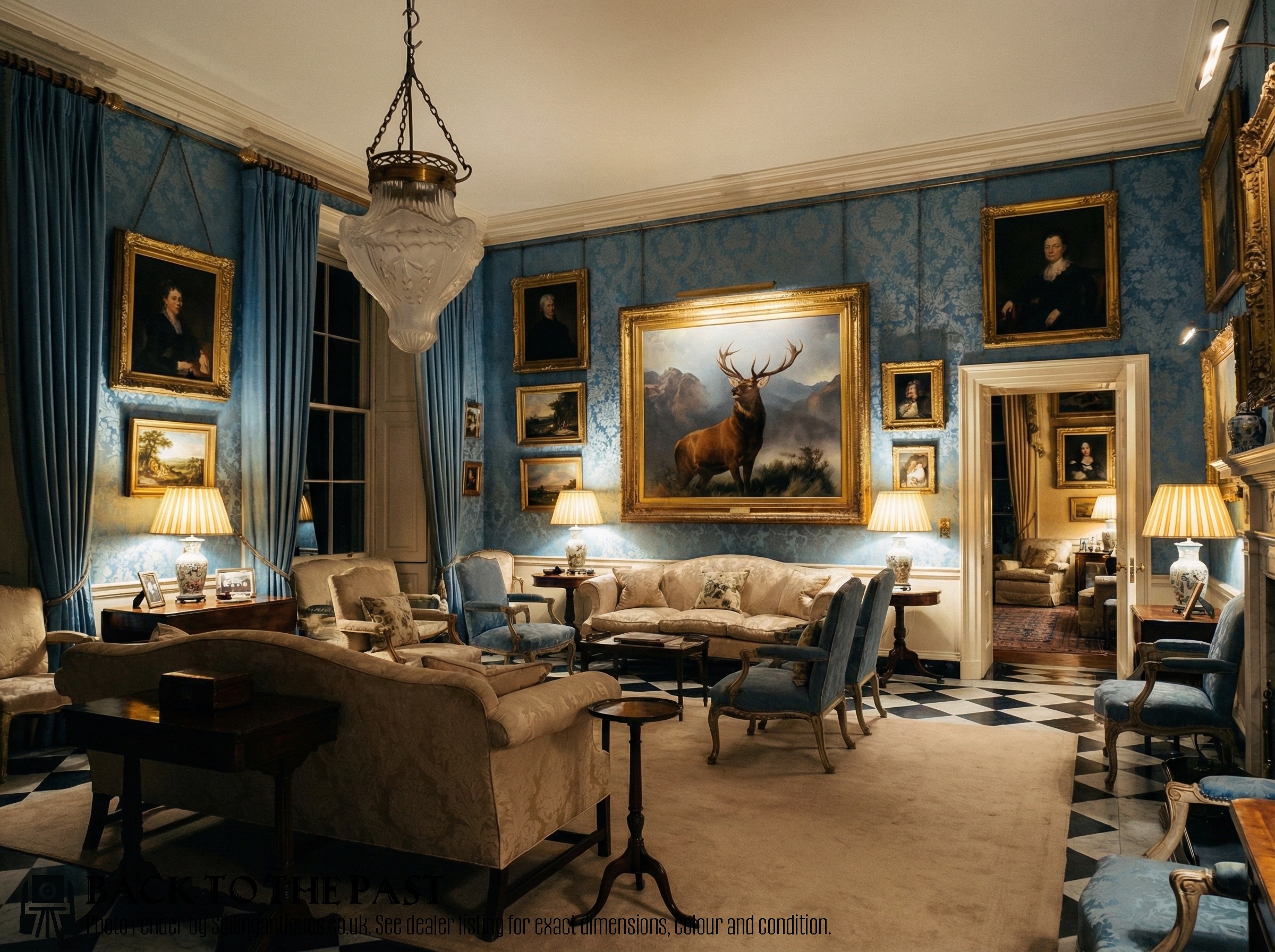
What a frosted glass lantern is
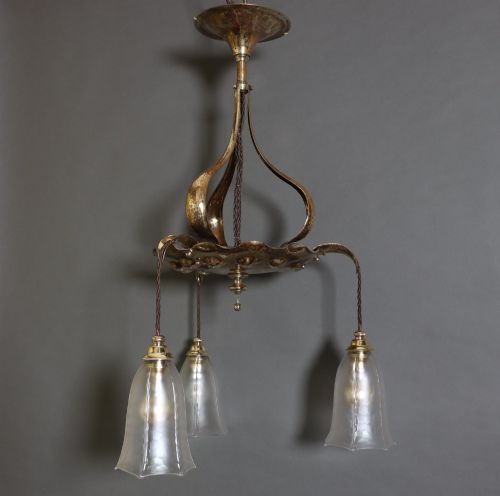
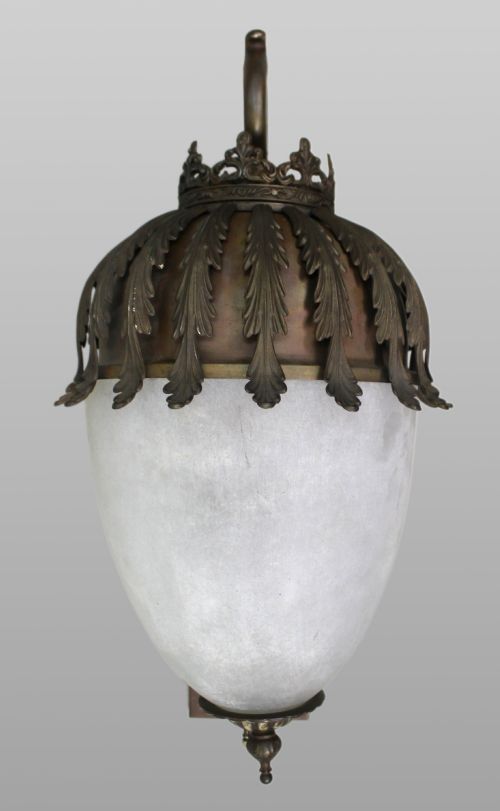
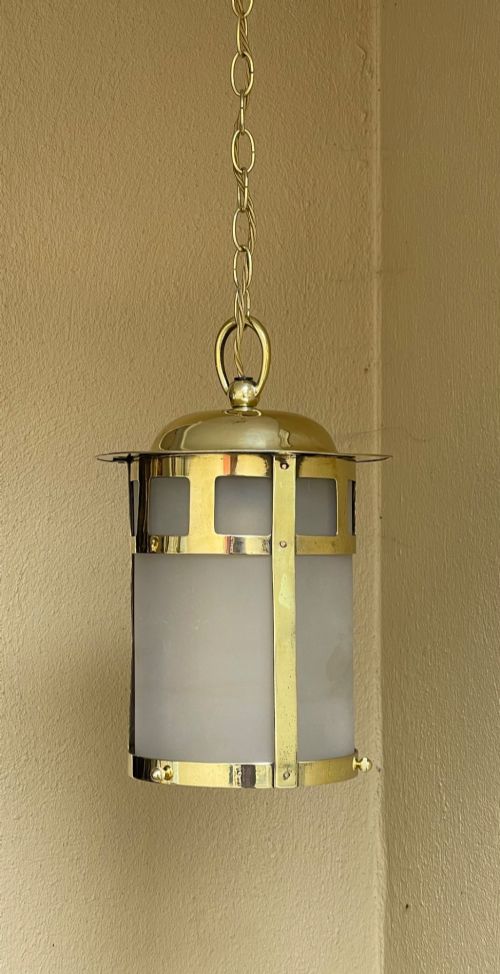
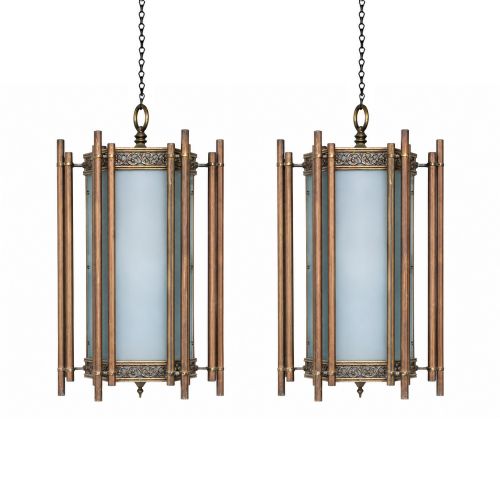
A frosted glass lantern provides diffused illumination through treated panes, serving as a primary light source in entrance halls and stairwells. The search phrase covers hanging pendant lights, ceiling lighting, wall sconces, and hall lanterns sourced from diverse European traditions.
Edwardian pieces and 1920s designs appear frequently alongside 19th-century French chateau and Louis XVI style examples. These fittings combine utility with decorative metal frameworks, balancing architectural presence with practical domestic lighting.
How they were made
Makers housed frosted, etched, or enamelled glass panels within structural frames forged from brass, bronze, gilt bronze, iron, copper, and chrome. Metalwork techniques involved casting, forging, and soldering to secure delicate glass elements safely within load-bearing mounts.
Surviving examples demonstrate manual surface treatments on the glass alongside patinated metal finishes. Component parts were engineered for ceiling suspension or direct wall mounting using robust chains, brackets, and fitted canopies.
Retail Price Guide 2026
Typical UK retail prices for frosted glass lantern, calculated from the Sellingantiques database of over a million retail prices indexed since 2003. This retail price guide relies exclusively on Sellingantiques data; no external sources or auction records are used, so the figures do not describe the wider market.
Listings feature frosted glass paired with brass, bronze, copper, iron, and chrome across Edwardian, Art Deco, and 19th-century periods.
What varies in quality
Quality rests upon the crispness of the metal casting and the depth of surface decoration on the glass panels. Finer examples display meticulous chasing on bronze or brass mounts, ensuring the framework complements the glass without appearing heavy.
The integration of the glass into the structural frame distinguishes standard utility lighting from elevated decorative pieces. Superior items maintain original patination on the metal and precise joins that keep the diffuser securely aligned.
The Frosted Glass Lantern Glossary
- Frosted glass
- Glass treated by acid-etching or sandblasting to create a textured, opaque surface that diffuses light. This treatment softens harsh bulb glare while distributing illumination evenly.
- Gilt bronze
- Bronze metal treated with a fine layer of gold or gold-coloured alloy to give a rich surface sheen. It appears frequently in formal French lighting designs.
- Hall lantern
- A ceiling-suspended light fixture specifically scaled for narrow corridors and entrance vestibules. These pieces direct light downward while illuminating surrounding wall surfaces.
- Wall sconce
- A lighting fixture attached directly to a vertical wall surface rather than suspended from a ceiling. They often feature matching metal brackets and frosted panels.
- Bell jar
- A rounded, dome-shaped glass shade resembling a laboratory bell jar. This form encloses the light source completely within a smooth, curved profile.
Frequently Asked Questions
Where should I hang a hall lantern?
These fixtures suit entrance halls, corridors, and high-ceilinged stairwells where they provide adequate downward illumination without obstructing movement.
Ensure the hanging height allows sufficient clearance underneath for pedestrian traffic while remaining visually balanced within the architectural proportions of the space.
How do I date a brass lantern?
Dating relies on examining manufacturing techniques, screw types, wiring methods, and stylistic cues such as Edwardian proportions or Louis XVI ornamentation.
Compare the construction details and metal patination against documented pieces from the nineteenth and early twentieth centuries to establish an accurate period.
Are these lights safe for modern wiring?
Many period fixtures require rewiring by a qualified electrician to comply with current safety standards and electrical regulations.
Original frames can typically accommodate modern internal lamp holders and contemporary cabling without altering the external appearance of the piece.