


Ormolu Hall Lantern
An ormolu hall lantern brings weight and warmth to an entrance, casting patterned light through glass panels.
Ormolu Hall Lantern
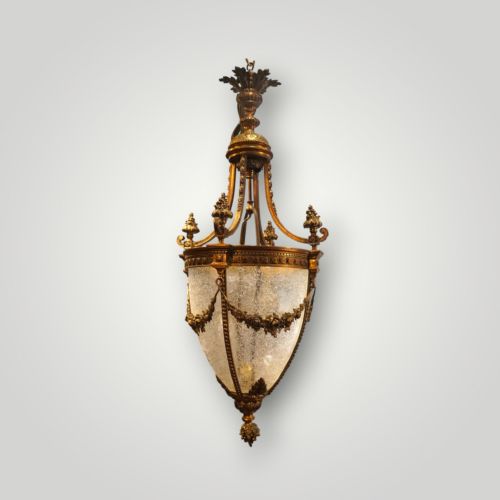
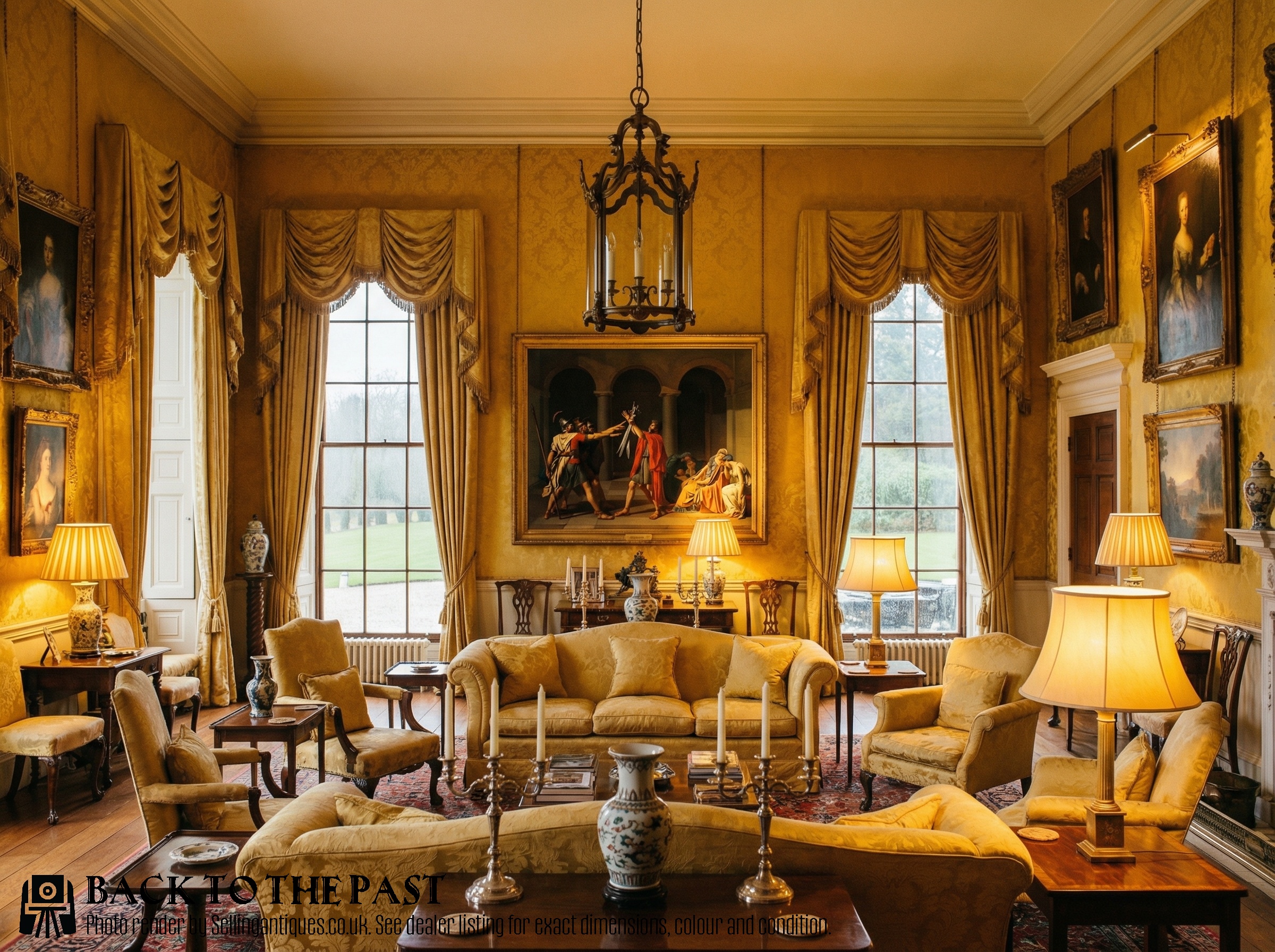
An ormolu hall lantern is a ceiling-hung light fixture designed for entryways, passages and stairwells, merging gilt metalwork with glass panels. When you search for an ormolu hall lantern, you are looking at overhead illumination constructed to catch and reflect natural and artificial light in narrow spaces.
The pieces on this page span from the nineteenth century into the early twentieth century, drawing heavily on French Neoclassical, Louis XVI and Rococo styles. Many examples originate from France, often referencing the grand designs found in the Palace of Versailles.
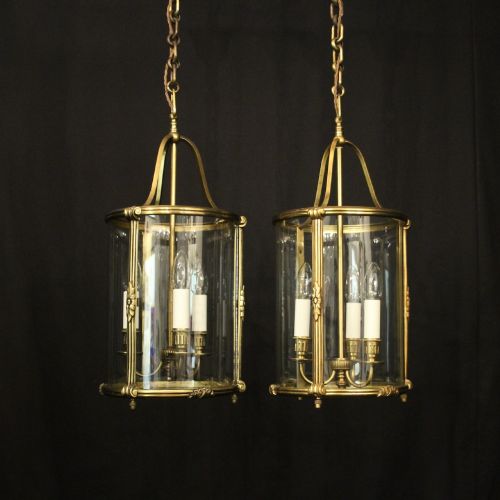
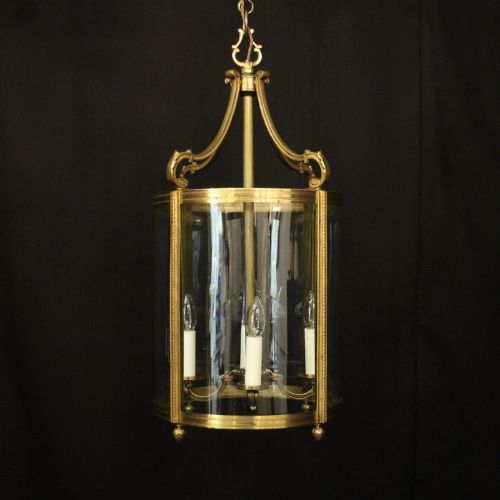
Most entries take the form of pendant lanterns and hanging ceiling lights, configured for single or multiple internal bulbs. You will find hexagonal and convex shapes among the selection, suspended on chains or directly from ceiling mounts.

How they were made
The structure relies on cast gilt bronze, ormolu, brass and bronze to form the rigid frames and decorative mounts. Artisans cast these metal components in sections before chasing and applying gold leaf or mercury gilding to achieve a lasting metallic lustre.
Panels of glass are fitted securely into the metal frameworks, utilising plain, frosted, etched or bevelled panes. These glass types alter the quality of the illumination, diffusing the glow or casting crisp patterns against hallway walls.
Ormolu Hall Lantern Retail Price Guide 2026
Typical asking prices for ormolu hall lantern among the pieces listed under this phrase on Sellingantiques today, from the lower quarter to the upper quarter. They describe what is for sale here now, not the wider market.
Hexagonal and convex glass configurations appear frequently alongside French Neoclassical and Louis XVI design influences in these lighting entries.
What varies in quality
Quality rests in the crispness of the bronze casting and the depth of the chasing work on the mounts. Finer examples display sharp acanthus leaves, bead reels and swags that retain their definition rather than appearing soft or smoothed over.
The treatment of the glass panels also distinguishes the work, particularly where bevelled edges or intricate etching add weight and cost to the piece. Substantial metal gauges and robust suspension loops ensure the lantern hangs true without structural fatigue.
The Ormolu Hall Lantern Glossary
- Ormolu
- Finely chopped gold leaf amalgamated with mercury and applied to a bronze base, then fired to leave a rich gold coating. This historic technique provides a durable and warm finish.
- Bevelled Glass
- Glass panes with angled edges ground down to a slope around the perimeter. This catches light at different angles and adds visual thickness.
- French Neoclassical
- A decorative style inspired by classical antiquity, featuring symmetry, urns, swags and geometric restraint. It dominated much of the eighteenth and nineteenth century French metalwork seen here.
- Louis XVI Style
- A lighter, more rectilinear aesthetic than preceding rococo designs, incorporating classical motifs like ribbons, fluting and beaded borders. It remains a primary reference point for these hanging lanterns.
Ormolu Hall Lantern: Frequently Asked Questions
How do I hang a hall lantern safely?
These lanterns require secure ceiling fixings capable of supporting the combined weight of cast bronze and glass panels. Professional installation involving a ceiling joist or metal hook rated for heavy fixtures is standard practice.
Electrical wiring must be routed down through the suspension chain and verified by a qualified electrician to meet current domestic safety standards.
What is the difference between ormolu and gilt bronze?
Ormolu specifically refers to gilt bronze created through a mercury amalgamation gilding process common in the eighteenth and nineteenth centuries. The terms are frequently used interchangeably in trade descriptions to denote gold-finished bronze.
Gilt bronze covers any bronze object coated in gold leaf or modern gold paint, whereas traditional ormolu involves a distinct chemical fire-gilding method.
How do I clean an antique lantern?
Dust the metal framework and glass panels regularly with a soft, dry cloth to prevent grime accumulation. Avoid abrasive cleaners or metal polishes that can strip away the historic gilt surface.
Glass panels can be removed carefully if the frame permits, then cleaned with standard glass cleaner before being secured back into their channels.
Are these lanterns suitable for low ceilings?
Pendant lanterns require adequate clearance so people can pass underneath without obstruction, particularly in domestic hallways. Most pieces can have their suspension chains shortened to adjust the hanging height.
Shorter ceiling mounts or flush-fitting styles are better suited to restricted vertical spaces than long multi-chain arrangements.