
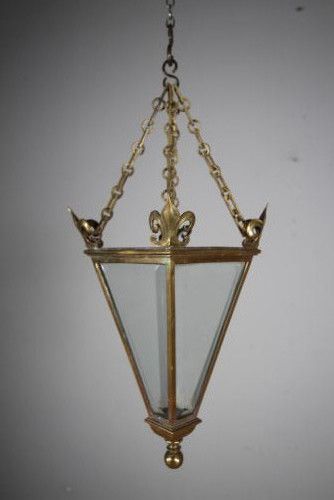
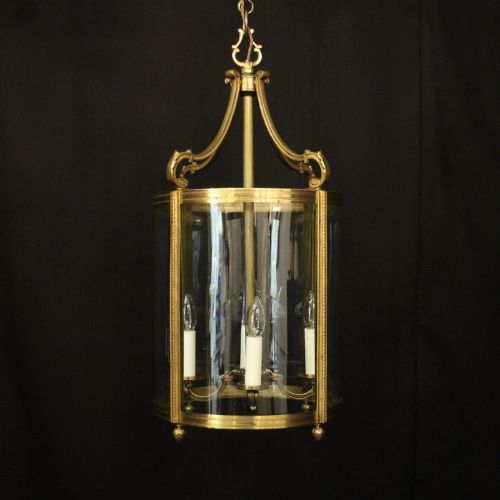


Gilt Bronze Lantern
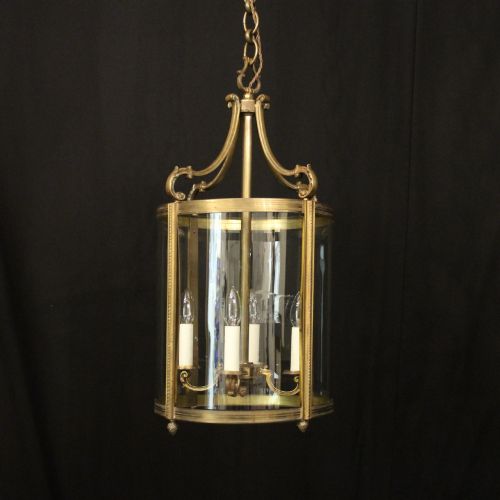
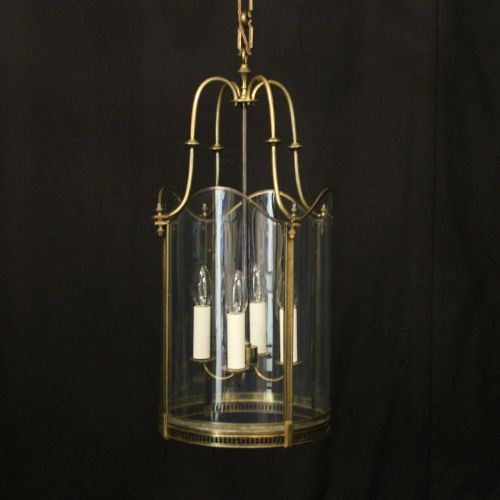
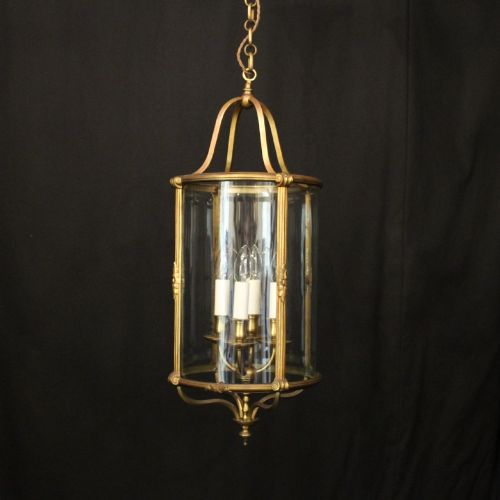
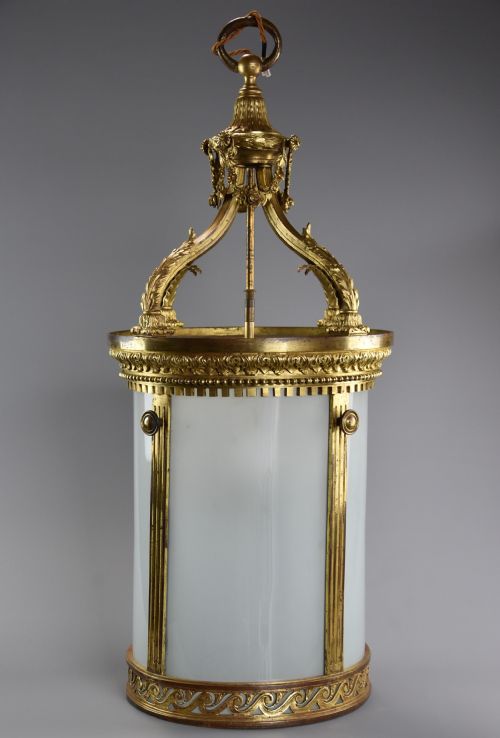
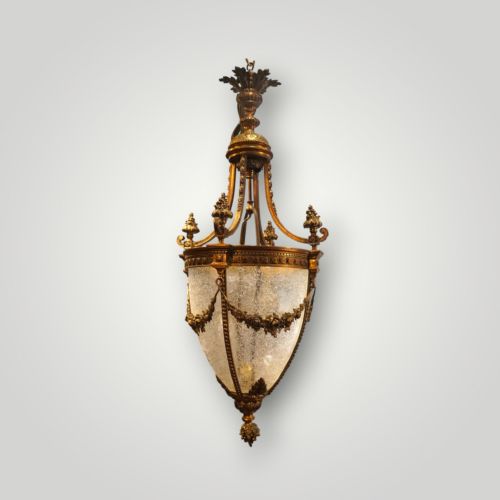
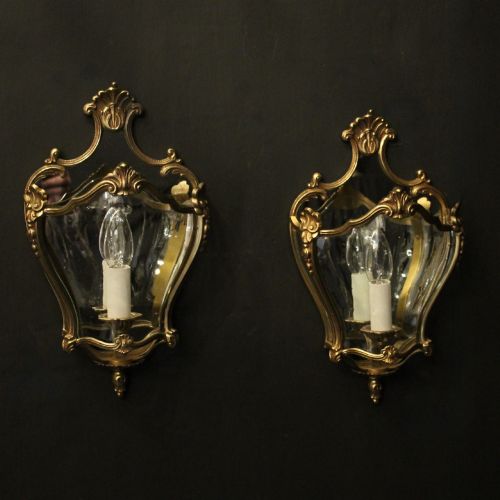
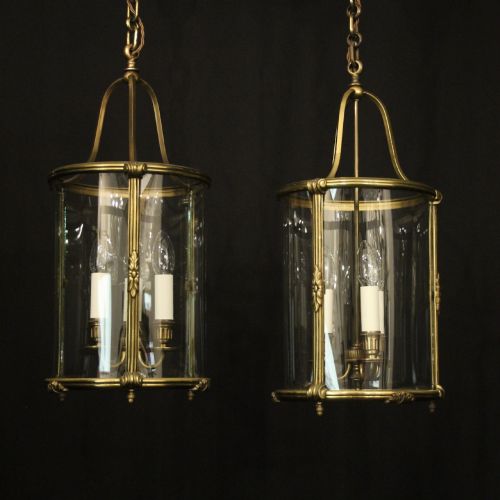
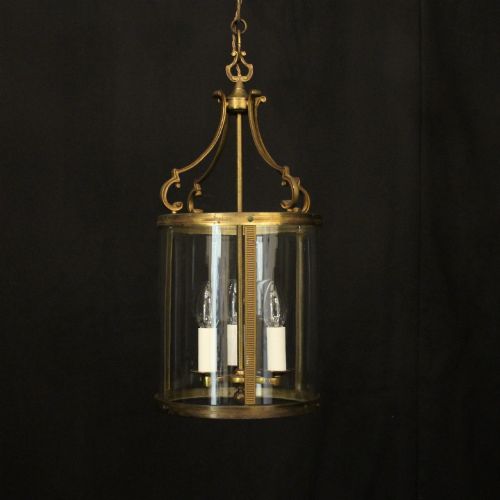
These gilt bronze lantern examples bring classical French elegance to an entrance hall, combining heavy metalwork with clear glass panels.

Understanding the gilt bronze lantern
A gilt bronze lantern serves primarily as a grand ceiling-hung light source for entrance halls and corridors, taking the form of a glazed metal cage. You are most likely to meet French examples influenced by Louis XVI, Neo-Classical, or Versailles designs, alongside English brass and bronze variations.
The selection ranges from single-light ceiling fixtures to pairs of large pendant lanterns and multi-light hall fixtures. Most pieces originate from the nineteenth and early twentieth centuries, spanning periods such as the Edwardian era and the nineteen-twenties.
Makers and designers drew heavily on established stylistic traditions, producing hexagonal and octagonal shapes fitted with glass or coloured crystal panels. These hanging lights function both as practical ceiling lighting and as architectural decorative statements.
Materials and construction
Craftsmen cast the structural frames in bronze or brass before applying a layer of gilding to the metal surface. These metallic cages house internal light fittings, ranging from twin-light arrangements to larger four-light configurations.
Panels of glass, cut glass, and occasionally coloured crystal are set directly into the metal framework to enclose the bulbs or candles. Mounts and decorative trims are cast separately and attached to the main body to enhance the classical ornamentation.
Retail Price Guide 2026
Typical UK retail prices for gilt bronze lantern, calculated from the Sellingantiques database of over a million retail prices indexed since 2003. This retail price guide relies exclusively on Sellingantiques data; no external sources or auction records are used, so the figures do not describe the wider market.
The inventory records pieces from the nineteenth century, Edwardian period, and the decades spanning nineteen-twenty to nineteen-thirty.
Assessing quality and execution
Quality reveals itself in the crispness of the cast metal ornamentation and the weight of the bronze frame. Finer pieces display sharper detailing in the classical mounts and heavier gauge metalwork.
The choice of glazing further distinguishes the range, with precision-cut glass and crystal panels offering superior light refraction compared to plain flat glass. The cohesion of the historical style, whether French Louis XVI or Florentine, dictates the visual harmony of the finished light.
The Gilt Bronze Lantern Glossary
- Gilt bronze
- Metal cast and subsequently coated with a layer of gold or gold-coloured finish. This material provides a durable and reflective surface characteristic of high-end nineteenth-century lighting.
- Hall lantern
- An enclosed hanging light fixture designed specifically for corridors and entrance spaces. These fixtures typically hang from chains or rods attached to the ceiling.
- Louis XVI style
- A classical design vocabulary characterised by straight lines, symmetry, and restrained ornamentation derived from ancient architectural motifs. It appears frequently in French lighting from the nineteenth century.
- Versailles design
- A formal decorative scheme associated with French palace interiors, often featuring octagonal or hexagonal lantern geometries. These pieces utilise elaborate metalwork and prominent glass panels.
- Cut glass
- Glass that has been decoratively shaped and faceted by grinding and polishing to catch and refract light. It is commonly used in ceiling lanterns to enhance brightness.
Frequently Asked Questions
Where should I hang a gilt bronze lantern?
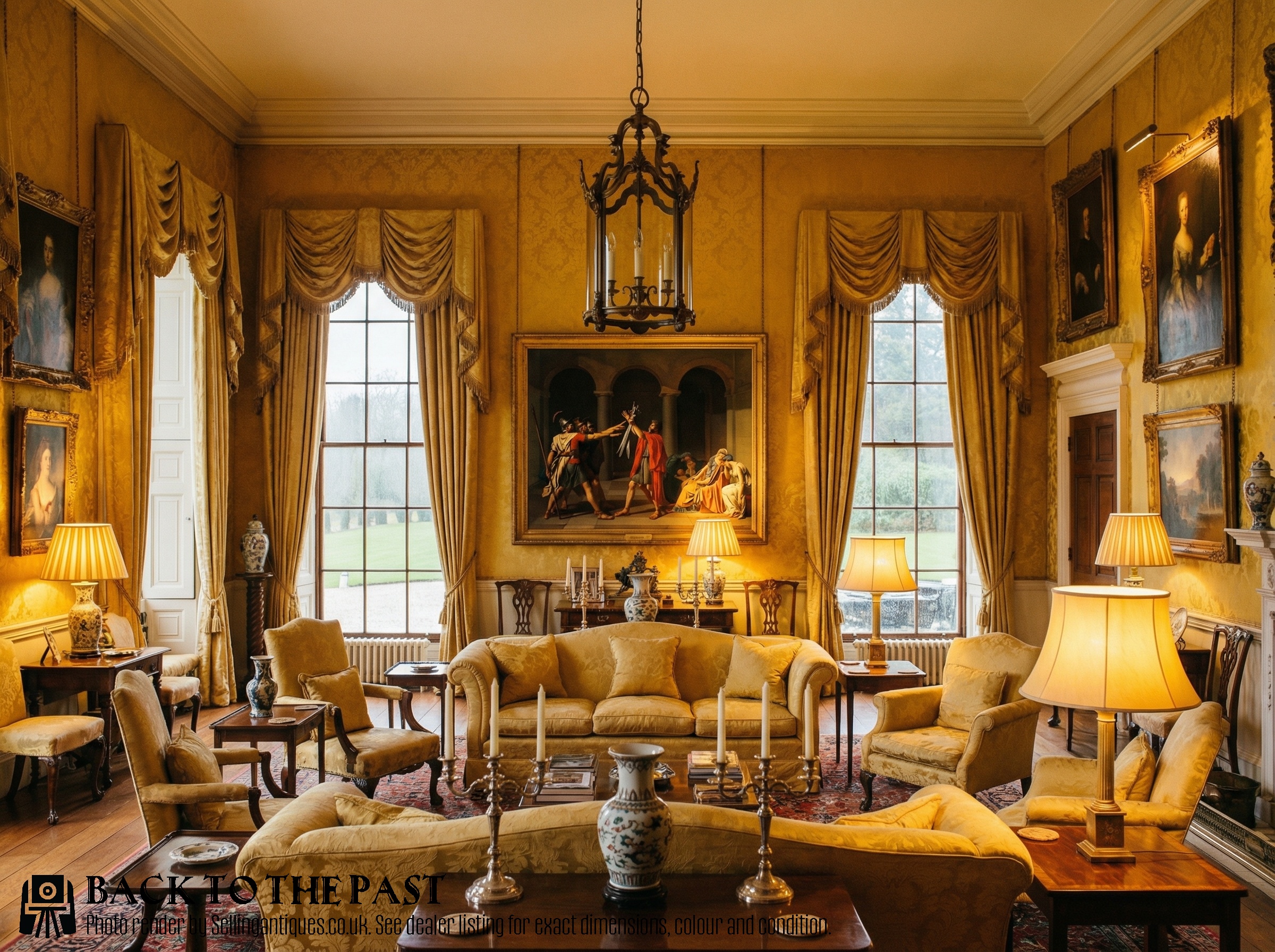
These fixtures suit high-ceilinged entrance halls, grand hallways, and stairwells where their pendant drop can be fully appreciated. Their enclosed design protects the internal components while directing light downwards.
Ensure the ceiling height and structural support can accommodate the weight of a bronze and glass fixture. Positioning them centrally creates an immediate focal point upon entering a space.
Are these lanterns wired for modern electricity?
Many surviving examples have been adapted over time to accommodate modern electrical wiring and standard bulb fittings. Some listings mention rewiring work, while others retain older configurations that may require professional updating.
Buyers should consult a qualified electrician to inspect the internal wiring before installation. This ensures the vintage fixture meets current safety standards for domestic ceiling lighting.
How do I identify a French Louis XVI style lantern?
Louis XVI style lanterns are defined by geometric balance, neoclassical motifs, and straight architectural lines rather than the flowing curves of earlier Rococo designs. They frequently incorporate cast bronze mounts and symmetrical glazing.
Many examples originating from France during the nineteenth century adopt this formal vocabulary. Look for crisp casting work and traditional proportioning to confirm the stylistic lineage.
What is the difference between gilt bronze and brass?
Gilt bronze consists of a bronze base metal coated with a golden finish, offering a deeper, heavier material quality prized in high-end antique lighting. Brass is an alloy of copper and zinc that possesses a naturally brighter golden hue without necessarily requiring surface gilding.
Both materials appear across the available inventory for hanging lanterns. Bronze generally provides a heavier structural cage suitable for elaborate cast ornamentation.